Connect with us

Economy

Panic as queues surface in Abuja

Published

on

ADVERTISEMENT
Zoom Ad
ADVERTISEMENT
Zoom Ad

* Depots reportedly hike price to N710/litre

By Francesca Hangeior.

 

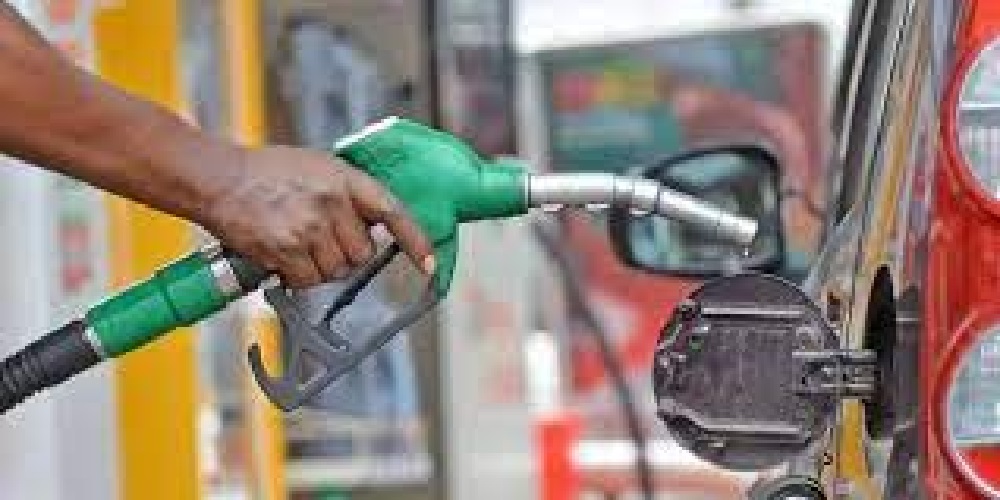
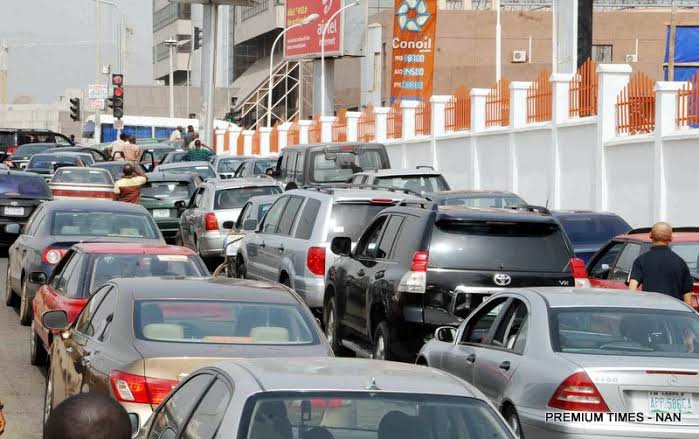
Fresh queues for Premium Motor Spirit, popularly called petrol, surfaced in Abuja, parts of Niger and Nasarawa States on Friday, following the closure of many filling stations operated by independent marketers.

Advertisement

According to reports, dealers closed their retail outlets due to their inability to access petrol as a result of the hike in the ex-depot price of the commodity to N710/litre by private depot owners.

Motorists besieged the few stations that dispensed petrol on Friday, particularly those operated by the Nigerian National Petroleum Company Limited and some major oil marketers in Abuja and neighbouring states.

This led to massive queues in outlets, such as the NNPC mega station on the Gwarimpa axis of the Zuba-Kubwa Expressway, Conoil and Total filling stations directly opposite the headquarters of NNPC in the Abuja city centre, and Salbas filling station at the Dei-Dei end of the Zuba-Kubwa expressway, among others.

Independent oil marketers, who own over 70 per cent of filling stations across the country, blamed the hike in the ex-depot price of petrol as dispensed by private depot owners.

Advertisement

The National President of the Independent Petroleum Marketers Association of Nigeria, Abubakar Maigandi, said that private depot owners had raised the ex-depot price of PMS to N710/litre, whereas the pump price of the commodity at NNPC retail stations was N617/litre.

Maigandi said, “The current situation is a result of how the private depot owners have been selling their products. It has been very difficult for independent petroleum marketers to get the product and sell it in Abuja and neighbouring states, as well as in other states in the North.

“So, the queues you are seeing now are because of the cost of PMS by private depots. The private depots are selling at N710/litre, but if you check the price of the same product at NNPC retail outlets, it is N617/litre.

“Therefore, by the time the independent marketers buy from private depots and bring it to our filling stations, we will not be able to sell our product because our cost price is already so high, while the cost at NNPC retail outlets is far lower.

Advertisement

“And you know that when we buy it at the rate of N710/litre, we have to add transportation cost again because there is no equalisation. And when we add the cost of transportation, the pump price is going to be higher than the N710/litre ex-depot price, whereas NNPC stations sell at N617/litre.”

Maigandi explained that because of the widespread number of stations operated by IPMAN, any distortion in the supply of products to members of the group would lead to fuel queues because major marketers and NNPC stations were fewer in number.

On whether IPMAN members cannot get direct PMS supply from NNPC, instead of buying the product from private depots, he replied, “That is what we have been negotiating with them (NNPC), and they promised us that they will start giving us our allocation.

“They have started, but the quantity is small compared to the number of retail outlets operated by IPMAN nationwide. We are getting products from NNPC, but the volume is too small for our members.

Advertisement

“So, we are requesting additional volumes because, in Abuja alone, we have over 250 retail outlets belonging to IPMAN members. This is just for Abuja. We have not talked about Niger, Kaduna, and other states in the North, not to mention the number nationwide.”

Maigandi, however, stated that the queues for petrol were not pronounced in remote villages, adding that “when you go to the villages, you will see that there are no queues.”.

“But in the city centres, where you have NNPC stations selling very cheaper than the N710/litre price, you will see queues there, as well as in front of the few outlets that have products to dispense.”

The IPMAN president said petrol was not scarce, as there were enough volumes in-country concerning what was imported by NNPC – Nigeria’s sole importer of the commodity.

Advertisement

Economy

See Black Market Dollar To Naira Exchange Rate Today 20th April 2026

Published

on

ADVERTISEMENT
Zoom Ad
ADVERTISEMENT
Zoom Ad

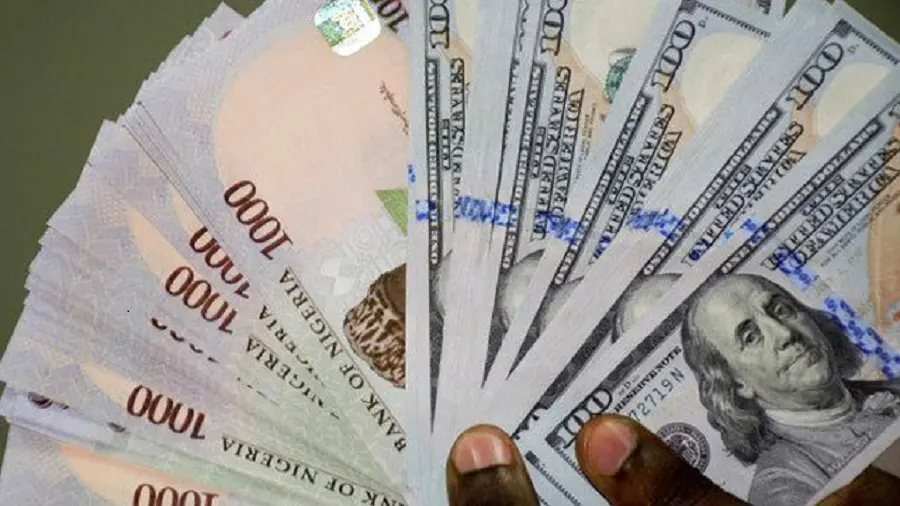
The Black Market Dollar-to-Naira Exchange Rate for 20th April 2026 Can Be Accessed Below.
IMPORTANT NOTE: The exchange rate changes hourly. It depends on the volume of dollars available and the Demand. This means…you can buy or sell 1 dollar at a certain rate, and the price can change (high or low) within hours.

The official naira black market exchange rate in Nigeria today, including the Black Market rates, Bureau De Change (BDC), and CBN rates.

Please note that the exchange rate is subject to hourly fluctuations influenced by the supply and demand of dollars in the market.

What’s the dollar to naira black market today, 20th April 2026?

Advertisement

The exchange rate for a dollar to naira at Lagos Parallel Market (Black Market) players sell a dollar for ₦1400 and buy at ₦1390 on Monday 20th April, 2026, according to sources at Bureau De Change (BDC).

Please note that the Central Bank of Nigeria (CBN) does not recognize the parallel market (black market), as it has directed individuals who want to engage in Forex to approach their respective banks.
Dollar to Naira Black Market Rate Today

Dollar to Naira (USD to NGN) Black Market Exchange Rate Today
Selling Rate ₦1400
Buying Rate ₦1390
Dollar to Naira CBN Rate Today
Dollar to Naira (USD to NGN) CBN Rate Today
Highest Rate ₦1348
Lowest Rate ₦1340
Disclaimer:NEWSRAIN NIGERIA does not set or determine forex rates. The official NAFEX rates are obtained from the FMDQOTC website. Parallel market rates (black market rates) are obtained from various sources, including online media outlets. The rates you buy or sell forex may be different from what is captured in this article.

Advertisement
Continue Reading

Economy

CBN, FMDA introduce the Nigerian Overnight Financing Rate

Published

on

ADVERTISEMENT
Zoom Ad
ADVERTISEMENT
Zoom Ad

The Central Bank of Nigeria (CBN) in collaboration with the Financial Markets Dealers Association (FMDA) has introduced the Nigerian Overnight Financing Rate (NOFR).

The new initiative is a standardized benchmark, aimed at enhancing transparency, strengthening monetary policy transmission, and deepening Nigeria’s money market.

The introduction of the NOFR was made known in a statement issued on Sunday by the Director, Corporate Communications of the CBN, Mrs. Hakama Sidi Ali.

The apex bank explained that the NOFR was developed to align Nigeria with global best practices in short-term interest
rate benchmarks.

Advertisement

Moreover, it said the initiative is expected to improve price discovery and transparency, while promoting consistent pricing of money market instruments.

“It will enhance the effectiveness of monetary policy, support financial innovation, boost investor confidence, and strengthen risk management across the financial system,” the CBN said.

The introduction of NOFR positions Nigeria alongside leading global benchmarks such as SOFR in the United States, SONIA in the United Kingdom, €STR in the Eurozone, and TONA in Japan.

Also, it complements African benchmarks such as the JIBAR in South Africa.

Advertisement

The CBN added that the benchmark was adopted after a stakeholder engagement session held on February 27, 2026, with market participants formally endorsing the initiative.

It further disclosed that following the subsequent regulatory approval, NOFR is now in use, with the CBN serving as the benchmark administrator.

“The bank will ensure governance, transparency, and regular publication of the rate,” the statement stated.

Advertisement
Continue Reading

Economy

Naira Slumps At Official FX Market

Published

on

ADVERTISEMENT
Zoom Ad
ADVERTISEMENT
Zoom Ad

The Nigerian naira depreciated slightly against the United States (US) dollar, trading at N1,343.6398 per dollar at the Central Bank of Nigeria (CBN) official foreign exchange window on Friday, 17th April, 2026.

According to the data on the CBN’s official platform, the naira traded at the Nigerian Foreign Exchange Market (NFEM) rate of N1,343.6398/$per dollar and closed at N1,342.5000 per dollar.

When compared with the previous trading rate, the Nigerian currency traded at N1342.3037 on 16th April, 2026. With this, the Nigerian currency depreciated slightly by a minimum of N1.3.

At the parallel market, the naira-to-dollar exchange rate for the buying rate didn’t change while the selling rate increased by N3 when compared to that of the previous trading rate.

Advertisement

According to Aboki FX , the Naira-to-dollar exchange rate at the black market on Friday, 17th April, 2026, was N1,395 and N1,405 per dollar for buying and selling rate respectively.

Continue Reading

Trending

Copyright © 2024 Naija Blitz News