

Connect with us

News

CHANGING ORIENTATION OF OUR FORMER STARS*

Published

on

ADVERTISEMENT
Zoom Ad
ADVERTISEMENT
Zoom Ad

By Tunde Olusunle

Several years after he retired from his illustrious career as a professional footballer, Peter Osaze Odemwingie was in the news a few weeks back. Very thankfully, his rebound was not a worrying piece of news. It has become customary for the medical plight of many of our former sportsmen to jump into our faces from the pages of tabloids. Often times, such unsavoury appearances, come with alms-solicitation bowls, foregrounding the dire situations of the subjects at those points in time. Odemwingie’s narrative, however, is a very heartening piece of news. He belongs to a new breed of our sports greats who are able to reinvent themselves after they cease to feature in big leagues across the world, even as we view them regularly on our television screens. Odemwingie’s example is one which should inspire our sports professionals, serving and upcoming.

Osaze Odemwingie by the way, played professional football for nearly two decades, specifically between year 2000 and 2018. A broad-based study of the careers of most footballers across the world is that their years of top, on-field performance averages 15 to 20 years. They sign their first professional contracts when they are about 18 years of age and will be fortunate to keep playing at optimum levels two decades after. Not every football player can be Roger Miller of Cameroon; Cristiano Ronaldo and Pepe of Portugal; Sergio Ramos of Spain, James Milner of England, or our own Kanu Nwankwo and John Utaka. These outfield players grossed or overshot two full decades on the turf for their respective clubs and countries in many instances. Goalkeepers in football have been known to enjoy careers well beyond two decades. They burn less calories within the space of their goal area, than defenders, midfielders, wingers and strikers. The latter are almost ever in motion snuffing out potential encroachments in their space and also shopping upfront for opportunities to unsettle their opponents.

Odemwingie was born in Tashkent, in the former Union of Soviet Socialist Republics, (USSR), which is now in the country Uzbekistan. He began a professional career in football, however, with Bendel Insurance Football Club of Benin City, Edo State, home state of his father, in year 2000. He went on to play for nearly 10 other clubs in Belgium, France, England, Russia and Indonesia before retiring in 2018. He played over 400 games and scored 125 goals for his various employers. He also played for Nigeria’s senior men’s soccer team, the Super Eagles, 65 times over a 12-year period, between 2002 and 2014. Odemwingie scored 11 goals, earning personal and group laurels. He played in four African Cup of Nations, (AFCON) tournaments; two World Cups and earned an Olympic medal in 2018, playing for Nigeria. Odemwingie was not reputed for the kind of tantrums typical of some of his teammates who had spats with the nation’s sports governing body, the Nigeria Football Federation, (NFF) or his managers. He was a remarkably temperate professional.

Advertisement

Much as he took a backstage from club and national footballing, however, he decided to explore other career options. He was just about 37 years old at the time and considered himself still productive. He thus conscientiously pursued a new vocation in the game of golf. He subjected himself to a three-year programme culminating in the receipt of a bachelors degree certificate in one of the courses within the gamut of golf education. June 25, 2024, Odemwingie graduated from the Professional Golfers Association, (PGA) academy. He spoke of the pain of adjustment from the group sports of his footballing career, as against the individuality of golf where one’s only company could be his caddie, for those who could afford one that is. Nonetheless, he is excitedly looking forward to his first PGA tour as a professional as he looks to leave his imprimatur on his new vocation.

Odemwingie is not the only Nigerian, nay African player to have sought new vocational vistas in sports-related concerns after retirement. Some ex-internationals have explored coaching, player management, scouting, punditry and similar possibilities. *Super Eagles* supremo in the years the team was known as *Green Eagles,* Segun Odegbami, multi-tasks as broadcast media proprietor, brand ambassador and newspaper columnist among others. Moses Kpakor a very uncompromising defensive midfielder who was particularly outstanding in the 1990 AFCON in Algeria, returned to the classroom, earned a masters degree in sports administration and is Director of Sports at the Benue State University, (BSU), Makurdi.

Retiring after a professional career of over 15 years, Augustine *Cerezo* Eguavoen, arguably one of Nigeria’s most rugged defenders in his time, managed clubsides in South Africa, Malta, Mali and Greece. He has been the Technical Director of the NFF since 2020. His teammate at Nigeria’s first participation in the FIFA Senior World Cup, “USA ’94,” Michael Emenalo a very effective left back, blossomed beyond his teething years in “Enugu Rangers Football Club,” to global football management. He has been Director of Player Development; Chief Scout; Technical Director and Sporting Director across clubsides in the US, England and France. More currently, Emenalo is Director of Football in the growing Saudi Arabia Professional Football League.

After what may pass as perhaps the briefest stint ever by any coach of the Super Eagles, Finidi George has taken up an appointment as Technical Adviser of *Sharks of Port Harcourt Football Club.* Sunday Oliseh has been manager of a number of clubs in Belgium and Germany. He also managed Nigeria for a few months. He has been severally appointed by the Federation of International Football Associations, (FIFA) as a technical expert for many FIFA-organised competitions. Emmanuel Amunike who is also a member of that generation of Nigerian players has had coaching spells in Saudi Arabia, Sudan, Tanzania and Zambia. He was an assistant coach under Eguavoen and presently serves in the same capacity with the national team. Austin *Jay-Jay* Okocha the skillfully admirable baller is involved in production and the entertainment industry. Nwankwo Kanu famously known as *Papillo* is the Chairman of *Enyimba Football Club* and is said to be involved with real estate, hospitality as well as oil and gas.

Advertisement

Victor Ikpeba who was nicknamed the “Prince of Monaco” in his active playing years as a forward in the French club by the same name, is a familiar face on satellite television football discussion programmes. Yakubu Aiyegbeni is reported to be active in the property market in England and owns a number of gas stations in Nigeria. Emmanuel Emenike is said to own one of the most modern hospitals named *Emenike Hospital* in Owerri, Imo State. The ex-international reportedly conceived of it to be the “go to” medical facility in Nigeria’s South East. Erstwhile defensive midfielder, Seyi Olofinjana, 36, was recently appointed Director of Talent Management for Africa at Chelsea Football Club. His compatriot Sone Aluko, 35, has been appointed First Team Coach at Ipswich Town Football Club, which has been newly promoted to the English Premier League, (EPL), while little-known Lukas Babalola, 27, is the new Assistant Manager at Feyenord Football Club in the Dutch first division.

This preceding narrative is an improvement over what has become the norm, rather than the exception with regards to our ex-internationals. Hitherto, it had almost, always been unsavoury news filtering from the homesteads of many of our former stars. The septuagenarian Christian Chukwu who led Nigeria to her first AFCON success in 1980, had to be rescued by billionaire Femi Otedola who paid for his medical evacuation and treatment abroad 2019. Charles Bassey, a marginal former player also has Otedola to thank for showing up for him when he was all but grounded with a protracted ailment in 2021. Henry Nwosu the youngest member of the 1980 AFCON team came down with a stroke two years ago, is a beneficiary of the kindness of the Lagos State governor, Babajide Sanwo-Olu. Nigeria’s mobile telecommunications giant, *Globacom* on the directives of its billionaire owner, Mike Adenuga, intervened last year to keep the folkloric national team goalkeeper, Peter Fregene, on this side of the divide.

Newer ex-internationals it would seem, have learnt from the experiences of their predecessors and have largely become more cautious in the management of their resources. Who would have imagined that a successful former player like Wilson Oruma would become a virtual tramp on the streets? He reportedly lost his life savings in excess of one billion naira to a self-styled fraud posturing as a clergyman who designed all manner fake investment prototypes for him. Another player, Femi Opabunmi also reportedly fell to the designs of a false prophet who fleeced him massively, under the pretext of helping to cure him of glaucoma-induced blindness. Misled by youthful exuberance, some Emeritus players have also frittered their savings on ostentatious and glamorous living. Wasn’t Dan Amokachi reported to own a jet which serviced his frolics in his heydays? Celestine Babayaro, Etim Esin and Ifeanyi Udeze, have been grouped in this category of sportsmen who “ate with all their fingers” to borrow from a Yoruba wise saying. Babayaro and Udeze are said to be gradually finding their feet.

Kanu and John Utaka are examples of ex-players who are giving back to society. Kanu, generally regarded as the most decorated African footballer, established the *Kanu Heart Foundation* to provide relief for indigent Africans and support people born with congenital heart defects, a health condition he once managed. He overcame this impairment to become one of Africa’s greatest of all time. Utaka established a football academy in Minna, Niger State, far away from his home community in Enugu State. Let’s hope that our former stars will ruminate deeply about the infinite possibilities available to them as they prepare for certain retirement. Let’s hope our erstwhile idols put a stop to hanging around the secretariat of the NFF and the Sports Ministry, desperately craving coaching engagements as sole panacea for their obvious apparent lack of planning.

Advertisement

Tunde Olusunle, PhD, is a Fellow of the Association of Nigerian Authors, (FANA)
Continue Reading
Advertisement
Click to comment

Warning: Undefined variable $user_ID in /home/naijuinz/public_html/wp-content/themes/zox-news/comments.php on line 49

You must be logged in to post a comment Login

Leave a Reply

News

Ogene Fires Back at Oshiomhole Over Obi Security Claims, Calls Remarks ‘Revisionist Comedy’

Published

on

ADVERTISEMENT
Zoom Ad
ADVERTISEMENT
Zoom Ad

By Gloria Ikibah

A fresh war of words has erupted over the security record of former Anambra State Governor Peter Obi, with the Leader of the Nigeria Democratic Congress (NDC) Caucus in the House of Representatives, Afam Victor Ogene, launching a scathing rebuttal to recent comments made by former Edo State Governor and Senator, Adams Oshiomhole.

The controversy followed remarks by Oshiomhole during a podcast interview in which he reportedly questioned Obi’s performance on security while serving as governor of Anambra State, arguing that the former presidential candidate lacked the credentials to tackle Nigeria’s current security challenges.

Responding in a statement, Ogene described Oshiomhole’s assertions as inaccurate and politically motivated, insisting that Obi’s security record remained a matter of public record.

Advertisement

“Senator Oshiomhole’s revisionist attempt to rewrite history is both laughable and insulting to Nigerians who know the facts. The data on security under Obi’s tenure in Anambra remains public record, and no amount of political grandstanding can erase it,” Ogene declared.

The lawmaker accused the former Edo governor of distorting historical facts in a bid to undermine Obi’s reputation, while also taking aim at Oshiomhole’s frequent interventions in national political debates.

Ogene further argued that Oshiomhole’s comments overlooked key events in Anambra’s political history, particularly the administrations that preceded Obi’s tenure.

“Oshiomhole has now officially joined the growing league of self-appointed press secretaries to President Tinubu. His trademark loquaciousness routinely puts him at odds with his own colleagues in the Senate, and he invariably ends up issuing humiliating apologies.

Advertisement

“In his latest desperate bid for ranking status among presidential attack dogs, Oshiomhole has again flown off tangent, mangling basic facts that even secondary school students know. What revisionist history would Oshiomhole teach Nigerian children when he can not accurately situate simple national events?”, he said.

Addressing references to the Bakassi Boys vigilante group, Ogene maintained that Oshiomhole had wrongly linked the group to Obi’s administration.

He also challenged Oshiomhole’s claims regarding efforts to dismantle criminal hideouts in Anambra State, insisting that the policy predated the administration of former Governor Willie Obiano.

“For the record: the Bakassi Boys operated under the four-year administration of the late Dr. Chinwoke Mbadinuju. Yet in his haste to smear Obi, Oshiomhole conveniently erased the three-year tenure of Dr. Chris Ngige before Obi’s assumption of office in 2006.

Advertisement

“Not done with his comedy of fallacies, Oshiomhole went further to claim that the demolition of kidnappers’ dens began under former Governor Obiano. False. That deterrence policy was introduced and executed by Obi”, he added.

The NDC caucus leader went on to contrast the leadership styles of both former governors, arguing that Obi’s administration focused on institutional reforms and security initiatives.

Ogene also pointed to security measures introduced during Obi’s administration, including community-based policing initiatives, which he said laid the foundation for a state-wide security framework.

“It is pitiable that a man who governed Edo State during Obi’s tenure would be so consumed by envy that he deliberately forgets basic facts. This is the same Oshiomhole who, while Obi was bringing civility and due process to governance in Anambra, was busy demolishing the houses of political opponents in Edo.

Advertisement

“In deed, for a man who pioneered the current attempt at evolving a state police structure, through the recruitment, training, kitting, and provision of security vehicles to each of Anambra’s 177 communities, it is uncharitable for Senator Oshiomhole to begin now to promote a contrary narrative”, he voted.

According to Ogene, Obi’s tenure was recognised through several security-related awards, and he argued that independent testimonies from senior law enforcement officials further supported the former governor’s record.

“Despite several security-related awards garned by Obi as governor, Oshiomhole’s desperate revisionism collapses under the weight of verifiable testimony. Philemon Leha, who served as Commissioner of Police in Anambra State during Mr. Peter Obi’s tenure has put the record straight.

“As I undertook my assignment in the state, I was greatly encouraged by the commitment and determined focus of Governor Obi. Security was on his priority list, and he always offered us logistics and other support on a scale I had not witnessed elsewhere.

Advertisement

“This is firsthand evidence from the man who ran security operations on the ground. While Oshiomhole peddles fallacies from a podcast chair, those who actually secured Anambra credit Obi’s leadership, logistics, and political will. Facts always triumph propaganda. 

“The unprovoked and coordinated attacks on Mr. Peter Obi’s person and political aspiration, by hirelings across both the ruling party and the opposition, are unprecedented. They point to only one thing: Obi is the real issue in the conversation for the 2027 general elections. 

“Yet, Obi has committed no crime by aspiring to lead. He has not barred anyone from contesting for the presidency. So it is both strange and uncharitable that many now want him muscled out of the race out of sheer jealousy and palpable fear of his rising popularity. 

“Like every other Nigerian, Obi is entitled to exercise his fundamental rights. Oshiomhole, and any one else, is free to run for the highest office if they so desire. No amount of sponsored smear campaigns,therefore, can deny Obi of that same democratic rights,” Ogene stated. 

Advertisement

The exchange adds to the growing political debate surrounding the records of leading political figures as discussions ahead of future electoral contests continue to gather momentum.

Continue Reading

News

Just in: Kwara traditional ruler reportedly dies in kidnappers hideout after demand of N21m ransom

Published

on

ADVERTISEMENT
Zoom Ad
ADVERTISEMENT
Zoom Ad


The traditional ruler of Olayinka community in Ifelodun Local Government Area of Kwara State, Oba Salman Olatunji Aweda, has been confirmed dead after his abductors reportedly demanded ₦21 million, two new motorcycles and a jerrycan of petrol for his release.

The monarch’s death was confirmed in an emotional voice message obtained by Sahara Reporters from a member of a committee involved in efforts to secure his freedom.

In the message, the committee member announced the development to residents of Olayinka community, saying several efforts made by family members, residents, community leaders and religious figures to rescue the monarch were unsuccessful.

Advertisement

The committee member described the death as the will of God and urged residents to accept the development.

He said, “Allah in His mercy said in the Holy Qur’an that we all human beings on earth belong to Him, and to Him we shall return, whether when we expect it or when we do not expect it.

Continue Reading

News

HoR move to address security challenges, strengthen military architecture

Published

on

ADVERTISEMENT
Zoom Ad
ADVERTISEMENT
Zoom Ad

By Ojomah Austin.


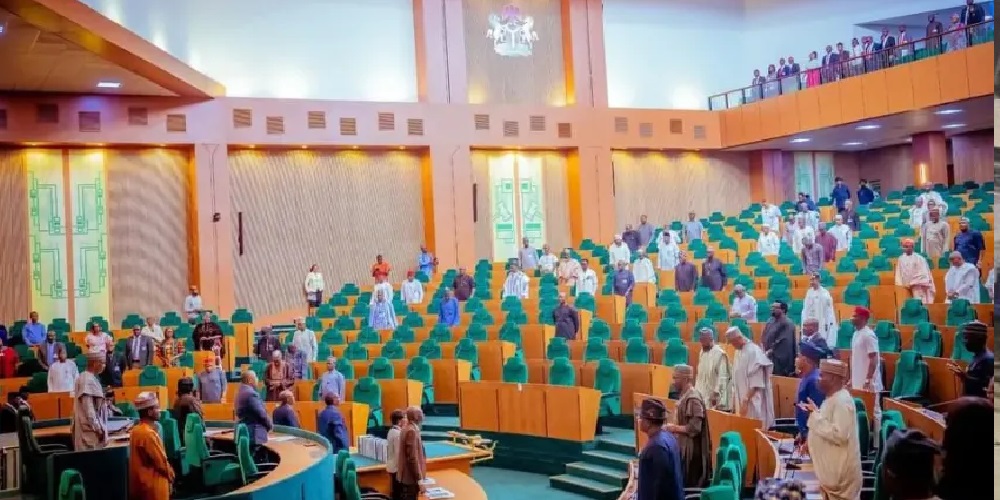
The House of Representatives on Monday commenced a two-day public hearing on a series of defence-related bills aimed at strengthening Nigeria’s military architecture, improving the welfare of service personnel and retirees to combat security challenges.

Speaking at the opening of the hearing at the National Assembly Complex, Speaker of the House of Representatives, Abbas Tajudeen, described the proposed legislation as a direct response to Nigeria’s evolving security challenges and a key component of the 10th House Legislative Agenda.

Advertisement

Abbas noted that the country continues to grapple with insurgency in the North-East, banditry and kidnapping in the North-West, farmer-herder conflicts in the North-Central, separatist agitations in the South-East, as well as emerging threats such as maritime piracy, cyber warfare, and organised crime linked to terrorism.

“We cannot pretend that our nation is at ease. Our Armed Forces are stretched, yet they remain our first and last line of defence,” the Speaker said.
He explained that the bills under consideration seek to strengthen the legal and institutional frameworks governing the military, making it more resilient, accountable, inclusive and capable of responding to modern security realities.

Among the bills before the committee are proposals for the establishment of an Armed Forces Farms and Ranches Scheme to promote food security in conflict-prone agricultural areas, legislation to improve gender representation in the Armed Forces, a comprehensive repeal and replacement of the Armed Forces Act through a new Nigerian Military Force Bill, and a bill to establish a Veterans’ Federation of Nigeria to improve support for retired military personnel.

The Speaker stressed that the hearing was not intended as a “rubber stamp” exercise but a platform for robust and evidence-based engagement.
“I give you my word every memorandum will be read, every oral presentation will be noted, and all relevant contributions will be considered and, where applicable, incorporated into the final reports and bills,” Abbas assured stakeholders.

Advertisement

He urged serving and retired military personnel, civil society organisations, gender advocates, legal experts and ordinary citizens to actively participate in the process, emphasizing that legislative innovation was necessary to address the country’s complex security challenges.
Abbas also commended the House Committee on Defence for organising the hearing and expressed confidence in its ability to conduct a transparent and fair process.

“We are here to serve the Nigerian people and to produce legislation that will make our Armed Forces more professional, more accountable, more gender-sensitive, and more effective in protecting lives and property,” he said.
In his welcome address, Chairman of the House Committee on Defence, Babajimi Benson, described the public hearing as a critical democratic exercise designed to ensure stakeholder participation in the lawmaking process.

According to Benson, defence legislation directly impacts national sovereignty, military effectiveness, operational readiness and the safety of Nigerians, making public input essential.
“The importance of public participation becomes even more significant when dealing with matters of defence and national security,” he said.

He explained that the bills address key areas including military education and professional development, joint operational effectiveness, medical training and healthcare support, strategic research and doctrine development, military governance reforms, food security initiatives, veterans’ welfare and inclusiveness within the Armed Forces.

Advertisement

“Collectively, these proposals represent an important effort to build a stronger, more professional, innovative and future-ready military institution,” Benson stated.
The lawmaker encouraged stakeholders to make oral presentations and submit memoranda, assuring them that all submissions would be carefully reviewed by the committee.

He also paid tribute to officers and soldiers of the Armed Forces of Nigeria for their dedication and sacrifices in safeguarding the nation despite difficult operating conditions.

The hearing also witnessed strong reactions from some veterans who expressed reservations about aspects of the proposed Veterans’ Federation of Nigeria Bill.

Supporters of the proposed (VFN) Bill urged lawmakers to adopt a framework they said aligns with international best practices for veterans’ welfare and representation.

Advertisement

In a policy brief submitted to the Committee, G.A Olonisakin speaking on behalf of veteran stakeholders argued that the debate surrounding the bill should focus on facts, global standards and the welfare of Nigerian veterans rather than on institutional sentiments or nomenclature.

The memorandum noted that in countries such as the United States, the United Kingdom, Canada and Australia, veterans’ organisations such as the American Legion, the Royal British Legion and the Royal Canadian Legion operate as non-governmental charitable associations rather than statutory government bodies.

According to the submission, responsibility for veterans’ welfare in those countries rests with dedicated government agencies, including the United States Department of Veterans Affairs, Veterans Affairs Canada, the United Kingdom’s Office for Veterans Affairs and Australia’s Department of Veterans Affairs.

The stakeholders further argued that Nigeria’s current arrangement, in which the Nigerian Legion combines the roles of both an association and a statutory government body, is uncommon internationally.

Advertisement

They maintained that the proposed VFN model would bring Nigeria closer to global standards by creating a government-driven umbrella body for veterans while preserving the identities of existing associations.

“The proposed Veterans Federation of Nigeria follows international practice by creating one umbrella body for all veterans and veterans’ associations, ensuring inclusiveness across Army, Navy and Air Force veterans, strengthening welfare coordination and improving engagement with government,” the memorandum stated.

The submission also sought to allay fears that the bill would undermine the Nigerian Legion, stressing that the federation would not erase the Legion’s history, traditions or identity.

Rather, it said, the Nigerian Legion would continue to exist as one of the recognised constituent bodies within the proposed federation alongside other veterans’ associations.

Advertisement

The position contrasted with concerns raised by some retired personnel who argued that the bill concentrates leadership positions in the hands of senior officers and called instead for the establishment of a standalone Ministry of Veterans Affairs headed by veterans.

The differing perspectives highlighted the intense interest among stakeholders in shaping the future structure of veterans’ welfare and representation in Nigeria, one of the key issues under consideration during the two-day public hearing.

Also a retired non-commissioned officer and legal practitioner, Sadiqe Nwabuezeh who identified himself as a former sergeant in the Nigerian Army, argued that the draft legislation was overly tilted in favour of senior military officers and failed to adequately accommodate the interests of rank-and-file veterans.

According to him, provisions of the bill appeared to reserve key leadership positions for retired senior officers, including the office of the Director-General, which he said was proposed to be occupied by a retired major general.

Advertisement

He urged lawmakers to reject the bill in its current form and instead consider the establishment of a dedicated Ministry of Veterans Affairs that would be managed by veterans themselves.

“The bill was not properly prepared. It was rushed and concentrates power in the hands of senior officers. We want a level playing ground where all veterans, regardless of rank, can participate in leadership and decision-making,” he told the hearing.

The retired soldier further questioned the involvement of serving military personnel and civilians in handling veterans’ affairs, arguing that retired personnel were best positioned to manage issues affecting former service members.

He maintained that veterans should have greater control over institutions established for their welfare and called for reforms that would guarantee broader representation across all ranks of retired military personnel.

Advertisement

The submission added to a range of perspectives presented by stakeholders as lawmakers continued deliberations on proposals aimed at reforming military administration, strengthening veterans’ welfare and enhancing the effectiveness of Nigeria’s defence sector.

The two-day hearing is expected to produce recommendations that will guide the House Committee on Defence in finalising the bills before their consideration by the House of Representatives.

Continue Reading

Trending

Copyright © 2024 Naija Blitz News