

Connect with us

News

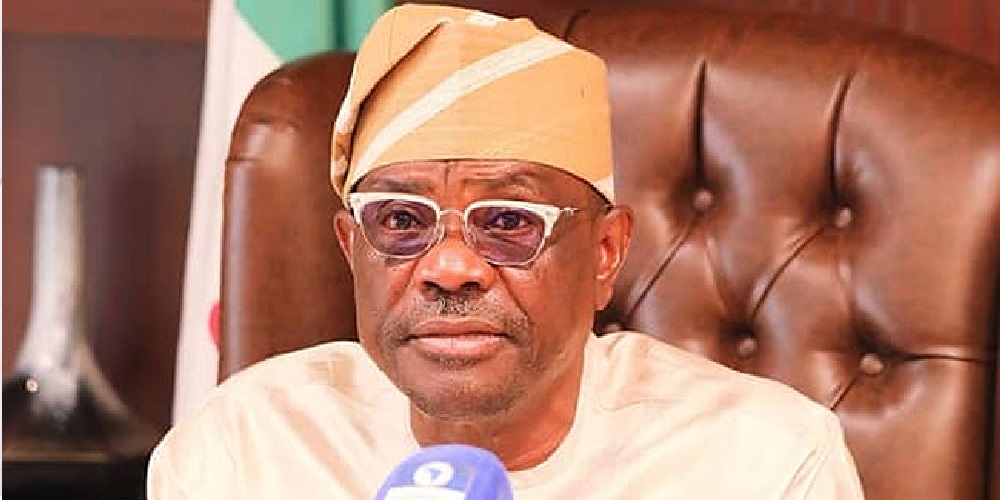
HOW FAR CAN WIKE GO?

Published

on

ADVERTISEMENT
Zoom Ad
ADVERTISEMENT
Zoom Ad

BY GILBERT BWANSHAK

As active participants in Nigeria’s unfortunate and needless civil war that spanned three years between 1967 and 1970, and major players in the General Yakubu Gowon administration in the early to mid-70s, the duo of Generals Murtala Mohammed and Olusegun Obasanjo when they assumed leadership of Nigeria in 1975, reasoned the need for decisive and deliberate actions to unify the country. From inception, the Murtala/Obasanjo government resolved to build on the mileage covered by Gowon who was overthrown by the new crop of military rulers.

Their passion for true nationhood and commitment to patriotism and nation building led to the carving of Abuja as the new Federal Capital Territory of Nigeria. In doing this, the Murtala/Obasanjo government envisioned a federal capital that will be home to every Nigerian no matter your ethnicity, tribe, religion and any other persuasion. In their projection, Abuja should be a place where every Nigerian would have sense of belonging, inclusivity and true brotherhood among all citizens. The capital territory went through different stages and assumed various nomenclature; from proposed to emerging and substantive capital of the Federal Republic of Nigeria. In like manner, it witnessed many stages of development from raw state to infancy and what it is today. During the military regimes of Ibrahim Babaginda, Sani Abacha and Abdulsalami Abubakar the capital territory was given varied degrees of concentration by respective leadership. Given their orientation, background and experiences in the military profession, there were conscious efforts to maintain the status of Abuja as the unifying capital city of Nigeria and for Nigerians. In every way possible, they tried to toe the line of their superiors who birth the new capital city.

With Nigeria’s return to civilian governance in 1999 which saw the emergence of a retired military general, Olusegun Obasanjo as the new democratic president of Nigeria, many envisaged the further enforcement of Abuja as home for all. Being the other leg of the duo that carved and created the new federal capital, residents and Nigerians were expectant with deliberate enthusiasm. In his own way, the Obasanjo government endeavoured to meet the aspiration of Nigerians. Though much was not achieved in the first term (1999-2003) but the story changed in the second term (2003-2007), as considerable mileage were covered in few areas, particularly restoring the original plan of the federal capital territory.

Advertisement

According to opinions and comments of many long term residents of Abuja, it was obvious that though past ministers of the Federal Capital Territory tried in their respective tenures to ensure the all-inclusivity vision of the founders of Abuja, in some ways the bureaucracy favoured a particular section of the country. Perhaps this may not be their making considering the evolution of Abuja particularly as it relates to personnel recruitment at it’s formative years. This trend continued from one administration to the other. Somehow, it was only during the tenure of Mallam Nasir El-Rufai that attempts were made to correct the skewed bureaucracy. Even at that, some people argued that the former Kaduna state governor was calculative and strategic in appointing and posting of those carefully selected to juicy positions and departments.

However it became worse in the last administration. Previously laid down guidelines and rules for some appointments were flagrantly abused. Adherence to federal character were deliberately jettisoned. For instance, while previous administrations ensured that one Mandate Secretary was picked to represent each of the six geo-political zones, this well-thought principle was shoved aside. In virtually all departments and units, the depth of skewed bureaucracy was glaring. In many ways, it affected the morale of workers such that service delivery took the backseat.

When Nyesom Wike assumed office as the Minister of the Federal Capital Territory in the third quarter of 2023, many workers wondered if he would have the nerve to address these anomalies. Many staff secretly wish that Wike would have the political will to right the wrong in the ministry’s bureaucracy which was eroding trust, believe, and cohesion. Many agreed that if the trend persists it will lead to widespread failure in service delivery which may impact negatively on the development of the territory.

In almost a year in office, Wike (and his junior Minister) have made significant landmarks in many sectors. From building of bridges, roads, and Infrastructures in other sectors to the improvement and upgrade of facilities, Wike has recorded achievements that dwarfs that of his predecessors. Fact is, of all the past ministers, only El-Rufai posted achievements that are close to what is happening in Abuja now. A visit round the city and across the six Area Councils will convince everyone that Wike is working.

Advertisement

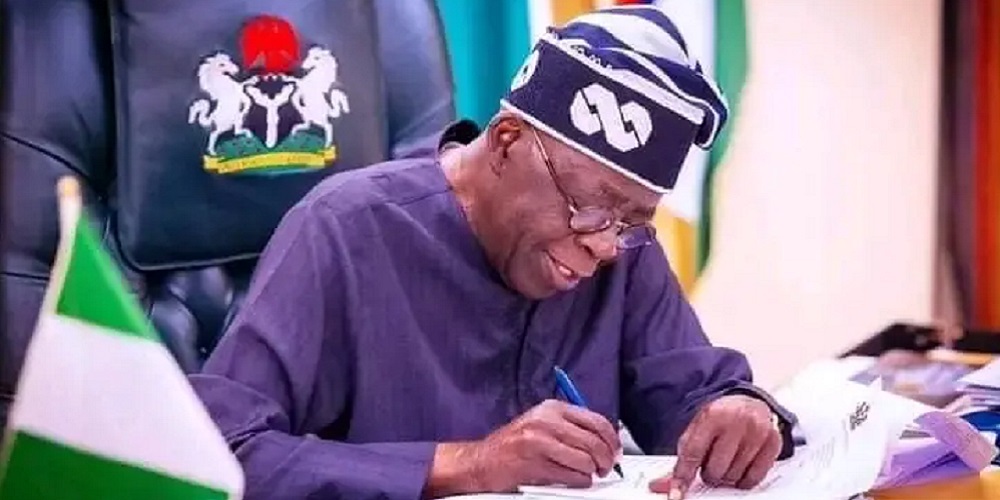
Over the past couple of months, some profound and transformational policies have been introduced in the governance structure of the federal capital territory. Perhaps unknown to him, in a quiet, meticulous, and deliberate approach to leadership and governance, Wike has been taking decisions which are in total conformity with the ideals and visions of the founder fathers and creators of Abuja as the federal capital of Nigeria. For a start, with the endorsement of President Bola Tinubu, the minister has succeeded in the restructuring of the entity from a ministry-focal to full-state structure with all the compliments of necessary appurtenances. With this singular and successful step, the scope of the vision of governance in the federal capital has swiftly expanded.

For the first time since it’s creation over four decade ago, the bureaucracy of the federal capital has weaned itself from the control of the Federal Civil Service by having its own; FCT Civil Service Commission. As a follow-up, the pioneer FCT’s Head of Service was appointed. In addition, ten(10) Permanent Secretaries were subsequently appointed and deployed to fit into the new governance and organisational structure of the federal capital territory. Similarly, to encourage gender equality and deepen inclusivity, which was the main reason for creating the federal capital territory the Women Affairs Secretariat was empaneled thereby increasing the Mandate Secretariats to seven.

It is instructive that Wike has been adhering to the principles of federal character in appointments, deployment of staff and every bureaucracy in the federal capital territory. From observation and comments by staff and residents there are empirical proofs to confirm that Wike is meticulously maintaining and sustaining the visions and principles of the federal capital territory which are also in sync with the agenda of Tinubu. Just as he ensured that the positions of the six Mandate Secretaries were given to people from the six geo-political zones, the ten Permanent Secretaries were evenly distributed, same with Directors of key Agencies and Departments.

Wike’s courageous actions has emplaced equity, fairness and justice in the federal capital territory. Though it has elicited minor hush-hush murmurings among few people but the vast majority of staff are excited. With adherence to competence, track record and experience many have witnessed rightful placements and long over-due promotions. Suddenly, a new culture of inclusivity, belonginess and unity is now in the federal capital territory. Unlike in the past when your career progression is solely anchored on where you come from, the reverse is the case. Workers are now encouraged to put in their best knowing that they would be appropriately appreciated through career growth when the need arises.

Advertisement

Though a huge percentage of federal capital territory’s over 7,000 work force are extremely happy with Wike’s commitment to all inclusivity, some are worried if he can sustain it till the end of his tenure. Few are also concerned that he may be victim of intense pressure and sustained blackmail orchestrated by few people who believe that every juicy positions in the federal capital territory is their birthright. Given Wike’s commitment to equity, fairness and justice as eloquently exemplified during his political fight with the People’s Democratic Party presidential candidate during the last general election, it is certain that he will not bow to any intimidation and subterfuge. As a firm believer in “agreement na agreement” Wike is expected to enforce and ingrain the principles of law, order, justice, fairness and equity in the federal capital territory under his watch.

* GILBERT BWANSHAK is an Abuja based public affairs analyst

Continue Reading
Advertisement
Click to comment

You must be logged in to post a comment Login

Leave a Reply

News

Abuja Task force operative shot dead in Wuse 2 in operation to seize moving security vehicle

Published

on

By

ADVERTISEMENT
Zoom Ad
ADVERTISEMENT
Zoom Ad

A member of the Federal Capital Territory (FCT) task force yesterday was shot dead during a confrontation, while trying to seize a moving vehicle ọf an unidentified security personnel in Wuse 2 Area ọf Abuja

The incident, which caused tension in the Wuse 2 district, occurred around Adetokunbo Ademola Crescent.

It was gathered that the victim died on the spot after being shot during the altercation.

Eyewitnesses said the deceased operative was among task force officials attempting to impound a vehicle when an argument broke out with occupants of the car.

Advertisement

During the altercation, a security operative allegedly fired warning shots before shooting one of the task force members at close range.

A witness explained that the dispute began after the vehicle was stopped at a traffic light, with the driver insisting that an object placed under the car be removed so he could move.

According to the source, “There were three of them at the traffic light where the car stopped. The officer kept saying, ‘Remove the object you placed under my car. My tyre is stuck.’ But they ignored him.

“When the traffic light changed, everyone moved on, but the man could not move because they prevented him. He again told them, ‘Remove the object from my car and let me go.’ But they insisted that he must either provide his papers or pay.

Advertisement

“The officer then fired a warning shot into the air to scare them, but they continued shouting, saying they were not afraid and that he was lying. The security personnel then stepped back and shot one of them directly in the forehead. He fell down and died instantly.

“The next thing I saw was that all of them started running away. But this young man lost his life for nothing. If they had listened when the officer asked them to remove the object from the car, he would still be alive.

“The man in the car was moving in a convoy with some security personnel and foreign nationals. A foreigner was inside the vehicle when the task force operative stopped it.”

Residents and passersby who gathered at the scene expressed concern over the growing tension caused by enforcement activities in parts of the capital.

Advertisement

The exact circumstances surrounding the shooting remain unclear, and authorities are yet to issue an official statement as of the time of filing this report.

Continue Reading

News

Alleged Coup: Military inaugurates general court-martial, begins trial of suspects

Published

on

By

ADVERTISEMENT
Zoom Ad
ADVERTISEMENT
Zoom Ad

The Nigerian military yesterday inaugurated a general court-martial to try officers accused in an alleged coup plot, marking the formal commencement of proceedings.

The News Agency of Nigeria (NAN) reports that the accused officers were brought to the venue of the sitting, the Guards Brigade Scorpion Mess, Asokoro, at about 8:53 a.m. under tight security.

Journalists were, however, denied access into the courtroom as proceedings commenced behind closed doors.

Several civil lawyers were observed arriving at the venue ahead of the inauguration, suggesting the presence of legal representatives for the accused.

Advertisement

The sitting signals the beginning of the military’s internal trial process following months of investigation into the alleged plot.

The case dates back to October 2025, when about 16 serving military personnel, comprising senior and junior officers, were arrested over alleged acts of indiscipline.

Subsequent investigations by military authorities, however, established that some of the officers had cases to answer bordering on an alleged attempt to overthrow the constitutional government, leading to the decision to subject them to court-martial.

NAN reports that more than 30 accused officers were brought in a luxurious “Marcopolo” bus.

Advertisement

In a related development, the federal government had earlier arraigned several civilian suspects and retired military personnel before a Federal High Court in Abuja over the same alleged coup plot.

The defendants, including a retired major general and a serving police officer, were charged with offences bordering on treason and terrorism.

They all pleaded not guilty to the charges.

The court subsequently ordered their remand in custody pending the hearing of their bail applications.

Advertisement

The parallel proceedings underscore the dual-track approach, with serving military personnel facing court-martial, while civilians and retired officers are being tried in civilian courts.

Further details of the court-martial proceedings were not immediately available as at the time of filing this report. (NAN)

Continue Reading

News

Protesters Storm Streets In Kwara South, Lament Terrorists Takeover Of Yoruba Communities, Demand Action From Tinubu Govt

Published

on

By

ADVERTISEMENT
Zoom Ad
ADVERTISEMENT
Zoom Ad

Residents of Kwara South under the aegis of the Kwara South Development Forum have staged a protest over what they described as incessant insecurity ravaging their communities, calling on President Bola Tinubu and Kwara State Governor AbdulRahman AbdulRazaq to act swiftly before the situation spirals further out of control.

The protesters accused armed groups, which they repeatedly described as terrorists, of taking over indigenous Yoruba communities in Kwara South, unleashing a wave of killings, kidnappings, and mass displacement of residents.

They warned that entire communities had been overrun, while local vigilante structures have been systematically dismantled.

Speaking during the protest, the Convener of the forum, Obashola Ayomide Ridwan, painted a grim picture of the security situation, alleging that informants have been aiding the attackers in targeting local defense leaders.

Advertisement

“Our local vigilante commanders were identified by informants, and the terrorists went after each of them and killed them one by one. After eliminating these commanders, they took over our communities, killing and kidnapping innocent people,” he said.

He added that the consequences had been devastating across the region, with families torn apart and social structures collapsing.

“Our mothers, fathers, sisters, and brothers have been killed and kidnapped, while our schools have been shut down in Kwara South. We are demonstrating today to express our concerns to President Tinubu and Governor AbdulRazaq to empower the local vigilantes and other security agencies to end the kidnapping and killings in Kwara South,” Ridwan stated.

The group also urged traditional rulers across Kwara South to rise above divisions and collectively engage the presidency, stressing that urgent high-level intervention is needed to halt what they described as a “creeping occupation” of their land.

Advertisement

During the protest, emotions ran high as victims and residents shared personal accounts of loss and displacement.

A female protester, Adebisi Jimoh, recounted how her community, Babanla, has effectively been abandoned due to persistent attacks.

“Our community has become deserted. Our family members have been kidnapped, and we had to raise ransom to secure their release. Many of us have been chased out of our homes,” she said.

Another protester, Sodiq Amidu, who spoke through tears, narrated how two of his close associates were abducted and only released after paying heavy ransom.

Advertisement

He identified the victims as Abdullah Issa, who paid N10million, and Yusuf Ibrahim, who paid N5million before regaining freedom.

“They were lucky to come back alive. Many others are not that fortunate,” Amidu lamented.

Also speaking, a prominent activist in the region, Aleshinloye Saheed, alleged that the attackers were able to consolidate control after eliminating local resistance.

“Our brave vigilante commanders have been killed, and our people have become vulnerable. Communities in Kwara South have been deserted as a result,” he said.

Advertisement

He called for what he described as “concerted action” from both federal and state authorities.

“We are calling on President Bola Tinubu and Governor AbdulRahman AbdulRazaq to take decisive and coordinated action over the incessant insecurity in Kwara South,” Saheed added.

Another protester, identified as Ishola Kwara, appealed directly to traditional rulers and the state government, expressing deep frustration over what he described as a lack of adequate response.

The protesters maintained that without urgent intervention — including the empowerment and restructuring of local vigilante groups and stronger security presence — Kwara South risks further descent into lawlessness.

Advertisement

They vowed to continue peaceful demonstrations until concrete steps are taken to restore security, rebuild trust, and enable displaced residents to return to their ancestral homes.

Continue Reading

Trending

Copyright © 2024 Naija Blitz News