Connect with us

Interview

Why breast milk is good for adults – Dr Dosekun

Published

on

ADVERTISEMENT
Zoom Ad
ADVERTISEMENT
Zoom Ad

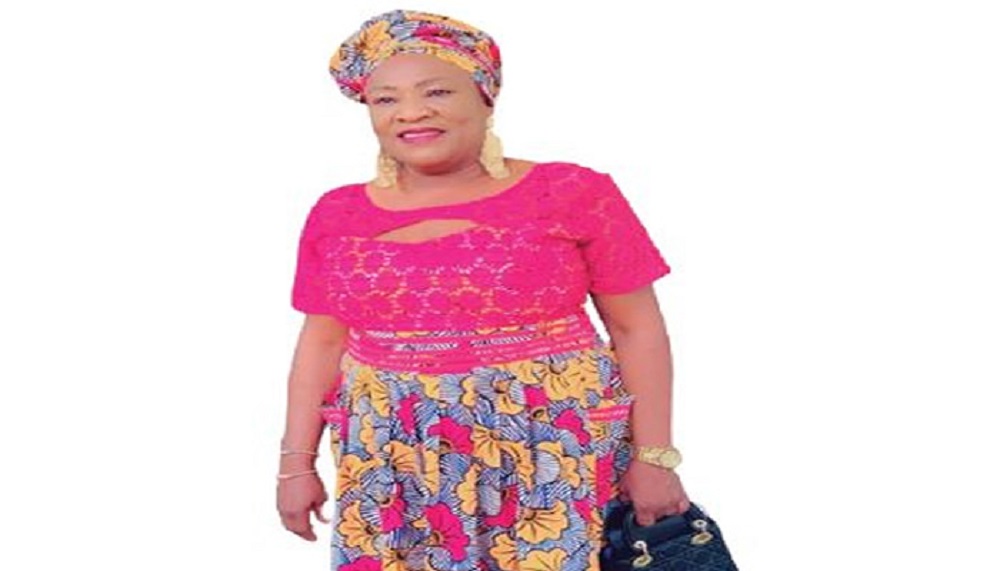
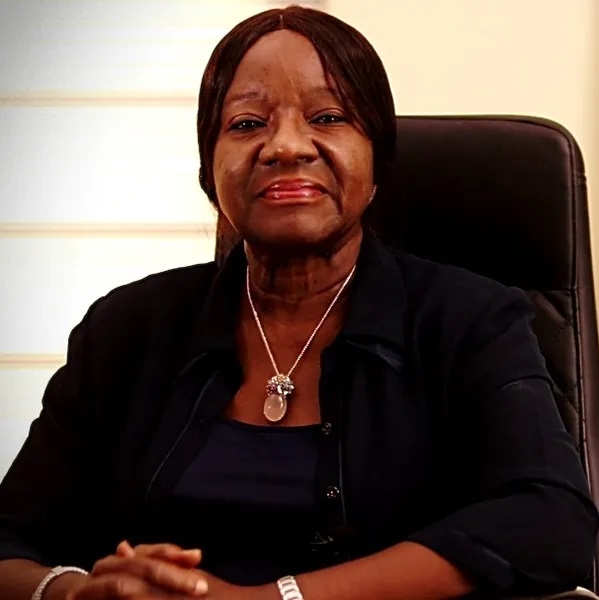
Dr Efunbo Dosekun, a medical doctor with specialty in paediatrics, is the brain behind Outreach Medical Services. She has been in the medical field for more than four decades.


In this interview with Saturday Sun, she spoke on several health issues relating to women and children. Dr Dosekun stressed the need for both the states and the Federal Government to ensure good remuneration for health workers in the country so as to reduce the rate of migration of health workers (the Japa syndrome). She also advised the government on the need for partnership between federal and private hospitals for effective health care delivery system.

What motivated you to bring women together for the sake of finding a lasting solution to the healthcare issues among women and children?

As far as l am concerned, particularly to African culture, women, children and babies are vulnerable, especially babies. Again, I felt that referral system when we do have an acute problem suddenly with our health, is not good enough. There have been so many instances when we have seen children and babies brought in very late because the parents didn’t know anywhere to go. Or the parents made an attempt to go to the government hospital and had to wait for a long time, and probably not to be attended to. They may be just referred on and on from one hospital to the other till they finally go home or get frustrated. So I said Lagos is quite a developed city in infrastructure, so why don’t we have systems that match it in terms of modernity, system of communication? What I am talking about is medical response system where something has happened and you know a number to call, or you are advised to go to a particular type of hospital, health centre if it is not so bad. Or you may be advised to go to the emergency room. But there must be somebody you have to talk to when you are distressed. In England, you just ring 999 and within 10 minutes someone would attend to you. So I decided that even if it is only rudimentary, there must be a recall centre. So we did a presentation about this to a group of women called, “Women Connect” and they agreed to work with us. We spoke also to Rotary Club and they welcomed the idea. We want to change the narrative. We are mobilising women. We can’t leave everything to government. We need to come together as a movement and talk to people who are interested in social impact to help us. For instance, a community insurance or membership of a call centre for a small subscription can help. We can have access to your call centre and you give us direction 24/7, so that if anything happens at any time to somebody, the person must be able to speak to somebody and that person must be able to negotiate for the person where she would go to, or negotiate an ambulance to propel the person there, if necessary. There is so much being in the dark that I am very concerned. I have been a doctor for 43 years. I am soon going to retire.

Advertisement

Did you take into consideration the Nigerian factor? For instance, poor communication system, transportation, traffic, and so on?

I know there are a lot of constraints, but instead of clogging our heads with constraints, let’s concentrate more on the good things that can happen if there is some intelligence to our medical response system. You may not even get the phone number, but you know that the hospital does this good work; you could just rush off there as an emergency. The beautiful thing about it is that once it starts, we will be able to persuade our colleagues because there are a lot of things that mitigate or stop people from going to hospitals. We know that government hospitals are full. Lagos expanded over a period of 10, 12 years from 10 million to 24 million. And the growth of hospitals has not been so fast because it is not easy to set up a hospital. That is why private sector hospitals have to come in to help, because many private sector hospitals are not full. So we have to find a way which we can mobilise people who need urgent care.

There is increase in child and maternity mortality. What do you think is the cause and how can it be solved?

Everybody always say that they are ignorant, and don’t know what to do. It is a lie. The problem is lack of money. Lagos State Government has really tried in Lagos State. It is minimal. If you can get access to a bed in a Lagos State-owned hospital, it is because it has been taken care of by the Lagos State Government, but you have to pay for drugs, etc. Such is not obtainable in private hospitals. So, government needs to work with us in the private sector. They cannot fulfil the need of 24 million people in Lagos, that is the reason many go to traditional birth attendants (TBAs), and to the chemist boy. The first thing is that the government needs to collaborate with the private hospitals that are ready, because it is not all the private hospitals that are ready to start doing social impact work and changing the public health narrative.

Advertisement

In this situation, government should choose private hospitals to help them, particularly in the area of women, babies and children. This is necessary because the Sustainable Development Goals (SDGs) rate is almost reaching its termination. Part of the goals is to reduce the mortality rate in children, women and babies. So we need private sector. We need to unlock the potential in the private sector. There are some people who are ready to look at these social issues and are ready to develop innovative and transformative ways of dealing with large crowds. It is possible; it is even done in Indian hospitals. l have seen how they have done it. They brought down the cost, but there must be numbers. Take for instance, if the government promises to give me 50 patients daily, l will expand my premises in order to take as many people as possible. l will have a training institute where l will take young nurses and develop them to be specialised in different skills so they will be able to support the physicians in executing their clinical roles.

So, there are so many things that could be done. The government can call us in and say, for each case you see, l will pay you this amount. Or government can send the subscribers of Lagos State insurance, but of course it has to be reviewed because the premium, the billing is too low and some of these cases require acute care. Acute care is different. It is not like giving analgesics, it is very acute. You are changing the drugs, high quality drugs. They are using oxygen and high skilled people. But the government must think about it. Government cannot just think about the primary health care, because if you think about it, you will still be having lots of deaths. As primary health care does only preventative measures, they do early diagnoses, but there must be well equipped hospitals that will take care of cases that have been diagnosed by primary health care. Without that it makes everything so shallow. Women should mobilise themselves and come together. We just have to care. Wives of politicians, senior bankers, industrialists, and so on, need to leave their ivory tower of splendour and protection and come and sensitise themselves and see the suffering and come together, and demand the physicians or health planners that are interested, to come together and plan.

Having been in the medical field for more than four decades in the healthcare system particularly taking care of children, what do you consider major health challenges facing babies, and how can they be prevented?

Pre-maturity in babies or babies appearing smaller than they should, that is sepsis, mothers having problem during the birthing process, can kill babies. Other killer diseases among babies include; a baby coming out not breathing well, and jaundice. Research has shown that the mother has to be in a good state before and after child birth to avoid malnutrition in babies. To avoid these diseases also, pregnant women should not just sit down at home, they must ensure they attend antenatal care.

Advertisement

I think Nigeria has done well in terms of providing primary health care that are facing antenatal care. There is such a wide choice on where pregnant women could go for antenatal care in Nigeria.

Also, pregnant women need to get in constant touch with doctors, senior nurses. There must be partnership. If there is proper antenatal care with expectant mothers taking their routine drugs, some of the pickup problems such as Caesarean Section (CS) should be detected on time and followed up appropriately.

There is what is called entrapatom period, that is 48 hours before and 48 hours after birth, just a period around delivery. That is when all sorts of things happen. It is a period the mother or the baby can die. A baby may come out not breathing well, but with skilled health practitioners around, some of these problems can be adequately taken care of. Having a baby at home or with traditional birth attendants, we want to see how we can reduce it. Those in rural and semi urban areas, I agree we have to train them, especially when there is no medical centre close by. When they are well trained, they will be able to identify dangers on time and follow up immediately. If those periods can be tidy, we will see fewer problems when the baby comes out.

In this country, we are seeing jaundice which is simple to treat in babies. It is just to put the baby under specialised light, and yet we are having jaundice. High jaundice destroys the baby.

Advertisement

In many West African countries they do not see it anymore, because they have a follow-up system called Health Surveillance System where they check the babies when they are three days, to make sure that they have not become very jaundiced. Our system is not strong enough. To treat jaundice is not rocket science. We need just strategies and then technical team, the doctors, to come up with a real robust programme that is around that time, 24 hours before and 24 hours after, to make sure that everything is standardized whenever the person is going to have the baby. Even the mothers can be trained in these early warning signs.

So when we finish having these things, we now must have a good emergency response system so that when things go wrong, you must be able to call a number. Those workers there must also have a conversation with the hospitals, find out who has a bed, so that we don’t do the crazy thing we are doing where we are sending people from one hospital to the other with a child that is gasping. Can you imagine the pain that parents are going to go through, and this in a private transport Keke Marwa in a country with bridges and skyscrapers? It is not right. Women have to stand up because the political system is still so immature. They are not being called to deliver their mandates. We all just sit down and wait for another election.

Some mothers do not like breastfeeding their babies, rather they prefer artificial milk. What is your take on this?

It is so important that women should breastfeed their babies very well because, breastfeeding does not only give the baby the right nutrient – babies who are well breast fed have a better attachment to their mothers. It is called bonding. It is an emotional bridge between a child and the parents. Research has found that those children who have solid attachment with their parents have less mental health problems. They are able to cope better when they had challenges along the line, even up to old age. Children who are well breastfed have less tantrums, less addiction, and better school performance. This can be referred to as emotional. Also talking about physical health, if you read about the component of breast milk, it did not only contain carbohydrate, protein, fats, vitamins, there is also additional factor there that is going to allow the immune system of the baby to grow, because we know that the immune system grows across time. They challenge the body nerve, which is weak in the first one year. God has given us special fluid to help the baby’s immune system grow properly. Inside the breast milk, there are already resolved factors. There are factors there that stimulate the immune system. There are bacteria there that are called friendly bacteria that stimulate the immune system, particularly in that breast milk in the first few days of life. It is yellow and it is called cholesterol.

Advertisement

How about adults? Some have said breast milk is also good for adults.

That’s right. Even now, adults take it because it has such a useful element in it. It makes a healthy adult. So we must not miss that opportunity. This is the time that the old and the new can combine. In our native culture there’re different ways we can do to promote lactation, and also in modern science, there are equipments that they give. There are also herbal drugs that can help in lactation.

Report has shown that there is increased rate of medical flight in the country. What is the way out?

Medical flight is natural phenomena. The fact is that things are getting tougher in the country and people are looking for a way out. If the private and government hospitals can pay their health workers well, l think it will go a long way in reducing the rate in which health workers leave the country in search of better remuneration.

Advertisement

What is your advice to women?

There is need for women, particularly in Lagos, to form a women group that will enable them establish community insurance. Let us have a community insurance, no matter the small amount. Let us do less fashion, and decide the amount that each will put down every month and, we have volume and we can now plan. With such plan in place, women will know hospitals to partner with, so that when they or their children are sick, they will know which hospital to visit, and such hospital will not charge them much because it is a group thing.
Continue Reading
Advertisement
Click to comment

You must be logged in to post a comment Login

Leave a Reply

Interview

Coup was planned before Tinubu’s inauguration – Defence minister

Published

on

By

ADVERTISEMENT
Zoom Ad
ADVERTISEMENT
Zoom Ad
You moved straight from being Chief of Defence Staff to Minister of Defence, with barely any break. How does that feel?

In my 39 years of military service, I never really had two weeks away from work. If you sit down doing nothing, you feel something is wrong. I am grateful to God and to Mr President for considering me worthy. It is a big task, but with the love and support of Nigerians, I am encouraged to do more.

How easy was the transition from CDS to Minister of Defence?

Advertisement

The military prepares you for both sides — being in uniform and being a civilian. You know that after 35 years, you will return to civilian life, so it’s a mindset. As CDS, you are more military than civilian. As a minister, you combine both. That gives me an advantage because I understand how the military works and how to interface with civilians.


Are you now a politician?

I’ve not transitioned yet. I’m in transition.

Advertisement

Are you now a member of the APC?

Not yet. But I think I will be, definitely. The APC has given me the platform to present myself right from when I was CDS till date, so why not? Mr President needs all the support. I will give him all my support. Whatever I can do to make sure that he succeeds in his duties, including moving forward to the second term, I think I will give him my very best.

There are those who think that you were compensated for some reason by the President. Did you help in saving his life during the coup plot?

I was not compensated. I know the President; he has an eye for picking the best for whatever task is at hand. I believe he saw that I had something to add, something of value. I am grateful that he considered me worthy. I will continue to do my best for my country and for the President, to show that he did not make a mistake—that his decision was justified.

Advertisement

You were also instrumental in helping save his life and the lives of others who might have been killed in the planned coup.

I was also a target. I was supposed to be arrested, and if I refused, I was to be shot. But that is the job. Anyone who goes into a coup zeros his mind. You either succeed or you fail, and whatever consequences come, you accept them. But honestly, these individuals were very unserious. They did not understand what they were getting into. If you look at their calibre, you wonder what got into their heads to think they could take on the Armed Forces.

Nigerians themselves would have resisted them. Even without the Armed Forces, Nigerians would have stood against them. Nigerians have fought against military rule for a long time. That is why Mr President has always stood with the people. For anyone to think they could wake up one morning and do that in Nigeria, something clearly went wrong in their thinking. They need to reset their minds.

Did they understand the consequences?

Advertisement

Definitely. Most definitely.

Have all those involved been apprehended?

So far, most of them have been caught. If anyone remains, perhaps one or two, but the majority have been arrested. It started with the colonel, who felt disgruntled because he was not promoted. He did not meet the required standards. The Armed Forces’ promotion system is very strict. So, he went around recruiting others who felt aggrieved—those not promoted or dissatisfied with postings. My pain is for the young officers who did not understand what they were getting into. He dragged them into a mess, and now they must face the consequences.

A lot of money was reportedly committed to the coup plot.

Advertisement

Yes, but it was centred on him as an individual. Everything revolved around him as a colonel. Frankly, I cannot imagine a colonel attempting such a thing. That era is past. This is not the Nigeria of the past. It is almost impossible today.

Why was the plot not detected earlier?

You do not act on speculation; you act on facts. You must be able to present evidence in court. Otherwise, the case collapses. The situation was monitored until facts were clear, then action was taken.

We also wanted to avoid implicating innocent people. That was why the process was painstaking. I inaugurated the board and ensured investigations were carried out thoroughly by the DIA, alongside the NIA, DSS, and other agencies. It was a holistic investigation.

Advertisement

From what we gathered, the planning dated back to around May 29, 2023—before the President took office. This was not because they thought the government was underperforming. They planned it knowing he had won the election. That makes it even more unfortunate.

Would it have been a bloody coup?

Based on the plan, yes; but execution is another matter. They probably thought Nigeria was another country. That kind of thing cannot succeed here today.

Were there loopholes within the military?

Advertisement

There are good, bad, and ugly people everywhere. No system is perfect. That is why we keep monitoring, reinforcing discipline, and ensuring every officer understands his responsibility. For anyone to attempt to truncate democracy at this stage is deeply troubling. We have strengthened the system. It is almost impossible to carry out a coup in Nigeria now—especially within the military. The Armed Forces are united.

What about civilian collaborators?

Historically, civilians have often instigated coups. It has never worked and will not work again. Nigeria has moved beyond that. Democracy is what we stand for. Interpol has been contacted. Those involved will be tracked. It is only a matter of time. Some of those named are alleged to be politically connected. Greed and self-interest drive such actions. But consequences always follow.

What about the families of those arrested?

Advertisement

This is part of the tragedy. Families bear the consequences of actions they did not commit. We have informed them clearly, and the Armed Forces are ensuring their welfare is protected, so they are not punished for the actions of their spouses.

One suspect escaped briefly. Why?

He was re-arrested almost immediately. As humans, nothing is 100 per cent. There was no denial. We followed due process. Coup allegations are serious; you must be certain before making them public. The president has been fully briefed at every stage.

There are concerns about security at Aso Rock

Advertisement

No place is completely immune. Even the White House and Buckingham Palace have had breaches. Aso Rock is heavily fortified. However, the incident revealed areas for improvement, and measures have been taken.

What lessons should Nigeria learn?

Nigerians must remain vigilant. Perception can be dangerous. We must move beyond ethnic blame and historical grievances. Sixty years after independence, we should not still be blaming colonialism. We must draw a line between the past and the future. Nations progress when they let go of destructive narratives. Nigeria has what it takes to succeed. Very few people damage our image, but we must do better at celebrating the many Nigerians excelling globally.

The ethnic composition of the arrested officers has raised concerns

Advertisement

I believe it was coincidental. The military operates like a family; people recruit those around them. There was no deliberate ethnic agenda—just foolishness, and they will face the consequences. We cannot still be debating civil war narratives in 2026. We must learn from history and move forward.

Are coups likely in the region?

Many of the countries experiencing coups are not Anglophone. Nigeria remains one of the most stable democracies in the region, alongside Ghana. Recently, we intervened to prevent a coup in Benin Republic. Within 12 hours, we secured the situation. That shows our capacity. We must continue to build our strength to secure Nigeria, the region, and Africa. When Benin needed help, its president called ours directly. The directive was given, and we acted swiftly.

Nigeria recently signed a defence cooperation agreement with Türkiye. What exactly does it cover?

Advertisement

The agreement covers military education, exchange of officers, training, intelligence sharing and defence industry cooperation. Importantly, it allows the co-production of military hardware in Nigeria. We don’t want to keep buying equipment; we want to build capacity, save foreign exchange and create jobs. So, it is a holistic issue for us. Türkiye, globally speaking, ranks very high—perhaps among the top six countries—with the capacity to produce military hardware.

What is new that we have gotten from Türkiye?

As I said, we have now made it very official. They can come here, and we can produce together. What we told them is that we do not want a situation where we constantly go to buy equipment and bring it home.

This time around, we want to use our own defence industry, produce here, and build our own capacity. We are confident that if we are able to do that, we can also reach out to our neighbours within the region and across Africa.

Advertisement

What makes Türkiye a strategic partner?

Türkiye has transformed its defence industry remarkably. They produce highly sophisticated air, land and sea platforms and are willing to transfer technology. That is crucial for us.

In terms of hardware, are we getting intelligence support?

Yes, we are sharing intelligence. They have a very strong intelligence system, being positioned between Europe and Asia. Some of these terrorist groups are receiving external support. Türkiye can help us identify funding sources, logistics, command structures, and other critical details. That will greatly enhance our intelligence capacity.

Advertisement

Our baseline intelligence surveillance relies on satellites. We have a bit of a handicap there. We have one satellite, but it does not give us what we need. It takes about four days for a round trip. What we need is real-time intelligence—being able to see what is happening and respond immediately. Modern warfare is very complex because the enemy is within.

Is there any low-hanging fruit in terms of surveillance?

Many security experts will tell you that response time is sometimes more important than the attack itself. Yes, attacks may happen. I remember visiting the White House as a tourist and being told that if there is an attack on the White House or Congress, response time is less than five minutes, with a whole battalion deployed.

Those are the things we are working towards. Quick response requires helicopters, drones, MRAPs, and light infantry vehicles that can move quickly. One of the major challenges we face is infrastructure. In many operational areas, covering 10 kilometres can take six hours. You often need someone ahead with a handheld probe checking for IEDs. If a vehicle hits an IED, everyone inside is gone. That is what makes operations extremely difficult. Once troops move into an area, informants alert the terrorists, and they retreat to isolated locations.

Advertisement

How soon will Turkish technology be deployed on the ground?

Very soon. Some of them are already ready. We are on the paperwork now, and the designs have been completed. There will be discussions, training, and implementation. Some of the equipment will arrive quickly and be deployed as soon as possible.

What about integration challenges?

We use U.S., Russian, Chinese, and other technologies. They all operate on common platforms. We conduct specific training for each system. We already have six Turkish helicopters performing very well, and our pilots are trained.

Advertisement

We are training more pilots, so when additional helicopters arrive, they can be deployed immediately. We also operate drones. For every system, we prepare in advance—training, spare parts, and maintenance systems—because these are not off-the-shelf items. They are produced specifically for our terrain and needs.

Night-vision infrastructure is also included. It is comprehensive. All the technologies are integrated and communicate with each other. This eases our burden because Türkiye is now our partner. I hope this does not upset the United States. We have also seen benefits from the NSA’s trip to the U.S. There have been deliveries of American military equipment.

Nigeria is a non-aligned nation. That allows us to partner with everyone. We can work with China, Türkiye, and the United States. Isolating yourself to one bloc is not in your best interest. Egypt, for example, receives support from multiple partners. Maintaining that leverage allows you to move forward.

Let me come to the reality on the ground. You said some commanders of terrorist groups and bandits have been neutralised—killed, as we would rather say. Who are these people? Where were they killed? Mostly in the North-West, North-East and North-Central. There is an ongoing war. We are expanding operations in Niger and Kwara states to prevent infiltration towards the South, which would be very dangerous.

Advertisement

They understand this, so what they do is hit soft targets—set fire to one or two buildings—and move on. That is what makes the news. But we are winning. I am glad we are winning. For the first time in December, people returned to the South-East from abroad and stayed through Christmas and into January. That has not happened before. We are working, but it is not yet Uhuru. These groups will continue to try to cause pain. No country is 100 per cent safe. We are working, we are winning, and we will continue to work harder.

However, people see reports of attacks—churches burned, police stations attacked, kidnappings in Kaduna—and they ask: if we are winning, how are these attacks still happening?

As I said, no country is completely safe. Even in the U.S., despite all the technology, attacks still happen. Asymmetric warfare is very difficult, especially when the enemy is ideologically driven and has nothing to lose. In the past, attacks were widespread. Now, they are limited to fewer areas. Because of pressure, they are fleeing. When they find an exposed community, they strike and run. That creates the impression that nothing has been done. But a lot has been done.

Are we using mercenaries?

Advertisement

No. We do not have mercenaries on the ground. What we do is partner with friendly nations to enhance capacity—training in special warfare, helicopters, drones, and so on. That is part of military tradition.

One of the president’s promises is to put more boots on the ground. There is a directive for increased recruitment in both the military and the police. That process has begun. For the army, beyond the depot in Zaria, we have opened two new training depots, including one in the South-East. The police and other security agencies are also expanding capacity.

Recruitment is painstaking. You must assess who you are bringing in. That again brings us back to data and databases. Security has both kinetic and non-kinetic aspects. The military handles the kinetic. The non-kinetic—good governance, border control, infrastructure—can speed things up.

Is Nigeria talking to Israel?

Advertisement

Yes. Israel is our partner. We have an embassy there, and they have one here. We talk to everyone who can add value.

Banditry and the conflicts we are fighting—are we seeing a new tone in ideological warfare? Are we seeing infiltration from outside? Are these foreign elements, or are they local initiatives by insurgents?

Terrorism started in the North-East, although there were earlier manifestations that were quashed. What affects us most is that when these things start, reports are made and no action is taken. It did not start today. It has been ongoing for a long time, and we needed to be proactive. Just like the coup attempt was quickly followed up with arrests, we should have done the same with this.

Instead, we downplayed it until they became monsters. This has happened repeatedly. If you allow a monster to grow because you think it is fighting your enemy, it will eventually turn against you. That is why we must unite and fight anyone who does not mean us well.

Advertisement

On the question of terror financiers and why it has been difficult to name them: some names have been mentioned, arrests have been made, and prosecutions are ongoing. These things take time. You do not want to present a case that will be thrown out by the courts due to a lack of evidence. Gathering facts is difficult and requires careful follow-up.

The reported execution of General Uba was very sad. The audacity of those involved is disturbing. Is the military angry enough to go after those responsible?

As we speak, we are operating in and around the area. However, we are not yet certain he is dead because we have not recovered any remains. If you observe the video, when such acts occur, the perpetrators usually leave the body behind. In this case, that did not happen. He is currently classified as missing in action, not killed in action. We have information suggesting he may still be alive, and we remain hopeful. I visited the family to reassure his wife and children that efforts are ongoing.

This underscores why we must not allow crime and criminality to fester—whether under the guise of religion, tribe, or ethnicity. We must unite and stop the blame game.

Advertisement

Have operations returned to the area?

Yes, they have.

Sambisa Forest?

Yes. We are operating there daily. The terrain is vast. When pressure mounts, they flee to neighbouring countries.

Advertisement

There have been reports about you possibly being considered as a vice-presidential candidate. How would you feel about that?

For me, that is distracting. The president appointed me to ensure peace and security in Nigeria, and that is my focus. Political considerations are for the president. I have a task, and I want to face it squarely without distraction.

Continue Reading

Interview

WEEKEND CHAT: Nigerians should be expectant of good things as the PDP is fully back-Hon Teejay Yusuf

Published

on

By

ADVERTISEMENT
Zoom Ad
ADVERTISEMENT
Zoom Ad

…says the era of ‘jumpology’ is over in PDP

…insists no matter what you provide for a nomad, he likes being on the move(defections)

By Emmanuel Agaji

Hon Teejay Yusuf left no one in doubt in this interview after the Peoples Democratic Party PDP 101st NEC meeting that Nigeria’s main opposition party is back to right all the wrongs of the past as the estate developer and economist turned politician x-rayed outcome of the meeting and the way forward with the big umbrella party, excerpts.

Advertisement

Let’s kickstart with your 101st NEC confab, It was a long-awaited one, and very many people expected that certain things will happen. What exactly does this portend for the party? The ability to now come together and have a meeting and articulate issues, especially for a party that has seen a lot of movement in the very recent past.

Positive. It shows that in spite of whatever has been going on we can still sit down, jaw-jaw, and channel our energy towards making the party more robust. Leadership is not just giving instruction. It’s the ability to resolve issues. So, yes, it took a long time, but finally it was resolved.

And I remember somewhere then …and I told people that I don’t see PDP being diisabled because of this crisis. We will come out of it. Our challenge has always been people who do not believe in the ideals of the party, but see the party only as a vehicle to achieve political ambition. It is not out of place.

Isn’t that the problem of all Nigerian politicians?

Advertisement

Not all, but a lot who are more vocal, a lot who kind of become the face of politics in Nigeria. And a lot of our fathers who should be a good example are in this nomadic movement, nomadism.

You know, a nomad, no matter how, if you give a pasture, I mean, get him, store him in the place for a nomad, he still want to go out, no matter how, whatever you provide for a nomad.

So, there are politicians who just assume that the moment the situation does not favour them. And I keep telling people, when you leave a house because of issues, who told you there are no issues in the other house you are going to?

Is there any human organisation without challenges? Families. So, you cease to be a member of your family because there are issues. So, I believe – I’m not saying PDP in that way like a cult or whatever. I mean, free exit and free entry.

Advertisement

However, there should be some degree of commitment. So, that’s why I kept saying that we are not, as a people, Nigerians, politically develop democratic ideas and values and party ideology.

Why are you in party A? It’s because I believe so-so policies of the party. That’s my interest. So, it won’t be that easy for you to jump. That’s what we call in the university, we call something jumpology. If you call me jumpology, if it’s not here, we are back here.

And if you observe, even the scriptures say it, there is need for consistency. The Bible talk about having done all that you need to do. Stand in due season. It is not in your hand to know due season. It’s the hand of God. You do your part, but you move. I don’t want to go into individuals because, I mean, you are out, you are out. Let’s focus on our party.

Let me ask you this because you talked about something that caught my attention, that leadership is not just about dishing out instructions, but also about resolving issues. On Tuesday, four senators elected on the platform of the PDP decamped to the ruling APC on the floor of the Senate and their letters were read out by the Senate President.

Advertisement

Now, if that happened just three days ago, or two days before the NEC meeting of the PDP, how well would you say that the NEC has been able to resolve the issues causing the political nomadism, or is it political jumpology now, that we’ll call it?

There is no issue. Before now, everybody was trying to hinge on the fact that we have issue of the secretary-ship. Do we have any issue on secretary-ship again? No. So, but people will always find justification for whatever they are doing.

Don’t forget, in 2013-14, we had about 40 to 50 members of House of Representatives left PDP for APC. We had senators. So, it is now a culture in Nigeria that people cannot stay in opposition, they jump into the ruling party.

And they come with this idea, we want to get more democratic dividends for our people. We have to be so, so, so. I don’t begrudge them, but they should not tell Nigerians that because of a crisis. Is there no crisis in APC?

Advertisement

They refer to irreconcilable differences.

With who?

We will have to talk to them. Because as of today, PDP has no crisis anywhere as pal who is the secretary of the party. That is why the NEC was convened, signed by Senator Anyanwun; communication to INEC, signed by Anyanwun as the chairman. That was the issue before.

The Abuja local government primaries and results and what have you, the transition of candidate to INEC was signed by them. So, we had this before. It has been resolved.

Advertisement

What I’m trying to make you understand is that more people will say and don’t forget, before election too, some people who have moved that way, can still come back because a lot of them have their eyes on certain things they want to get there.

And there are other blocs in those particular parties they are going to, who feel that, no, we’ve here, we’ve tabernacle over this place for a long time, and we feel that we should be the ones who benefit from largesse. Some of that will be, we’ll run back.

You had at a point, was it 2019? I had one particular, I don’t want to mention his name, under like six months, moved out, moved in, moved out, moved back. So, it’s not about those things you read and they say. It’s about personal interest.

It’s not just those four senators.

Advertisement

A number of governors have moved. And isn’t that a cause of concern, that elected members of the party who were elected on the platform of the party into office, or different offices, are moving?

R: You see, it still boils down to what I’m talking about in Nigeria.

Yeah, but I want to know, what are the concerns of the NEC concerning this?

You see, the NEC definitely raised this issue, and the NEC mandated the leadership to challenge those things. It’s a court process, you cannot just pull anybody out because you have left my party, come and vacate this.

Advertisement

But the challenge in Nigerian nation, need to deal with and need to resolve, is that politics without some sense of honour, integrity and value, should be discarded with.

The idea of jumping from party to party, especially when you are elected on that platform; don’t forget, Nigeria does not have an independent candidature.

You cannot run election on your own. It’s a party that sponsors you.

In fact, if you remember the Imo scenario in 2007, when the party was not comfortable with the Supreme Court judgement about Ararume, and the PDP withdrew from election, Ararume couldn’t run, because he can’t run election without a vehicle, which is a party.

Advertisement

So by implication, whoever, even the Kogi scenario, as much as I disagree with, Abubakar Audu died, and Yahaya Bello inherited Abubakar Audu’s vote, because the court ruled that it was the party that earned the vote.

So if you look at these two scenarios, you now begin to question the legality and legitimacy of people crossing with the mandate given to them. But these are things that must be tried in court. There have been trials in court.

Unfortunately, there’s a clause in the constitution, and I, my little time in the National Assembly, I did at every point in time we amend the constitution to raise that.

Whatever the court says about the movement of anybody to another party, if they say, okay, your movement, your decamping is illegal, until the presiding officer read, confirm, and put a vote before you leave the house, or you leave your seat.

Advertisement

By implication, it’s difficult for parliament, for you too, because of the fact that you have left your political party, lose your seat. Until that section, of the constitution is amended.

And for governors, unwritten, but you’re becoming a norm; governors are becoming leaders of the party in their states. Those days, way back.

Are they becoming or they have become?

They are now. But those days, the party used to be supreme, and it started, that’s why…

Advertisement

When you talk about those days, are you talking about the Fourth Republic, or previous times?

Previous, I’m talking about Second Republic. And even at the beginning of this republic, it was so. Party, I mean, leadership was more respected. Governors would come for meeting and submit themselves to the leadership of the party.

But now, even Governors’ Forum is not recognised by any organ of the party. It’s not in the constitution. But Governors’ Forum takes decision.

APC had a Governors’ Forum meeting, and the president and they came out with the chairman and the party had to endorse.

Advertisement

So, it still boils down to the mentality of an average Nigerian. We bring this mentality of, the oligarchy mentality, where the man who has the biggest office, dish out instruction, until we consciously imbibe some democratic values.

And the long rule of military, too contributed. A man who was in his 20s, 30s, 40s, who have been used to giving instruction; you now come to a meeting, and he is now 70 years old, and the man of 40 is saying, no, I disagree on this. He says how dare you?

He might not voice it out, but within him, he’s not happy, because he has been used to dishing instruction, and it’s been obeyed. So, these are the things that accumulated and brought us to this level that we are.

But for me I have hope, I have a conviction that what we have done yesterday is a step in the right direction, and we should not be putting the government on its toes, because that’s what is expected of us.

Advertisement

We need to begin to look at every policy of the government, make sure that we give Nigeria a better alternative. That’s why I said, I’m not interested in talking about those who have gone, my focus is PDP, and my focus is how PDP become the ruling party in Nigeria.

Now let’s talk about members of the PDP, but who are actively engaged in the activities of other political parties?

What is NEC, or what did NEC have to say about that?

It was very clear, you had a meeting on Tuesday, founding fathers and stakeholders of the party, and those things came up, and it was very clear.

Advertisement

I keep telling people, it’s not a coalition. If you say a coalition, it means party A, B, C, D comes together, and decided that on so, so, so, presidency or governorship, we’ll pick a candidate of this particular party, and we all rally around that candidate. No.

What you have is an assemblage of individuals who believe in the candidature of one man, to become a candidate having that political party, and they move into a party, so it’s no more a coalition.

So, you see, it’s not that PDP, NEC, say, go and do this or SDP NEC took this decision, no. Individuals came together.

So to me, it’s a political party they have every right.

Advertisement

Some of them are still members of PDP.

That is where I am coming to. However, now, NEC has said this. You can’t, it’s illegal to be a member of two political parties. Some of them have taken the initiative, the boldness to resign from PDP.

For those who have not resigned, the moment you have, because some of them, it’s so unfortunate that honour is far from a lot of them. Some of them, tactically, did not resign, and did not take the membership card of that party.

So, legally, it will be difficult for you to challenge what they are doing, he has not resigned from PDP. He didn’t take ADC card. So, in law, he’s still a legal member of PDP.

Advertisement

However, the party has said we are going to the convention now, we going to have election, so new things will happen. Unfortunately some of them will still come back. That’s unfortunate thing.

That’s why some people are angry, that if you keep doing this, if everybody does the same thing, will there be a house for you to come and meet?

You have some key members of your party who have said, look, I am a member of the PDP, but I’m going to work for the President to get a second term in 2027. What’s in store for them from the NEC?

That’s what I explained to you. Our challenge majorly as a party came because we deviated drastically from our norms and values.

Advertisement

Prof. Jerry Gana lucidly enumerated these things, justice, fairness. In 1999, there were a lot of very, very qualified Northerners who would have ran for presidency. They said, no, let’s sit down.

From G18 to G34 and what have you, we formed this party on the basis of equity and what have you; let the presidency go to the South. If you remember the Jos Conference, Obasanjo and Ekwueme were the leading candidate. Rimi wanted to run, he was qualified imminently but no, we have to do it this way.

So what we did wrong that got us to that, because when you say, hey, somebody is in our party and is supporting another party, you must not treat only symptom, you must treat the root cause.

The root cause was that we failed to zone for the first time. In 2014, some of the leaders of our parties, eminent leaders of the party, said it was a turn of the North that they should not remain in the South.

Advertisement

Five governors walked out of PDP, they formed new PDP and became members of APC.

In 2019, the parties looked at their narrative and 2015 election and say we must continue with our zoning. 2023 will now fail to zone, that is the basis.

So the same way some people felt in 2014, that is the turn of the North. In 2023, some people said, no, it’s the turn of the South.

And unfortunately for us, the same man who led the rebellion of 2014, that it was the turn of the North, is now the one that is now benefiting from 2023 becoming a candidate and at that time the narrative has not changed.

Advertisement

I’m sorry, I hear some people say, the North has only ruled for 10 years. Buhari, eight. Yaradua two. The South, Obasanjo eight, Jonathan six, Tinubu now four, so it should be the North.

I say, did Nigeria begin in 1999? How? This narrative is to suit somebody’s ambition.

And I hope that the PDP gets its act together and stands firmly on its feet.

We are coming back fully. Nigerians should be very, very expectant, something good is going to come.

Advertisement

THE END

Continue Reading

Interview

My son who died in Lagos building collapse scored 320 in UTME – Driver

Published

on

By

ADVERTISEMENT
Zoom Ad
ADVERTISEMENT
Zoom Ad

Saheed Akeredolu, relative of the owner of the collapsed building at Ota-Ona Ikorodu, tells GRACE EDEMA how he lost two children and an uncle during the incident

How old are you, and what is your occupation?

I’m 49 years old. I work as a bus driver for a private school.

How did your building collapse?

Advertisement

It was a normal day; all my three children and their mum were home. It was my son and my youngest daughter who were inside the new building. There is a small space inside the compound, and that is where we stayed to get the main building completed.

So, I called my son to help me with some things, and he promised to come soon. I eventually fell asleep inside that small building. Later, he came and saw that I was already asleep, quietly took his phone, and called his younger sister so they could spend some time together in the unfinished building. Their mum, sister, and I were in the small building.

When the building collapsed it was the sound that woke the three of us up; we were in the old building. When we realised what had happened, we started looking for them. That was it.

What were the children doing in the building?

Advertisement

They had gone there to pray. Yes, they were praying at about 1 p.m. on that fateful day. It was while they were praying that the building collapsed. They went to pray in the uncompleted building because of how things are in the community. They usually preferred to go and pray at the mosque, but there is a curfew in our area. My son didn’t want to leave his younger sister behind. So, they all stayed there to pray together.

You talked about curfew; did you mean there was a traditional curfew in your area?

Yes. In our area, we call it Igemo; it is a traditional curfew where women are not allowed to go out. Women are expected to stay indoors.

How old were they?

Advertisement

My youngest daughter, Amira, was 13 and her elder brother was 18.

How many children do you have?

I had three. But now, I’m left with just one; she is 16 years old now.

Why were those two not rescued while all the other workers survived?

Advertisement

From what I’ve learnt, all the workers there survived the accident—about seven of them—because they were mostly on the top floor. The top floor, which is actually the second floor, was where the workers were stationed.

What about your children?

They were on the middle floor, the first floor. That’s where they were trapped, along with my elder brother. My elder brother was there too. My uncle, who also went there to pray, was the one supervising the building.

How old was he?

Advertisement

He was an elderly man; he was 78 years old.

What do you think caused the collapse?

From the beginning, we used solid, high-quality materials. To be clear, every material we used was certified as standard.

Did the government inspect and approve the building?

Advertisement

Yes, both the state and local governments inspected the building at various stages. We have official certificates to prove that. The government gave approvals at every stage before construction moved forward.

If you are asked to provide every document, can the government still access them?

Yes. If the government asks for every single document, we can provide them. Everything is available. They were involved throughout the process.

But what would you say caused your building to suddenly cave in?

Advertisement

I’ll keep saying this: only God knows what happened. Honestly. Even people who used to pass by or live around us often said, ‘Is it the government that owns this house?’ The structure looked very solid. We didn’t use substandard materials.

For example, some people said we used too many iron rods. Others might have reduced the quantity to save cost, but we didn’t. My wife and I were involved in everything right from the start—from when we first secured the land.

At what stage was the work before the building collapsed?

Just before it happened, they were doing the final touches. Two days ago, they finished the external plastering. After that, they started working inside—internal plastering. They began from the last floor to the top and were working their way to the upper floors. They hadn’t even finished before the incident happened.

Advertisement

How would you describe your children?

My son, Abdulmalik, was my firstborn. I worked closely with him. There are many reasons why I’m proud of them. For example, he did very well in his UTME. He scored 320. It was a big achievement. He was an electrician by training and planned to study Electrical Electronics at university, but it’s sad he is dead.

Which university did he get admitted to?

He was accepted into his first choice last year, which is the University of Lagos. The university accepted him because of his performance. Lagos State University was his second choice, and both schools sent congratulatory messages to him.

Advertisement

What about your uncle?

He was about 78 years old; he was my mother’s younger brother. He lived in Egbeda but came here to supervise the building project. He came to support us and helped with the construction.

How about his wife and children?

They are not in Nigeria; they live abroad.

Advertisement

Is there any message you have for the Lagos State Government on your collapsed building?

Well, since the government approved the building, I am really hoping for their support now. Nothing is left with me, nothing at all, except for my wife and my other daughter. That’s all I have now.

How did you fund the building that collapsed?

My mother owned the land. The building was on her land, and her grave is on the land as well. They were six in their family, and it’s the last born who is abroad that has been sending the money we are using to build the house.

Advertisement

Credit: PUNCH

Continue Reading

Trending

Copyright © 2024 Naija Blitz News