
News
Protect interest of micro-minorities in Niger-Delta – Discussants urges FG

- /home/naijuinz/public_html/wp-content/plugins/mvp-social-buttons/mvp-social-buttons.php on line 27
https://naijablitznews.com/wp-content/uploads/2024/08/hgj-1000x600.jpg&description=Protect interest of micro-minorities in Niger-Delta – Discussants urges FG', 'pinterestShare', 'width=750,height=350'); return false;" title="Pin This Post">
- Share
- Tweet /home/naijuinz/public_html/wp-content/plugins/mvp-social-buttons/mvp-social-buttons.php on line 72
https://naijablitznews.com/wp-content/uploads/2024/08/hgj-1000x600.jpg&description=Protect interest of micro-minorities in Niger-Delta – Discussants urges FG', 'pinterestShare', 'width=750,height=350'); return false;" title="Pin This Post">


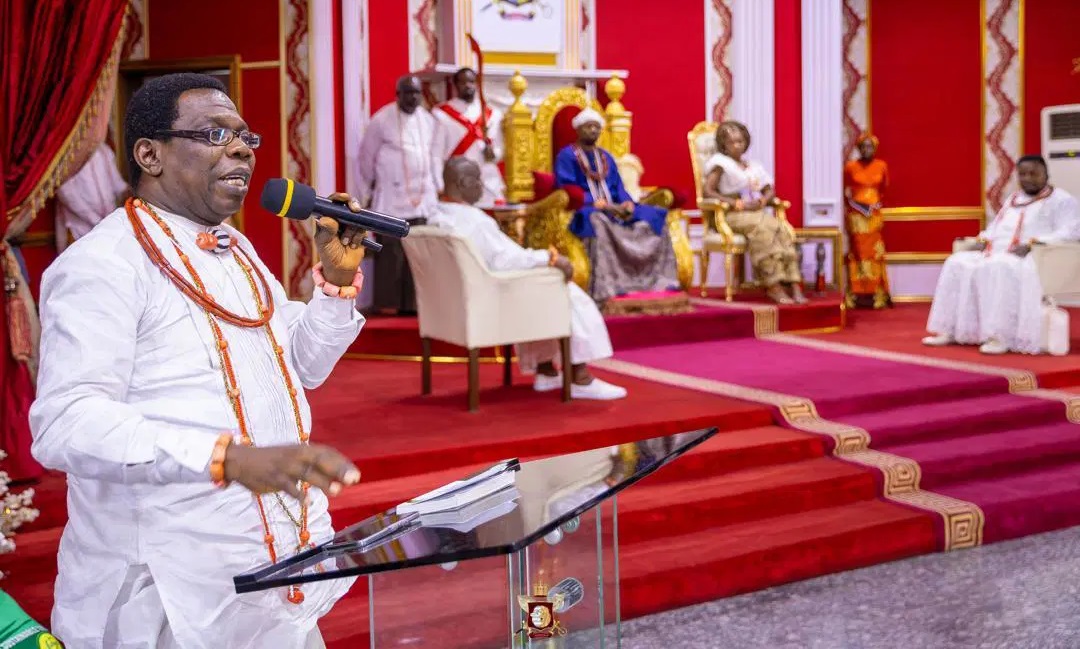
A member of discussant panel at the 3rd Coronation Anniversary Lecture of the Olu of Warri, His Imperial Majesty, Ogiamme Atuwatse III, Chief Robinson Ariyo, the Egogo (Mouthpiece) of Warri Kingdom, has urged the federal government to set up a commission to protect the interest of Micro- Minorities in the Niger Delta region.
Speaking on the Anniversary Lecture theme; “The Challenges of Ethnic Minorities Within The Nigerian State”, yesterday at the Olu’s Palace Auditorium (Aghofen), Chief Ariyo, decried the conceived oppression and marginalization of the ethnic micro minorities by the majority ethnic groups even at the sub-regional level.
He amented the present arrangement where all three ethnic nationalities would collectively agitate for dividends of democracy either in terms of infrastructures or political appointments but when such finally comes the majority ethnic groups within the region would hijack it, leaving the micro-minorities with nothing to show for it at the end of the struggle.
The Egogo of the Iwere kingdom suggested the need for the various micro-minorities to begin to come together to synergies on how to chat a common course of liberating themselves, urging the Itsekiri nation to see the Ogoni’s and other ethnic groups they shared this same status as allies, in order to protect their interest.
Ariyo, a legal practitioner also stressed the importance of proper implementation of existing laws and policies to protect the rights of micro-minorities and ensure their survival in a landscape dominated by more prominent minority groups, noting that Nigerian constitution guarantees the survival of all ethnic nationalities in any part of the country.
However, the itsekiries who occupy three local government within the region, such as the Ecules, who predominantly reside in only three local government areas, argue that the definition of “minority” has been too broad and fails to capture their unique challenges.
According to him; “within the Niger Delta, there are relative majorities who have benefitted significantly from the struggles of the so-called minorities.
“This, they argued, has led to the oppression of micro-minorities by larger minority groups, particularly when it comes to accessing benefits from initiatives such as the Niger Delta Development Commission (NDDC) and the Amnesty office”
Continuing; “The Amnesty office, established in response to the demands of the Niger Delta region, has been dominated by these larger minority groups.
“This has led to the marginalization of micro-minorities, such as the Ogoni people, who now seek to form alliances with other micro-minorities to ensure their voices are heard and their rights are recognized.
“The Itsekiri people, who are a minority within Delta State, have been systematically excluded from key positions in the state government.
“Over the past nine years, itsekiries have been absent from top executive roles, including the positions of governor, deputy governor, and key commissioner posts in Delta State
“The call to redefine “minority” is not just about semantics but about ensuring that all groups, particularly micro-minorities, receive fair representation and access to the benefits intended for marginalized communities.
The ceremony witness Itsekiri sons and daughters in Delta State, paid homage to the Olu of Warri Kingdom, Ogiame Atuwatse III as he celebrates his third (3rd) coronation anniversary. A delegation all over itsekiri lands
The Itsekiri indigenes, who paid homage to the Revered Monarch were from Sapele, Bobi and Obonteghareda Communities.
Others are; Holy Covenant Church, Ugboegungun, Aja-Etan, Dibi Field home-based women, Itsekiri Staff of College of Education, Warri, Ugbajo-Itsekiri, delegation from Warri South Council and members of University of Benin Alumni Association, Warri chapter, also paid homage to the Monarch.
The different groups, entertained the King with elegant dance steps and Itsekiri cultural songs, paying allegiance to the King’s reign on the exalted throne.
The Olu of Warri Kingdom, HRM. Ogiame Atuwatse III, flanked by his Queen, Olori Atuwatse III, later offered prayers to his subjects, including palace chiefs, who greeted him as tradition demands.
Other panel of discussants included; Hon. Daniel Reyenieju, Sir A. S Mene, while Prof Benson Osadalor, former Acting VC Ambrose Ali University (AAU) delivered the main lecture of the day.
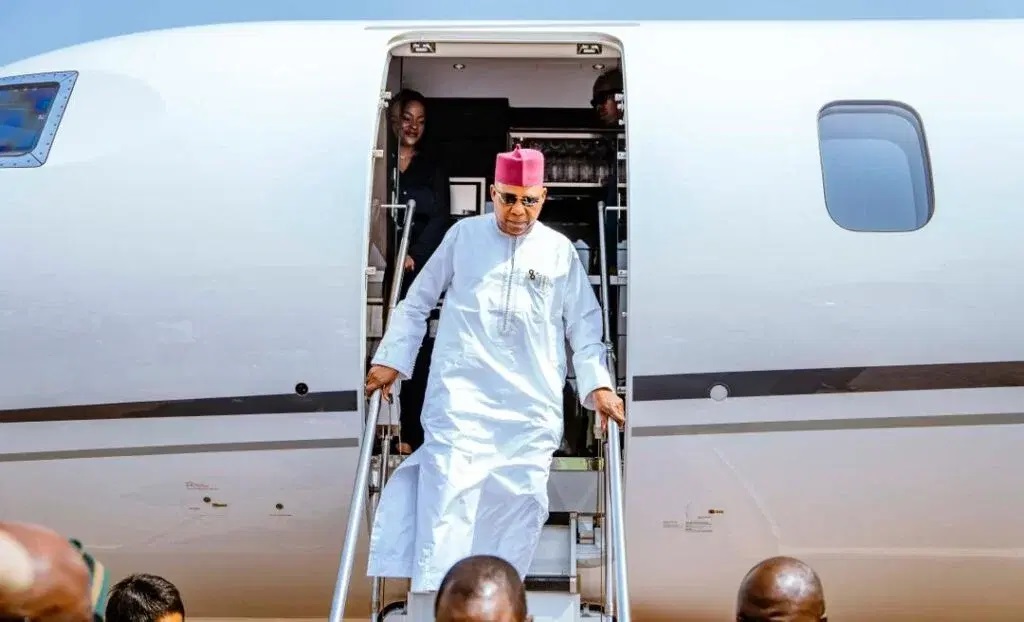
Vice President Kashim Shettima on Saturday evening arrived in Luanda, the capital of Angola, for the 21st Ordinary Session of the Assembly of Heads of State and Government of the African Union.
The summit is taking place between August 29 and 30, 2026.
Senator Shettima, who arrived at 4th February International Airport, Luanda, at about 4: 45 pm local time, was received by the country’s Deputy Minister of Foreign Affairs, Esmeralda Medonca and other senior government officials.
The Nigerian officials who welcomed the Vice President were the Minister of Foreign Affairs, Amb. Bianca Odumegwu Ojukwu, Minister of Defence, Gen. Christopher Musa (retd), the Nigerian Charge d’Affaires, Amb. Mazy Ogbede, Minister of Interior, Mr. Tunji Ojo, Minister of Regional Development, Abubakar Momoh, Attorney General of the Federation and Minister of Justice, Lateef Fag emi, SAN, Chairman and CEO, Nigeria Diaspora Commission, Mrs Abike Dabrri-Erewa, among other government officials.
The 21st Ordinary Session of the Assembly of Heads of State and Government of the African Union with the theme: “Strengthening Mechanisms for Conflict Prevention and Resolution in Africa,” is aimed at deepening dialogue among member states and reinforcing African responses to peace and security challenges.
Upon arrival, Vice President Shettima, who is representing President Bola Tinubu at the Summit, received a briefing from the Minister of Foreign Affairs, Ambassador Bianca Ojukwu and other experts from the Nigerian Embassy.
As part of the preparations of the 26th Extraordinary Session of the African Union Executive Council, foreign ministers and experts in foreign relations held a meeting earlier on Saturday.
The Executive Council provides a platform for political consultations among AU member states on conflict prevention and the promotion of peace and stability.
The Angolan Summit is expected to provide an opportunity to assess the effectiveness of existing instruments and to discuss more coordinated responses to conflicts on the continent.
A young Nigerian, Samuel Ezekiel, has narrated how his friend allegedly deceived him into undergoing kidney removal and later spent part of the money he received on electronic gadgets.
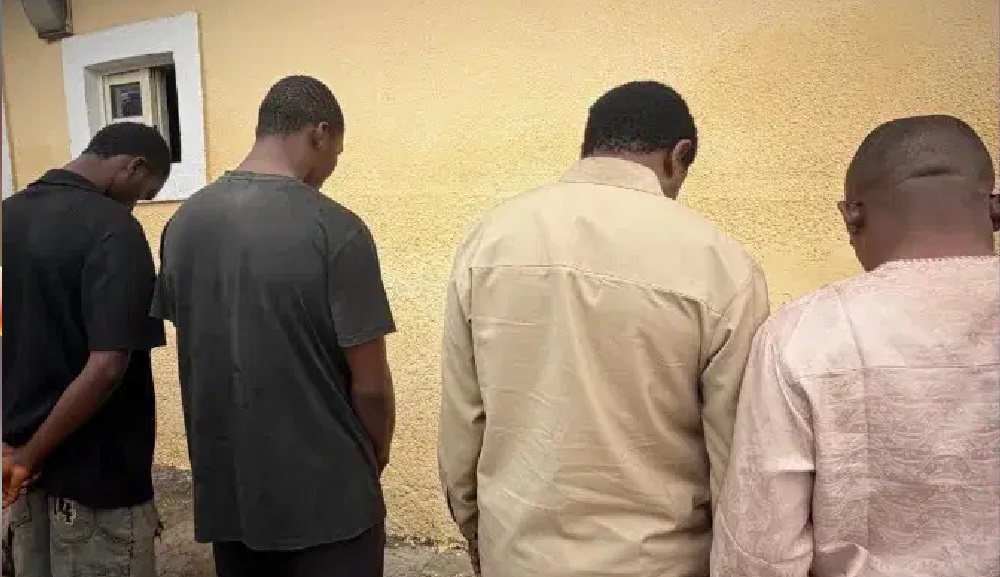
Ezekiel made the disclosure while speaking to journalists during the parade of suspects linked to an alleged organ-harvesting syndicate operating in Abuja and Nasarawa State.
According to him, his friend, Emmanuel Odeh, initially told him they were going to a hospital, and he followed because he trusted him.
“It’s my friend that deceived me. His name is Emmanuel Udeh,” Ezekiel said.
He explained that Odeh later connected him with another man, David, who took him to an agent identified as Ben for medical tests.
Ezekiel said his first test did not match the intended kidney recipient, but the agent later informed him that another recipient had been found and that his kidney was a match.
He alleged that he was subsequently told to assume the name “Hassan Abubakar” and was taken to the Federal High Court, where an affidavit was prepared before they proceeded to Wellington Hospital in Life Camp, Abuja.
“Then he now said that they are going to change my name, that I will be bearing Hassan Abubakar,” he said.
Ezekiel said documents were signed at the hospital before he was taken into the theatre. He added that he was given money in dollars around 10pm or 11pm before the procedure.
He said he handed the money to Odeh for safekeeping before entering the theatre.
“After they give us the money, then when I wanted to enter the theatre, I gave Emmanuel the money to hold it,” he said.
However, Ezekiel alleged that when he came out of the theatre, Odeh had exchanged the money and used part of it to purchase two phones, two power banks and two Wi-Fi devices.
“He bought two phones, two power banks, and two Wi-Fi. Then he now gave me one and held one,” he said.
The victim said he remained at the hospital for about a week before being discharged and taken by Odeh to a hotel, where they spent two days.
He said they later travelled to Cross River State and stayed there for about three months.
According to Ezekiel, when he eventually asked Odeh about the money he had received, his friend told him it had been spent.
He added that Odeh later claimed they had no money for transportation back to Abuja and sold his phone to raise the fare.
Ezekiel said he knew a kidney-related procedure was involved but claimed that Odeh reassured him that it would not negatively affect his health.
“He just told me that it’s something that they will just convert it, that there’s not any issue in there,” he said.
He confirmed that he consented to the procedure, which he said took place at Wellington Hospital on April 24. He recalled receiving several $100 notes and a $50 note but said he could not state the exact amount.
The allegations emerged as the Nigeria Police Force intensified its investigation into an alleged organ-harvesting network operating in Abuja and Nasarawa.
The police on Friday paraded several suspects, including two doctors and alleged recruiters, following a sting operation in the Auta Balefi area of Karu Local Government Area, Nasarawa State.
Those paraded included Dr Benjamin Oyime, a nephrologist and consultant to Wellington Hospital; Dr Daniel Otukpa, also a nephrologist and Acting Director of Clinical Services at the hospital; David Idoko; and Odeh.
The police alleged that the syndicate targeted vulnerable young people and facilitated illegal kidney removals using forged documents and false representations.
The Force said investigations were ongoing to apprehend other members of the alleged network.
The case became public after activist Martins Otse, popularly known as VeryDarkMan, said a young man approached his NGO with medical evidence indicating that his left kidney was missing.
The police subsequently commenced investigations, leading to the arrest and parade of the suspects.
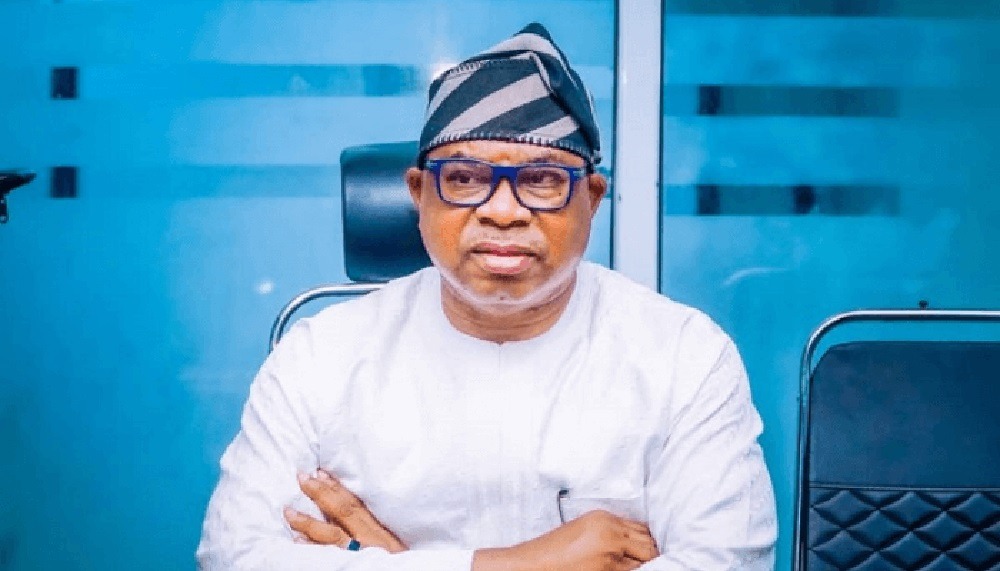
The All Progressives Congress (APC) governorship candidate in the August 15, 2026 Osun State election, Bola Oyebamiji, has congratulated Governor Ademola Adeleke on his victory, urging him to protect the lives and property of all residents as the state moves beyond the election.
Oyebamiji, while addressing APC leaders, members and supporters in Osogbo on Saturday, said he congratulated Adeleke “in the spirit of democracy” following the declaration of the election result by the Independent National Electoral Commission (INEC).
He also called on the governor, as the chief security officer of the state, to exercise his constitutional responsibility to safeguard citizens, particularly during the sensitive post-election period.
“At the same time, I call on Mr. Governor, as the Chief Security Officer of the state, to do everything within his constitutional responsibility to protect the lives and property of all citizens, particularly during this sensitive post-election period,” Oyebamiji said.
The APC candidate urged an end to violence, harassment and intimidation allegedly targeting members and supporters of his party.
Oyebamiji particularly called for an investigation into the deaths of former Irewole Local Government chairman, Remi Abass; APC chairman in Atakumosa Local Government Area, Gbenga Ogbara; Mr. Dele Ayegbo, nephew of Wole Oke and Director-General of his 2026 Governorship Campaign Council; and more than 35 other victims.
He urged the Nigeria Police Force to thoroughly investigate the killings and ensure that those responsible are brought to justice, while expressing condolences to the families of those who lost their lives to political violence.
“The senseless killings, harassment and intimidation of members and supporters of our party must therefore stop forthwith,” he said, adding that attacks on innocent citizens and their businesses “must not be allowed to continue.”
Oyebamiji also raised concerns over reports of attacks on small and medium-sized businesses based on the perceived political affiliations or non-allegiance of their owners to the Accord Party.
He described such attacks as “clearly condemnable and unacceptable,” stressing that security and a conducive environment for businesses were essential to Osun’s economic growth, investment and employment prospects.
On the outcome of the election, Oyebamiji said the APC remained committed to pursuing justice and fairness through lawful and constitutional means in relation to the electoral process.
He, however, urged his supporters not to be discouraged, calling on them to sustain their faith in democracy and confidence in institutions established to protect democratic rights.
The APC candidate subsequently directed the attention of party members towards the 2027 general elections, urging them to close ranks, strengthen party structures and commence mobilisation for the re-election of President Bola Tinubu and other APC candidates.
“We must close ranks, strengthen our structures and work tirelessly to secure incontrovertible victories for Mr. President and all our candidates in Osun State,” he said.
Oyebamiji also thanked Tinubu for his support before, during and after the governorship election, while commending former governor Bisi Akande and Minister of Marine and Blue Economy, Adegboyega Oyetola, for their contributions to his campaign and the repositioning of the APC in the state.
The APC candidate’s remark comes 14 days after INEC declared Adeleke as the winner of the election.
INEC said that the incumbent, who is the candidate of the Accord Party, polled 511,067 votes while Oyebamiji came second with a total vote count of 444,815.

Ecuador ex-president bags five-year jail term over $76m bribery scandal

Shettima arrives in Luanda for AU summit

Friend tricked me into kidney removal, spent payment on gadgets — Victim




-
 News22 hours ago
FG moves to harmonise salaries of federal government workers
-
 News22 hours ago
Ugandan King Who Became Monarch At Age 3 Di£s Aged 34
-

 Metro22 hours ago
Police Parade Doctors, Others Over Alleged Organ Trafficking In Nasarawa
-

 News22 hours ago
NYSC sets September 7 for 2026 batch C registration
-

 News22 hours ago
2027 Presidency: Very Unlikely North Will Support Obi-Kwankwaso Ticket — Datti
-

 News17 hours ago
Confusion in Niger as gunfire, explosions rock presidential palace, airport
-
 News22 hours ago
Police-Led Joint Team Arrests Nine, Recovers Three AK-47 Rifles, Pump-Action Gun in Anambra
-

 News18 hours ago
‘My wife drove me with knife, vowed to stab me’, husband says as 15-year marriage crumbles
Warning: Undefined variable $user_ID in /home/naijuinz/public_html/wp-content/themes/zox-news/comments.php on line 49
You must be logged in to post a comment Login