News
18-Yrs Limit: Nigeria’s Education Minister, Tahir Mamman receives more knocks
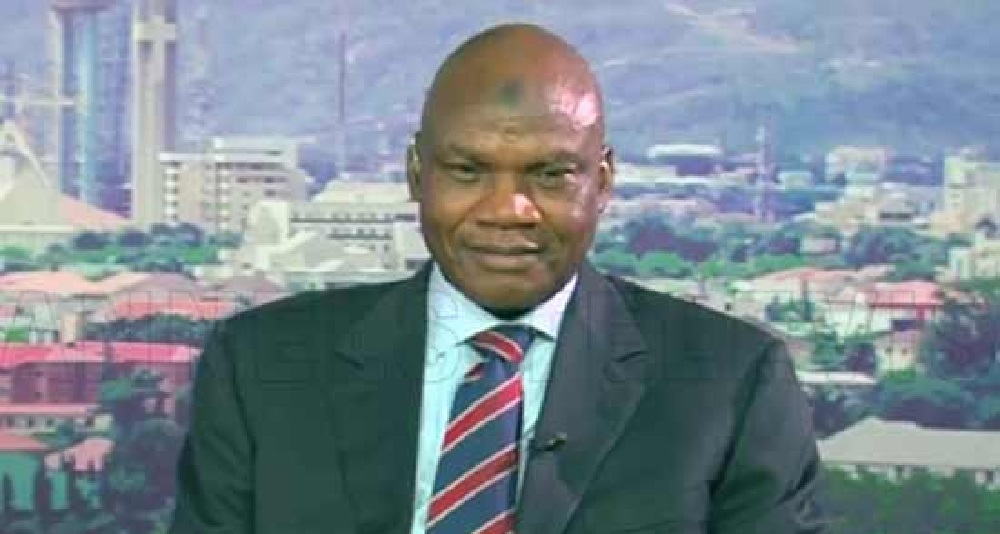
Former Labour Party (LP) chieftain and actor, Kenneth Okonkwo, has disagreed with the position of the federal government that candidates under 18 years of age will no longer be allowed to sit for secondary school leaving examinations.

Naija News recalls the Minister of Education, Tahir Mamman, disclosed this on Sunday during a TV interview. He said the Federal Government has instructed the West African Examinations Council (WAEC) which administers the West African Senior School Certificate Examination (WASSCE) and the National Examinations Council (NECO) which organises the Senior School Certificate Examination (SSCE) to comply with the directive on 18 years age limit for any candidate to be eligible for the two examinations.
Mamman also insisted that the age limit for any candidate to write the Unified Tertiary Matriculation Examination (UTME) organised by the Joint Admissions and Matriculation Board (JAMB) remained 18 years.

The policy has continued to attract condemnation and criticism from several stakeholders. In his reaction on Thursday, Okonkwo said the government policy which was made public recently by the education minister is unfortunate and undesirable.
He recounted a personal experience of some of the vices he picked up as a teenager when he stayed at home for one year before proceeding to a higher institution of learning.
The actor cum politician also noted that the current educational system in Nigeria makes it possible for students to conclude secondary education by 16 years of age and wondered why such students must be forced to stay at home and what they would be doing until they turn 18.
He cautioned against turning idle hands and minds into the devil’s workshop as a result of such government decisions. Okonkwo, therefore, called for a reversal of the policy.
“Prof Tahir Mamman, the Minister of Education’s statement that students must attain the age of 18 years before writing neco and jamb, is unfortunate and undesirable.
“This policy is personal to me because I completed my secondary school education at the age of 15 years plus and made excellent grades. The policy of jamb then was that every student must attain the age of 16 years before writing jamb. I had to voluntarily stay at home for a year to write jamb. The little little vices I picked up in my life as a teenager were when I stayed at home for a year. You can imagine if I had stayed at home for three years.
Children start nursery classes at 2 years and take 3 years to complete them. This makes them start primary one at age 5 and finish at age 10. They get into secondary school at age 10 and finish at age 16 and should be allowed to get into university at age 16. I finished at age 15 because secondary education was for 5 years during our time.
“Keeping children idle for two years is making them susceptible to crimes and other antisocial behaviour as an idle mind is a devil’s workshop.
“The Minister should immediately revert to the 16-year benchmark for entering the university, not 18. It’s unfortunate that our old men in political positions want to entrench gerontocracy in our system and are already trying to enforce it on our children. Must this government get everything wrong?” Okonkwo wrote via his X account.

News
MTN finally begins airtime compensation over poor service rendered in January
Subscribers of MTN Nigeria have started receiving airtime credits from the telecom operator as compensation for poor quality of service experienced in January 2026.
The development became public after several users shared notifications on the social media platform X, showing that their lines had been credited with different amounts.
One of the messages sent to subscribers read: “Dear Customer, your account has been credited with N341 airtime for quality of service issues in January 2026. Thank you for your understanding.”
Findings indicate that the compensation varies across users. While some reported receiving over N300, others claimed they got smaller amounts such as N20 and N91, though these could not be independently verified.
As of the time of filing this report, it remains unclear whether all affected subscribers have received the airtime credit or if the process is still ongoing in phases.
The move follows increased regulatory pressure on telecom operators to improve service delivery and address persistent complaints from subscribers across the country.
Industry observers believe the action is linked to directives from the Nigerian Communications Commission, which requires operators to meet minimum quality-of-service standards and, where necessary, compensate customers for service lapses.
MTN had earlier signalled its readiness to comply with such directives, while also committing to further investment in network infrastructure to improve service quality nationwide.
However, the company has yet to provide details on the total number of subscribers affected or the criteria used in determining the compensation amounts.
Telecom service delivery has remained a major concern in Nigeria, with many users frequently complaining about dropped calls, slow internet speeds and network outages.
Regulators have in recent years intensified oversight of telecom operators to ensure compliance with service benchmarks and consumer protection guidelines.
Compensation measures such as airtime credits are part of broader efforts to rebuild trust among subscribers and enforce accountability within the sector.
Analysts say while the current compensation may offer temporary relief to affected users, long-term improvement in service quality will depend largely on sustained investment in infrastructure and efficient network management.
News
Just in: Edo Youths Scatter APC Campaign Event, Declare “No More Promises”
Confusion in parts of Edo State on Friday after a campaign event organised by the Deputy Speaker of the Edo State House of Assembly, Osamwonyi Atu, was disrupted by protesting youths in Orhionmwon East Constituency.
The lawmaker had arrived in Abudu, the administrative headquarters of Orhionmwon Local Government Area, to formally kick off his re-election campaign when the situation took an unexpected turn.
Hundreds of youths stormed major roads in the town, effectively halting the planned rally and creating a tense atmosphere.
The protesters, who identified themselves as Concerned Orhionmwon East Youths, openly rejected Atu’s campaign, accusing him of failing to deliver on key promises made during the 2023 elections.
Chanting slogans and wielding placards, they expressed deep frustration over what they described as years of neglect.
Among their grievances was the persistent lack of electricity in the area, which they claimed has lingered for over 15 years.
They also decried the state of an abandoned comprehensive school project, describing it as a symbol of unfulfilled commitments to the community.
The demonstration disrupted movement across parts of Abudu, as protesters occupied strategic locations, forcing residents to either stay indoors or seek alternative routes. Security presence was reportedly reinforced to prevent the situation from escalating into violence.
Responding to the incident, Atu dismissed the allegations raised by the youths, attributing the unrest to opposition against the Assembly’s recent anti-cultism legislation. He maintained that the law was necessary and would remain in force.
“Those protesting are pained by the anti-cultism law. The law has come to stay,” he said.
Also reacting, the Coordinator of the Osamwonyi Atu Campaign Organisation, Martins Ozakpolor, alleged that the protest was politically orchestrated. According to him, a rival aspirant sponsored the disruption in a bid to discredit the Deputy Speaker ahead of the elections.
Ozakpolor further defended Atu’s performance, insisting that the lawmaker had delivered tangible projects in the constituency. He specifically cited the construction of a comprehensive school, countering claims by the protesters that the project was abandoned.
Despite the disruption, the campaign team said the visit recorded some level of success. They noted that Atu was received by members of the Abudu Elders Council, who offered prayers in support of his re-election bid.
The incident underscores growing political tension in the constituency as the next election cycle approaches, with competing narratives emerging over performance, accountability, and grassroots support.
News
ADC leadership crisis: ‘Expedite Action’ Obidient Movement Urges Supreme Court
The Obidient Movement has called on the Supreme Court not foot drag on the African Democratic Congress ADC matter before it.
This was contained in a statement issued and signed by Dr Yunusa Tanko. National Coordinator of the Movement stating that:
“The Obidient Movement like to make passionate appeal to the Supreme Court of Nigeria for a Swift Judicial Resolution of Opposition cases before it.
“The Movement wants to remind the apex court that justice delayed in this matter is effectively democracy denied.
” The current leadership vacuum in the main opposition coalition has left thousands of party faithful in a state of flux and risks disenfranchising a significant portion of the electorate who look toward the ADC and its coalition partners as a credible alternative for national governance.
”The apex court is the last refinery of justice, at a time when the political landscape requires absolute clarity, any prolonged delay in pronouncing a final verdict on the ADC leadership crisis provides room for mischief, fuels factionalism, and undermines the preparations for a robust multi-party contest in the coming elections”
“The Obidient Movement notes that the legal battle between the contending factions is no longer a mere internal affair as it has become a matter of national interest which the apex court should be conscious of in its decisions.
“The Independent National Electoral Commission (INEC) and the voting public require a settled leadership to engage with, particularly as primary windows and coalition negotiations begin to take shape.
“We therefore like to make an urgent call to the Supreme Court requesting an expedited and definitive ruling on the leadership dispute currently paralysing the African Democratic Congress (ADC).
“As the 2027 electoral cycle approaches, the continued ambiguity surrounding the party’s executive structure—following the court’s decision to reserve judgment on April 22—threatens not only the internal stability of the ADC but the broader viability of opposition consolidation in Nigeria.
“A swift and clear pronouncement from the Supreme Court will stabilise the political atmosphere and allow the ADC and the wider opposition movement to focus on the essential task of nation-building.
“We remain confident in the wisdom of the apex court and trust that the judiciary will remain the steadfast guardian of our democratic process.
-
News18 hours agoWike Appoints Musa Idris As Senior Special Assistant On Procurement
-
Sports21 hours agoEx-Super Eagles striker, Enaremo is dead
-
News17 hours agoWoman Accused Of K!lling Her Two Ex-husbands Hours Apart
-
News23 hours agoFCT minister Wike set to inspect Karu Township road due for completion by May (VIDEO)
-
News21 hours agoMilitary set to try suspected coup plotters, set up General Court-Martial
-
News21 hours agoOyedele Formally Assumes Office as Finance Minister Vows to Sustaim Reform Momentum
-
News4 hours agoMeta Platforms, Microsoft Announce Over 16,000 Job Cuts As AI Spending Surges
-
News19 hours agoFCT Residents Hail President Tinubu Over Construction Of Satellite Towns Roads

You must be logged in to post a comment Login