
News
AGF moves to block presidential pardon for corrupt leaders

- /home/naijuinz/public_html/wp-content/plugins/mvp-social-buttons/mvp-social-buttons.php on line 27
https://naijablitznews.com/wp-content/uploads/2024/09/Lateef-Fagbemi1.jpg&description=AGF moves to block presidential pardon for corrupt leaders', 'pinterestShare', 'width=750,height=350'); return false;" title="Pin This Post">
- Share
- Tweet /home/naijuinz/public_html/wp-content/plugins/mvp-social-buttons/mvp-social-buttons.php on line 72
https://naijablitznews.com/wp-content/uploads/2024/09/Lateef-Fagbemi1.jpg&description=AGF moves to block presidential pardon for corrupt leaders', 'pinterestShare', 'width=750,height=350'); return false;" title="Pin This Post">


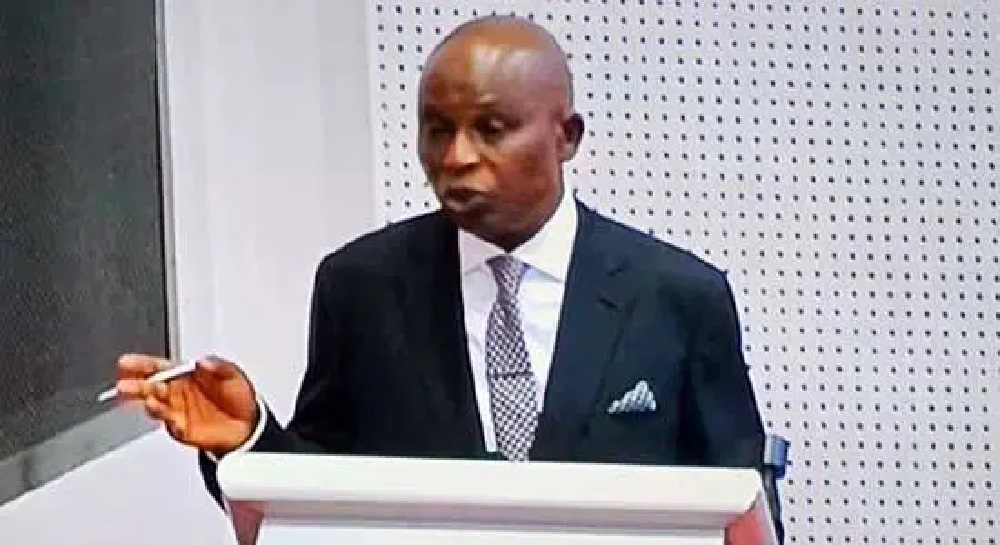
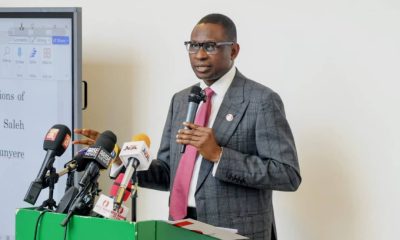
The Attorney-General of the Federation (AGF) and Minister of Justice, Lateef Fagbemi (SAN), has proposed a constitutional amendment to block presidential pardons for corrupt leaders, aiming to strengthen the fight against corruption.
The proposal, made at a one-day roundtable organized by the Independent Corrupt Practices and Other Related Offences Commission (ICPC) in Abuja on Monday, seeks to exclude corruption cases from the prerogative of mercy.
The ICPC event, themed ‘Building a Unified Front Against Corruption in Nigeria,’ brought together State Attorneys-General, Commissioners for Justice from all 36 states, and representatives from civil society organizations, the private sector, and other stakeholders to enhance collaboration and strengthen anti-corruption efforts. The roundtable was supported by the MacArthur Foundation.
According to the Minister of Justice, the proposed amendment will be pursued in the next constitutional review to ensure that corrupt leaders face the full weight of the law.
The AGF stated that the proposal would be a significant step toward addressing corruption in Nigeria, a major concern for citizens and the international community.
Several high-profile individuals convicted of corruption in Nigeria have previously received presidential pardons.
Notable examples include the former Governor of Bayelsa State, Diepreye Alamieyeseigha, pardoned by President Goodluck Jonathan in 2013, and the former Governor of Delta State, James Ibori, who received a pardon in 2015.
The AGF said, “I have always believed that no one can claim to know everything, and it is through collaboration with others that we achieve the best results. United we stand, divided we fall. In the fight against corruption, everyone is a stakeholder. Believe me, everyone is involved.
“In fighting corruption, we need to focus on the facts, not on where someone is from or their religion. If someone is accused of embezzling money, the focus should be on the facts of the case.
“I suggest that in our next constitutional amendment, matters of corruption should be excluded from the prerogative of mercy. This is the only way we can progress.
“We want to return to an era where showing your passport and mentioning your profession automatically earns you respect. When we travel outside the country, and you reach immigration or border stations, they first ask you, ‘What work do you do?’ Sometimes you feel like hiding your passport, but you have to show it.
“Let us return to this approach when dealing with corruption. We should also avoid the trend of public sentiment influencing actions, especially in Nigeria, where political polarization is rampant. Investigations should be thorough, and charges should be clear and concise.”
Chairman of the Senate Committee on Anti-Corruption and Financial Crimes, Senator Osinakachukwu Ideozu, lauded the proposal, noting that corruption undermines institutions and stifles development. He reiterated the Senate’s commitment to supporting anti-corruption initiatives.
Ideozu stated, “Corruption is not just a legal challenge; it is a social cancer that erodes trust, undermines institutions, and stifles development. It is a problem that requires a comprehensive and multifaceted approach, involving every segment of our society.
“As State Attorneys-General, you hold significant responsibilities in the administration of justice at the state level, and your role in this fight cannot be overstated.
“We must ensure that our justice system operates with the highest level of integrity, where the rule of law is upheld, and where there is no place for corruption to take root. Prevention is always better than cure.”
ICPC Chairman, Dr. Musa Adamu Aliyu (SAN), emphasized the importance of collaboration between the ICPC and State Attorneys-General in preventing corruption and promoting good governance.
He explained that the ICPC has been working to strengthen its anti-corruption efforts through preventive measures and enforcement.
Specifically, Aliyu said that the National Anti-Corruption Strategy (NACS) will be enhanced through collaboration.
He stated, “Corruption is a complex problem that has permeated all aspects of life and suppressed development in Nigeria. Both Federal and State institutions are stunted because of multiple harmful practices, greed, and impunity.
“Reaching institutions at the State level requires the involvement of State officials. It demands expertise, collaboration, informed strategies, and knowledge sharing. Knowledge and expertise are not based in one place and are not easily acquired without a determined and focused pursuit, with adequate resources.
“This collaboration with the Attorney General can lead to more effective preventive strategies, enhanced inter-agency cooperation, and a more corruption-resistant public sector. We can also win the confidence of the public in government institutions and the criminal justice system in particular.”
Chairman of the House Committee on Anti-Corruption, Rt. Hon. Kayode Moshood Akiolu, assured the ICPC of legislative backing, stating that the House of Representatives is committed to playing its legislative role in ensuring the federal government’s success in the anti-corruption fight.
Akiolu said, “At a period in our national life when the economy is struggling, citizens are grappling with existential issues, and the government needs all the resources it can get to execute developmental projects and pull our country out of the woods.
“The need to rein in corruption and plug revenue leakages has never been greater. To the uninitiated, it might seem like the government does a lot of talking. But the truth is that corruption is a complex phenomenon to contend with.
“Corruption is a national problem; it is not a federal problem. All hands need to be on deck to help steer the ship of state from corruption-infested waters and onto safe waters where national development can thrive.”
Keynote speaker, Chief Kanu Agabi (SAN), emphasized the need for a unified front against corruption, while Chairman of the Senate Committee on Anti-Corruption and Financial Crimes reiterated the Senate’s commitment to supporting anti-corruption initiatives.
According to him, this development will boost the federal government’s anti-corruption drive and promote accountability among public officials.
A panel discussion, moderated by former Lagos State Attorney-General, Moyosore Onigbanjo (SAN), featured experts including Mr. Ekpo Nta, former Chairman of ICPC, Prof. Mohammed Tabiu (SAN), Prof. Abdulkarim Kana (SAN) (Designate), and Barr. Hauwa Abubakar, Attorney-General of Borno State.
The discussion identified key challenges and opportunities for enhancing anti-corruption efforts, including addressing corruption-inducing social norms, promoting public education and awareness, and strengthening institutional frameworks.

The National Agency for the Prohibition of Trafficking in Persons, NAPTIP, has called for an investigation into some civil society organisations, CSOs, allegedly being used as fronts by human traffickers to gain access to vulnerable communities and traffic children.
The agency also disclosed that it had recovered 118 children allegedly trafficked from Nasarawa, Benue and three other states in the North-Central region.
NAPTIP’s Head of Press and Public Relations, Vincent Adekoye, disclosed this on Tuesday in Abuja at a joint briefing by security agencies’ spokespersons.
Adekoye said traffickers were increasingly exploiting communities affected by insecurity, including farmer-herder conflicts, by posing as representatives of non-governmental organisations and offering assistance to vulnerable families.
He said some traffickers approached distressed communities under the guise of providing educational and humanitarian support before taking children away.
“Traffickers also now masquerade under the umbrella of Civil Society Organizations and move to communities that are already distressed; moving to communities where you have farmer-herder crises, and promising parents that, ‘we will take your children back to school,’ under a fake back-to-school project. And from there, they harvest children, move them,” he said.
Adekoye disclosed that NAPTIP recently rescued four children in Onitsha, Anambra State, who were allegedly trafficked from Kajuru in Kaduna State in 2023.
He said some of the children were recovered from a high-rise building, while another was found in the custody of a nurse at a Federal Medical Centre in Onitsha.
According to him, the agency is planning to profile CSOs, particularly community-based and faith-based organisations operating in vulnerable areas, to prevent criminal elements from exploiting their credibility.
“We have continued to ensure that we want to profile the Civil Society Organizations in Nigeria. My DG has asked me to convey to them, the leadership of the CSOs in Nigeria, to do an in-house cleansing,” Adekoye said.
He explained that community-based, faith-based and non-governmental organisations were often familiar to residents and could therefore be exploited by traffickers seeking to gain the trust of vulnerable families.
The NAPTIP spokesman said the agency had so far recovered 118 children allegedly trafficked from Nasarawa, Benue and three other North-Central states.
He urged Nigerians to remain vigilant and report suspicious activities involving organisations seeking to take children away from their families.
“As at last count, we have recovered 118 of such children from those that were trafficked from Nasarawa and from Benue, and three other states within the North Central. So, we are appealing to Nigerians to be watchful. When you see them, please contact NAPTIP,” he said.
Adekoye recalled that NAPTIP had earlier disclosed the rescue of more than 180 children from trafficking networks allegedly operating under the guise of civil society organisations offering educational support to vulnerable families.
Traffickers exploit social media
The agency also warned of an increasing technology-driven dimension to human trafficking, saying traffickers were using social media platforms to recruit young Nigerians with promises of lucrative jobs and better living conditions abroad.
Adekoye said NAPTIP recently rescued 16 young Nigerian men from Thailand after they were allegedly lured with attractive employment offers.
He explained that the recruitment process was often designed to appear legitimate, with traffickers offering to arrange travel documents, transportation and other logistics for prospective victims.
“From beginning, it looks so real to them that they have no reason at all to doubt. So, the agency has been inundated in recent times with calls from some of them who are stranded.
“Just in July, we rescued about 16 of them from Thailand. When you hear their story, your emotion will corrupt you of what they pass through. Some of them couldn’t survive. Those who survived have a narrow escape from death,” he said.
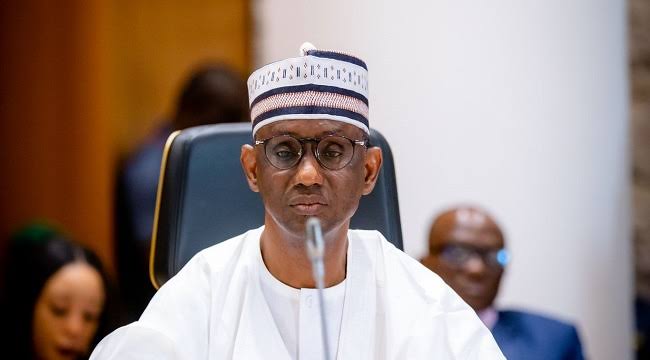
The Director-General of the National Centre for the Control of Small Arms and Light Weapons, DIG Johnson Kokumo (retd), has dismissed allegations contained in a viral video claiming that persons arrested over the seizure of illegal arms at the Tin Can Island Port were allegedly being sponsored by the National Security Adviser, Nuhu Ribadu.
Addressing journalists on Tuesday in Abuja during the joint security spokespersons briefing, Kokumo explained that he was personally present at the Tin Can Island Port when the Nigerian Customs Service handed over 399 assorted automatic weapons intercepted at the port to the centre.
He said, “The story in the video is not correct and cannot be correct.
“I was at the Tin Can Island Port with the Comptroller-General; 399 assorted automatic weapons were intercepted by the Nigerian Customs Service at the port. And this cache of arms, illegal weapons, was handed over to the centre.
“I was not there in a representative capacity; I was there personally. And the Comptroller-General, of course, was also present personally to do the handing over,” he said.
According to him, the seized weapons are currently secured in an armoury, while two suspects arrested in connection with the illegal importation remain in custody.
“As I’m talking to you, the arms are in a secured armoury. Two suspects arrested in connection with the illegal importation are currently in custody.
“Investigation is ongoing with a view to bringing to book the criminal elements in Nigeria and possibly identifying their international criminal partners outside the shores of Nigeria,” Kokumo added.
He further maintained that the allegations contained in the viral video were baseless, noting that the video also called for violence against the NSA and other persons.
“So, what has gone viral in the video is not correct and cannot be correct,” he stated.
Kokumo also disclosed that the Federal Government had continued to destroy recovered illicit weapons to prevent them from being diverted back into the hands of criminal and non-state actors.
He said the destruction of the weapons was in line with international conventions to which Nigeria is a signatory, including agreements under the United Nations, African Union and ECOWAS.
“And of course, another reason for destroying them is to also ensure that the weapons so recovered do not find their way back into the hands of non-state actors for use on innocent citizens of Nigeria,” he said.
The Director-General said the Second Quarter Arms Destruction Exercise for 2026, conducted on July 30 at the Muhammadu Buhari Cantonment, Giri, Abuja, resulted in the public destruction of 1,419 illicit weapons.
He said the latest exercise brought the cumulative number of illicit weapons destroyed by the centre since 2022 to more than 19,000.
Kokumo said the destruction was part of efforts by the Federal Government to prevent the possession and use of illicit weapons by non-state actors involved in terrorism, banditry, kidnapping, armed robbery and other violent crimes.
He also disclosed that the centre had received 5,050 illicit, unserviceable, decommissioned and obsolete assorted automatic weapons retrieved from the Nigeria Police Force in June 2026.
He added that 399 JOJEF automatic guns intercepted by the Nigeria Customs Service were handed over to the centre on August 17, 2026.
Kokumo, however, said the government was not targeting legitimate local arms manufacturers, explaining that some artisanal producers possess skills that could be harnessed for national development.
“From time immemorial, in villages in Nigeria, we have traditional, well-aligned rights where people even fire for joy; they use Dane guns to do all this. We have local hunters who go into the bushes to hunt for rats and rabbits.
“All these guns, of course, are manufactured by local artisanal producers. But what we are seeing now is the introduction of sophisticated weapons,” he said.
He added that the government was particularly concerned about criminal manufacturers producing sophisticated illicit weapons.
“So, we have those who are criminal manufacturers of these illicit weapons; we are really out for them. And we have equally identified talents among the local manufacturers—the talents, those who are naturally talented, of course, will be absorbed into our plans, and we’ll see how they can be most efficient and most productively used in national service,” Kokumo stated.
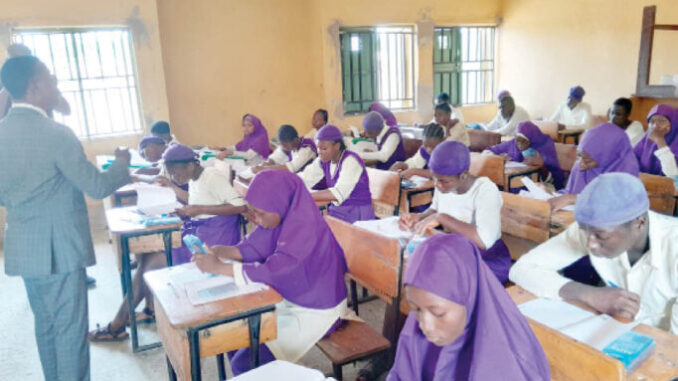
Candidates seeking admission into Nigerian tertiary institutions will now pay N4,000 only once to verify their West African Senior School Certificate Examination, WASSCE, or O’Level results, under a new arrangement jointly introduced by the Joint Admissions and Matriculation Board, JAMB, and the West African Examinations Council, WAEC.
The development is expected to bring relief to admission seekers who have often been subjected to repeated verification of their academic credentials by different institutions during the admission process.
Under the new arrangement, candidates whose admissions are regulated by JAMB are required to verify their WAEC results once through JAMB, after which the verification outcome will be made available to the relevant tertiary institution.
JAMB and WAEC, in a joint statement issued on Tuesday, said candidates would make the ₦4,000 payment only through the specified JAMB Verification Service platform, stressing that the fee should not be paid to individual institutions.
The two bodies also directed tertiary institutions to utilise the verified results supplied by JAMB for admission screening, processing and other administrative purposes.
Consequently, institutions are not permitted to demand additional payments from candidates for another verification of the same WAEC result.
The new policy follows a series of meetings and consultations between JAMB and WAEC aimed at simplifying the verification process and reducing the financial and logistical burden on admission seekers.
According to the statement, WAEC has authorised JAMB to share the outcome of the verification exercise with relevant tertiary institutions for admission-related purposes.
“This arrangement is designed to ensure that candidates who have successfully verified their WASSCE O’ Level result through the Verification Service platform will not be required to repeat the same verification exercise,” the bodies said.
They explained that the initiative would also enable candidates to initiate the verification process from the comfort of their homes or any internet-enabled location, reducing the need for repeated visits to tertiary institutions or JAMB-approved Computer-Based Test, or CBT, centres.
JAMB and WAEC urged candidates to take advantage of the new arrangement by completing their WASSCE O’Level verification through the JAMB-provided platform once, noting that the verified result would subsequently be available to the institution where the candidate seeks admission.
The collaboration, the two examination and admission bodies said, was designed to put candidates’ interests first by cutting unnecessary costs, reducing administrative stress and simplifying the admission process while safeguarding the integrity and security of academic records.

NAPTIP seeks probe of CSOs over alleged child trafficking

Tin Can seizure: Arms Centre boss denies Ribadu link

JAMB, WAEC end multiple O’Level verification charges, fix N4,000 one-off fee




-
 News23 hours ago
EFCC sacks over 40 staff for corruption, prosecutes 5 others
-

 News24 hours ago
Calls Mount for Forensic Audit of Chinua Achebe Airport Over Alleged Revenue Diversion
-

 Economy24 hours ago
NNPCL Increases Price Of Petrol
-
 Metro24 hours ago
Air Force Officer Narrates How Gunmen Abducted His Wife, Two Children From Kaduna Home
-

 News17 hours ago
Just in: Court fires 2027 APC candidate, orders fresh primaries
-

 Entertainment23 hours ago
Headies dismiss claims of sidelining gospel artistes
-

 News16 hours ago
Intoxicated Pilot Crashes Stolen Plane Near Nuclear Site
-

 News17 hours ago
Breaking Dangote Refinery stops sales of petroleum products to Matrix, AA Rano, others
Warning: Undefined variable $user_ID in /home/naijuinz/public_html/wp-content/themes/zox-news/comments.php on line 49
You must be logged in to post a comment Login