News
Why FG should ban BBNaija reality show – Nigerian students
- /home/naijuinz/public_html/wp-content/plugins/mvp-social-buttons/mvp-social-buttons.php on line 27
https://naijablitznews.com/wp-content/uploads/2024/07/images-2024-07-29T114731.974.jpeg&description=Why FG should ban BBNaija reality show – Nigerian students', 'pinterestShare', 'width=750,height=350'); return false;" title="Pin This Post">
- Share
- Tweet /home/naijuinz/public_html/wp-content/plugins/mvp-social-buttons/mvp-social-buttons.php on line 72
https://naijablitznews.com/wp-content/uploads/2024/07/images-2024-07-29T114731.974.jpeg&description=Why FG should ban BBNaija reality show – Nigerian students', 'pinterestShare', 'width=750,height=350'); return false;" title="Pin This Post">
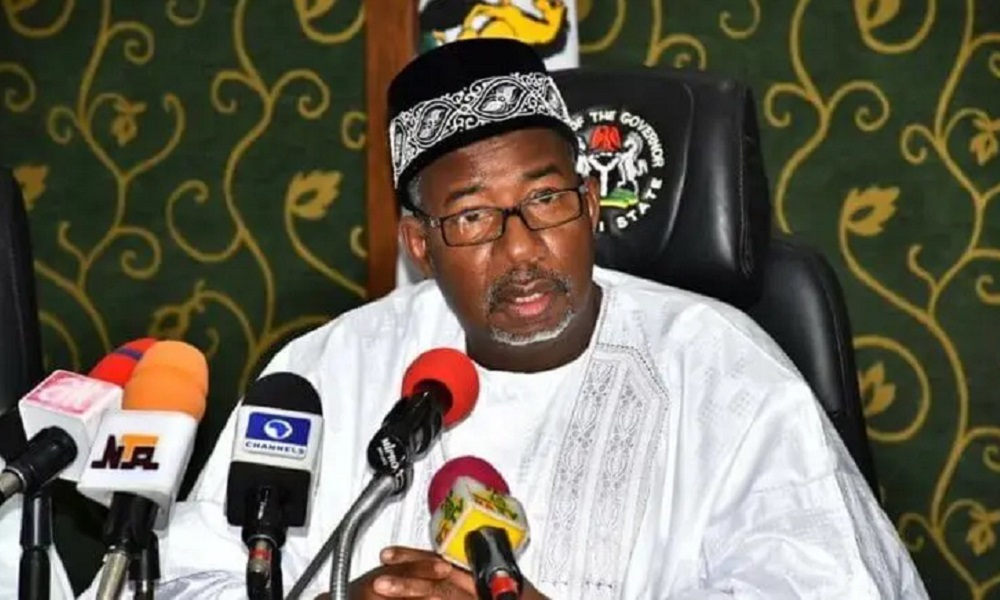
The leadership of the National Association of Polytechnic Students (NAPS) has called on the Federal Government to ban popular reality TV show, Big Brother Naija (BBNaija).

NAPS in a statement issued by its Senate President, Comrade Adeniji Boluwaji Temitope on Sunday, 8th of September, 2024 noted that its purpose is far fetch from values uphold and capacity development.
Even as it urged the state government, local government, traditional rulers not to relent on their efforts to fight immoralities and insanity in the society.

The statement reads partly: “After careful study and observation of what BB9ja show stand for in the entertainment industry, its reveals that its not an academics nor political neither moral oriented show. Since its purpose is far fetch from values uphold and capacity development, the BB9ja show should be concluded as blue film aiming at promoting immoralities in all ramifications.
“Africa is known to be values uphold society across the globe and specifically Nigeria. This portray that no rational Nigerian will support the immorality show called BB9ja. It’s obvious that there is decayedness in our culture, tradition and moral before the introduction of the immorality show. Yes there is, which is amount to other factors but we should not be on the edge of contributing to continuous degradation of our heritage.
A wise men says don’t create problem for solution, rather be part of the solution if you can’t provide one. As history reported the quality of our cultural heritage and uniqueness years back, it most time seems as nightmares to us considering the present Nigeria of our time.
“Ditto, there is need for quick intervention by the the Federal Government to place a ban on the show before the youth populace (strength of the nation) and the children become irrational being. We urge the State Government, Local Government, Traditional Rulers not to relent on their efforts to fight immoralities and insanity in our society.”
While appreciating the efforts of the government at all levels, NAPS emphasized that there was need towards restoring sanity and dignity of the nation.

News
‘To Keep It Coming’: Reflections on Framework Building, Idea Formation and Scholarly Reception
By Max Amuchie | The Sunday Stew
There is a specific kind of validation that academia confers and another that the world confers. The academy signals acceptance through citation, peer review, and the slow machinery of scholarly publication. The world signals it differently — through use. When a scholar picks up your framework not merely to interrogate it, but to build with it, something important has shifted. That is not endorsement. That is adoption.
That is what happened when Dr. Omoniyi Ibietan — Secretary General of the African Public Relations Association (APRA) and a Fellow of the Nigerian Institute of Public Relations (NIPR)—reached for The Insecurity Triad to anchor the theoretical foundations of his paper on crisis communication in the Agatu conflict. He did not cite it as a curiosity. More importantly for this discourse, Ibietan is a member of doctoral faculty at Rome Business School’s DBA programme.
He used it as a load-bearing wall.
His words, addressed to Premium Times editorial page editor Ololade Bamidele, are worth sitting with: the framework took him back to Mbembe, offered fresh insight into, and — and then did something rarer. It shaped what he was about to write. “So compelling was it,” Ibietan noted, “that it shaped my theoretical framing for a new paper I just submitted.”
Ibietan’s message to Bamidele was in response to last week’s edition of The Sunday Stew entiteld: ‘The Insecurity Triad: Azikiwe, Awolowo, and Chinweizu — Nigeria’s Elite Class of Framework Builders’.
Dr Ibietan’s words: “Thank you Ololade Bamidele. Please tell Dr. Amuchie to keep it coming. The first part of this took me back to Mbembe (one of Africa’s leading representation of activistic scholarship). Amuchie offered me a refreshing, lovely insight of the works of (Ali) Mazrui, (Claude) Ake, (Jean-François) Bayart, (William) Reno, especially his treatise on the ‘Relocation of Authority’ and of course Mbembe. It was a meta-analytical enterprise. So, compelling was it that it shaped my theoretical framing for a new paper I just submitted on Crisis Communication in the Agatu Crisis. Needless to say this is also beautiful.”
This is not simply a compliment from a respected scholar. It is evidence of intellectual utility. Scholars are exposed to thousands of ideas during their careers. Very few are incorporated into ongoing research. Fewer still alter the theoretical architecture of work already in development. When an established academic changes the lens through which he interprets a conflict because of a framework he has encountered, that framework has crossed an important threshold. It has moved from proposition to application.
What makes Ibietan’s validation particularly significant is his position within African scholarly and professional networks. He occupies a rare intersection of communication studies, governance research, public policy, and professional practice. His adoption therefore functions as more than an individual scholarly decision. It is an early signal that the Insecurity Triad possesses interdisciplinary reach. A framework developed primarily to explain insecurity and conflict dynamics has proven capable of informing crisis communication research. That is not a small achievement. It suggests conceptual elasticity without sacrificing analytical precision.
What makes this moment even more consequential is that the Insecurity Triad was never designed as a self-contained theoretical exercise. It was built to travel. Its three pillars — Money, Land, and Mind — were deliberately constructed to be analytically portable across conflict environments, governance challenges, and security ecosystems. Ibietan applied it to the Agatu crisis, a deeply localised conflict in Benue State with its own history of farmer-herder tensions, displacement, and contested narratives. The framework held. It supplied categories capable of explaining not only the drivers of insecurity but also the communicative environment surrounding conflict.
That portability is often what separates enduring frameworks from temporary concepts. Many theories explain a single case. The most influential frameworks explain multiple cases without losing explanatory power. They move across disciplines. They generate new questions. They create intellectual bridges between fields that previously appeared unrelated. The early evidence suggests that the Insecurity Triad possesses precisely these qualities.
There is also a broader significance to this moment. African intellectual production has long suffered from a structural asymmetry. Frameworks generated in Europe and North America routinely become the default lenses through which African realities are interpreted, while concepts generated from African experience often struggle to achieve comparable visibility. As a result, African scholars frequently find themselves applying imported theories to indigenous problems rather than exporting indigenous theories to the wider world.
The Insecurity Triad represents an attempt to reverse that flow. It is a framework theorised from Nigerian and Sahelian realities, derived from empirical observations of conflict, governance failures, criminal economies, and social fragmentation. Its ambition is not merely to describe Africa but to contribute to the global vocabulary of security studies.
That is why Ibietan’s engagement matters. Validation from a scholar of his standing demonstrates that the framework is not circulating solely because of media visibility or public debate. It is entering scholarly workflows. It is influencing research design. It is becoming part of the knowledge-production process itself.
His comparison to Mbembe is instructive. Achille Mbembe’s concept of necropolitics did not become influential because people admired it. It became influential because scholars found it useful. It provided explanatory power where existing frameworks fell short. Researchers adopted it, tested it, extended it, and applied it across contexts far removed from its original formulation.
The Insecurity Triad is not Mbembe, nor should it be measured against the trajectory of a mature global theory. But the comparison illuminates an important principle: intellectual influence begins when a framework starts solving analytical problems for other scholars. Ibietan’s adoption suggests that this process may already be underway.
The Agatu application is therefore more than a citation. It is proof of concept. It demonstrates that the framework can survive contact with a different discipline, a different methodology, and a different research question. In academic terms, that is often the first indication that a concept has genuine staying power.
What the scholarly community should watch is not whether the Insecurity Triad receives more praise — praise is abundant and often fleeting — but whether it continues to be used. Frameworks earn their place in the canon not through applause but through repeated deployment. They become influential when researchers begin treating them as tools rather than subjects.
Ibietan’s paper carries the architecture of the Triad into the literature on public relations, crisis communication, and conflict management. Tomorrow another scholar may apply it to political economy, peacebuilding, migration, state legitimacy, or violent extremism. Each application expands the framework’s reach. Each successful application increases its explanatory credibility.
That is how ideas compound. That is how indigenous theories become established traditions. That is how a framework moves from being an author’s insight to becoming part of a field’s intellectual infrastructure.
The Insecurity Triad is now in motion. The significance of Ibietan’s validation lies not simply in who endorsed it, but in what he did with it. He built upon it. He carried it into new terrain. He demonstrated that it travels.
The question is no longer whether the framework can move beyond its point of origin. It already has.
The question now is how far it will travel.
Unveiling the DSI in The Sunday Stew
As an undergraduate at the University of Calabar, one of the first sets of books to catch my attention was The Open Society and Its Enemies, Karl Popper’s landmark two-volume 1945 work of political philosophy. In it, he passionately defended liberal democracy and mounted a fierce critique of totalitarianism. The other book of his I picked up was The Poverty of Historicism published in 1957, where he attacked the intellectual and logical validity of authoritarian teleology. While The Poverty of Historicism targeted the foundational logic, The Open Society dismantled the devastating political consequences of totalitarian rule.
However, long before he turned his sights on totalitarianism, the Austrian-British philosopher had already revolutionised western epistemology. In his groundbreaking 1934 book, The Logic of Scientific Discovery (Logik der Forschung), Popper introduced the concept of falsifiability as a solution to the demarcation problem—the question of how to distinguish between genuine science and non-science (such as pseudoscience, metaphysics, or myth). At its core, the concept insists that for a theory to be considered scientific, it must be falsifiable. This means there must be at least one logically possible observation, metric, or experiment that could prove the theory wrong. A theory that explains everything, explains nothing.
For three consecutive weeks in this column beginning on April 26, I laid bare the Trinity of State Decay (TSD)—a macro-diagnostic theory mapping how nations fracture into dual or competing sovereignties. I analysed how this structural deterioration plays out in Nigeria and across the wider Sahelian context. Yet, the theory is fundamentally scalable; it applies to all contexts and geographies where the devastating conditions of the Insecurity Triad take root, from the fault lines of Latin America to the fragile corridors of Southeast Asia.
But to save the Trinity of State Decay from the graveyard of mere political commentary or fluid narrative, it must meet Popper’s uncompromising standard. It must be measurable. It must be testable. It must expose itself to empirical refutation.
By anchoring the theoretical formulation to quantitative metrics, I provide international organisations and the global scholarly, policymaking and intelligence communities with a verifiable yardstick. If the state’s legal authority and empirical reality remain tightly bound, the index will prove it; if they are violently drifting apart, the index will map the velocity of that separation.
Next week, therefore, I cross that scientific Rubicon. I will unveil the Decoupling Sovereignty Index (DSI).
I am moving from description to diagnosis.
Trust is sacred. Stay seasoned.
•Dr. Max Amuchie is the CEO of Sundiata Post and architect of The Insecurity Triad and Trinity of State Decay. He writes The Sunday Stew, a weekly syndicated column on faith, character, and the forces that shape society, with a focus on Nigeria and Africa in a global context.
X — @MaxAmuchie | Email: max.a@sundiatapost.com | Tel: +234(0)8053069436
News
LP Approves Dr Chibuzo Okereke As 2027 Presidential Candidate
By Kayode Sanni-Arewa
The Labour Party(LP) has formally presented Dr. Chibuzo Okereke as its presidential candidate for the 2027 general election, following what the party described as a broad-based consensus among its members and stakeholders.
The announcement was made in Abuja on Friday, May 30, 2026, with party leaders expressing confidence in Okereke’s capacity to provide the visionary leadership needed to address Nigeria’s governance and development challenges.
National Publicity Secretary of the party, Ken Eluma Asogwa in a statement indicated that Dr. Okereke is a renowned governance expert, policy strategist, and reform advocate whose contributions to public policy, legislative governance, and institutional development have earned him national recognition.
He currently serves as President of ERGAF-AFRICA Legislative Governance Innovation and Policy Hub, a leading policy and legislative research institution. He is also a legislative consultant to key committees and ranking members of the National Assembly, where he provides expert guidance on governance and public policy matters.
In addition, Dr. Okereke is a Resident Lecturer in the Department of Public Policy and Administration at Miva Open University, Abuja, where he is involved in training future public sector leaders and policy professionals.
A distinguished scholar, Okereke holds a PhD in Legislative Governance Studies, as well as Master’s degrees in Public Administration and Legislative Studies, both obtained with distinction
His expertise in governance, accountability, and national development has made him a respected voice on major national and international media platforms.
Beyond academia and policy advocacy, the Labour Party noted that Dr. Okereke has demonstrated a strong commitment to youth empowerment, educational advancement, and democratic reforms.
The party described him as a leader whose intellectual capacity, integrity, and dedication to public service align with its vision for a more accountable, competent, and prosperous Nigeria.
The party expressed optimism that his candidacy would inspire Nigerians seeking transformational leadership ahead of the 2027 presidential election.
News
Nigerian Catholic priest convicted of sexual assault in US
A Texas jury has convicted former Roman Catholic priest Anthony Odiong of sexually assaulting women to whom he provided spiritual direction, concluding a closely watched case involving allegations that he abused his position as a clergyman to pursue sexual relationships with vulnerable parishioners.
The jury, comprising eight women and four men, found Odiong, 57, guilty of one count of first-degree sexual assault and two counts of second-degree sexual assault involving two women who testified during the trial in Waco.
Odiong, who pleaded not guilty, now faces a possible life sentence on the first-degree charge. Sentencing proceedings are scheduled to begin Monday before the same jury. The second-degree convictions each carry potential prison terms ranging from two to 20 years, The Guardian reports.
Jurors deliberated for about two hours before returning their verdict.
The case initially included allegations involving a third woman, but prosecutors Ryan Calvert and Liz Buice dropped that portion of the case after the complainant, described as being in an “extremely emotionally fragile” state, did not appear in court to testify. Prosecutors said they chose not to compel her appearance, citing her “extremely tenuous” emotional condition.
According to courtroom accounts, Odiong showed little visible reaction as Judge Thomas West read the verdict. He reportedly looked straight ahead during the proceedings before lowering his head as deputies escorted him from the courtroom.
The prosecution stemmed from allegations first brought to public attention in February 2024 by a group of women who accused Odiong of sexual coercion, unwanted touching and abusive financial control while serving as a Catholic priest in Texas and later in Louisiana.
One of the complainants, identified by the pseudonym Mary Doe, later presented a copy of a media report detailing the allegations to Waco police and accused Odiong of assaulting her over three years beginning in 2008.
Investigators subsequently identified a second complainant, known as Jane Doe, who also alleged abuse during the same period while Odiong served in the Waco area. Authorities said additional reports from other women helped establish probable cause for his arrest and prosecution despite the age of the allegations.
During the trial, Mary Doe testified that Odiong initiated a long-term sexual relationship with her while acting as her spiritual adviser as she navigated a difficult divorce and cared for seven children. She and one of her sons told jurors that the child once discovered them having sexual intercourse in her bedroom following a family gathering.
Jane Doe testified that she sought spiritual guidance from Odiong while trapped in an abusive marriage. She alleged that he pressured her to permit sexual acts with her husband that she found painful and then required her to discuss the encounters with him. Prosecutors argued that such conduct constituted sexual assault under Texas law even though Odiong was not directly involved in the sexual activity.
Both women said they met Odiong while he served at St Peter Catholic Center in Waco, a church frequented by students and employees of Baylor University. Their former husbands were Baylor employees, placing them within Odiong’s pastoral reach.
Jurors also heard evidence that DNA testing established Odiong had fathered a child in 2023 with a woman identified as Presley Jones, whom he had counselled spiritually while serving as pastor of St Anthony of Padua Church in Luling, Louisiana.
Although Odiong was not charged in connection with Jones because Louisiana lacks a law similar to Texas’ clergy sexual assault statute, prosecutors argued that the child demonstrated a pattern of sexual relationships with women he met through his ministerial work.
Expert witnesses told the court that clergy members bear responsibility for maintaining professional and spiritual boundaries with those under their care. Jurors also heard testimony regarding the Catholic Church’s requirement that priests remain celibate.
The defence called only one witness, a former parishioner, who testified about Odiong’s character and recalled attending a 2011 gathering at Mary Doe’s home. Under cross-examination, however, the witness acknowledged that Odiong’s conduct fell short of expectations for a religious leader.
Odiong, a naturalised United States citizen, was ordained a Catholic priest in 1993 in his native Nigeria. He was transferred to the Austin Diocese region, which includes Waco, in 2006 under then-Bishop Gregory Aymond.
After studying in Rome, Odiong moved to Luling in 2015, by which time Aymond had become Archbishop of New Orleans.
Church officials in Austin later said they suspended Odiong from ministry in 2019 over allegations involving multiple women. The suspension was not publicly announced at the time, though officials said New Orleans church leaders were informed. Archbishop Aymond did not publicly disclose a similar suspension in New Orleans until late 2023.
-
News24 hours agoCJ Reassigns Nafiu-Bala’s Case Against ADC Leadership To Justice Lifu
-
News24 hours agoAngry protesters lockdown Ibadan, want immediate rescue of abducted Oyo teachers, pupils
-
News24 hours agoHow NDC Senatorial primary was conducted in closed room-Aisha Yesufu
-
Sports20 hours agoRead Major Talking Points Ahead Of PSG v Arsenal Champions League Final Today
-
Sports24 hours agoSAD! Super Eagles Star Chukwueze Breaks Down At Mother’s Funeral
-
News20 hours agoEach time I sleep with my wife it’s pay as you go, man tells court
-
News21 hours agoFinally, PDP Faction Presents 2027 Certificate of Return to Jonathan at Abuja Convention
-
Foreign7 hours agoRussia claims deadly drone strike varsity hostel killed 21 students

Warning: Undefined variable $user_ID in /home/naijuinz/public_html/wp-content/themes/zox-news/comments.php on line 49
You must be logged in to post a comment Login