Economy
SEE Dollar To Naira Exchange Rate Today 9th October 2024
- /home/naijuinz/public_html/wp-content/plugins/mvp-social-buttons/mvp-social-buttons.php on line 27
https://naijablitznews.com/wp-content/uploads/2024/06/Screenshot_20240605-141212.png&description=SEE Dollar To Naira Exchange Rate Today 9th October 2024', 'pinterestShare', 'width=750,height=350'); return false;" title="Pin This Post">
- Share
- Tweet /home/naijuinz/public_html/wp-content/plugins/mvp-social-buttons/mvp-social-buttons.php on line 72
https://naijablitznews.com/wp-content/uploads/2024/06/Screenshot_20240605-141212.png&description=SEE Dollar To Naira Exchange Rate Today 9th October 2024', 'pinterestShare', 'width=750,height=350'); return false;" title="Pin This Post">
By Mario Deepromoter

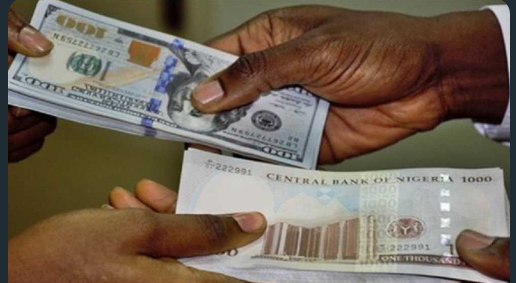
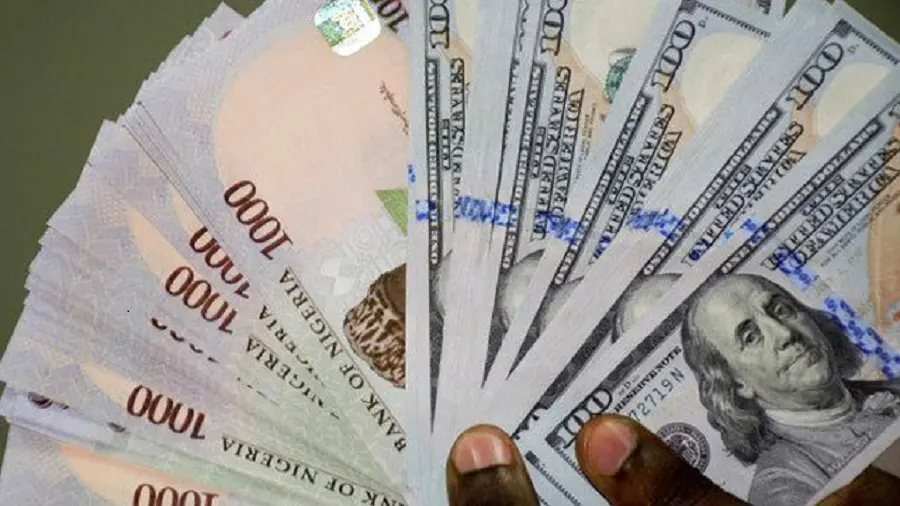
The official naira black market exchange rate in Nigeria today including the Black Market rates, Bureau De Change (BDC), and CBN rates.
Please note that the exchange rate is subject to hourly fluctuations influenced by the supply and demand of dollars in the market. As of now, you can purchase 1 dollar at a certain rate now, however, it’s important to remember that the rate can shift (either upwards or downwards) within hours.

What is the Black market dollar to naira today?
The local currency (abokiFx) opened at ₦1,680.00 per $1 at the parallel market otherwise known as the black market, today, Wednesday, 9 October 2024, in Lagos Nigeria, after it closed at ₦1,670.00 per $1 on Tuesday, 8 October 2024.
Dollar to Naira (USD to NGN) Black Market Exchange Rate Today
Buying Rate ₦1,670
Selling Rate ₦1,680
Please, note that the black market exchange rate of dollar to naira in Nigeria is typically higher than the official exchange rate because the Federal Government does not regulate it.
Below you can see the chart for the Nigerian Naira rate today in the official market compared to the Dollar.
1 USD = 1620.2374 NGN
1 Dollars = 1620.2374 Nigerian Naira
The USDNGN rate as of 9 Oct 2024
Disclaimer: NEWSRAIN NIGERIA does not set or determine forex rates. The official NAFEX rates are obtained from the FMDQOTC website. Parallel market rates (black market rates) are obtained from various sources including online media outlets. The rates you buy or sell forex may be different from what is captured in this article.
Source: Newsrain
Economy
FAAC: FG, states, LGs share N2.257tn April revenue
The Federal Government, states and local government councils shared a total sum of N2.257 trillion from the Federation Account in April.
Director, Press and Public Relations, Office of the Accountant General of the Federation, Bawa Mokwa, disclosed this in a statement on Monday.
The revenue was shared at the May 2026 Federation Account Allocation Committee, FAAC, meeting held in Abuja.
The N2.257 trillion total distributable revenue comprised distributable statutory revenue of N1.260 trillion , distributable Value Added Tax, VAT, revenue of N747.088 billion, and augmentation of N250.000 billion.
This indicated that total gross revenue of N3.184 trillion was available in the month of April 2026. The total deduction for cost of collection was N113.756 billion, while total transfers, refunds, and savings were N813.839 billion.
According to the statement, gross statutory revenue of N2.378 trillion was received for the month of April 2026. This was higher than the sum of N1.699 trillion received in the preceding month by N678.224 billion.
Gross revenue of N806.617 billion was available from VAT in April 2026. This was higher than the N664.425 billion available in the month of March 2026 by N142.192 billion.
The communiqué stated that from the N2.257 trillion total distributable revenue, the Federal Government received a total sum of N787.351 billion, and the state governments received a total sum of N772.360 billion.
The local government councils received N540.152 billion, while the sum of N157.254 billion (13% of mineral revenue) was shared with the benefiting states as derivation revenue.
On the N1.260 trillion distributable statutory revenue, the statement stated that the Federal Government received N580.942 billion and the state governments received N294.661 billion.
The local government councils received N227.172 billion, and the sum of N157.254 billion (13% of mineral revenue) was shared with the benefiting states as derivation revenue.
From the N747.088 billion distributable VAT revenue, the Federal Government received N74.709 billion, the state governments received N410.898 billion, and the local government councils received N261.481 billion.
The Federal Government received N131.700 billion of the N250.000 billion, the state governments received N66.800 billion, and the local governments received N51.500 billion.
In April 2026, Companies Income Tax, CIT, CGT, SDT, import duty, oil and gas royalty, and VAT increased significantly, while Petroleum Profit Tax, PPT, and hydrocarbon tax, HT, decreased considerably.
Excise duty and CET levies decreased marginally.
Economy
Nigeria’s company income tax drops to N1.37tn in Q1 2026 — NBS
Nigeria’s company income tax, CIT, decreased in the first quarter of 2026 to N1.37 trillion.
The National Bureau of Statistics, NBS, disclosed this in its CIT report released on Monday.
The report showed that the country’s CIT dropped by 8.98 percent when compared to N1.449 trillion collected in Q4 2025.
Further breakdown showed that domestic CIT stood at N538.91 billion, while foreign payments accounted for N828.82 billion in the period under review.
“Company Income Tax (CIT) in Q1 2026 stood at N1.37 trillion, indicating a decrease of 8.08 percent on a quarter-on-quarter basis from N1.49 trillion in Q4 2025.
“Of the total CIT collected, domestic CIT contributed N538.91 billion, while foreign CIT payment accounted for N828.82 billion during the quarter,” the NBS stated.
Economy
Revenue: IMF asks FG to impose fuel, telecom taxes
The International Monetary Fund has recommended introducing taxes on fuel products and telecommunications services in Nigeria as part of broader measures to increase government revenue and create fiscal space for development spending and social interventions.
The recommendation was contained in the IMF’s 2026 Article IV Consultation report on Nigeria, where the Fund argued that additional tax measures would be needed over the medium term despite the recent overhaul of the country’s tax system.
“Further tax policy changes will likely be needed—such as increasing the VAT rate, extending VAT to fuel products, rationalising tax expenditures in particular VAT exemptions on extractive industries and some customs duties, and introducing telecom excises—to complement administrative gains,” the IMF said.
The Washington-based institution, however, cautioned that the timing of any new taxes must take into account Nigeria’s rising poverty levels and worsening food insecurity.
“The timing of reforms must consider the poverty and food insecurity situation and ensure that the cash transfer system is in place and funded,” the Fund added.
The recommendation is likely to trigger fresh debate across the country, given the sensitivity surrounding fuel prices and telecommunications costs.
A previous attempt by the Federal Government to introduce a five per cent excise duty on telecom services faced widespread opposition from operators, subscribers and consumer advocacy groups before it was eventually suspended and later scrapped.
Telecommunications companies had argued that the sector was already burdened by multiple taxes, rising energy costs, foreign exchange pressures and infrastructure challenges, warning that any additional levy would ultimately be passed on to consumers through higher call and data charges.
Similarly, proposals linked to fuel taxation have generated opposition from labour unions and private sector groups amid concerns over rising living costs following the removal of petrol subsidies and increases in transport and food prices.
The IMF’s latest recommendation comes as it projects that Nigeria will need stronger revenue mobilisation efforts to sustain planned increases in public spending and support vulnerable households.
According to the report, revenue-enhancing tax policies could generate additional revenues equivalent to 3.9 per cent of Gross Domestic Product within three years of implementation. The Fund identified a two-percentage-point increase in the Value Added Tax rate as the single largest contributor, with an estimated revenue gain of 0.8 per cent of GDP.
It also projected that removing pioneer status incentives and revising free zone regulations would generate another 0.7 per cent of GDP, while reforms to capital gains taxation and adjustments to personal income tax bands, allowances and rates would each contribute 0.6 per cent of GDP.
The IMF further estimated that a top-up tax on multinationals and large firms could raise 0.5 per cent of GDP, while rationalising investment allowances would add another 0.4 per cent.
Notably, the category labelled “others”, which includes telecom excise duties and other measures such as a carbon tax on fuel, was projected to contribute an additional 0.4 per cent of GDP in revenue gains.
Beyond new tax measures, the Fund said Nigeria could generate even larger gains through stronger tax administration.
It projected that administrative reforms would yield an additional 3.1 per cent of GDP through improved compliance, enforcement and efforts to reduce informality in the economy.
According to the report, measures such as fiscalisation, electronic invoicing and cross-validation of tax deductions could generate 1.5 per cent of GDP, while expanded tax identification registration and consolidation of taxpayer databases could contribute another 1.6 per cent of GDP.
The IMF acknowledged that some of Nigeria’s recently enacted tax reforms would reduce government revenue in the short term because they were designed to support households and small businesses.
It estimated that revenue-reducing measures would lower revenues by 2.4 per cent of GDP, with expanded VAT input credits, additional zero-rated items and broader exemptions on basic consumption goods accounting for 1.7 percentage points.
Lower corporate income tax obligations for smaller firms would reduce revenues by 0.4 per cent of GDP, while lower personal income tax rates and expanded exemptions for low-income earners would account for another 0.3 percentage point reduction.
Overall, the IMF projected that the combined impact of revenue-enhancing measures, administrative reforms and revenue-reducing policies would result in a net increase in government revenue equivalent to 4.6 per cent of GDP over the medium term.
The Fund argued that stronger revenue mobilisation had become increasingly important because Nigeria’s fiscal position remained under pressure despite recent reforms.
-
News23 hours agoBREAKING: Gunmen storm NIPSS Kuru, kill two soldiers Police Officer
-
News18 hours agoFG, FRSC Join Forces to Crack Down on Fake Diplomatic Number Plates
-
Politics5 hours agoPDP Sweeps Adamawa LG Elections, Wins All 21 Councils, 226 Wards
-
News18 hours agoADC alleges plot to cripple opposition, thumbs down court deregistration order
-
News17 hours agoKwara ADC guber candidate, Mohammed mourns death of Oba Aweda while in captivity
-
News14 hours agoDefence Stakeholders Resist Plan to Reserve NDA Entry for Military School Alumni
-
Entertainment5 hours agoWhy I Took Decision To Marry Myself On My 45th Birthday-Denrele Edun
-
News18 hours agoTinubu Commissions Court of Appeal Judges’ Quarters, Urges States to Strengthen Judicial Infrastructure(Photos)

Warning: Undefined variable $user_ID in /home/naijuinz/public_html/wp-content/themes/zox-news/comments.php on line 49
You must be logged in to post a comment Login