
News
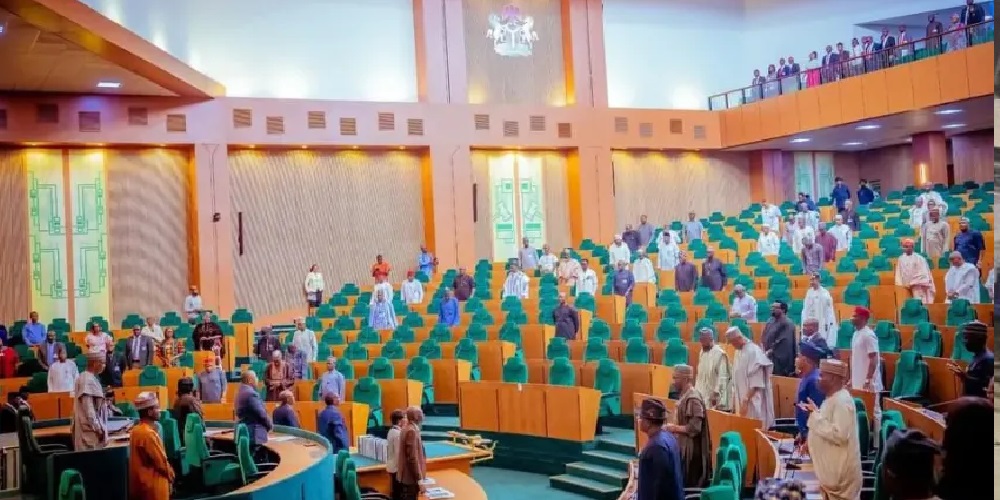
Reps Pass For Second Reading Bill To Create National Honours Award Commission

- /home/naijuinz/public_html/wp-content/plugins/mvp-social-buttons/mvp-social-buttons.php on line 27
https://naijablitznews.com/wp-content/uploads/2024/05/house-of-representatives2.jpg&description=Reps Pass For Second Reading Bill To Create National Honours Award Commission', 'pinterestShare', 'width=750,height=350'); return false;" title="Pin This Post">
- Share
- Tweet /home/naijuinz/public_html/wp-content/plugins/mvp-social-buttons/mvp-social-buttons.php on line 72
https://naijablitznews.com/wp-content/uploads/2024/05/house-of-representatives2.jpg&description=Reps Pass For Second Reading Bill To Create National Honours Award Commission', 'pinterestShare', 'width=750,height=350'); return false;" title="Pin This Post">



By Gloria Ikibah
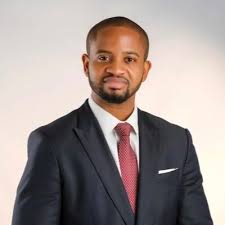
President Bola Tinubu has congratulated the Managing Director and Chief Executive Officer of the South-East Development Commission (SEDC), Mark Okoye, on the occasion of his 40th birthday, commending his contributions to public service and leadership in national development.
In a statement issued by the Special Adviser to the President (Information & Strategy),Bayo Onanuga, on Sunday, the President celebrated Okoye’s milestone birthday and acknowledged what he described as an impressive record of service spanning more than a decade.
Before assuming leadership of the South-East Development Commission, Okoye held several strategic positions in Anambra State, including Managing Director and Chief Executive of the Anambra State Investment Promotion and Protection Agency. He also served as Special Adviser to the Governor before later becoming Commissioner for Economic Planning, Budget and Development Partners.
The President used the occasion to recognise Okoye’s achievements in public office and his commitment to advancing development initiatives.
The statement read: “President Tinubu acknowledges Okoye’s dedication, resilience, and passion for service, and encourages him not to relent in his efforts to manage the South-East Development Commission and deliver on its mandate.”
The statement noted that the President views young leaders as critical to Nigeria’s future and expressed confidence in the capacity of the country’s emerging generation of public servants.
Tinubu also praised Okoye’s professional conduct throughout his years in government service.
“As a youth-centric leader, the President states that, with Okoye and many other innovative young people in his administration, the nation’s future remains promising.
“The President celebrates Okoye on this milestone and commends his 14-year unblemished record in public service.”
The President joined family members, friends and associates in celebrating the SEDC chief executive, offering prayers for his continued wellbeing and success.
“President Tinubu joins family, friends, and well-wishers in wishing Okoye a happy 40th birthday, good health, and renewed strength as he continues his service to the nation”, he added.
News
Deputy Speaker Pushes for Home-Grown Defence Industry, Stronger Financial Crackdown on Insecurity
By Gloria Ikibah
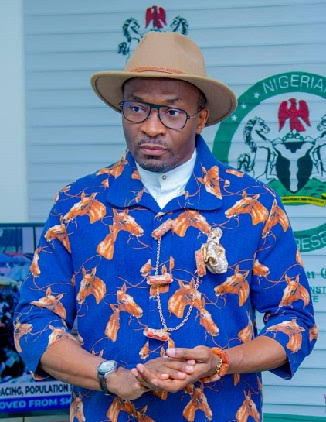
Deputy Speaker of the House of Representatives, Rt. Hon.mBenjamin Kalu, has called for a major shift in Nigeria’s security strategy, urging increased local production of military equipment and stronger financial controls to disrupt criminal and terrorist networks.
Speaking at the Nigeria People’s Strategic Conference and Defence Exhibition 2026 in Abuja on Saturday, Kalu said the country must reduce its dependence on imported weapons and invest more heavily in building a self-reliant defence manufacturing sector capable of supporting national security needs.
The conference, which focused on integrating private sector capacity into Nigeria’s security architecture, brought together stakeholders from government, business and the security community to discuss solutions to the country’s evolving security challenges.
He argued that expanding domestic arms production would not only strengthen national defence capabilities but also create jobs, stimulate industrial growth and reduce vulnerabilities associated with reliance on foreign suppliers.
The Deputy Speaker also highlighted the critical role of the financial sector in the fight against insecurity, calling on banks and other financial institutions to intensify due diligence measures and strengthen transaction monitoring systems to identify and block illicit financial flows that sustain criminal groups and terrorist organisations.
He emphasised that addressing insecurity requires coordinated action across multiple sectors and urged participants to move beyond discussions towards concrete commitments and measurable outcomes.
According to him, technology companies have a vital role to play by developing platforms that enhance intelligence gathering, information sharing and early warning systems. He also underscored the importance of civil society organisations in strengthening trust between communities and government institutions, particularly in areas affected by insecurity.
Kalu further assured stakeholders that the National Assembly will continue to support security reforms through legislative action, constitutional review processes, budgetary allocations and robust oversight of security-related programmes.
The Deputy Speaker maintained that despite the security challenges facing the country, Nigeria remains resilient and capable of overcoming its difficulties through stronger institutions, innovation and greater collaboration among public and private sector actors.
He said: “Every sector represented in this room must leave with a specific, measurable role in Nigeria’s security architecture. The defence industry must deepen local capacity so that we do not import what we can produce. The technology sector must offer platforms for intelligence sharing and community early warning. The financial sector must tighten the chokepoints through which criminal and terrorist financing flows. The civil society must continue to build the bridges between communities and government that make sustainable peace possible.
“And the legislature, we will continue to provide the legal scaffolding on which all of this is built. We will continue to review the constitution where it needs reviewing. We will appropriate resources where resources are needed. We will provide oversight to ensure that what is promised is delivered. We will legislate not for public applause but for the protection of lives and the dignity of every Nigerian.”
Kalu noted that the House recently voted 289 to 2 in favour of a safer Nigeria through the State Police constitutional amendment, describing the near-unanimity as patriotic rather than partisan.
“I am proud to serve in an assembly that just two days ago voted 289 to 2 in favour of a safer Nigeria. That near-unanimity was not partisan. It was patriotic. And it must be matched by an equal unity of purpose in this room today.
“There is a Nigeria on the other side of this season. That Nigeria is not a promise. It is a project. A project that belongs to all of us; both the legislature and the executive, the uniform and the suit, the community and the corporation, the government and the governed.
“We are a people worth fighting for. This republic is worth building. And let this moment be the moment we decide, formally and finally, to build it together”, he said.
The Deputy Speaker also dismissed the feelings in some quarters that Nigeria was failing.
“Nigeria is not failing. Nigeria is fighting. There is a difference. A failing country stops trying. Nigeria has never stopped trying. That is our heritage. That is our irreducible character. But resilience must be met by structure. Courage must be met by policy. The sacrifice of the Nigerian people deserves a security ecosystem worthy of the sacrifice”, he said.
The event drew participants from the defence industry, financial institutions, civil society, and security agencies.
News
ECOWAS Parliament Convenes High-Level Dakar Summit to Drive Renewable Energy Push in Rural West Africa
By Gloria Ikibah
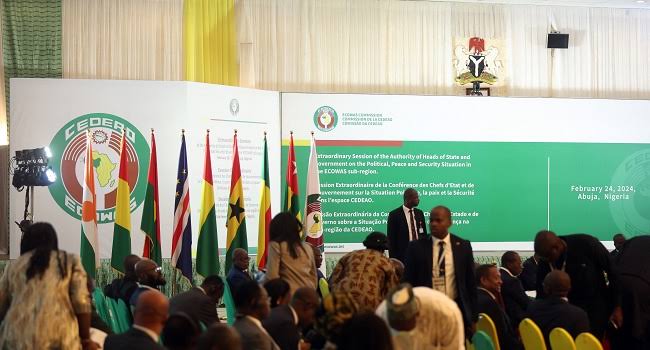
The ECOWAS Parliament is set to convene a major regional meeting in Dakar aimed at advancing renewable energy deployment and expanding electricity access to millions of people living in rural communities across West Africa.
The five-day Delocalised Joint Committee Meeting, scheduled for June 15 to 19, will bring together Members of Parliament, representatives of ECOWAS institutions, government officials, development partners, private sector stakeholders, civil society organisations and energy experts to examine practical solutions for accelerating rural electrification throughout the region.
The meeting will be held under the theme, “Harnessing Renewable Energy for Rural Electrification and Empowerment of Rural Economies in the ECOWAS Region: The Role of the ECOWAS Parliament”, will be organised by the Joint Committee on Energy and Mines, Agriculture, Environment and Natural Resources, and Infrastructure under the Sixth Legislature of the ECOWAS Parliament.
The gathering comes against the backdrop of persistent energy deficits across many rural communities in West Africa, where millions of residents still lack access to reliable electricity despite notable progress in recent years. Limited electricity access continues to affect key sectors, including agriculture, education, healthcare, digital connectivity and economic productivity.
With ECOWAS targeting universal access to sustainable and affordable energy by 2030, participants are expected to focus on the role of parliamentary action in advancing that objective and supporting policies that encourage investment and innovation in the energy sector.
Central to the discussions will be the potential of decentralised renewable energy solutions, including solar mini-grids, hybrid energy systems and stand-alone solar installations, to close the electricity access gap in underserved areas.
Delegates will also assess how West Africa can better harness its vast but largely untapped solar and hydropower resources to meet growing energy demand.
The meeting will further review major regional energy frameworks, including the ECOWAS Renewable Energy Policy (EREP), the Energy Efficiency Policy (EEEP), the updated ECOWAS Energy Policy and the Regional Electricity Market (REM).
Participants will also evaluate the contributions of the ECOWAS Centre for Renewable Energy and Energy Efficiency (ECREEE), the West African Power Pool (WAPP) and the ECOWAS Regional Electricity Regulatory Authority (ERERA) in strengthening regional energy integration.
One of the key features of the programme will be a field visit to a renewable energy installation in Senegal. During the visit, lawmakers will engage directly with beneficiary communities, local entrepreneurs, women and youth groups to gain first-hand insight into the impact of rural electrification on livelihoods, economic activity and community development.
At the end of the meeting, Members of Parliament are expected to adopt a set of recommendations aimed at reinforcing regional rural electrification initiatives, attracting greater investment into renewable energy infrastructure and strengthening parliamentary oversight of ECOWAS energy policies and programmes.
The outcomes of the Dakar meeting are expected to contribute to ongoing efforts to bridge the energy access gap and support sustainable economic growth across the ECOWAS region.

Enzo Maresca wants Chelsea Defensive Superstar as Top Target at Man City

Real Madrid complete a Shocking Signing of Chelsea Superstar

Tinubu Hails SEDC Boss Mark Okoye at 40, Praises Public Service Record




-

 News18 hours ago
Board releases lists of successful NSCDC, NIS, NCoS applicants
-
 News18 hours ago
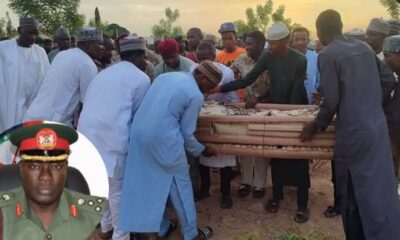
Finally, ex- Defence spokesperson, Rabe Abubakar buried in Katsina
-
 News18 hours ago
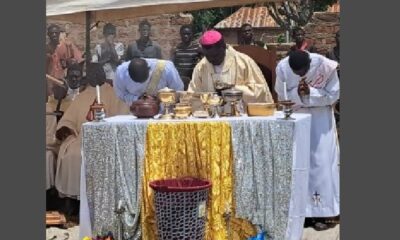
Protect Vulnerable Benue People From Persistent Attacks, Pope Leo XIV Tells FG
-

 News18 hours ago
Tinubu condemns death of retired general Rabe in kidnappers’ custody
-
 News19 hours ago
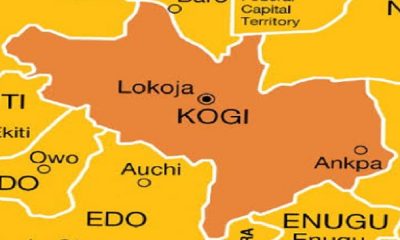
Insecurity: Kogi Bans Okada Operations In Bunu District, Night Travel
-

 News18 hours ago
Chimamanda Adichie alleges cover-up, negligence following son’s death
-
 Crime6 hours ago
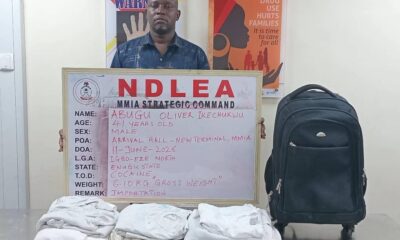
NDLEA nabs businessman with 6.10kg cocaine starched in shirts, towels from Brazil+Photos
-

 News8 hours ago
31.5kg cocaine trafficking: 11 Indian sailors, ship convicted, fined $6m
Warning: Undefined variable $user_ID in /home/naijuinz/public_html/wp-content/themes/zox-news/comments.php on line 49
You must be logged in to post a comment Login