News
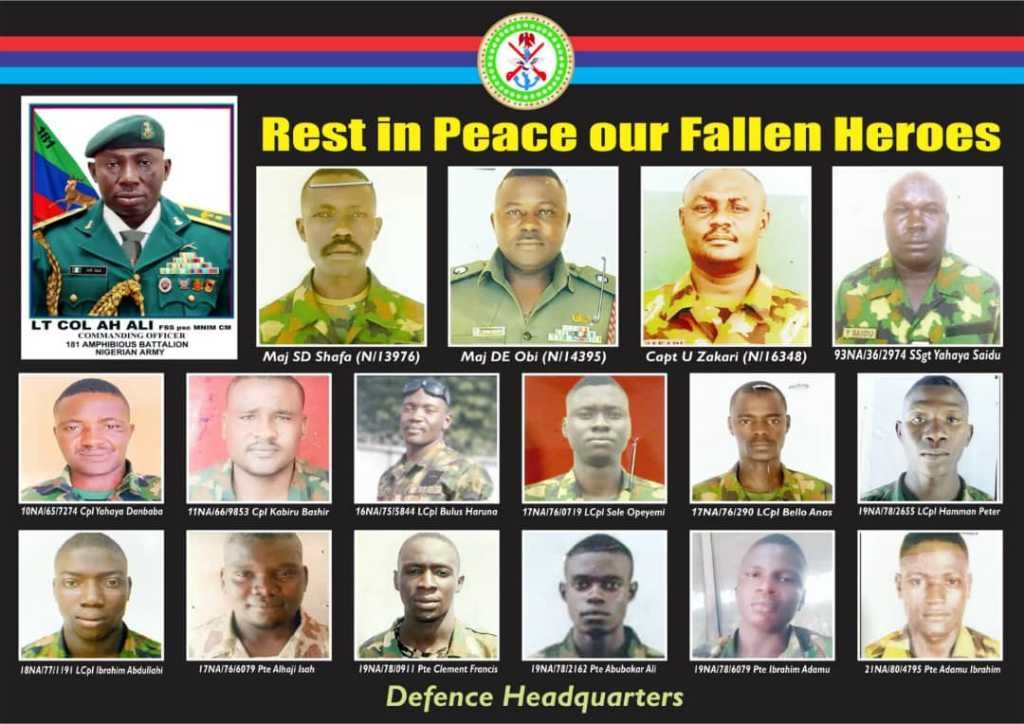
NHRC Condemns Killing Of 16 Soldiers
- /home/naijuinz/public_html/wp-content/plugins/mvp-social-buttons/mvp-social-buttons.php on line 27
https://naijablitznews.com/wp-content/uploads/2024/03/Killing-Of-16-Soldiers-1000x600.jpg&description=NHRC Condemns Killing Of 16 Soldiers', 'pinterestShare', 'width=750,height=350'); return false;" title="Pin This Post">
- Share
- Tweet /home/naijuinz/public_html/wp-content/plugins/mvp-social-buttons/mvp-social-buttons.php on line 72
https://naijablitznews.com/wp-content/uploads/2024/03/Killing-Of-16-Soldiers-1000x600.jpg&description=NHRC Condemns Killing Of 16 Soldiers', 'pinterestShare', 'width=750,height=350'); return false;" title="Pin This Post">
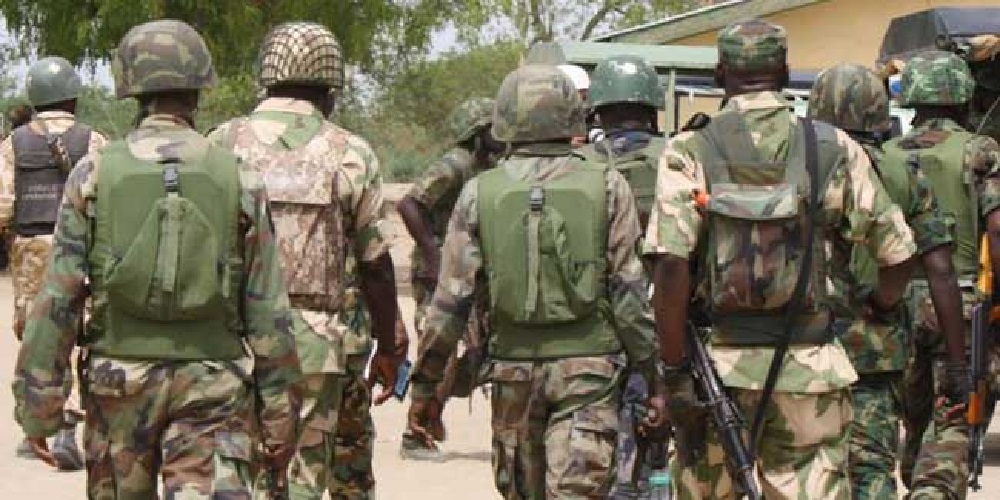
The National Human Rights Commission (NHRC) has condemned in strong terms the killing of 16 soldiers (officers and men) and some civilians on Thursday, March 14, 2024.

The killings were allegedly carried out by youths from Okuama community in Ugheli South local government area of Delta State while soldiers were on a peace mission to the community.
The Commission, in a statement on Monday, rejected the practice whereby aggrieved individuals and groups take laws into their hands attacking and killing law enforcement agents, insisting that such behaviors occasion human rights violations and distrust.

It said: “To this extent, it specifically amounts to violations of the right to life and dignity of human person as guaranteed under Article 3 of the Universal Declaration of Human Rights (UDHR), Article 1 of the International Covenant on Civil and Political Rights (ICCPR), Article 4 of the African Charter on Human and Peoples’ Rights (ACHPR), and other international instruments to which Nigeria is a signatory. Furthermore, everyone is entitled to life and security of their person under section 33 of the 1999 Constitution of Nigeria (as amended).”
NHRC said: “These senseless killings of security agents which has been going on in several parts of the country are not acceptable. Citizens must engage and collaborate with the Law Enforcement Agents (LEAs), by providing them with the necessary information that will assist them in fishing out those behind these heinous and dastardly acts and ensure that they are prosecuted and punished in accordance with the law.”
The Executive Secretary of the Commission, Dr. Tony Ojukwu in the signed statement, urged authorities to put necessary mechanisms in place to arrest everyone allegedly involved in the gruesome murders.
This is aimed to bring all perpetrators to to justice and prevent further occurrence in the future.
He said: “We are keenly monitoring the situation and official investigation in this case to ensure that those who are behind this inhumane and wicked act are quickly arrested, prosecuted and punished in accordance with the relevant international, regional and municipal laws.”
The Commission urged everyone, including the affected community and the Nigerian Armed Forces to sheath their sword and refrain from any form of reprisals while awaiting for the outcome of the investigation.
This is to avoid further escalation of the crises that could worsen tension and human rights violations. The Commission expresses condolence to the Chief of Defense Staff, Chief of Army Staff, the Nigerian military, and the families of the slain soldiers and urges everyone to remain calm and trust that justice will be served accordingly.
News
Reps Back President Tinubu’s Economic Reforms, Subject 13 Commerce Bills to Public Scrutiny
By Gloria Ikibah
The House of Representatives has reaffirmed its commitment to supporting President Bola Ahmed Tinubu’s economic reform agenda as lawmakers commenced a public hearing on 13 commerce-related bills aimed at strengthening Nigeria’s business environment, expanding trade opportunities and promoting private sector growth.
Speaker of the House, Rt. Hon. Tajudeen Abbas, made the commitment while declaring open the public hearing organised by the House Committee on Commerce on Monday in Abuja.
He described commerce as one of the strongest pillars of Nigeria’s economy, noting that it drives investment, stimulates production, creates jobs, encourages innovation and boosts consumer confidence.
According to the Speaker, the ongoing legislative exercise is designed to ensure that Nigeria’s commercial laws keep pace with technological advancements, emerging economic realities and global best practices.
He said: “As Nigeria pursues economic diversification and greater competitiveness, we must ensure that our commercial laws are responsive to emerging realities, technological advancement and international best practices.
“This hearing exemplifies the enduring commitment of the House of Representatives to inclusive, transparent and participatory lawmaking. We firmly believe that legislation is strongest when it does not depend on the wisdom of legislators alone, but incorporates the practical experience, expertise and perspectives of the people it is designed to serve. Public hearings therefore remain one of the most valuable instruments through which we deepen democracy and ensure that our laws truly reflect the needs and aspirations of Nigerians”.
Speaker Abbas explained that the objective of the hearing was to subject the proposed legislation to thorough public examination, receive input from stakeholders and ensure that the final laws promote enterprise, protect legitimate businesses, encourage fair competition and support sustainable economic growth.
“In carrying out this important responsibility, the Committee is expected to carefully examine the policy objectives of each Bill, assess their likely impact on businesses, investors and consumers, receive memoranda and oral presentations from stakeholders, and recommend only those provisions that will strengthen Nigeria’s commercial environment and improve our competitiveness as an investment destination. These responsibilities demand diligence, fairness, objectivity and an unwavering commitment to the national interest.
“This exercise aligns closely with the Legislative Agenda of the 10th House of Representatives, which places a premium on economic growth, institutional reform, good governance and private sector development. Since our inauguration, we have remained committed to enacting laws that improve the ease of doing business, support entrepreneurship, remove unnecessary regulatory barriers, attract investment and create opportunities for our people.
“It also reinforces our unwavering commitment to supporting the economic reform programme of the administration of President Bola Ahmed Tinubu, GCFR. The Renewed Hope Agenda envisions a stronger, more productive and globally competitive Nigerian economy. As the People’s House, we shall continue to provide the legislative framework and oversight necessary to translate that vision into measurable progress for businesses, investors and ordinary Nigerians,” he added.
The Speaker urged participants to approach the assignment with patriotism and place national interest above personal or institutional considerations.
“Let our contributions be guided by facts, informed by experience and inspired by our collective desire to build a stronger economy. Let us rise above sectional, institutional or personal interests and focus instead on what is best for our nation.
“It is actually through engagements like this that we strengthen our democratic institutions, build public confidence in the legislative process and lay the foundation for a more dynamic, competitive and prosperous Nigerian economy,” Abbas said.
Also speaking, the Minister of Industry, Trade and Investment, Dr. Jumoke Oduwole, commended the House for initiating a public hearing on the African Continental Free Trade Area (AfCFTA) Domestication Bill, describing it as a critical step towards Nigeria’s economic transformation.
The Minister said the agreement offers Nigeria enormous opportunities to expand trade, attract investment, strengthen regional value chains and create jobs.
“The AfCFTA is critical to Nigeria’s trade, investment, industrialization and economic transformation agenda.
“The AfCFTA is the world’s largest free trade area by number of participating countries. It provides access to a continental market of over 1.4 billion people with a combined GDP exceeding US$3 trillion. For Nigeria, it presents a unique opportunity for Nigerian businesses to expand into new markets, attract investment, create jobs and strengthen regional value chains.
“Since ratifying the Agreement in 2020, Nigeria has made significant progress in its implementation. We have established the institutional framework for coordination through the Central Coordination Committee and the Nigeria AfCFTA Coordination Office, developed a National AfCFTA Implementation Strategy, and submitted our tariff concessions and services commitments under Trade in Goods and Services respectively,” Oduwole said.
The minister, who currently serves as Chairperson of the AfCFTA Council of Ministers, stressed that successful implementation of the continental trade agreement requires a solid legal framework.
“As the current Chairperson of the AfCFTA Council of Ministers, I recognise the fact that effective continental implementation of the AfCFTA requires more than policy and administrative action.
“It requires a clear and comprehensive domestic legal framework. At the recent meeting of the ECOWAS Council of Ministers responsible for Industry and Trade (ECOMOTI) held in June 2026, the Council underscored this point,” she said.
She described the proposed AfCFTA Domestication Bill as both timely and strategic.
“The Bill is not merely about implementing an international treaty. It is about positioning Nigeria to fully harness the opportunities of continental trade while safeguarding our national interests. It provides the legal basis for coordinated implementation across government institutions, promotes transparency and predictability for investors and businesses, and strengthens Nigeria’s capacity to meet its obligations while effectively enforcing its rights under the Agreement.
“Importantly, this legislation aligns with the Renewed Hope Agenda of President Bola Ahmed Tinubu, GCFR, by promoting economic diversification, industrial growth, export expansion, investment promotion and job creation. It is an important step towards building a more competitive and resilient Nigerian economy,” she added.
Earlier, Chairman House Committee on Commerce, Rep. Ahmed Munir, said the hearing represented one of the most important stages of the legislative process.
He explained that the 13 bills before the committee are aimed at modernising Nigeria’s commercial laws, strengthening professional standards and positioning the country for sustainable economic growth.
“Today, we gather to deliberate on thirteen (13) key legislative proposals designed to modernize Nigeria’s commercial framework, strengthen professional standards, and position our economy for sustainable growth in a rapidly evolving global market.
“The bills before us today touch on fundamental sectors of our national economy,” he said.
Rep. Munir explained that the bills cover three broad areas, including expanding global trade and protecting local assets through the AfCFTA Implementation Bill and amendments to the Nigerian Export Promotion Council Act; modernising commerce through reforms to digital economy legislation, the Sale of Goods Act and the Price Control Act; and strengthening professional institutions through the establishment and regulation of several chartered professional bodies.
According to him, the overall objective of the 10th House was to ensure that legislation promotes economic growth rather than creating obstacles for businesses.
“The goal in the 10th House of Representatives is to ensure that laws actively foster economic expansion rather than obstruct it.
“The success of this legislative exercise depends heavily on your candid, expert feedback. I urge all stakeholders, be it governmental, industrial, and civil society, to actively participate, offer constructive critiques, and provide data-driven insights to help us refine these bills into robust legal instruments,” Munir said.
Stakeholders drawn from government agencies, professional bodies, private sector organisations and civil society groups also made presentations during the hearing, offering recommendations aimed at strengthening the proposed legislation before their passage by the National Assembly.
News
ECOWAS Parliament Pushes Bold Reforms to Unlock MSME Growth Across West Africa
By Gloria Ikibah
The Parliament of the Economic Community of West African States (ECOWAS) has called for urgent policy reforms to strengthen Micro, Small and Medium Enterprises (MSMEs), describing them as the backbone of the region’s economy and a critical driver of job creation, innovation and regional integration.
The call was made at the opening of the Joint Committee meeting on Industry and Private Sector, Macroeconomic Policy and Economic Research, Administration, Finance and Budget, and Public Accounts on Monday, in Cotonou, Republic of Benin.
The meeting is focused on developing strategies to empower MSMEs as formal drivers of regional value chains.
Speaking on behalf of the joint committees, Co-Chairperson Hon. Alhagie Darbo said MSMEs play a central role in the economic life of West Africa but continue to face major challenges because many operate outside the formal sector.
He said: “Across our region, Micro, Small and Medium Enterprises constitute the backbone of local economies. It generates employment, stimulate innovation, promote entrepreneurship, empower women and young people, and facilitate cross-border trade.
“Yet, despite their enormous contribution, a significant proportion of these enterprises continue to operate informally, limiting their access to finance, markets, technology, business support services and legal protection.
“It is estimated that the informal sector accounts for nearly 90% of economic activities and employs not less than 60% of our labour force across member states.
“While this demonstrates the entrepreneurial spirit of our people, it also highlights the urgent need to create enabling policies that encourage formalisation, improve productivity and integrate MSMEs into regional and continental value chains.”
Darbo stressed that empowering small businesses goes beyond economic growth, describing it as an essential tool for reducing poverty and achieving sustainable development across the sub-region.
He urged lawmakers and stakeholders to focus on practical reforms capable of removing barriers that continue to limit the growth of small businesses.
“As representatives of the peoples of West Africa, we have a collective responsibility to identify practical policy measures that will remove barriers confronting MSMEs and unlock their full potential. Formalising and strengthening these enterprises is not merely an economic imperative; a pathway to sustainable development and poverty reduction.
“Distinguished Members and other participants, the adoption of ECOWAS Vision 2050 provides us with a clear strategic framework for transforming our Community into a peaceful, prosperous and fully integrated region driven by its people.
“Achieving this vision requires stronger institutions commitment, including enabling business environment where MSMEs can thrive, compete and participate effectively in regional and beyond”, he added.
He also challenged participants to ensure the meeting produces practical recommendations capable of transforming the region’s business environment.
“Our discussions over the coming days should therefore move beyond identifying challenges. We must focus on developing practical recommendations that will support harmonised policies, improve access to finance, enhance digital transformation, facilitate intra-regional trade, strengthen productive capacities, and promote the participation of MSMEs in regional value chains under the ECOWAS Trade Liberalisation Scheme and the African Continental Free Trade Area.
“I am confident that the wealth of experience represented in this room including Honourable Members, policy experts, representatives of the private sector and development partners will generate insightful discussions and actionable recommendations capable of advancing the economic transformation of our Community”, Hon. Darbo stated.
Declaring the meeting open, Speaker of the ECOWAS Parliament, Hon. Hadja Memounatou Ibrahima, represented by the Second Deputy Speaker, Hon. Adjaratou Traore Coulibaly, described MSMEs as indispensable to the region’s economic growth and development.
She noted that strengthening small businesses would not only improve livelihoods but also contribute to tackling insecurity across the region by creating more opportunities for women and young people.
The Speaker observed that empowering entrepreneurs through targeted support and favourable policies would help reduce unemployment, promote inclusive growth and strengthen social stability in ECOWAS member states.
The week-long meeting is expected to produce recommendations aimed at harmonising regional policies, improving access to finance, promoting digital innovation, strengthening intra-African trade and expanding the participation of MSMEs in regional value chains under the ECOWAS Trade Liberalisation Scheme and the African Continental Free Trade Area (AfCFTA).
Participants expressed optimism that implementing the outcomes of the meeting would strengthen the economies of ECOWAS member states, improve regional competitiveness and position West Africa as a stronger player in the global economy.
News
AGF Reveals Alleged Hijacked State House Letter Helped Fake Agency Get Recognition
By Gloria Ikibah
The House of Representatives Ad-Hoc Committee investigating the alleged operation of the Presidential Economic Advisory Council (PEAC) and the Presidential Foreign Investment Promotion Council (PFIPC) also heard fresh testimony from the Accountant-General of the Federation, Shamseldeen Ogunjimi, who explained how a letter purportedly issued by the State House enabled the controversial council to obtain official administrative recognition.
Presenting his report, Ogunjimi said the Office of the Accountant-General first interacted with the council in November 2024 after receiving a letter dated November 7, 2024, requesting the creation of an administrative code for budgeting, accounting and reporting purposes.
He explained that the office followed established procedures by creating the administrative code and notifying the State House while copying the Office of the Auditor-General.
Subsequently, the office received additional requests relating to self-accounting status, Treasury Single Account (TSA), domiciliary accounts, staff deployment and funding.
Despite processing some administrative requests, Ogunjimi stressed that no public funds were released to the council.
“It is important to note that no funds were released under salaries, overhead, capital, or any form of intervention or special allocation to the council,” he told lawmakers.
He disclosed that although the council requested an establishment grant of N27.4 billion, the request was never approved because there was no budgetary provision for it.
He also explained that while the Central Bank of Nigeria opened two domiciliary accounts for the council, they never became operational because regulatory conditions were not met.
However, the most significant revelation came when Ogunjimi informed the committee that the original correspondence requesting the administrative code was later discovered not to have originated from the State House.
“The letter that was received by the Treasury. was respectfully addressed as coming from the State House.
“That letter was never issued by the State House”, he said.
The disclosure prompted lawmakers to describe the correspondence as a hijacked State House letter allegedly used to mislead government agencies into recognising a non-existent institution.
The Accountant-General further explained that two Treasury officers originally deployed to the Office of the Chief Economic Adviser in 2010 and 2013 remained there after the office was allegedly taken over by the new council because no formal notification was sent to his office.
“It was never assumed or written to us that those two officers were being taken over.
“The staff also never reported to the office to say that another council had taken over the office and the name had changed.
“As far as I was concerned, we were dealing with a new agency, not the Office of the Chief Economic Adviser,” he said.
He added that when the council later requested five additional officers, only three were approved because officials considered the organisation too small to justify the number requested.
“It was when all this matter came to light that I got to know that two of our staff were actually working or being absorbed by the agency.
“We never knew. We believed, based on the records available to us, that those officers were still with the Office of the Chief Economic Adviser,” he said.
The House committee is expected to continue its investigation on Wednesday when Adeyemi is expected to appear before lawmakers to respond to allegations surrounding the operation of the purported presidential council and the alleged forgery of official government documents.
-
News16 hours agoTinubu smokes silk cigarettes a lot: he can’t do without them: Babachir Lawal
-
News16 hours agoPHOTOS: Jay-Jay Okocha’s Daughter, Daniella, Shares Photos From Bachelorette Party in Greece Ahead of Wedding
-
News16 hours agoTinubu Is Tired, Should Be Allowed To Retire In Peace, Says Peter Obi
-
News16 hours ago2027: APC uploads 27 governorship candidates to INEC portal ahead of deadline
-
Foreign16 hours agoIran cautions, says Middle East war will expand geographically If US falls for zionists deception
-
News15 hours agoSuspected Hoodlums Cart Away PVCs At Distribution Centre In Osun
-
Entertainment15 hours agoFULL LIST: BBNaija Season 11 Kicks Off As 24 Housemates Battle For Record N160m Prize
-
News2 hours agoFugitive drug kingpin, ex-int’l footballer bag 24 years jail term for cocaine importation(Photos)