
News
Finally, Trump returns to White House after unprecedented comeback, emboldened to reshape American institutions

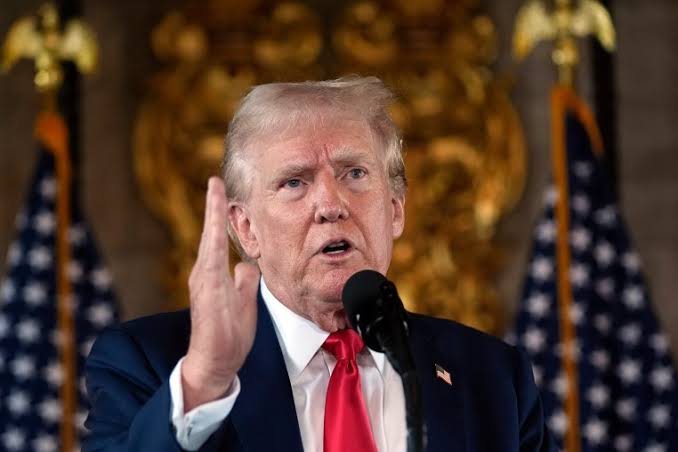


Donald Trump was sworn in as the 47th president Monday, promising a “revolution of common sense” and taking charge as Republicans assume unified control of Washington and set out to reshape the country’s institutions.
Trump, who overcame impeachments, criminal indictments, and a pair of assassination attempts to win another term in the White House, will act swiftly after the ceremony. Dozens of executive orders have already been prepared for his signature to clamp down on border crossings, increase fossil fuel development, and end diversity and inclusion programs across the federal government.
Declaring that the government faces a “crisis of trust,” Trump said in his inaugural address that under his administration “our sovereignty will be reclaimed. Our safety will be restored. The scales of justice will be rebalanced.”
Trump claimed “a mandate to completely and totally reverse a horrible betrayal,” promising to “give the people back their faith, their wealth, their democracy and indeed their freedom.”
“From this moment on,” he added, “America’s decline is over.”
The executive orders are the first step in what Trump is calling “the complete restoration of America and the revolution of common sense.”
Other goals will prove more difficult, perhaps testing the patience of supporters who were promised quick success. Trump has talked about lowering prices after years of inflation, but his plans for tariffs on imports from foreign countries could have the opposite effect.
Frigid weather rewrote the pageantry of the day. Trump’s swearing-in was moved indoors to the Capitol Rotunda — the first time that has happened in 40 years — and the inaugural parade was replaced by an event at a downtown arena. Throngs of Trump supporters who descended on the city to watch the inaugural ceremony outside the Capitol from the National Mall were left to find other places to view the festivities.
At the Capitol, Vice President JD Vance was sworn in first, taking the oath read by Supreme Court Justice Brett Kavanaugh on a Bible given to him by his great-grandmother. Trump followed moments after noon, using both a family Bible and the one used by President Abraham Lincoln at his 1861 inauguration as Chief Justice John Roberts administered his oath.
A cadre of billionaires and tech titans — including Mark Zuckerberg, Jeff Bezos, Tim Cook and Sundar Pichai — were given prominent positions in the Capitol Rotunda, mingling with Trump’s incoming team before the ceremony began. Also there was Elon Musk, the world’s richest man, who is expected to lead an effort to slash spending and federal employees.
Trump and his wife, Melania, were greeted at the North Portico of the executive mansion by outgoing President Joe Biden and first lady Jill Biden for the customary tea and coffee reception. It was a stark departure from four years ago, when Trump refused to acknowledge Biden’s victory or attend his inauguration.
“Welcome home,” Biden said to Trump after the president-elect stepped out of the car. The two presidents, who have spent years bitterly criticizing each other, shared a limo on the way to the Capitol. After the ceremony, Trump walked with Biden to the building’s east side, where Biden departed via helicopter to begin his post-presidential life.
Trump’s inauguration realized a political comeback without precedent in American history. Four years ago, he was voted out of the White House during an economic collapse caused by the deadly COVID-19 pandemic. Trump denied his defeat and tried to cling to power. He directed his supporters to march on the Capitol while lawmakers were certifying the election results, sparking a riot that interrupted the country’s tradition of the peaceful transfer of power.
But Trump never lost his grip on the Republican Party and was undeterred by criminal cases and two assassination attempts as he steamrolled rivals and harnessed voters’ exasperation with inflation and illegal immigration.
Trump used his inaugural address to repeat his claims that he was targeted by political prosecutions, and he promised to begin “fair, equal and impartial justice.”
He also acknowledged that he was taking office on Martin Luther King Jr. Day, which honors the slain civil rights hero. Trump said, “We will strive together to make his dream a reality,” and he thanked Black and Latino voters for their support in November.
Now Trump is the first person convicted of a felony — for falsifying business records related to hush money payments — to serve as president. He pledged to “preserve, protect and defend” the Constitution from the same spot that was overrun by his supporters on Jan. 6, 2021. He’s said that one of his first acts in office will be to pardon many of those who participated in the riot.
Eight years after he first entered the White House as a political newcomer, Trump is far more familiar with the operations of federal government and emboldened to bend it to his vision. Trump wants to bring quick change by curtailing immigration, enacting tariffs on imports and rolling back Democrats’ climate and social initiatives.
He has also promised retribution against his political opponents and critics, and placed personal loyalty as a prime qualification for appointments to his administration.
With minutes to go before leaving office, Biden issued preemptive pardons to his siblings and their spouses to shield them from the possibility of prosecution. He said in a statement that his family “has been subjected to unrelenting attacks and threats” and that he has “no reason to believe these attacks will end.”
Earlier in the day, Biden took a similar step with current and former government officials who have been the target of Trump’s anger. Biden said “these are exceptional circumstances, and I cannot in good conscience do nothing.”
Trump has pledged to go further and move faster in enacting his agenda than during his first term, and already the country’s political, business and technology leaders have realigned themselves to accommodate Trump. Democrats who once formed a “resistance” are now divided over whether to work with Trump or defy him. Billionaires have lined up to meet with Trump as they acknowledge his unrivaled power in Washington and his ability to wield the levers of government to help or hurt their interests.
Long skeptical of American alliances, Trump’s “America First” foreign policy is being watched warily at home and abroad as Russia’s invasion of Ukraine will soon enter its third year, and a fragile ceasefire appears to be holding in Gaza after more than 15 months of war between Israel and Hamas.
Trump said he would lead a government that “expands our territory,” a reference to his goals of acquiring Greenland from Denmark and restoring U.S. control of the Panama Canal.
He also said he would “pursue our manifest destiny into the stars, launching American astronauts to plant the Stars and Stripes on the planet Mars.” Musk, the owner of a space rocket company with billions of dollars in federal contracts, cheered and pumped his arms above his head as Trump spoke.
Trump is planning to crackdown on the U.S. southern border with a playbook that’s similar to his first term — declaring a national emergency, limiting the number of refugees entering the U.S. and deploying the military. An app called CBP One, which has allowed nearly 1 million people to legally enter the U.S. with eligibility to work, has already stopped working.
He’s expected to take additional actions — including constitutionally questionable ones — such as attempting to end birthright citizenship automatically bestowed on people born in the U.S.
Trump will also sign an executive order aimed at ending diversity, equity and inclusion programs within the federal government. [AP]




News
2027: Rainbow Coalition Signals Fresh Political Realignment in Nigeria — Sokoto PDP Guber Candidate
The Peoples Democratic Party (PDP) governorship candidate in Sokoto State, Abubakar Sokoto, has described the emerging Rainbow Coalition as another chapter in Nigeria’s long history of political alliances and realignments.
Sokoto, in a statement issued in Sokoto on Tuesday, said political coalitions had remained a recurring feature of Nigeria’s electoral history, with parties and political groups often coming together to pursue shared political objectives.
According to him, while the names, personalities, circumstances and goals behind such alliances may change, political realignment remains an established part of the country’s democratic process.
He cited the 1999 AD-APP joint presidential ticket of Olu Falae and Umaru Shinkafi as one of the notable examples of political cooperation in Nigeria.
He also recalled the Coalition of Progressive Political Parties ahead of the 2015 general elections, as well as the merger involving the Action Congress of Nigeria (ACN), Congress for Progressive Change (CPC) and All Nigeria Peoples Party (ANPP), which eventually led to the formation of the All Progressives Congress (APC).
“The greatest lesson from these experiences is that political coalitions are about people as much as they are about parties,” he said.
On the latest political realignment, Sokoto noted that the Minister of the Federal Capital Territory (FCT), Nyesom Wike, had described the Rainbow Coalition as a multi-party platform mobilising support for President Bola Tinubu’s 2027 re-election bid.
He added that Wike had also maintained that the coalition was not an APC structure.
Sokoto said concerns reportedly expressed by some APC governors over the emerging coalition should be viewed within the broader context of Nigeria’s history of political alliances and realignments.
He urged APC governors and other party leaders to adopt what he described as a pragmatic approach to the developing political configuration ahead of the 2027 elections.
The PDP candidate also called on Nigerians to support efforts aimed at ensuring that the 2027 general elections are free, fair and credible.
News
Niger Miners’ Deaths: ‘Anyone Who Tampers With Evidence Will Face Full Wrath of Law’ — Tunji-Ojo

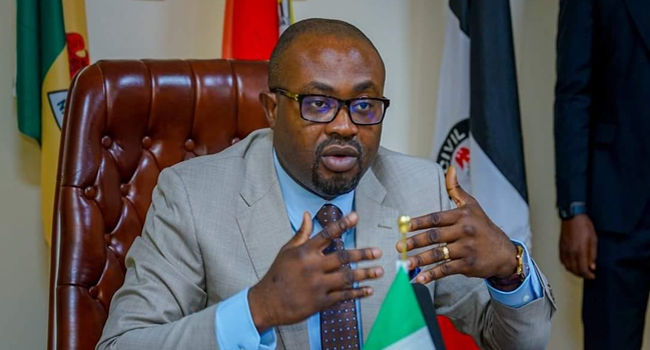
The Federal Government has warned that anyone who attempts to destroy or conceal evidence, intimidate witnesses or obstruct investigations into the deaths of 37 suspected illegal miners in Niger State will face prosecution.
Minister of Interior, Olubunmi Tunji-Ojo, issued the warning on Tuesday in Abuja while inaugurating a 10-member independent investigative committee set up to establish the circumstances surrounding the deaths of the detainees in the custody of the Nigeria Security and Civil Defence Corps (NSCDC).
The 37 detainees died on September 17, days after they were arrested during NSCDC operations against suspected illegal mining in the M.I. Wushishi and Lukoto areas of Niger State on September 15 and 16.
The circumstances and actual cause of the deaths remain under investigations.
Speaking at the inauguration of the panel, Tunji-Ojo directed the NSCDC leadership and all officers linked to the incident to cooperate fully with investigators and ensure that all relevant records and material evidence are preserved.
“All records and material evidence connected to this incident, I have directed that they must be preserved and made available,” the minister said.
He added: “Any attempt by anybody to destroy or conceal evidence, intimidate witnesses or obstruct this investigation will be treated as a serious offence against the nation and it will not be tolerated.
“If it ever happens, I give you my word, the full hammer of the law will descend on such an individual.”
‘We Owe Nigerians the Truth’
Tunji-Ojo said the Federal Government was determined to establish the truth and ensure accountability, regardless of the status of anyone found culpable.
“To Nigerians, I say this: we owe you the truth.
This committee will give you the truth. No officer, no matter how highly placed, or any individual will be shielded if found culpable,” he said.
The minister also appealed to the families of the deceased to remain calm, assuring them that the government would not abandon them.
“To the families who lost loved ones, I appeal for calm and patience. This government will not and will never abandon you,” he said.
Tunji-Ojo charged the committee to conduct a thorough investigation and promised that its findings would not be ignored.
“I challenge you: let your antecedent speak when the report is submitted, and I assure you of one thing: this report will not be swept under the carpet,” he said.
He added that those found culpable would face the appropriate legal consequences.
“We will call a meeting like this; we will present the report, and whoever needs to be prosecuted will be prosecuted, and whoever needs to be dealt with in line with the law will be dealt with,” the minister said.
Panel to Determine Cause of Death, Responsibility
The committee, chaired by retired Deputy Director-General of the Department of State Services (DSS), Jonathan Kure, is expected to establish the identities of the deceased and investigate the circumstances surrounding their arrest and detention.
It will also determine the cause and circumstances of the deaths, establish responsibility, complicity, negligence or misconduct, and recommend appropriate action, including compensation where applicable. The panel is also expected to recommend measures to prevent a recurrence.
The committee has two weeks to complete its investigation and submit its report to the Minister of Interior.
The NSCDC initially attributed the deaths to a suspected disease outbreak, but the official cause has not been established.
The Federal Government has ordered a comprehensive investigation into the circumstances surrounding the deaths.
The incident has generated widespread public outrage, with survivors and relatives making allegations about the conditions in which the detainees were held. Reports have included claims of overcrowding and poor ventilation, as well as allegations that an unidentified substance was sprayed inside the cell. Those claims remain subject to investigation.
Following the incident, the Federal Government suspended the Niger State NSCDC Commandant, Suberu Siyaka Aniviye, along with 20 other officers pending the outcome of the investigation.
The NSCDC subsequently paraded the suspended commandant and other officers linked to the incident at its national headquarters in Sauka, Abuja, as the Corps presented preliminary findings to journalists.
President Bola Tinubu had earlier ordered a full and transparent investigation, saying the government would not tolerate mass deaths arising from official negligence, dereliction of duty or failure by public officials to protect people placed in their care.
Channels Television
News
Akpabio pays condolence visit to Bamanga Tukur family says he was a detribalised Nigerian(Photos)
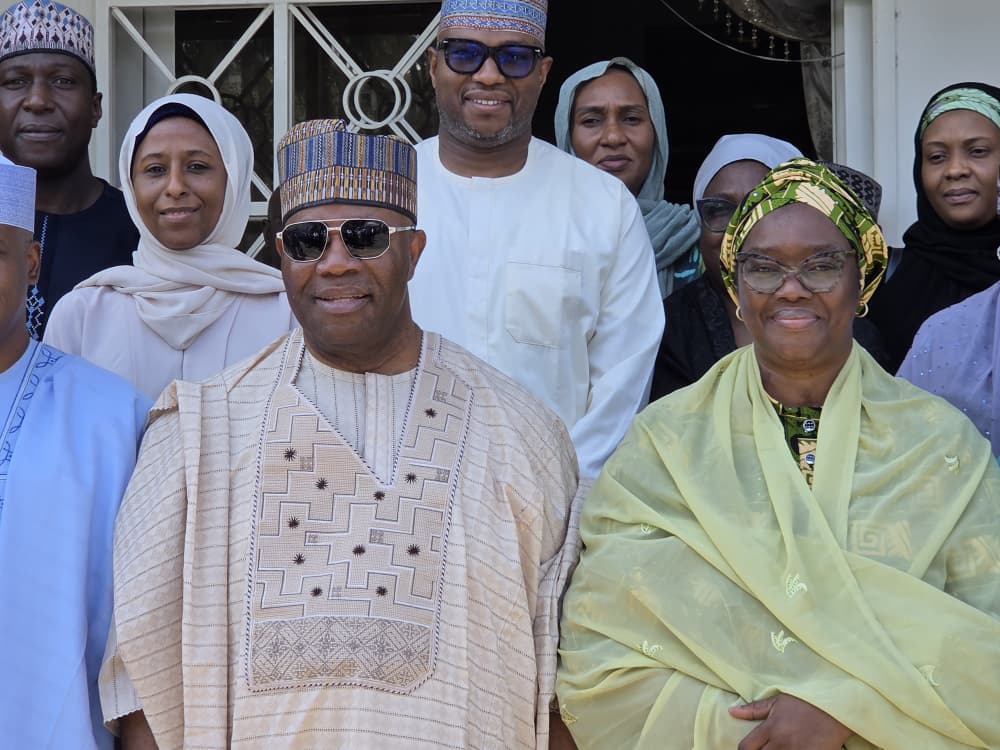
President of the Senate, Godswill Akpabio, has described the late Elderstatesman and former National Chairman of the Peoples Democratic Party(PDP) Alhaji Bamanga Tukur, as a detribalised Nigerian whose contributions to the country transcended ethnic and political boundaries.
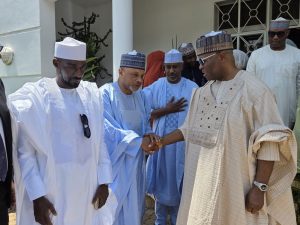

Akpabio, who arrived Nigeria from Italy yesterday, stated this while on a condolence visit to the family of the late former governor of the defunct Gongola State on Tuesday. He described the late Tukur as “a detribalised Nigerian, great patriot and towering national figure whose contributions to the country transcended ethnic and political boundaries.”

A statement by his Special Assistant on Media, Jackson Udom, disclosed how Akpabio recalled his personal relationship with the late elder statesman, noting that Tukur had, among other engagements, chaired an event he attended in London in 2009.
“The late Tukur left behind a legacy of love, wisdom and service to the nation and would continue to serve as an example to younger politicians and Nigerians.”

He expressed regret that Tukur was no longer alive to continue sharing his wealth of experience and wisdom, adding that his contributions to national development would remain memorable.
Akpabio also disclosed that the National Assembly would honour the late elder statesman on the floor of the Senate when it resumes, while urging Tukur’s children to continue in their father’s footsteps and uphold the values for which he was known.
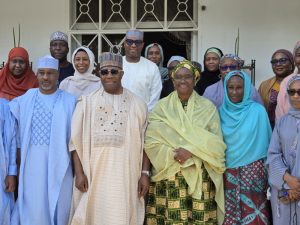
Responding on behalf of the family, one of the deceased’s sons, Mahmoud Tukur, thanked the President of the Senate, his wife, Mrs Unoma Akpabio and his entourage for the condolence visit.
Mahmoud also expressed appreciation to President Bola Tinubu and Nigerians for honouring and remembering his father, who died at the age of 90 on Saturday, September 12, 2026.

2027: Rainbow Coalition Signals Fresh Political Realignment in Nigeria — Sokoto PDP Guber Candidate

Niger Miners’ Deaths: ‘Anyone Who Tampers With Evidence Will Face Full Wrath of Law’ — Tunji-Ojo

Akpabio pays condolence visit to Bamanga Tukur family says he was a detribalised Nigerian(Photos)




-
 News22 hours ago
FCT minister Wike’s words on marble
-
News22 hours ago
2027: Wike Reveals Why APC Governors Are Opposing Rainbow Coalition
-
 News13 hours ago
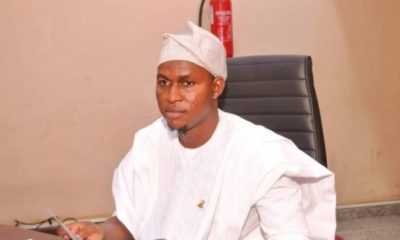
Christian candidates will punish Nigerian Muslims if elected in 2027 elections: APC Lawmaker Ibrahim Shittu
-
 News13 hours ago
Nigeria signs acquisition agreement for 12 Viper Attack helicopters from U.S
-

 Sports13 hours ago
Mohammed Salah Fined, Banned In UK From Driving For Six Months Over Speeding Case
-
 Politics13 hours ago
2027: APC, APGA disagree over Anambra ‘alliance’
Warning: Undefined variable $user_ID in /home/naijuinz/public_html/wp-content/themes/zox-news/comments.php on line 49
You must be logged in to post a comment Login