
News
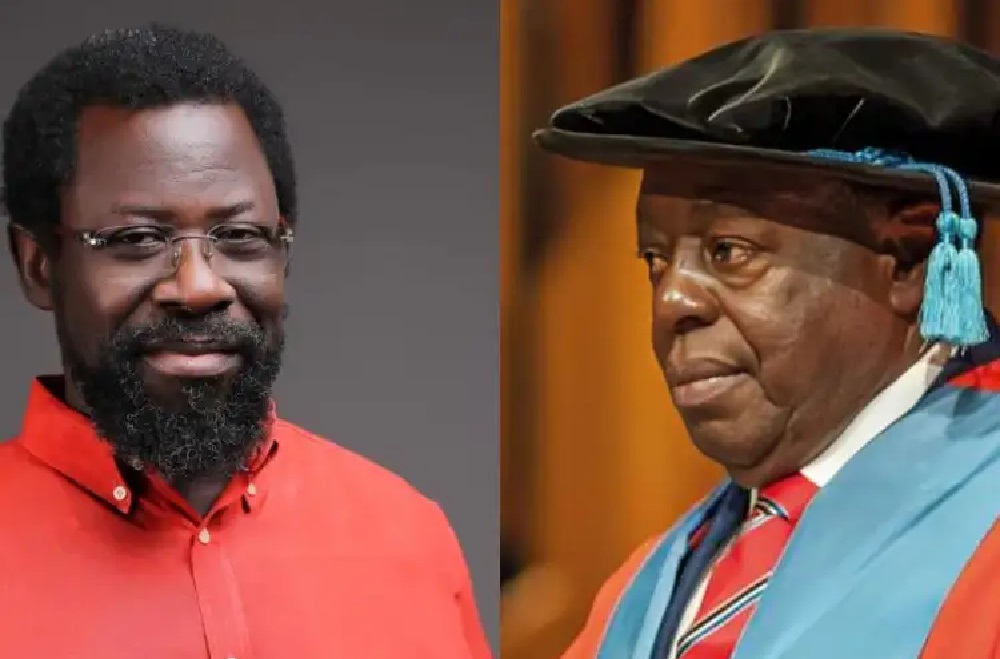
Defamation: Aare Afe Babalola Drops Charges Against Dele Farotimi After Ooni’s Intervention

- /home/naijuinz/public_html/wp-content/plugins/mvp-social-buttons/mvp-social-buttons.php on line 27
https://naijablitznews.com/wp-content/uploads/2024/12/delwe-afe-1000x600.jpg&description=Defamation: Aare Afe Babalola Drops Charges Against Dele Farotimi After Ooni’s Intervention', 'pinterestShare', 'width=750,height=350'); return false;" title="Pin This Post">
- Share
- Tweet /home/naijuinz/public_html/wp-content/plugins/mvp-social-buttons/mvp-social-buttons.php on line 72
https://naijablitznews.com/wp-content/uploads/2024/12/delwe-afe-1000x600.jpg&description=Defamation: Aare Afe Babalola Drops Charges Against Dele Farotimi After Ooni’s Intervention', 'pinterestShare', 'width=750,height=350'); return false;" title="Pin This Post">


The founder of Afe Babalola University, Ado Ekiti, Aare Afe Babalola has agreed to drop all defamation charges against the human rights lawyer, Dele Farotimi.
The decision of Babalola was sequel to the intervention of the Ooni of Ife and other prominent Obas in the country.
Farotimi had authored a book “Nigeria and it’s Criminal Justice System where he alleged that Aare Afe Babalola corrupted the Judiciary and procured judgements in the supreme Court.
This development led to his arrest and arraigned in court for defamation.
Addressing newsmen at the school premises in Ado Ekiti, Aare Babalola said today is a special day to him because he is a Yoruba man and very proud to be one.
He said different traditional ruler and personalities both within and outside the country have been on his kneck to pardon Farotimi including Bishop Kukah and Obasanjo.
He said as a Yoruba man, he has no choice than to obey the commandments of the traditional institutions led by Ooni adding that the statement of an Oba in Yoruba traditional from time immemorial is a command.
He said:”I rejected an oil block and defended the EFCC law and also rejected ministerial nominees twice, wondering why any one would just wake up and try to rubbish all he had laboured for.
I have nothing to gain from his imprisonment, I am happy each time I give.
The Ooni of Ife, Oba Adeyeye Oguwusi had earlier appealed passionately to Babalola to consider the various forces and personalities that have intervened in the matter including former president Obasanjo to please pardon Dele Farotimi.
The monarch praised Babalola and commended his contribution to the development of the Yoruba race, the Nation and the world at large.
He said Afe Babalola has done things that inscribed his name in gold, he said the traditional institution is proud of him.
He said:”We all came together to discuss the matter with him and he gave all the full respect to the Obas and agreed.
Ooni said the Obas can attest to the hard work of Babalola and how he had invested so hard to build his name and that can not be ternished and rubbished by anyone.
He said Babalola has proven to the world that he cherished his name and the world has heard him loud and clear.
Dele Farotimi is your son, we give birth to different children in this world and as elders when our children offend us as Yoruba after a little spank, we also pardon such children.
He appealed to Babalola to drop charges against Farotimi.







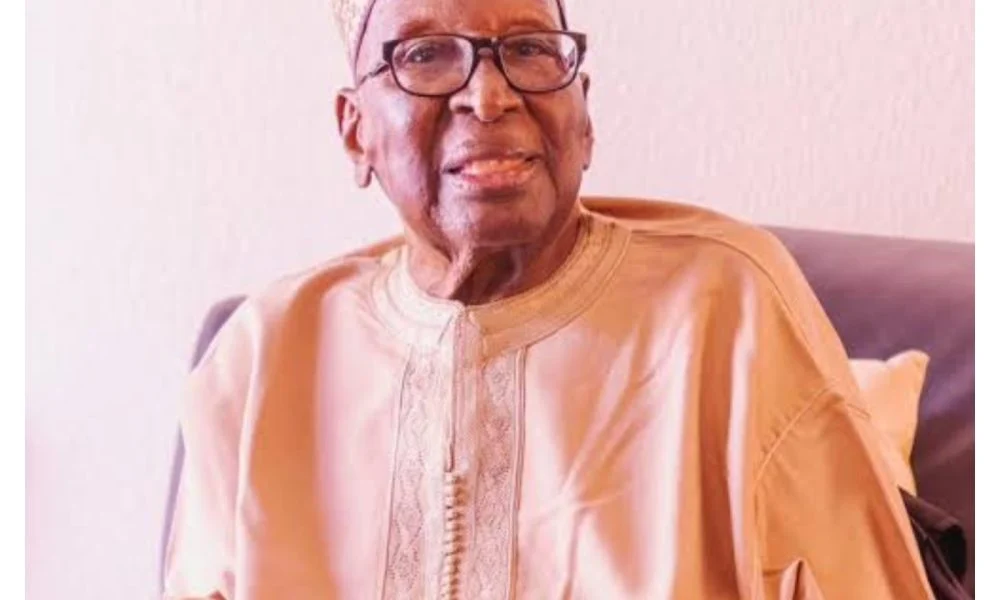
Ex- National Chairman of the Peoples Democratic Party (PDP) and prominent Nigerian businessman, Alhaji Bamanga Tukur, has died at the age of 90.
Tukur’s family confirmed to TRT Afrika that he died on Saturday at his residence in Abuja after a prolonged illness.
His burial is expected to take place on Saturday at the Lamido of Adamawa’s Palace in Yola, Adamawa State.
The late politician and businessman is survived by 17 children.
Tukur served as governor of the former Gongola State, which was later divided into Adamawa and Taraba states, during Nigeria’s Second Republic.
He later served as Minister of Industries under the military administration of General Sani Abacha and also sought to contest the Nigerian presidency.
Tukur went on to become National Chairman of the PDP, playing a prominent role in the party’s leadership and Nigeria’s political affairs.

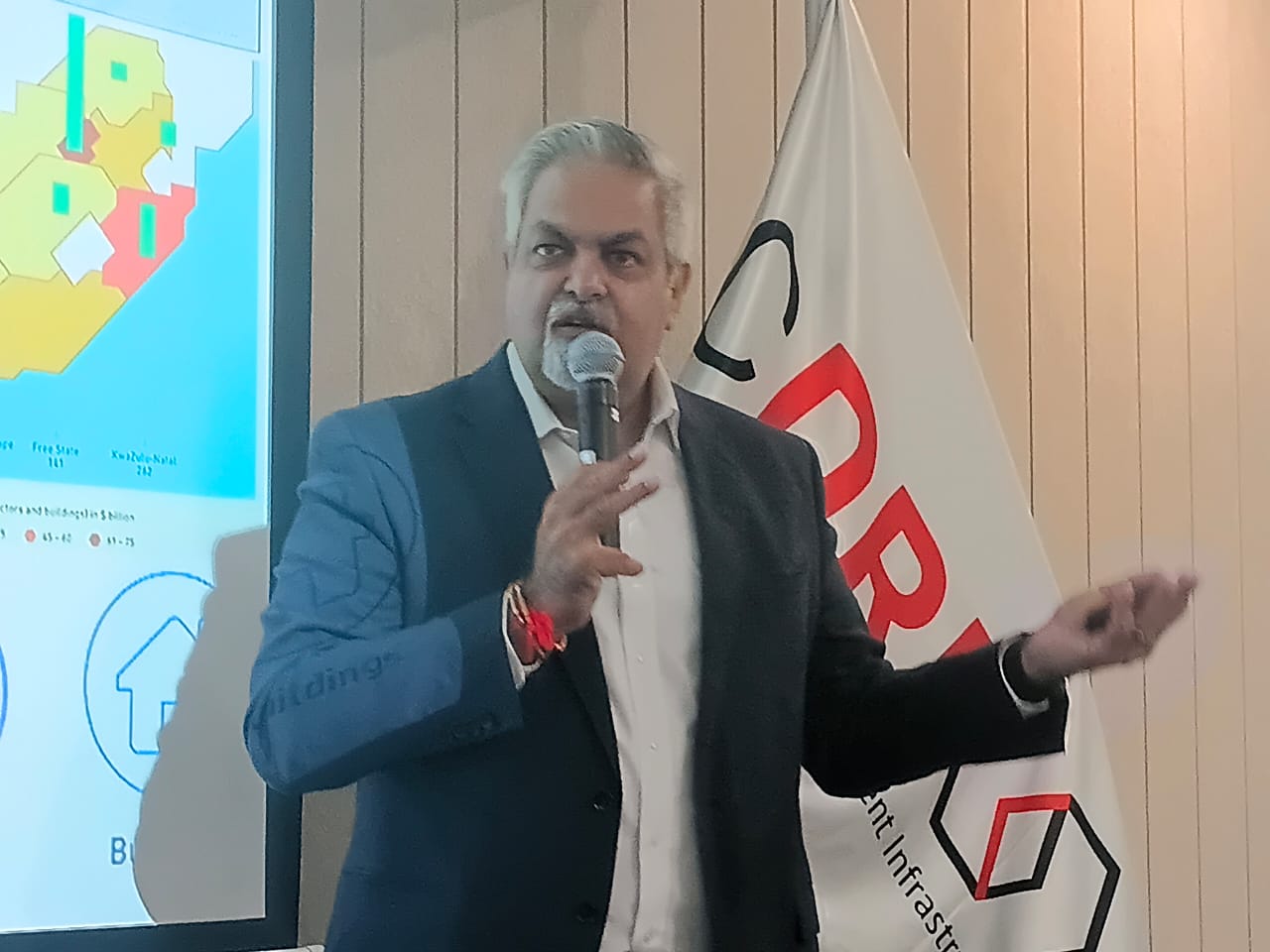
By Gloria Ikibah
Natural disasters destroy between $700 billion and $800 billion worth of infrastructure globally every year, with the wider economic impact estimated to be about seven times higher.
The Director General of the Coalition for Disaster Resilient Infrastructure (CDRI), Amit Prothi, stated this while addressing international journalists covering the BRICS meetings in New Delhi, India.
Prothi called for stronger investment in disaster-resilient infrastructure as climate change increases the frequency and severity of extreme weather events.
He said. “On average, we lose about $700 to $800 billion of infrastructure every year. That’s only the direct damage. The economic cost of that damage is roughly seven times higher”.
He cited wildfires in Los Angeles, floods, earthquakes and cyclones in different parts of the world as examples of disasters causing increasingly severe damage to infrastructure and placing additional pressure on national economies.
According to him, governments need to have a clearer understanding of the risks facing critical infrastructure and ensure that resilience is incorporated into planning and construction before disasters occur.
Naijablitznews.com reports that CDRI was launched by India at the United Nations in New York in 2019 and has since grown from 24 founding members to 70 members, with the Philippines expected to become the 71st.
Its membership cuts across Africa, Asia, Europe, the Americas and the Pacific and includes multilateral institutions such as the World Bank and regional development banks.
“The coalition was created to bring practices, knowledge and experiences together so that countries can better understand and address the growing complexities of disaster risks,” Prothi said.
India remains the permanent co-chair of the coalition, while the second co-chair rotates every two years. Previous co-chairs have included the United Kingdom, the United States and France, while India and Brazil currently lead the organisation.
Prothi explained that CDRI does not directly finance infrastructure projects but works with governments to ensure that resilience is considered when infrastructure is planned and designed.
“We are the chilli in the soup,” he said, using an analogy to explain CDRI’s role.
“When countries build roads, power systems or telecommunications networks, we help them understand how those investments can withstand future risks from climate change and disasters”, he added.
He said changing climate patterns meant that governments can no longer rely solely on traditional infrastructure standards and building codes based on past experiences.
“You may not have experienced floods before, but patterns are changing. The question is how you prepare your infrastructure for those future risks,” he said.
Critical infrastructure at risk
Telecommunications, power and transport systems are among the key areas receiving attention from the coalition because of their importance during and after disasters.
Recalling his experience during Nepal’s devastating 2015 earthquake, Prothi said the failure of telecommunications infrastructure demonstrated how critical communication networks become when disasters strike.
“I was in Kathmandu during the earthquake and could send a brief message to my family. Others couldn’t contact their loved ones because telecommunications infrastructure had broken down.
“Communication is becoming increasingly critical during disasters,” he said.
CDRI is also working with governments to assess risks facing electricity networks and transport infrastructure and to incorporate risk data into infrastructure planning.
The coalition has increasingly become involved in major international discussions on disaster risk reduction, climate adaptation and resilient infrastructure, including the G20, BRICS, COP climate conferences and United Nations platforms.
During India’s G20 presidency, CDRI supported the establishment of a Disaster Risk Reduction and Resilient Infrastructure Working Group. The initiative continued under Brazil’s G20 presidency and has remained part of wider discussions on climate adaptation and resilience.
“As global conversations move increasingly toward adaptation and resilience, the relevance of disaster-resilient infrastructure is growing,” he said.
The CDRI DG, also stressed that resilience should not end with disaster preparedness and prevention, arguing that countries must have systems that allow them to recover quickly when disasters occur.
“The speed of recovery matters. The longer it takes countries to rebuild, the greater the impact on communities and national economies,” he said.
He said the coalition was exploring innovative financing options, including insurance and private-sector participation, to enable countries to mobilise funds for reconstruction more quickly after disasters.
CDRI turns to data, technology
The coalition has also developed a global risk database designed to estimate infrastructure losses across countries and identify vulnerabilities in different sectors.
Prothi said Brazil records average annual infrastructure losses of about $13 billion, while losses across Africa are estimated at a similar level.
The database enables governments to identify infrastructure vulnerabilities and develop resilience measures based on the specific risks facing different sectors.
“Different infrastructure sectors face different risks. Power transmission systems, for example, may be highly vulnerable to cyclones, while buildings may face greater risks from earthquakes,” he said.
Looking ahead, CDRI plans to develop dedicated programmes for Africa, small island developing states, mountain regions and cities, where the effects of climate change and natural disasters are becoming increasingly complex.
Prothi also identified artificial intelligence, satellite data and advanced modelling as emerging tools that could strengthen early warning systems and improve disaster preparedness.
“There is an incredible amount of work under way on using data and predictive models. This will be one of the most important conversations over the coming years,” he said.
He called for greater participation by ASEAN countries, noting that nations in the region had developed considerable experience in dealing with earthquakes, tsunamis, floods and other natural hazards.
“The expertise that countries such as those in ASEAN have developed can benefit the rest of the world, while they also gain from shared global experiences,” he said.
Prothi said stronger international cooperation would be essential as countries confront increasingly unpredictable climate and disaster risks, with resilient infrastructure becoming a critical part of efforts to protect lives, economies and essential services.

Niger’s junta chief appointed a new chief of staff, state TV reported on Friday, after a thwarted army mutiny last month shook his grip on power.
Supporters of the military government put down the attempted uprising with the help of Russian mercenaries, but not before intense fighting in the capital.
Disgruntled soldiers attacked several sensitive sites in Niamey and hunkered down in a key military base at the airport.
“By a decree signed on September 11, 2026, General Abdourahamane Tiani has appointed Brigadier General Mamane Sani Kiaou as chief of staff of the armed forces,” state TV reported a statement as saying.
Kiaou, who previously served as army chief of staff, replaces General Moussa Salaou Barmou.
The statement did not say why Barmou had been dismissed.
Niger has been run by General Tiani since a coup in July 2023 that toppled the elected president Mohamed Bazoum, who has been detained ever since.
Tiani also appointed General Abdourahmane Abou Zataka to succeed Kiaou as army chief of staff, the statement added.
Described as a “seasoned field commander” by associates, Kiaou has led a fight against jihadist groups in Niger’s western Tillaberi region and in the southeastern Diffa area.
Nigerien state media reported that he recently concluded a tour of the country’s key military garrisons aimed at “restoring cohesion among the troops.”
Kiaou also led negotiations that resulted in the withdrawal of French and US forces from Niger following the July 2023 coup.
Tiani has moved the country closer to Russia and away from Western partners, notably former colonial power France.
State television had previously broadcast accusations that France was behind last month’s uprising.
AFP

FG endorses take over HND admissions by JAMB

Ex-PDP Chairman Bamanga Tukur is dead

Natural Disasters Destroy Up to $800bn Infrastructure Annually, CDRI Warns




-

 News24 hours ago
BREAKING: Fear, Anger as Sokoto Residents Storm Streets Over Kidnappings, Attacks
-

 News23 hours ago
Sad: Four Mobile Policemen, eight residents killed in Benue invasion
-

 News7 hours ago
SAD! Teenage twins die after eating bread spiked with ‘otapiapia’
-
 News23 hours ago
After over 20 years, FG settles N18bn outstanding severance payment to ex-Nigeria Airways staff(Photos)
-

 News7 hours ago
Just in: Dangote Refinery jerks up petrol price by N85
-

 Sports4 hours ago
Amusan Finishes 2nd As Russell Wins Inaugural World Athletics Ultimate Championship
-

 News4 hours ago
Niger unveils fresh Chief of Staff after botched coup
-

 News17 hours ago
Employment: Mbah Urges Enugu Youths to Seize Federal Opportunities (Photos)
Warning: Undefined variable $user_ID in /home/naijuinz/public_html/wp-content/themes/zox-news/comments.php on line 49
You must be logged in to post a comment Login