

Connect with us

News

Abolishing Death Penalty, Nigerians Will Decide – Deputy Speaker

Published

on

ADVERTISEMENT
Zoom Ad
ADVERTISEMENT
Zoom Ad

By Gloria Ikibah

Deputy Speaker, House of Representatives, Rep. Benjamin Kalu, has said that the decision to abolish death penalty in Nigeria rests with the people.

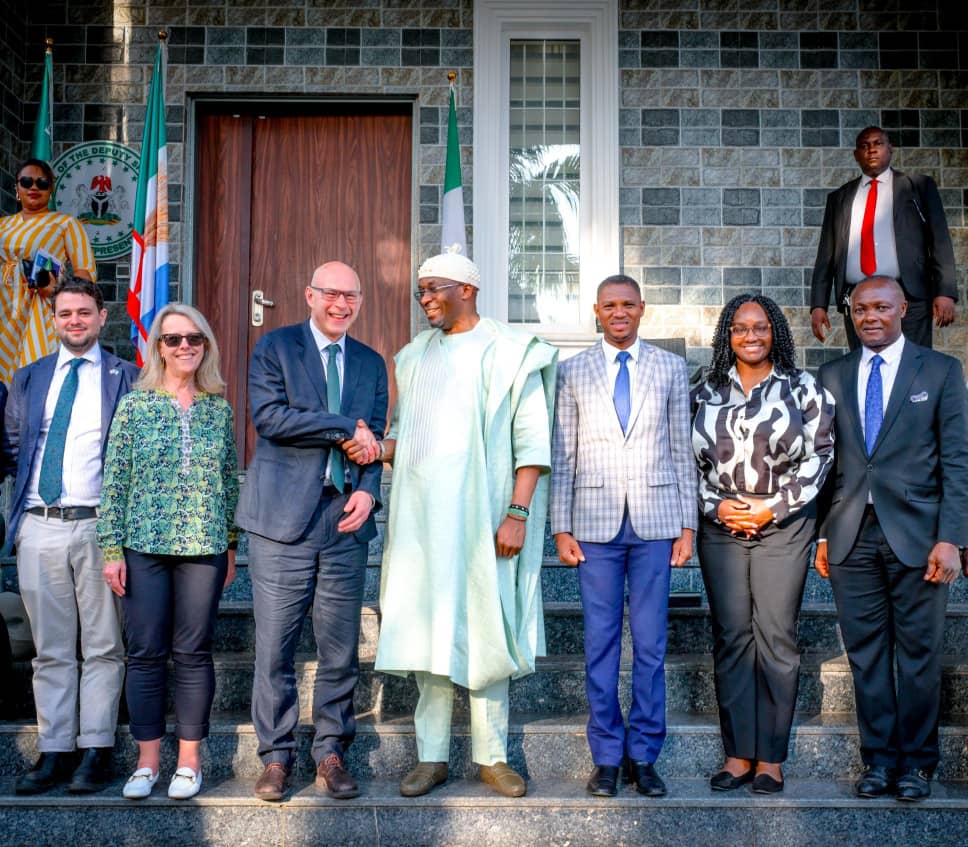
Kalu who stated this during a visit by officials of the Death Penalty Project and the British High Commission to his office in Abuja on Thursday, stressed the need for open discussions and collaboration among stakeholders, as opinions on the issue vary widely.

He noted that over 130 countries have already abolished the death penalty, either in law or practice. However, in Nigeria, capital punishment is still allowed for crimes such as murder, armed robbery, and treason.

Advertisement

The Deputy Speaker said that the number of death row inmates highlights the need for reforms in the criminal justice system. As chairman of the Constitution Review Committee, he said the committee has been studying the moral, ethical, and practical aspects of the death penalty.

While no bill on the matter is currently before the House, Kalu stated that the committee is considering it, and a proposal could be brought forward soon for debate and public input.
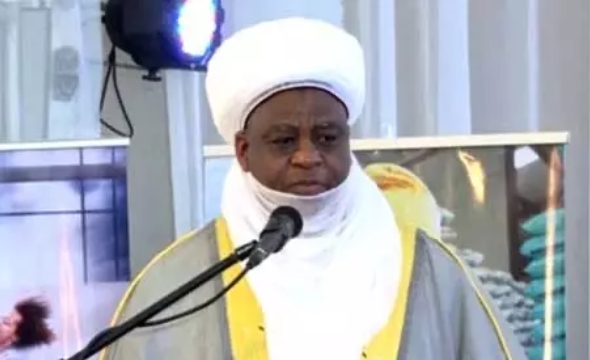
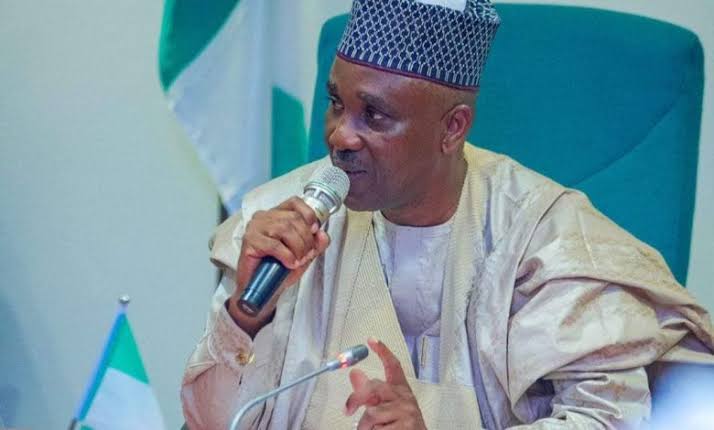
Kalu said, “Internationally, there is a growing trend toward the abolition of the death penalty, with over 130 countries having abolished it in law or practice. This shift reflects a global understanding that justice must incorporate rehabilitation and restorative practices rather than solely punitive measures.
In November 2024, the UN General Assembly’s Third Committee approved a resolution for a global moratorium on executions, aiming for full abolition, which was adopted on December 17, 2024, marking the tenth resolution since 2007 advocating for a moratorium, with support increasing from 104 states in 2007 to 130 in 2024, while opposition has declined. Notably, Nigeria abstained from the recent vote among 22 abstaining states. This trend indicates a strong movement towards the universal abolition of the death penalty. Within the African Union, 48 of 55 countries are now abolitionist in law or practice, with only Egypt and Somalia carrying out executions in 2023.
“The African continent is advancing towards the abolition of the death penalty more rapidly than any other region, with six countries having eliminated the death penalty for all crimes or for ordinary crimes in just the past four years (since July 2021).
We are willing to collaborate with you and have further engagements as we know that aligning our laws with international best practices enhances Nigeria’s reputation on the global stage.
“There’s no bill before the House of Representatives at the moment to address this issue as we speak, but there’s an intention for us to have conversations around it. I’m trying to give it legal framework by presenting it as a bill. We are considering presenting it before the parliament for debate, for us to know whether or not is what our society needs at the moment. It will pass through various stages of public hearing to allow the public make contribution on this subject matter. We are positive that our willingness to engage further on this discussion will send a clear message that we are committed to upholding human rights and ensuring that our criminal justice system reflects fairness and proportionality.”
The Deputy Speaker however stated that as further discussions are ongoing, the goal is not to diminish the seriousness of capital offenses but to create a justice system that is equitable, effective, and respectful of human rights.
“We owe it to our citizens to ensure that their rights are protected and that our laws reflect the highest standards of justice. I urge you all to support us as we take significant steps towards reforming our criminal justice system towards creating a Nigeria that embodies fairness, respect for human rights, and a commitment to justice for all,” Kalu added.
Earlier, leader of Delegation and Co-founder/Co-Executive Director of The Death Penalty Project, Saul LeurFeund, said the visit was to seek the collaboration of parliament on the potential abolishment of death penalty in Nigeria.
He said, “We’ve seen great progress, Zimbabwe abolished death penalty on new year’s eve. I had the pleasure of being here last August on the invitation of the British high commission .
“It will be helpful to have conversation around death penalty in Nigeria. It will be helpful to bring partners together to discuss potential abolishment, to see if we can change discussion around death penalty. So we want to bring our experience and to discuss with you, the possibility on how the Constitution can be amended and anything we can do to provide technical support”.


Advertisement

News

Discovery: ‘True Tomb’ Of Jesus Christ Found After 2,000 Years Matches Biblical Description Account

Published

on

ADVERTISEMENT
Zoom Ad
ADVERTISEMENT
Zoom Ad

After years of searching, Italian archaeologists have discovered an ancient site that matches a Bible description of the tomb where Jesus Christ was buried.

This was made known by a preliminary study in the Jerusalem archaeological journal Liber Annuus.

“We have found evidence of a funerary landscape,” lead archaeologist Francesca Romana Stasolla, of the “La Sapienza” University of Rome, told the Daily Mail.

The researchers had been excavating Jerusalem’s Church of the Holy Sepulchre, a fourth century Roman Church that was built over a holy site where many Christians believe Christ was crucified, buried and then resurrected.

Advertisement

True tomb? of Jesus Christ found after 2,000 years and it matches the Biblical description
The church of the Holy Sepulchre

As a result, it’s become a mecca for religious pilgrims from across the world, attracting around four million visitors per year.

?True tomb? of Jesus Christ found after 2,000 years and it matches the Biblical description
Pilgrims praying at the Church of the Holy Sepulchre

During the final phases of the excavations in 2025, the team found a peculiar landscape that suggests they might have been onto something.

Advertisement

Underneath the church was an abandoned quarry, cultivated plots of land, rock-cut tombs and an ancient garden.

Coincidentally, the Book of John said: “At the place where Jesus was crucified, there was a garden, and in the garden a new tomb, in which no one had ever been laid.”

While no one had been found in the tomb, the abundance of parallels was compelling.

John 19:20 says that the crucifixion occurred close to Jerusalem, while Hebrews 13:12 claims that it occurred outside the city gate, which was the exact location of the quarry at the time of Christ.

Advertisement

Sections of the quarry measured 20 feet deep and had been filled with dirt, suggesting that it served a pastoral purpose.

The site’s agricultural function was further supported by the discovery of olive trees and grapevines — possibly the same plant referenced in John 19:41 — that date back to the time of Jesus‘ de@th, which is believed to have happened around 33 A.D.

“The gospel mentions a green area between the Calvary and the tomb, and we identified these cultivated fields,” Stasolla told the Times of Israel.

In fact, the graves, which were carved directly into the stone, proved that it was an actual burial ground, and matched descriptions by Matthew, Mark and Luke of Jesus’ grave as having been carved from rock.

Advertisement

The evidence goes beyond parallels to the Bible. One particular chamber had been obstructed by a Roman structure built during Emperor Hadrian’s reign in the second century.

Around 200 years later, builders employed by Constantine’s workers destroyed the Roman structure and dug up the site to reveal the tomb, which they then separated from the other chambers.

While this doesn’t definitely prove that this was Jesus’ burial site, the campaign to preserve it suggested that knowledge of the site had been passed down to early generations of Christian worshippers.

“The real treasure we are revealing is the history of the people who made this site what it is by expressing their faith here,” Stasolla told the Times. “Whether someone believes or not in the historicity of the Holy Sepulchre, the fact that generations of people did is objective. The history of this place is the history of Jerusalem, and at least from a certain moment, it is the history of the worship of Jesus Christ.”

Advertisement
Continue Reading

News

Gusau : N12bn NFF intervention fund probe ongoing, says EFCC

Published

on

ADVERTISEMENT
Zoom Ad
ADVERTISEMENT
Zoom Ad

The Economic and Financial Crimes Commission has confirmed that its investigation into the utilisation of the N12bn Federal Government intervention fund released to the Nigeria Football Federation is ongoing.

The EFCC spokesman, Dele Oyewale, disclosed this while responding to inquiries on Thursday.

“Investigation is ongoing on the matter,” Oyewale said.

The development follows reports that the EFCC and the Independent Corrupt Practices and Other Related Offences Commission had commenced investigations into the utilisation of the intervention fund approved by President Bola Tinubu in 2024 to clear outstanding wages and bonuses owed to players of Nigeria’s national teams.

Advertisement

A top source familiar with the matter told our correspondent on Thursday that some officials linked to the fund had been invited by investigators and had provided statements.

The source, however, did not disclose the identities of the officials invited or indicate whether any arrest had been made.

The investigation comes amid renewed developments at the NFF, following the resignation of its President, Ibrahim Gusau, after three years and 11 months in office.

Recall Gusau announced his resignation at a news conference in Abuja, saying his decision followed consultations with his family and friends.

Advertisement

“I have decided to resign my position as the president of NFF, after consultations with my family and friends.

“I have also advised my board members, those who are willing, to resign as well,” he said.

He, however, said he could not immediately confirm the number or identities of board members who had resigned, explaining that those affected had yet to communicate their decisions directly to him.

Gusau’s resignation came amid concerns over Nigeria’s recent performances in international football.

Advertisement

The Super Eagles failed to qualify for the 2022 and 2026 FIFA World Cups, while the Super Falcons also missed out on qualification for the 2027 FIFA Women’s World Cup.

Nigeria’s age-grade teams have equally struggled, with the Golden Eaglets failing to qualify for the FIFA U-17 World Cup in three consecutive editions.

Despite his resignation, Gusau said he would continue to contribute to the development of Nigerian football through his experience and relationships within African football.

“For me, I want to make it clear that, by the grace of God, we will continue to give our contribution.

Advertisement

“Our experience, connections and relationships within African football will never go in vain. We will do our best to ensure that whenever we are needed, we will contribute to the progress of Nigerian football,” he said.

Gusau also highlighted what he described as achievements of his administration in coaching education, league administration, refereeing and infrastructure development.

He said the NFF conducted several coaching programmes, including CAF B and C Licence courses and a Coaching Instructors’ Course, while the CAF A Licence programme was scheduled to commence on September 16.

On refereeing, Gusau said the federation introduced young officials into the system and provided opportunities for their training and development.

Advertisement

He noted that Nigerian referees had recently featured at major continental and global competitions, including the Under-17 World Cup and the Women’s Africa Cup of Nations in Morocco.

Gusau also identified inadequate infrastructure as one of the major challenges facing Nigerian football, saying his administration prioritised the development of facilities through funds available under FIFA development programmes.

“As a board, we sat down and identified infrastructure as one of our greatest needs. We also recognised the need for permanent accommodation and training facilities for our national teams, and we are currently working on that,” he said.

He said he remained committed to supporting efforts to advance Nigerian football whenever his contribution was required. (Punch)

Advertisement
Continue Reading

News

Abia @35: Kalu Hails Peace, Security, Democratic Gains, Calls for Sustained Progress

Published

on

ADVERTISEMENT
Zoom Ad
ADVERTISEMENT
Zoom Ad

By Gloria Ikibah

Deputy Speaker of the House of Representatives, Rt. Hon. Benjamin Kalu, has congratulated the government and people of Abia State on the 35th anniversary of the state, commending its strides in peace, security, democratic governance and development.

Abia State was created on 27 August 1991 by the administration of former military Head of State, General Ibrahim Babangida, after it was carved out of the old Imo State.

In a statement issued on Thursday, Kalu, who represents Bende Federal Constituency, said the people of Abia had demonstrated resilience by sustaining peace and strengthening confidence in democratic leadership.

Advertisement

He described peace and security as essential foundations for economic growth, development and investment, noting that the state had remained largely peaceful and safe.

The Deputy Speaker also praised successive military and civilian administrations for their contributions to the development of the state, saying the progress recorded over the years was the result of collective efforts by past and present leaders.

Kalu specifically commended the administration of Governor Alex Otti for prioritising security and good governance, including the establishment of an Air Force office in Umuahia, the state capital.

He also praised what he described as bipartisan political cooperation between the state and Federal Government, citing the approval of Certificates of Occupancy for federal projects and initiatives in Abia.

Advertisement

Among the projects he highlighted were the Industrial Court, Renewed Hope Housing Projects and newly approved federal educational institutions in the state, which he said had been facilitated through legislative interventions.

According to Kalu, the projects and other developments expected in the state would help attract investment, create employment and expand infrastructure.

He stressed that Abia stood to gain significantly from continued cooperation between the Federal and state governments.

The Deputy Speaker also commended reported efforts by the state government to settle outstanding pensions and gratuities owed workers, urging the authorities to sustain the payments as a way of honouring retired public servants who served the state.

Advertisement

“Abia at 35 is a story of resilience and progress. I commend the governments, present and previous administrations for their efforts aimed at developing our dear state and I urge us to sustain the momentum of peace, unity and service delivery,” Kalu said.

He wished the people of Abia a successful celebration of the state’s 35th anniversary, while urging residents and leaders to continue working together to consolidate the gains recorded over the years.

Continue Reading

Trending

Copyright © 2024 Naija Blitz News