
News
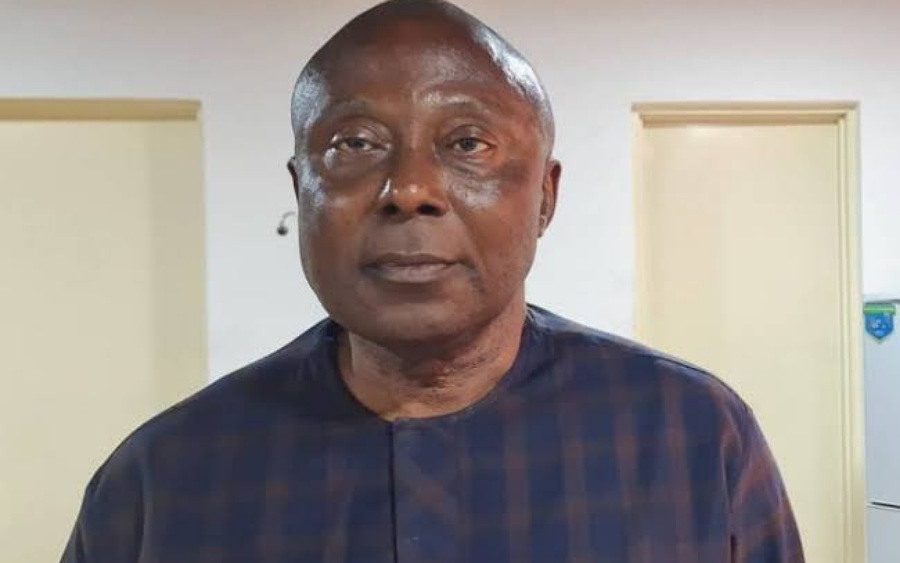
Alleged N1.96bn fraud: Banker, director testify against ex-acting AGF

- /home/naijuinz/public_html/wp-content/plugins/mvp-social-buttons/mvp-social-buttons.php on line 27
https://naijablitznews.com/wp-content/uploads/2024/10/Anamekwe-Nwabuoku.jpg&description=Alleged N1.96bn fraud: Banker, director testify against ex-acting AGF', 'pinterestShare', 'width=750,height=350'); return false;" title="Pin This Post">
- Share
- Tweet /home/naijuinz/public_html/wp-content/plugins/mvp-social-buttons/mvp-social-buttons.php on line 72
https://naijablitznews.com/wp-content/uploads/2024/10/Anamekwe-Nwabuoku.jpg&description=Alleged N1.96bn fraud: Banker, director testify against ex-acting AGF', 'pinterestShare', 'width=750,height=350'); return false;" title="Pin This Post">


The Federal High Court sitting in Abuja, on Friday, heard how a former Acting Accountant-General of the Federation, AGF, Mr. Anamekwe Nwabuoku, used four different companies to siphon public funds to the tune of about N1.96billion.
A Director in the Federal Civil Service, Mr. Felix Nweke, made the revelation when he testified as a witness in the amended nine-count money laundering charge the Economic and Financial Crimes Commission, EFCC, preferred against the erstwhile Acting AGF.
Nweke, who mounted the box as the second prosecution witness, PW-2, told the court that in a bid to conceal the fraud, the looted funds were channelled into bank accounts that had one Gideon Joseph as the sole signatory.
Led in evidence by EFCC’s lawyer, Mr. Ekele Iheanacho, SAN, the witness, while tracing the origin of the fraud, told the court that he worked under the defendant while he served as a Deputy Director in the Defence Ministry.
According to the witness who disclosed that he was the Deputy Director in charge of the Ministry’s expenditure, between 2018 and 2020, part of his functions included the preparation of schedule of inflows and outflows that were due to the Army, Navy and the Air Force.
Nweke said in 2018 when the ex-Acting AGF was posted to the Ministry, he (Nwabuoku) told him that there was the need to make funds available to facilitate some critical stakeholders, the National Assembly and the Federal Ministry of Finance.
He said the defendant, who insisted that they must be creative, suggested that they should get some companies they could use to pull out funds.
He said it was at that point that they contacted Mr. Joseph who was always coming to the ministry with his brother to make supplies.
Continuing, the PW-2, said though Joseph was initially begging him for contracts, he was persuaded to shelve the idea as the issue of contract award was not within his purview.
He told the court that when he informed the defendant about Joseph, he advised that they could enlist him.
“I then took Gideon to Eucharia Ezeodi, who has been coming to the Ministry for business. I also assisted him to open account with Zenith Bank.”
The PW-2 said their contact in the bank assisted them to open four accounts with Joseph as the signatory.
He said they usually raise money either in naira or foreign currencies, adding that the money would then be handed over to the defendant, either directly or through a proxy.
“Sometimes, the director will also ask me to do some transfers to private persons.”
Nweke added that some of the funds they generated were often used to take care of welfare packages for the military since there was no provision for such.
When EFCC’s lawyer asked the witness how funds were paid into the accounts, he said “from the internal security operations account of the military.”
When he was asked who paid the money into the internal security operations account, the witness said, “it is from the ministry’s account that payments were made.”
The witness mentioned about five names from the bank documents who were workers in the Ministry of Defence.
He alleged that funds were also transferred into bank accounts of staff members and withdrawals made afterwards and paid back into accounts of the four companies.
Earlier in her testimony, an official of Zenith Bank Plc, Eucharia Ezeodi, admitted that she knew the defendant while he was a Director in the Federal Ministry of Defence.
The witness told the court that sometime in 2019, she met the defendant who was a Director of Finance and Account at the Federal Ministry of Defence, through the first witness.
She said the EFCC invited her in 2022 in respect of corporate accounts opened for the four companies that were allegedly used by the defendant to move funds out of the coffers of the ministry.
The banker went ahead to list the said companies as: Temeeo Synergy Concept Limited, Turge Global Investment Limited, Laptev Bridge Limited and Arafura Transnational Afro Limited.
She confirmed that accounts of the companies had Mr. Joseph as the sole signatory.
The witness identified bank documents, including statements of account for the four companies, account opening packages, the Corporate Affairs Commission (CAC)’s documents and also her signature on the documents.
While being cross-examined by counsel to the defendant, Mr. Isidore Udenko, the witness said she had no personal relationship with the ex-AGF, except on bank transactions.
When she was asked if the defendant’s name reflected in any of the transactions, the witness replied that a director must not necessarily be a signatory to a company’s account.
She, however, said that a signatory to an account must bring his Identity Card, a Bank Verification Number (BVN), passport photograph, among others, which she said Joseph did.
Ezeodi said the nature of transactions in the account statements was simply deposit and withdrawal, adding that Joseph did all the withdrawals, although the defendant was the alleged beneficiary.
Justice James Omotosho adjourned further hearing in the matter till February 26 and March 5.
It will be recalled that Nwabuoku was in May 2022, appointed to temporarily take charge of the Office of the Accountant General of the Federation (OAGF), after the then AGF, Ahmed Idris, was suspended from office and eventually placed on trial for allegedly laundering public funds totalling about N80.2billion.
EFCC later maintained that the Acting AGF, Nwabuoku, had before his appointment, also dipped his hands into the till.
Investigations into the allegation led to his removal from the office in July 2022, few weeks after he was appointed.
Though Nweke was initially listed as the 2nd defendant, his name was subsequently removed after he agreed to testify against the former Acting AGF.
In the amended charge marked: FHC/ABJ/CR/240/24, the EFCC alleged that Nwabuoku committed an offence that was contrary to Section 18 of the Money Laundering Prohibition Act, 2011, as amended by Act No. 1 of 2012, and punishable under Section 15(3) of the same Act.







News
2027: Wike rallies support for Tinubu In Akpor kingdom, Insists He’II resign as Minister should president lose FCT, Rivers(Photos)


The Minister of the Federal Capital Territory (FCT), Nyesom Wike, on Friday declared that his political alignment with President Bola Tinubu remains unshakable, rallying the political structure of Rivers State to consolidate support for the President.
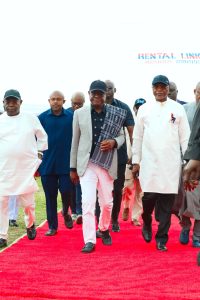
”My interest in Rivers State is for God to use me as a vessel to help our people. I am back here not for what I will get, but for what I will be to raise my people”, Wike declared during a strategic consultative meeting with stakeholders of the Akpor Kingdom in Obio-Akpor Local Government, Rivers State, Wike emphasized that politics is driven by the collective interest of the people rather than perpetual animosity.
He also reiterated his decision to resign his position as Minister should President Tinubu lose in Rivers State and the FCT.
The former governor of Rivers State maintained that expanding the political base is essential for delivering democratic dividends.
He said; “there is no permanent enemy in politics what we have is permanent collective interest.
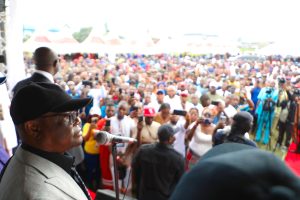
“It is all about the interest of our people. The more you are in number, the happier you become. Leadership is like a waste dustbin. If you cannot absorb things, both the good and the bad, then you cannot be a true leader.”
Reflecting on the political trajectory that led to his appointment as FCT Minister, Wike noted that working with President Tinubu was an extraordinary milestone that defied political convention.
He stressed that his return to grassroots mobilization in Rivers State is aimed at leveraging his position as a vessel to uplift the state and its people.
”You know how difficult, you know how impossible it looked, but he made it possible for us to produce the Minister of the Federal Capital Territory,” Wike told the gathering.
He charged political actors in the state not to be distracted by social media criticism regarding his open-door policy toward former detractors, asserting that true political strength lies in numerical superiority.
In a fiery charge to local leaders, Wike demanded an all-inclusive campaign structure spanning every stratum of society in Obio-Akpor Local Government Area.
He called on traditional rulers, clergy, and community leaders to unite behind a single political direction.
”Obio-Akpor as a whole, whether you are a politician, whether you are a traditional ruler, whether you are a pastor, or whether you are a native doctor, I need everybody now,” he declared.
Wike said further; “Because all of them will vote. For the purpose of voting and elections, we must bring everyone together. ”
Drawing from his political history as the first elected chairman in the history of Obio-Akpor Local Government to win a second term following its creation in 1989, Wike reminded incumbent council leaders that performance and human connection remain the ultimate yardsticks for re-election.
He stated; “I was not elected two times because I was just Chairman.
“I was elected because people felt the impact of governance and because I related with the people. Anywhere, whether for burial or thanksgiving, I was always identifying with them”.
Outlining the electoral roadmap, the FCT Minister highlighted Wards 15, 16, and 17 in Obio-Akpor Local Government as strategic strongholds capable of deciding electoral outcomes across the local council.
”We have over 200 units across three very important wards Ward 15, Ward 16, and Ward 17. These three wards can defeat ten wards in Obio-Akpor. They are three wards with a difference, and you must utilize them to make that difference,” he instructed.
Wike directed local leaders to immediately deploy unit coordinators and door-to-door canvassers across all polling units, urging them to mobilize their immediate families, in-laws, and neighbors to ensure a decisive victory.
Reiterating his loyalty to his constituency, Wike affirmed that he would remain the state’s “Chief Critic” and guide to ensure elected council officers stay accountable to the electorate.
Wike was accompanied by the Rivers State APC governorship candidate, Kingsley Chinda and other political leaders.
News
Echoes of Wike ‘na our own ‘ song takes over at ongoing Akpor town hall meeting in Obio/Akpor LGA today (Video)
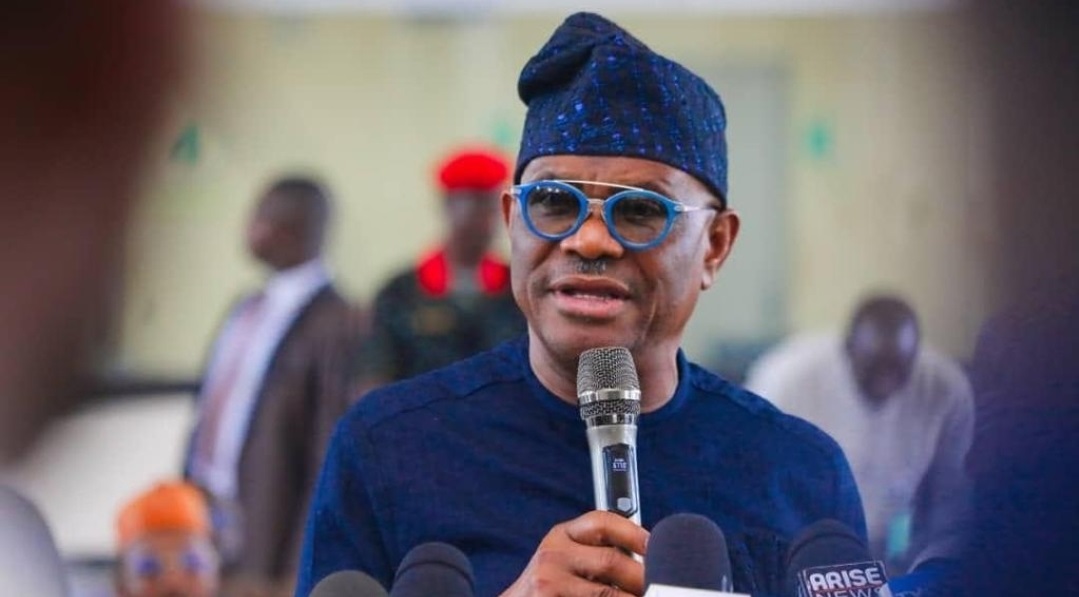
Echoes of Wike ‘na our own ‘song rent the air at ongoing Akpor town hall meeting at Obio/Akpor LGA in Rivers State today.
Watch clip below:
News
Watch moment, traditional rulers present kola to FCT minister Wike at ongoing town hall meeting in Akpor kingdom, Obio/Akpor LGA
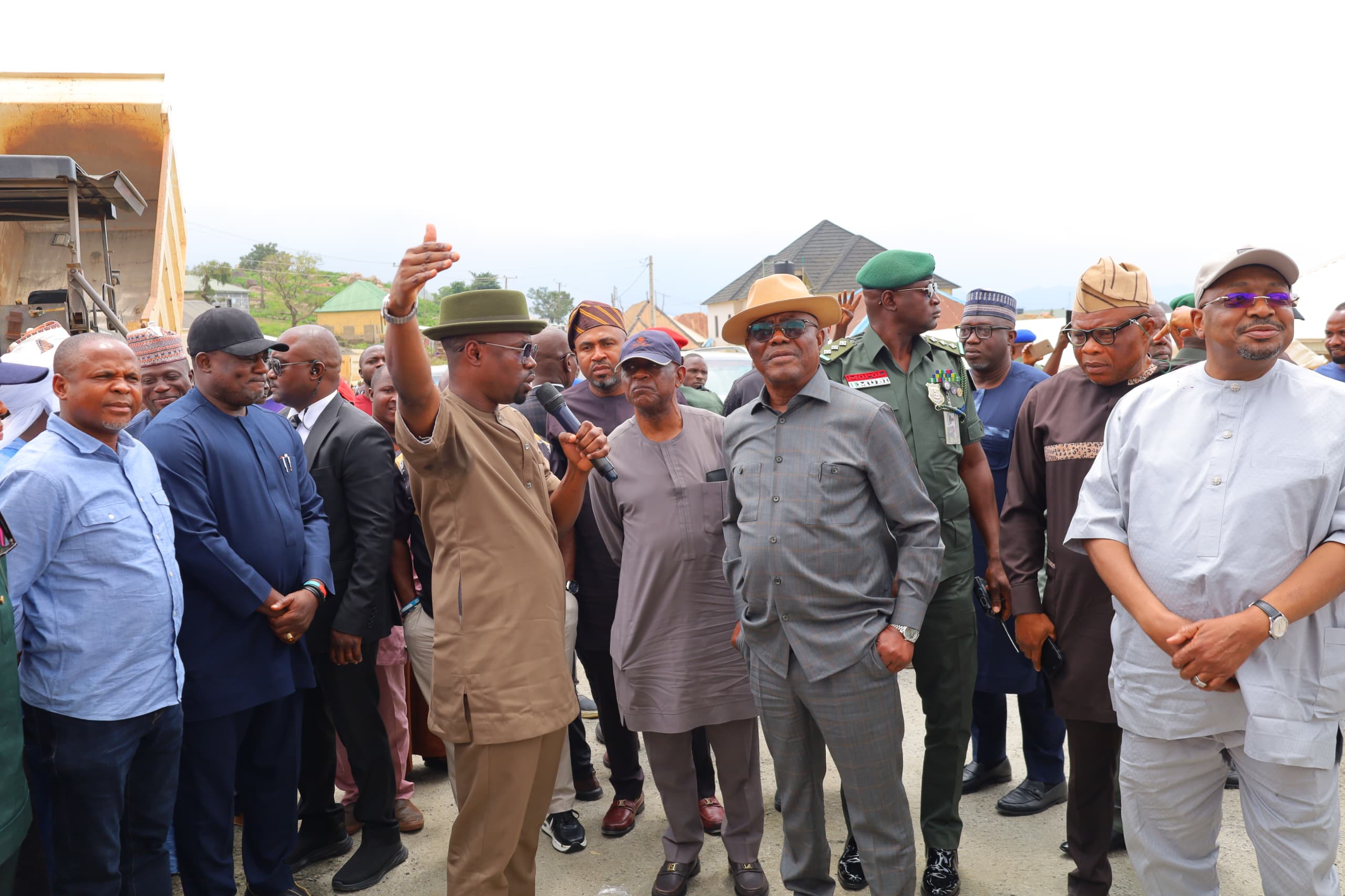
A video clip showing traditional rulers presenting kola to FCT minister Nyesom Wike at Akpor in Obio/Akpor LGA in Rivers State has emerged.
Watch:

2027: Wike rallies support for Tinubu In Akpor kingdom, Insists He’II resign as Minister should president lose FCT, Rivers(Photos)

Echoes of Wike ‘na our own ‘ song takes over at ongoing Akpor town hall meeting in Obio/Akpor LGA today (Video)

Watch moment, traditional rulers present kola to FCT minister Wike at ongoing town hall meeting in Akpor kingdom, Obio/Akpor LGA



-
 News13 hours ago
Nigeria at 66: ‘Tinubu made Yahoo Yahoo promise to Nigerians, he’s fake’ – Atiku
-

 Metro13 hours ago
Gunmen Abduct 20 Corps Members In Imo
-

 Foreign13 hours ago
UK government begins freeing 5,000 prisoners due to extreme prison overcrowding
-

 News13 hours ago
Nigeria Is Now the Worst Place To Be Born — Peter Obi
-

 News13 hours ago
If you elect me as your president in 2027, I will end election rigging in Nigeria — Atiku
-

 News13 hours ago
Nigerian researcher Chika Onochie wins grant for male fertility study in Canada
You must be logged in to post a comment Login