News
Nigerians Decry Corruption Yet Defend Corrupt Leaders – EFCC Chair


- /home/naijuinz/public_html/wp-content/plugins/mvp-social-buttons/mvp-social-buttons.php on line 27
https://naijablitznews.com/wp-content/uploads/2024/02/Ola-Olukoyede.jpg&description=Nigerians Decry Corruption Yet Defend Corrupt Leaders – EFCC Chair', 'pinterestShare', 'width=750,height=350'); return false;" title="Pin This Post">
- Share
- Tweet /home/naijuinz/public_html/wp-content/plugins/mvp-social-buttons/mvp-social-buttons.php on line 72
https://naijablitznews.com/wp-content/uploads/2024/02/Ola-Olukoyede.jpg&description=Nigerians Decry Corruption Yet Defend Corrupt Leaders – EFCC Chair', 'pinterestShare', 'width=750,height=350'); return false;" title="Pin This Post">


Chairman of the Economic and Financial Crimes Commission (EFCC), Ola Olukoyede, has expressed concern over the contradictory stance of many Nigerians regarding corruption.
He pointed out that while citizens frequently condemn corruption, they often rally behind corrupt leaders when they face prosecution.
Olukoyede made these remarks on Friday in Abuja during a visit by officials of the Centre for Crisis Communication (CCC), led by its Board of Trustees director, Chris Olukolade.
The EFCC chairman emphasized that corruption and financial crimes are among the biggest challenges hindering Nigeria’s progress. He asserted that tackling these issues requires collective responsibility, not just government intervention.
“One of the major problems in Nigeria, which, when tackled, will make underdevelopment a thing of the past, is corruption and financial crimes,” Olukoyede stated.
He stressed that national progress depends on both leadership and citizen action, urging Nigerians to actively uphold integrity in their daily dealings.
“A society that is ready to move forward is a responsibility not only of the government but of the citizens. This is why some of us are deeply committed to this cause. We are prepared to do what is necessary within the confines of the law and the powers granted to us by the Constitution. If everyone decides to do the right thing, Nigeria will move forward,” he added.
Olukoyede reiterated the EFCC’s unwavering commitment to fighting corruption, assuring the public that the agency will operate strictly within legal boundaries while ensuring justice is served.
Highlighting the importance of public cooperation, Olukoyede emphasized the need for strategic communication and collaboration with organizations like the CCC to enhance public awareness. He lamented the inconsistency in public reactions to corruption cases, noting that the same individuals who criticize corruption often defend high-profile figures facing corruption charges.
“It is unfortunate that people condemn corruption yet, at the same time, support those accused of it,” he said.
He criticized the public tendency to stage protests in support of politicians and business figures facing corruption trials, arguing that such actions undermine the fight against financial crimes.
“Everybody complains that corruption is ruining our system, yet when we investigate and prosecute high-profile cases, the same people take to the streets with placards in support of corrupt leaders. This attitude suggests that we are not serious about fighting corruption. The fight must be a collaborative effort,” he remarked.
Olukoyede urged Nigerians to remain consistent in their stance against corruption, emphasizing that meaningful progress can only be achieved when citizens and authorities work together in the pursuit of accountability and justice.









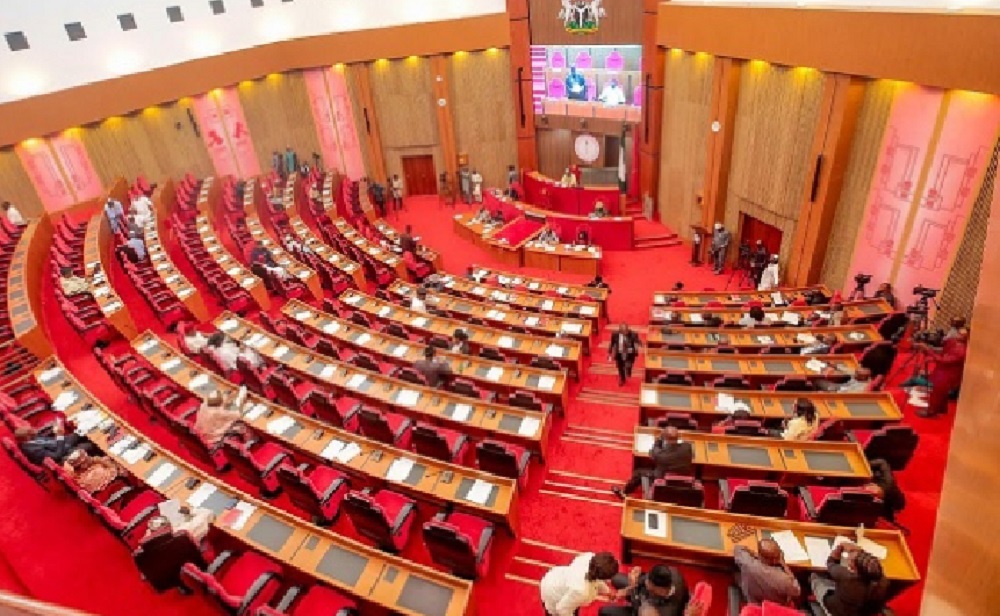
The Senate Committee on Finance has opened a fresh scrutiny of the Federal Government’s import duty waiver regime after the Nigeria Customs Service (NCS) disclosed that the value of Import Duty Exemption Certificates (IDECs) issued since March 2020 rose to about ₦34 trillion by 2025.
The committee also threatened sanctions against the heads of several Ministries, Departments and Agencies (MDAs), including the Nigerian Civil Aviation Authority (NCAA), the Small and Medium Enterprises Development Agency of Nigeria (SMEDAN), the Industrial Training Fund (ITF) and the Federal Medical Centre (FMC), Jabi, for failing to appear before its investigative hearing on revenue remittances.
Appearing before the committee on Monday, Comptroller-General of Customs, Bashir Adewale Adeniyi, said the agency’s revenue performance had been significantly influenced by government fiscal policies, particularly import duty exemptions granted to strategic sectors.
He explained that about 60 per cent of the ₦34 trillion worth of duty waivers covered military hardware imported to strengthen Nigeria’s security architecture, while the remaining exemptions applied to imports of Compressed Natural Gas (CNG), electric and hybrid vehicles, medical equipment, industrial machinery, manufacturing inputs and food items under government intervention programmes.
Adeniyi maintained that duty waivers should not be assessed solely on the basis of revenue forgone, arguing that they were intended to promote broader economic and social objectives, including industrial growth, improved healthcare delivery and national security.
He, however, recommended stronger monitoring mechanisms to ensure beneficiaries of the incentives deliver the expected outcomes through increased production, lower prices and wider economic benefits.
The Customs boss also told lawmakers that the Service had generated about ₦4.5 trillion as of June 30, 2026, against an annual revenue target of ₦11.04 trillion.
However, the hearing exposed disagreements over Customs’ financial obligations after the Fiscal Responsibility Commission (FRC) alleged that the agency had an outstanding operating surplus liability of about ₦8.9 billion based on its 2019 audited accounts.
Customs officials rejected the claim, insisting that the figures required reconciliation.
The committee also turned its attention to the Corporate Affairs Commission (CAC) after the Fiscal Responsibility Commission alleged that the agency had failed to remit about ₦13.9 billion in operating surplus between 2023 and 2025.
Responding, the Registrar-General of the CAC, Hussaini Ishaq Magaji, acknowledged the outstanding liability but said the Commission had commenced gradual settlement of the amount.
To establish the actual figure, Chairman of the committee, Senator Sani Musa, directed the CAC, the Fiscal Responsibility Commission and the committee’s secretariat to reconcile their records and submit a comprehensive report within two weeks.
The committee also expressed displeasure over the absence of several invited agencies from the investigative hearing.
Senator Musa warned that the heads of the NCAA, SMEDAN, ITF, FMC Jabi and other defaulting agencies must appear at the next sitting or face sanctions under the Senate Standing Rules.
He stressed that agencies responsible for managing public resources have a constitutional obligation to account for revenues generated on behalf of the Federal Government and comply with legislative oversight.
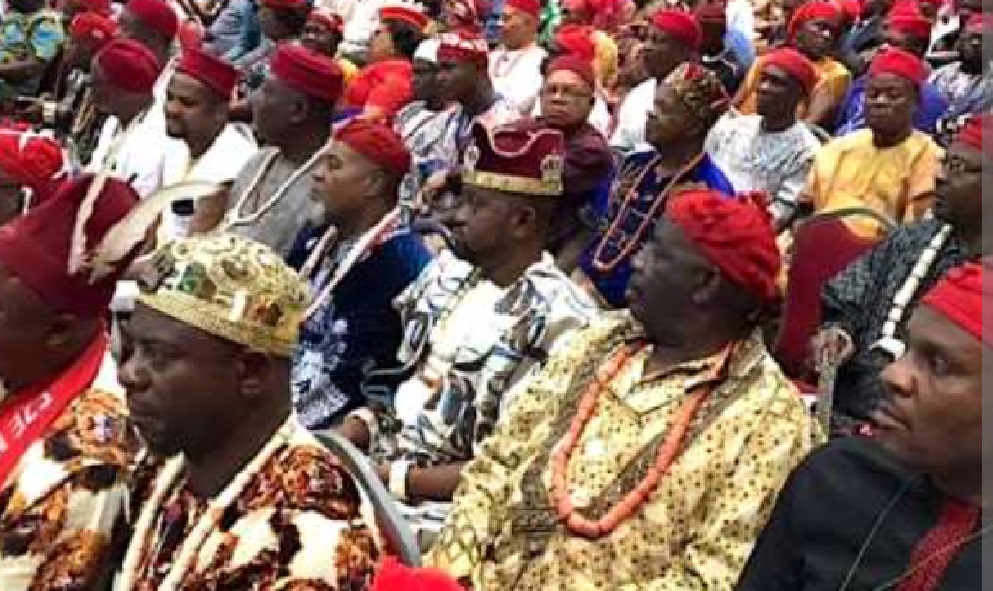
Prominent Igbo leaders have raised fresh concerns over the future of Nigeria’s democracy, warning that the continued suppression of opposition parties could undermine the credibility of the 2027 general elections and trigger political instability across the country.
The warning was issued by the Igbo Leaders of Thought (ILT), an influential assembly of intellectuals, traditional rulers and stakeholders from Nigeria’s South-East. The group argued that no democratic system can thrive without a strong and active opposition capable of holding those in power accountable.
In a statement signed by ILT President, Prof. Elochukwu Amucheazi, and Secretary, Prof. Jerry Chukwuokolo, the organisation condemned what it described as a systematic campaign to weaken opposition parties ahead of the next general election.
According to the group, recent developments—including concerns raised by Nigeria Democratic Congress (NDC) presidential candidate Peter Obi over his personal safety and alleged frustration of his business interests, as well as judicial rulings affecting major opposition parties—have raised serious questions about the country’s democratic environment.
The ILT also recalled previous remarks by Edo State Governor Monday Okpebholo, who had warned that Peter Obi’s security could not be guaranteed in the state. The group further noted that during Obi’s visit to Edo State earlier this year for political activities, gunshots were reportedly fired at him and members of his entourage.
The organisation warned that weakening opposition parties through the use of state institutions could damage Nigeria’s democratic foundations and reduce public confidence in the 2027 elections.
The group specifically expressed concern over what it described as the use of institutions such as the judiciary, security agencies and the Independent National Electoral Commission (INEC) in ways that could prevent opposition parties from competing effectively with the ruling party.
“The democracy Nigerians enjoy today did not come easily. It was achieved after years of struggle against military rule,” the statement said.
The ILT argued that those who once fought for the restoration of democracy should not now be associated with actions that weaken democratic competition.
It warned that if the current political atmosphere is not addressed, Nigeria could face another major political crisis similar to those experienced during previous republics.
Drawing lessons from history, the group referenced the 1962 “Operation Wetie” political violence in Western Nigeria, which eventually contributed to the military coup of January 15, 1966.
It also recalled the disputed governorship election in Ondo State during the Second Republic, saying the resulting violence and destruction paved the way for another military intervention in 1983.
The organisation further pointed to the violence that followed the 2011 presidential election, which, according to Human Rights Watch, claimed more than 800 lives in northern Nigeria, including members of the National Youth Service Corps (NYSC).
The ILT stressed that its warning was not intended to create fear but to encourage political leaders and institutions to uphold democratic principles, protect political competition and ensure that the 2027 elections remain peaceful, credible and acceptable to all Nigerians.
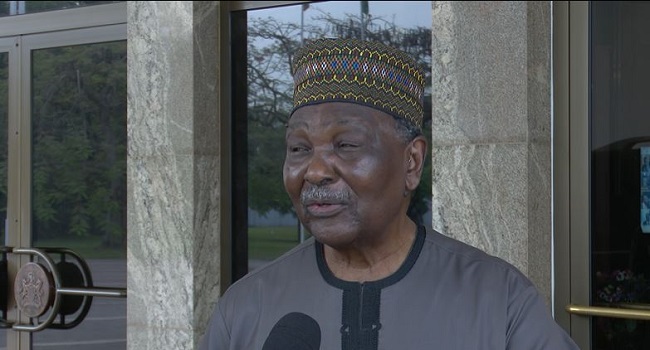
Former Head of State General Yakubu Gowon dropped a political bombshell Monday, revealing that President Bola Tinubu was instrumental in propelling the late Muhammadu Buhari to the presidency and that Buhari repaid the debt in full by ensuring Tinubu succeeded him.
“The support Buhari received from Tinubu helped him emerge as president,” Gowon told a gathering in Abuja marking the first anniversary of Buhari’s death. “This is something for which we must give President Buhari credit. He stood firmly behind President Tinubu so that he could continue serving Nigeria.”
In a rare moment of personal disclosure, the 90-year-old former leader also revealed a private debt to Buhari, recalling how a decade after leaving office and struggling in the UK — he couldn’t afford his children’s school fees.
“I appealed to him, and he ensured that my family received assistance to pay those school fees. That was the kind of person he was. He cared for people,” Gowon said, pushing back against those who viewed Buhari as a sectional leader. “He governed for all Nigerians.”
Senator Atiku Bagudu, who served as Kebbi State Governor and Chairman of the Progressives Governors’ Forum during Buhari’s tenure, confirmed the political reciprocity.
“Buhari had prayed that his brother, Tinubu, succeeds him, and Allah granted his wish,” Bagudu declared.
Vice President Kashim Shettima, representing Tinubu at the event, revealed a deeply personal moment: Tinubu had personally ordered him to fly to London when Buhari fell ill, instructing: “Ensure he lacks nothing.”
Shettima described the profound honor of later escorting Buhari’s body back to Nigeria on Tinubu’s behalf — “one of the greatest honours done to me by the president and the Buhari family.”
In his personal remarks, Shettima offered a poignant reflection on power and loyalty:
“When you are in power, your friends know you. When you are out of power, you know your friends.”
The Buhari family is now establishing the Muhammadu Buhari Foundation and Centre to document the late president’s contributions, according to former SGF Boss Mustapha.
Katsina State’s Deputy Governor Faruk Lawal Jobe described Buhari as belonging to “that rare generation of leaders whose personal integrity became synonymous with public service.”
Borno Governor Babagana Zulum recalled Buhari’s courage, visiting his embattled state “even at great security risk” during the peak of the insurgency.
The remembrance drew a who’s who of Nigeria’s political elite: former First Lady Hajia Aisha Buhari, the Ooni of Ife, former Senate President Ahmad Lawan, and governors including Sanwo-Olu (Lagos), Dapo Abiodun (Ogun), Abdulrazaq AbdulRahman (Kwara), and Bala Mohammed (Bauchi).
Gowon also congratulated Shettima on his nomination as Tinubu’s running mate for the 2027 election — a signal of continuity in the alliance that has come to define Nigeria’s modern political landscape.

Senate investigates N34tn Duty Waivers, Threatens Sanctions for Defaulting Agencies

Police dig deep into cause of South Africa’s midfielder’s death

Fresh 2027 Election Alarm as Igbo Leaders Warn Against Crushing the Opposition




-
 News19 hours ago
NSITF promises Gambia of technical support, stronger partnership …As study tour ends in Abuja
-
 News17 hours ago
‘He was our bread winner’: Dad laments 28-Year-Old Lieutenant Killed in Oyo School Rescue Mission
-

 News19 hours ago
DAY 24 of Projects Commissioning and Flag-Off in the FCT
-

 News17 hours ago
After 56 Days in Captivity, Oriire Parents Scared of Sending Rescued Kids Back to School
-
 News19 hours ago
One dies, seven injured as Gombe Assembly Complex under construction collapses
-

 News17 hours ago
Gunmen Kidnap 60-Year-Old Headmaster In Oyo, Demand N30m Ransom
-
 News18 hours ago
Norwegian Air adorns British Airways logo for 24hrs after losing 2026 World Cup wager
-
 News18 hours ago
JUST IN: Former Minister Of Science, Nnaji Docked, Denies Certificate Forgery
Warning: Undefined variable $user_ID in /home/naijuinz/public_html/wp-content/themes/zox-news/comments.php on line 49
You must be logged in to post a comment Login