Connect with us

News

INTERPOL uncovers 150 stolen vehicles from Canada in Nigeria, Gambia, other W.A. countries

Published

on

ADVERTISEMENT
Zoom Ad
ADVERTISEMENT
Zoom Ad

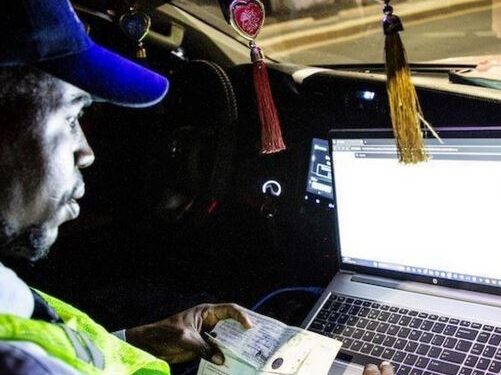
A major crackdown on cross-border vehicle trafficking and organised crime, the INTERPOL-led police operation in West Africa has uncovered a total of 150 stolen vehicles, most of them from Canada.


The operation, codenamed Safe Wheels, took place from March 17 to 30, 2025 and involved national law enforcement agencies across 12 West African countries, including Nigeria and Ghana.

INTERPOL, in a statement on April 30, 2025, revealed that more than 12,600 vehicles were inspected during the operation, resulting in the seizure of over 75 vehicles and the launch of 18 new investigations into vehicle crime and its links to organised criminal networks.

According to INTERPOL, the majority of stolen vehicles were traced to Canada, while others were identified as having been stolen in France, Germany and the Netherlands. Toyota, Peugeot and Honda were the most commonly recovered makes.

Advertisement

“Each year, hundreds of thousands of vehicles are stolen around the world, yet the initial theft is often only the beginning of a vehicle’s journey into the global criminal underworld,” said David Caunter, INTERPOL’s Director of Organised and Emerging Crime.

“Stolen vehicles are trafficked across the globe, traded for drugs and other illicit commodities, enriching organised crime groups and even terrorists. INTERPOL’s SMV (Stolen Motor Vehicle) database is the strongest tool we have to track stolen vehicles and identify the criminals involved in this global trade,” he added.

The SMV database, which INTERPOL provides to its 196 member states, allowed officers in the region to check suspicious vehicles and immediately confirm their status. In 2024 alone, the database helped identify around 270,000 stolen vehicles globally.

In Nigeria, the operation uncovered six high-end vehicles—four of which bore signs of forced entry—hidden in freight containers arriving in Lagos from Canada. The Nigerian Customs Service (NCS) confirmed that all six vehicles, including Toyota and Lexus models, had been reported stolen in Canada in 2024. Investigations are ongoing in collaboration with Canada’s INTERPOL National Central Bureau.

Advertisement

In support of Safe Wheels, INTERPOL deployed nine officers and experts from its SMV Task Force, including a specialist from Canada, to assist local law enforcement in Benin, Cabo Verde, Gambia, Ghana, Nigeria, and Togo.

The operation was carried out under Project Drive Out, a new partnership between INTERPOL and the Government of Canada aimed at curbing vehicle theft and the illegal trade in auto parts. Funding for the project was provided by Canada.

The participating INTERPOL member countries included Benin, Burkina Faso, Cabo Verde, Côte d’Ivoire, Gambia, Ghana, Guinea-Bissau, Mali, Mauritania, Niger, Nigeria, and Togo. Daily, law enforcement teams in these countries established an average of 46 checkpoints to inspect vehicles and track trafficked units.

Officials say the successful coordination of Safe Wheels highlights the growing threat of transnational vehicle crime in West Africa, often linked to broader networks of smuggling and illicit trade.

Advertisement

The operation marks a significant step in regional efforts to clamp down on organised vehicle theft and bolster international policing cooperation.

Continue Reading
Advertisement
Click to comment

Warning: Undefined variable $user_ID in /home/naijuinz/public_html/wp-content/themes/zox-news/comments.php on line 49

You must be logged in to post a comment Login

Leave a Reply

News

NCC begins telecom pricing review after eight years

Published

on

By

ADVERTISEMENT
Zoom Ad
ADVERTISEMENT
Zoom Ad

The Nigerian Communications Commission, working with consultancy KPMG, has begun a comprehensive review of telecom interconnection pricing, the first major reassessment of the sector’s tariff framework in nearly a decade.

The exercise, kicked off in Lagos at a mobile termination rate stakeholder forum on Tuesday, brought regulators, operators and industry participants into a structured process to reassess wholesale pricing rules that govern payments between networks for completing voice calls.

Mobile Termination Rates are regulated fees paid by one operator to another to complete calls across networks. They influence competition, investment, and retail pricing.

The telecom regulator said the current framework, last set in 2018 and adjusted in 2022, has been overtaken by structural changes in the market, including the rollout of 5G, the expansion of data-led services, and the entry of mobile virtual network operators.

Advertisement

It also cited macroeconomic pressure, including currency depreciation and inflation, which have significantly altered operators’ cost bases.

The Head of the Competition and Tariff Unit at the NCC, Omotayo Mohammed, said the exercise goes beyond a routine tariff review and reflects the need to align regulation with a rapidly evolving industry.

The executive stated that the telecom market has changed materially since the last determination, both in technology deployment and market structure, adding that new service categories and business models now require regulatory attention.

“For regulation to remain effective in a fast-moving market, our frameworks must evolve in step with it,” Mohammed said, noting that the review is being conducted under Section 108 of the Nigerian Communications Act 2003 to ensure tariffs remain cost-reflective and non-discriminatory.

Advertisement

KPMG noted the study would combine data analysis, stakeholder consultation, and international benchmarking to inform a revised pricing framework.

Partner and Head of Tax, Wole Obayomi, said that regulatory and people services at the firm that the exercise was designed to identify gaps in the existing regime and test whether a structured review cycle is required.

The process, he said, depends on industry input. “It is important that we get input from the industry in terms of potential solutions and recommendations to address the shortfalls,” he said.

Under the review, the NCC and KPMG will examine pricing practices across wholesale and retail segments and assess whether emerging services are adequately captured under existing regulatory definitions.

Advertisement

The sector’s evolution over the past decade has introduced new business models that are not fully reflected in current rules.

The study will also assess the sustainability of prevailing tariff structures, with attention to investment capacity, service quality, and consumer affordability.

Operators, the consultants noted, apply varying pricing models within regulatory limits, making it necessary to examine how these structures function in practice.

As part of the process, the NCC will require operators to submit detailed financial and operational data covering revenue, costs, profitability, market share, capital expenditure, service quality, and usage trends over multiple years.

Advertisement

KPMG said the dataset is intended to provide a clearer view of industry trends and the cumulative impact of existing pricing rules.

The engagement will include bilateral technical sessions with mobile network operators, mobile virtual network operators, international carriers, clearing houses, and interconnect exchange providers.

Industry participants are expected to involve finance, technical, and commercial teams in the discussions.

The NCC and KPMG will also benchmark Nigeria’s framework against peer markets, including South Africa and Kenya, alongside emerging economies such as Indonesia and Malaysia.

Advertisement

The selection, consultants said, reflects similarities in macroeconomic conditions and regulatory responses to sector development.

Findings from the benchmarking exercise are expected to inform recommendations for a revised pricing regime aligned with both domestic conditions and international practice.

The commission said the review is intended to support a pricing framework that is transparent, competitive, and capable of sustaining investment in network infrastructure and service quality.

NCC Director of Public Affairs Nnenna Ukoha said the exercise cuts across the entire telecom value chain, from operators to consumers and investors.

Advertisement

She said termination rates remain central to pricing dynamics, competition, and service outcomes.

Ukoha said the commission would integrate stakeholder feedback under its co-creation regulatory approach.

She urged operators to comply with timelines for data submission, noting that the process would only be effective with timely and accurate input.

Advertisement
Continue Reading

News

Soludo backs Tinubu, urges Igbos to shun “politics of lamentation”

Published

on

By

ADVERTISEMENT
Zoom Ad
ADVERTISEMENT
Zoom Ad

The Governor of Anambra State, Prof. Chukwuma Soludo, has declared his strong support for the leadership of President Bola Ahmed Tinubu, urging Ndigbo to move from an alliance of protests to an alliance for progress.

Speaking during a grand endorsement rally for President Tinubu in Abakaliki, Ebonyi State, yesterday, Soludo emphasised the growing synergy between progressive forces across Nigeria, describing his attendance as a “solidarity visit” and a resounding display of inter-party cooperation, progressivism and national unity.

Standing alongside his host, the Governor of Ebonyi State, whom he affectionately recognised as “my own brother,” Governor Soludo affirmed his commitment to the collaborative governance currently shaping the nation.

“I am here on a solidarity march with my own brother, the Rt. Hon. Governor of Ebonyi State, who, by the grace of God, is governor until 2031,” he remarked to applause.

Advertisement

Governor Soludo, representing the All Progressives Grand Alliance (APGA), underpinned the necessity of moving beyond traditional political silos to secure the nation’s future.

“I am here in solidarity with you because today, you are endorsing the President and Commander-in-Chief of Nigeria, Asiwaju Bola Ahmed Tinubu, GCFR,” he stated. “I have come in solidarity because progressives are working together. It is time for progressives to unite.”

Addressing the current economic and social climate, the governor acknowledged the presence of national challenges but expressed optimism in the current administration’s efforts to address them. He signalled that his own party, APGA, would soon convene to formalise its position, with the ultimate goal of consolidating a national progressive front to ensure the continuity of the foundational structures being laid by President Tinubu.

In a poignant message to his fellow Ndigbo, Governor Soludo made a compelling argument for a shift in political strategy. He urged the region to move away from historical patterns of grievance-based politics towards a future defined by pragmatic partnership.

Advertisement

“I say to ụmụ nne m ndị Igbo, ENOUGH of the politics of lamentation,” Governor Soludo declared. “We must now move from the alliance of protest to the alliance for progress—an alliance and partnership for prosperity for Ndigbo. We must now unite as Ndigbo; we must not waste our votes again,” he stated.

Continue Reading

News

150 terrorists convicted in 48 hours, says AGF

Published

on

By

ADVERTISEMENT
Zoom Ad
ADVERTISEMENT
Zoom Ad

The Federal Government has secured approximately 150 convictions within the first two days of its latest phase of mass terrorism trials, Attorney-General of the Federation and Minister of Justice, Lateef Fagbemi (SAN), disclosed on Tuesday.

Fagbemi made the disclosure while speaking with journalists at the Federal High Court in Abuja, where the trials are being conducted simultaneously before 10 judges of the court.

The AGF said the current phase, which commenced on Monday, had already recorded about 160 trials leading to roughly 150 convictions on its first day alone.

“Yesterday, we had about 160 trials. I think about 150 convictions,” Fagbemi told reporters.

Advertisement

He added that proceedings on Tuesday brought approximately 300 cases before the courts, with another 84 cases expected to be concluded before the close of the day.

“Whatever we can do, or wherever we stop today, we’ll continue tomorrow and also on Thursday. So it’s still ongoing,” the minister said.

Fagbemi appealed for patience from members of the public as the exercise continued, stressing that the initiative reflected the government’s commitment to justice, accountability and the rule of law.

On Monday, the AGF had said the ongoing phase marked the fourth round of mass terrorism trials conducted since the inception of the current administration, describing the exercise as a clear signal that the government would not tolerate terrorism in any form.

Advertisement

“The message is clear, direct and straightforward. It is that the present administration is not taking the issue of terrorism with levity. And that is why you see ongoing trials.

“Since the inception of this administration, this is about the fourth phase that we are undertaking. So the message is that let everybody know that terrorism in whatever form or shape will not be tolerated,” Fagbemi added.

The prosecution is being led by the AGF himself, while the Director-General of the Legal Aid Council, Aliyu Abubakar, heads the defence team.

Among the judges handling the cases are Justices Binta Nyako, Emeka Nwite, Musa Liman, James Omotosho, Obiora Egwuatu and Ekerete Akpan, with proceedings taking place across several courtrooms simultaneously.

Advertisement

The current phase of trials is expected to run through Thursday, with the overall exercise scheduled to last one week.

The latest phase follows a previous round conducted between April 7 and April 10, during which no fewer than 500 alleged terrorists were tried before the Federal High Court sitting in Abuja.

Continue Reading

Trending

Copyright © 2024 Naija Blitz News