
News
Guild of Editors suspends member, Osuji for breach of ethics




The Nigerian Guild of Editors said it has suspended one of its members, Mr Steve Osuji, for violating the “off-the-record” provision in the Code of Ethics for journalists in Nigeria.
In a press statement jointly signed by the President, Mr Eze Anaba, and General Secretary, Mr. Onuoha Ukeh, it said that there was an agreement that the keynote address delivered by the Director-General of the State Security Service, Mr Adeola Ajayi, at its 25th Biennial National Convention in Enugu, was off the record and not for publication.
The Guild said that despite the announcement of this agreement, “a senior journalist and member of the Guild, Mr. Steve Osuji, published an article based on the presentation on his social media platforms, breaching our Code of Ethics on confidentiality.”
The professional body said that it “takes this professional misconduct seriously and has announced the suspension of Mr. Osuji from our professional body for one year, effective immediately.”
The NGE apologized to the Director-General of the SSS and the institution he represents for the embarrassment caused by Osuji’s actions, while reaffirming its “commitment to upholding the highest standards of journalism and ensuring that our members adhere to our code of ethics.”
The NGE said that “Mr Osuji will have the opportunity to appeal this decision.”


By Gloria Ikibah
The Speaker of the House of Representatives, Rt. Hon. Tajudeen Abbas, has congratulated the First Lady, Senator Oluremi Tinubu, on her 66th birthday, describing her as a “great mobiliser and unifier”.
In a congratulatory message issued through his Special Adviser on Media and Publicity, Musa Abdullahi Krishi, on Saturday, Abbas described the First Lady as a dependable spouse, partner and ally to President Bola Ahmed Tinubu.
The Speaker commended her “indefatigable spirit” and high level of patriotism, saying she remained an inspiration to Nigerian women.
He also acknowledged her experience in public administration and women mobilisation, describing her as an experienced political, religious and woman leader.
Abbas praised her resilience in supporting not only the President but also the ruling All Progressives Congress (APC), noting her influence at the grassroots and her efforts to complement the actualisation of the Renewed Hope Agenda.
The Speaker wished the First Lady many more years in sound body and mind, while praying for the success of her husband in the forthcoming presidential election.
By Gloria Ikibah
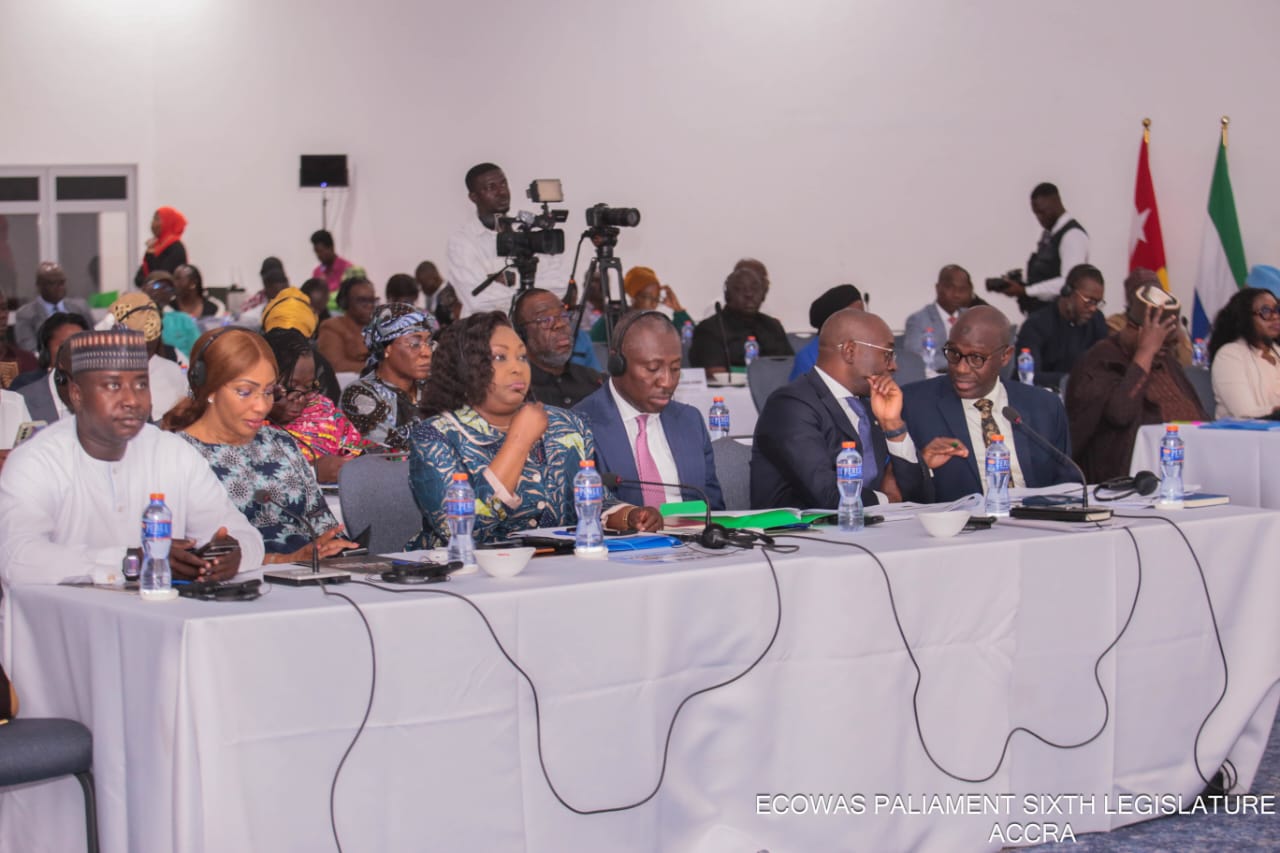
Experts have warned that climate change is putting growing pressure on livelihoods, infrastructure and regional stability across West Africa, as lawmakers deliberate on the need for stronger adaptation measures and regional cooperation.
The warning was issued at the second Extraordinary Session of the ECOWAS Parliament and its second Parliamentary Seminar on Monday in Accra, Ghana, where experts examined the theme, “Climate Change as a Driver of Environmental Degradation, Population Displacement and Rising Insecurity in the ECOWAS Region”.
The experts said rising temperatures, extreme weather, drought, unpredictable rainfall, flooding, rising sea levels and land degradation were placing increasing pressure on communities and critical infrastructure across the sub-region.
In a presentation on climate change in West Africa, including risk areas, vulnerabilities and implications for regional stability, the Senior Programme Officer, Climate Change and Ozone Directorate of Ghana’s Environmental Protection Authority, Dr Derek Sarfo-Yiadom, said climate hazards were no longer distant threats.
“Climate hazards are with us,” he said, identifying extreme heat, drought, heavy and unpredictable rainfall, rising sea levels and other weather-related events as growing concerns.
Sarfo-Yiadom said climate hazards became disasters when communities exposed to them lacked the capacity to cope.
According to his presentation, seasonal temperatures in the region have risen by between one and three degrees Celsius since 1970, contributing to hotter heatwaves and increasingly unpredictable weather patterns.
He said changing rainfall patterns were also increasing the risk of flooding, while drought and heat were placing additional pressure on agriculture and livelihoods.
Farmers, low-income communities, coastal settlements and displaced populations were identified as particularly vulnerable to the effects of climate change.
The presentation also highlighted threats to homes, irrigation systems, electricity supply, transport networks, ports, markets and public services.
Sarfo-Yiadom said the consequences of climate change extended beyond the environment, with social and economic implications for communities.
He warned that climate pressures can contribute to displacement and conflict, particularly in communities heavily dependent on agriculture and natural resources.
The expert called for increased investment in climate adaptation, flood-proof zoning and wider climate-risk mapping.
He also urged governments to ensure that early-warning systems reached vulnerable communities and that public authorities were held accountable for climate-related spending.
ECOWAS seeks stronger regional climate action
In another presentation focusing on the ECOWAS regulatory and institutional framework and the need to translate climate commitments into regional action, the Principal Officer, Climate Change and Climate Services at the ECOWAS Commission, Mr Raoul Kouame, said the region needed to harmonise climate policies and standards.
He said member states should also be supported to implement their commitments under the Paris Agreement.
“The challenge is no longer just to define climate commitments,” he said.
Kouame identified institutional fragmentation, differences in national capacities and difficulties in accessing climate finance among the challenges affecting climate action across West Africa.
He called for stronger coordination between regional and national institutions, as well as greater sharing of experience among member states.
He also advocated mechanisms that would enable countries to develop national climate frameworks linked to regional structures.
According to him, regional cooperation should cover climate services, early-warning systems, forest and ecosystem protection, carbon markets and access to climate finance.
According to him, West African countries needed to strengthen their capacity to access available climate funds and develop innovative financing mechanisms to support implementation.
Kouame stressed that ECOWAS had an important role to play in providing regional solidarity and helping member states implement their climate commitments more effectively.
The ECOWAS Parliament has previously identified climate change and environmental protection among areas within its parliamentary responsibilities, including the harmonisation of policies and programmes among member states.
Climate risks cross national borders
A climate, water and meteorology expert with the Permanent Inter-State Committee for Drought Control in the Sahel (CILSS), Dr Abdou Ali, also called for greater regional cooperation in responding to climate and resource pressures.
His presentation examined drought, land degradation and food insecurity, with particular attention to the need for countries to share climate information, data, technical expertise and climate services.
Ali said regional cooperation was essential because climate risks did not stop at national borders.
He highlighted agriculture, coastal areas, biodiversity, disaster risk and human displacement as areas requiring coordinated adaptation measures.
He also emphasised the need to integrate climate action into policies covering agriculture, forestry, energy, transport, industrialisation and waste management.
The expert said regional strategies would require adequate financing, stronger institutions and effective implementation mechanisms to deliver results.
The presentations converged on the need for stronger climate adaptation measures across West Africa, with the experts stressing that responses should reflect the needs and livelihoods of affected communities to avoid creating new vulnerabilities.
The discussions come as West African countries face continued climate variability, with drought in the Sahel and flooding in Gulf of Guinea countries posing risks to food security, water resources, health systems and infrastructure. Regional institutions are increasingly emphasising early warning, data sharing and coordinated responses to climate-related disasters.
Parliamentarians at the Accra seminar are continuing deliberations on the expert presentations, with discussions expected to focus on practical measures that can strengthen climate resilience and address the links between environmental degradation, displacement and insecurity in the ECOWAS region.
By Gloria Ikibah
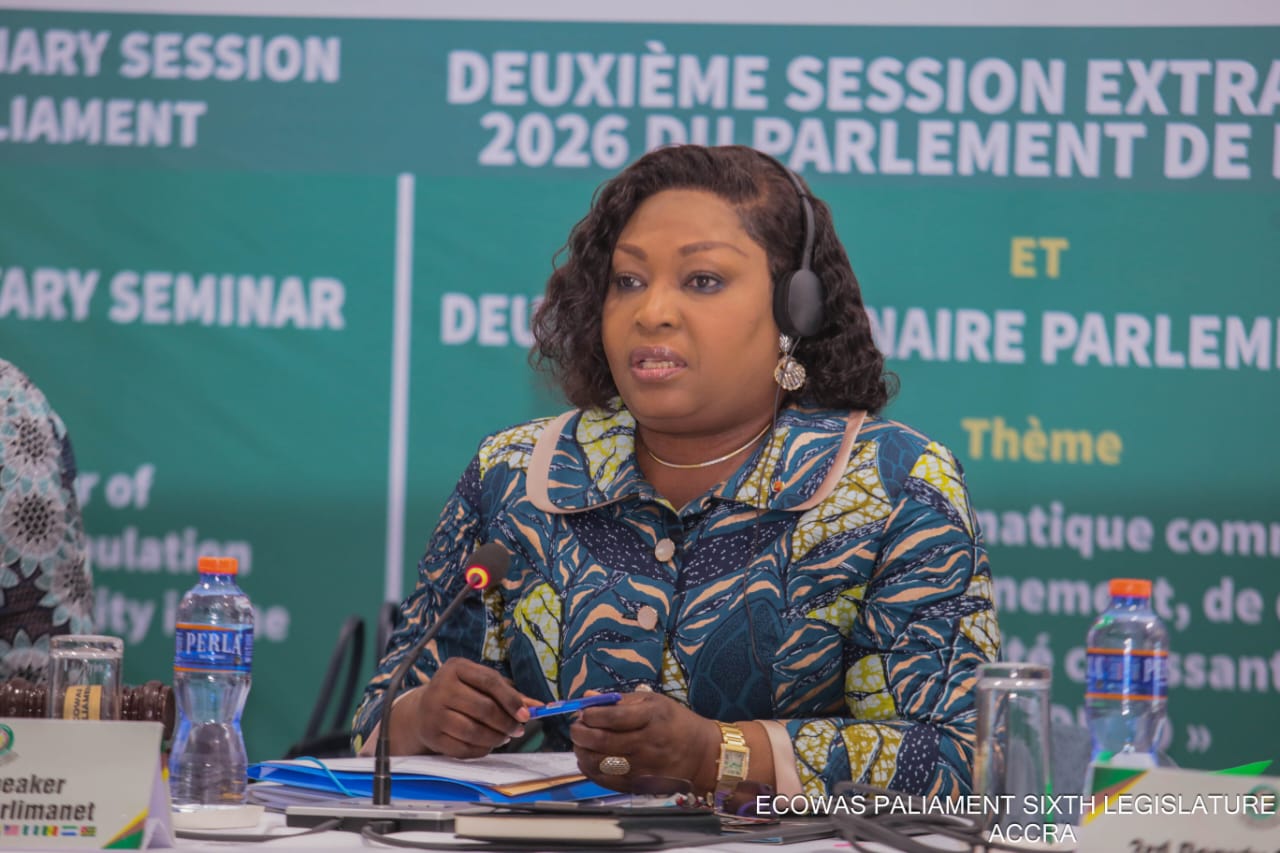
The Speaker of the ECOWAS Parliament, Rt. Hon. Mémounatou Ibrahima, has called for practical and people-centred responses to the growing effects of climate change, warning that environmental disruption is increasingly affecting livelihoods, communities and the security of populations across West Africa.
Ibrahima made the call on Monday in Accra, Ghana, while opening the second Parliamentary Seminar of the year under the theme “Focusing on climate change, environmental degradation, population displacement and growing insecurity in the ECOWAS region”.
The seminar forms part of the activities of the Sixth Legislature of the ECOWAS Parliament and brings lawmakers together to examine the interconnected challenges facing communities across the sub-region. Recent regional discussions by the Parliament have similarly placed climate change, displacement and insecurity at the centre of its agenda.
In her welcome remarks, Ibrahima said the effects of climate disruption can no longer be viewed simply through statistics or scientific projections, as communities were already experiencing its consequences.
She said: “Climate disruption can no longer be measured only in degrees, statistics or projections. It is read in land that yields less, in coastlines that retreat, in flooded neighbourhoods, in families losing their livelihoods, and in communities forced to relocate.
“Behind the climate question lies a profoundly human one: how do we protect the living conditions, dignity and security of our populations when their environment is changing faster than their capacity to adapt to it?”
The Speaker said the responsibility of parliamentarians at the seminar was to connect technical knowledge with the realities experienced by people in their constituencies.
“Our responsibility during this Seminar will be precisely to connect these realities, not to restate here what we already know, but to better understand what is at stake in our territories and to consider the most appropriate responses.”
She said the expertise to be shared during the seminar would be valuable, but stressed that it needed to be combined with the experiences of lawmakers who remained closely connected to their communities.
“The expertise that will be shared with us should inform our discussions. But it must also meet the experience of parliamentarians, who remain in close contact with their territories and their people.
“It is from this dialogue between technical knowledge and lived realities that truly useful proposals can emerge”, she added.
Ibrahima also linked the opening of the seminar to Ghana’s Founder’s Day, which is commemorated on September 21 to mark the birth of Ghana’s first President, Osagyefo Dr Kwame Nkrumah.
She recalled Nkrumah’s contribution to Ghana’s independence and his wider vision of a united and self-reliant Africa.
“The 21st of September carries special resonance in Ghana. The country celebrates today Founder’s Day, a date that coincides with the birth of Osagyefo Dr Kwame Nkrumah.
“Gathered here in Accra, we cannot let this occasion pass without recalling the man whose fight for Ghana’s independence was inseparable from a far greater ambition: that of a free, united Africa, able to take charge of its own destiny.
“On this day of commemoration, I would like us to pause to stand with the people of Ghana and honour the memory of this illustrious African figure. I invite us to observe a minute of silence”, Speaker Ibrahima stated.
The lawmakers observed a minute of silence in honour of Nkrumah.
Ibrahima urged participants to focus on substantive discussions during the seminar, saying the formal opening ceremonies should not distract from the need to address the challenges confronting West African communities.
“Tomorrow we will have time for solemnity. Today, let us choose substance, listening and work.
“It is in this spirit that I invite us to get straight to the heart of our work. Thank you. Thank you. Obrigada”, she noted.
The Accra seminar is expected to examine how climate change and environmental degradation are contributing to population movements and insecurity, as well as possible regional responses.
The ECOWAS Parliament has previously identified climate change and environmental protection among areas within its parliamentary remit, including the development and harmonisation of regional policies on climate change, natural resources and environmental protection.

Abbas Hails Oluremi Tinubu @66, Praises Her as ‘Great Mobilise, Unifier’

Climate Change Threatens West Africa’s Livelihoods, Stability — Experts

ECOWAS Parliament Seeks Urgent Action as Climate Change Fuels Displacement, Insecurity



-

 News23 hours ago
TeeJay Yusuf mourns Ex-Kogi Governor Ibrahim Idris
-
 Sports24 hours ago
EPL: Shearer Warns Arsenal After Brighton Humbling
-
 News22 hours ago
Just in: Former Kogi Governor Ibrahim Idris reportedly dies in UK
-

 Politics12 hours ago
‘They Don’t Want Wike To Win’ – Fayose Reveals Five APC Governors Secretly Backing NDC
-

 News12 hours ago
Uzodinma Wants To Become Senate President But Wike Is Not Supporting Anyone From Southeast – APC Chieftain Reveals
-

 Sports12 hours ago
LaLiga: Barcelona Reveal Plan For Messi’s Return
Warning: Undefined variable $user_ID in /home/naijuinz/public_html/wp-content/themes/zox-news/comments.php on line 49
You must be logged in to post a comment Login