News
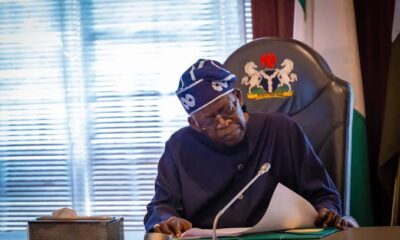
President Tinubu appoints Omidiran FCC chairman




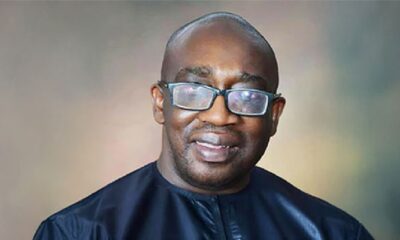
President Bola Tinubu has appointed a former member of the House of Representatives, Ayo Hulayat Omidiran, as the Executive Chairman of the Federal Character Commission (FCC).
This was contained in a statement issued by the Special Adviser to the President on Information and Strategy, Bayo Onanuga, on Monday, August 11, 2025.
The appointment comes a few hours after the presidency announced the reappointment of Dr Muheeba Dankaka as the FCC chairman for a second five-year term.
However, Onanuga, in a fresh statement issued shortly after the first one on Monday, announced the reversal of Dankaka’s reappointment and announced the appointment of Omidiran as the FCC chairman.
Onanuga stated that Omidiran succeeded Dankaka whose tenure was dogged by controversy.
Tinubu also appointed Mohammed Musa as the Commission’s secretary while retaining Kayode Oladele from Ogun State was named as commissioner.
Oladele a former House of Representatives member, was appointed by President Tinubu in 2024.
He served as the Commission’s acting chairman.
The president renewed the appointments of Lawal Ya’u Roni, Abubakar Atiku Bunu, and Eludayo Eluyemi, who represent Jigawa, Kebbi, and Osun States, for a second term.
Tinubu also reappointed Abdulwasiu Kayode Bawalla as the commissioner from Lagos State.
The newly appointed commissioners are Obina Oriaku, Abia; Bema Olvadi Madayi, Adamawa; Obongawan Dora Ebong, Akwa–Ibom; Nnoli Nkechi Gloria, Anambra; Babangida Adamu Gwana, Bauchi; Tonye Okio, Bayelsa; and Aligba Eugene Tarkende, Benue.
Others include Engr. Modu Mustapha, Borno; Dr. Stella Odey Ekpo, Cross River; Ederin Lovette Idisi, Delta; Nwokpor Vincent Nduka, Ebonyi; Victor Sabor Edoror, Edo; Sola Fokanle, Ekiti; Peter Eze, Enugu; Ibrahim Baba Mairiga, Gombe; Jerry Alagbaoso, Imo; Ruth Jumai Ango, Kaduna; Muhammad Awwal Nayya, Kano; Anas Isah, Katsina; and Bello Idris Eneye, Kogi.
Also appointed are Dr. Ibrahim Abdullahi, Kwara; Isah Jibrin, Niger; Ajimudu Bola, Ondo; Prince Ayodeji Abas Aleshinloye, Oyo; Pam Bolman, Plateau; Aaron Chukwuemeka, Rivers; Aminu Tambar, Sokoto; Bobboi Bala Kaigama, Taraba; Jibir Maigari, Yobe; Sani Garba, Zamfara; and Solomon Ayuba Dagami, FCT.







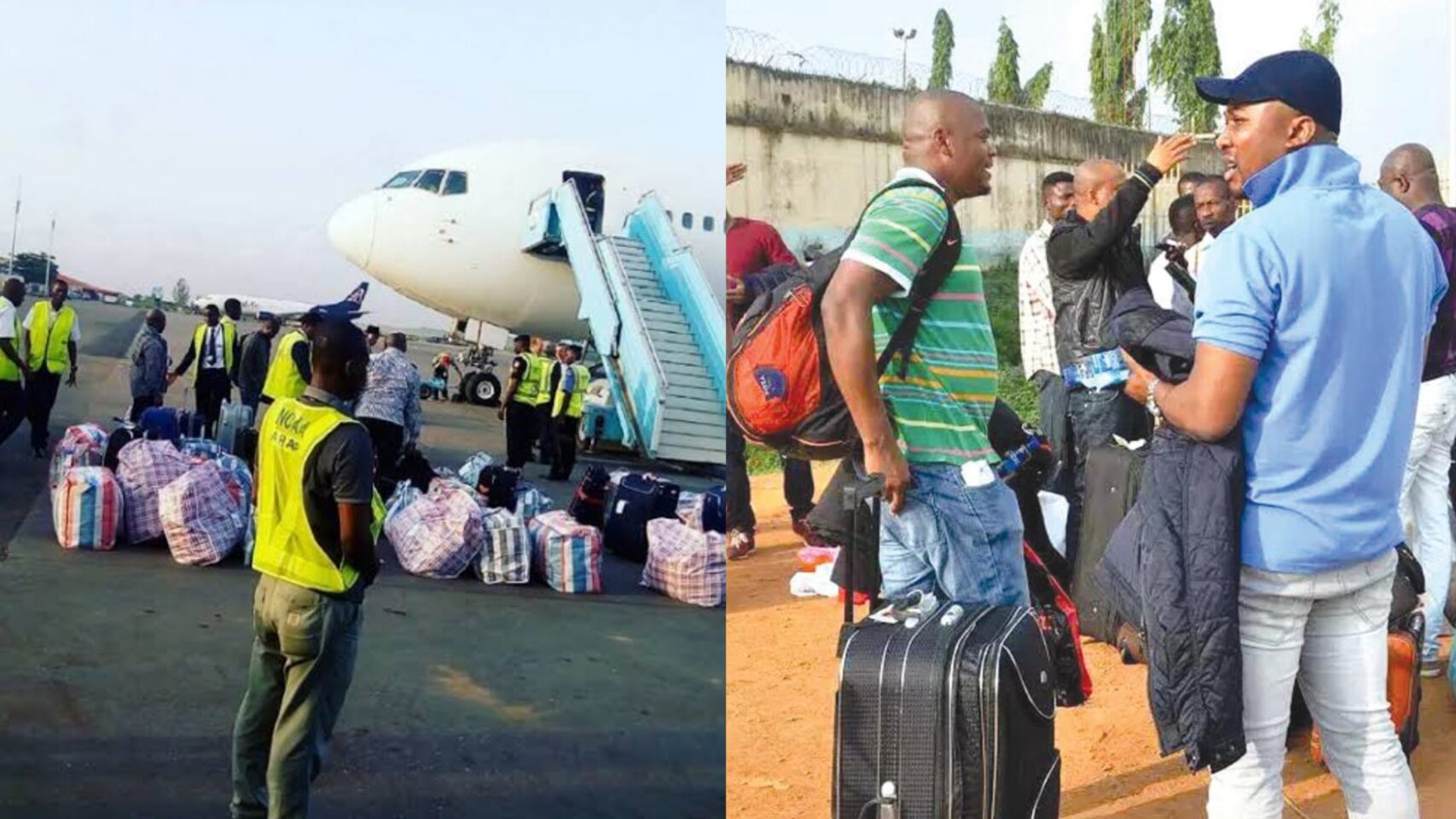
Japa on reverse lane as the United States Department of Homeland Security, DHS, has updated its list of Nigerians facing removal from the country, reducing the number to 112 and publishing their names and photographs online.
The latest list features Nigerians from different parts of the country and was published through the DHS official website.
Among those listed are Cletus Onyali, Olaolu Alabi, Marcus Unigwe, Mkpouto Etukudoh, Blessing Uchanma, Olaniyi Ojikutu, Richard Ugbah, Oluwamuyiwa Olawoye, Anthony Asanya and Ebele Agbasiele
Others identified on the list include Izuchukwu Okoye, Olufemi Olufisayo Olutiola, Abiemwense Obanor, Chibuzo Nwaonu, Oluchi Jennifer Chimdimma Chime, Ifeanyi Okoro, Oluwaseun Kassim, Quazeem Adeyinka and Talatu Dada.
The complete list contains 112 names, with the photographs and details of the other individuals available through the DHS online portal.
The publication comes amid stepped-up immigration enforcement by the US government, particularly involving undocumented immigrants and individuals with outstanding removal orders.
It also comes against the backdrop of efforts by US authorities to obtain increased cooperation from foreign governments in receiving their nationals who have been ordered to leave the United States.
Nigeria has previously faced pressure from the US over the repatriation of its nationals subject to deportation.
The updated publication provides public access to the identities and photographs of the Nigerians currently identified by DHS for removal from the United States.
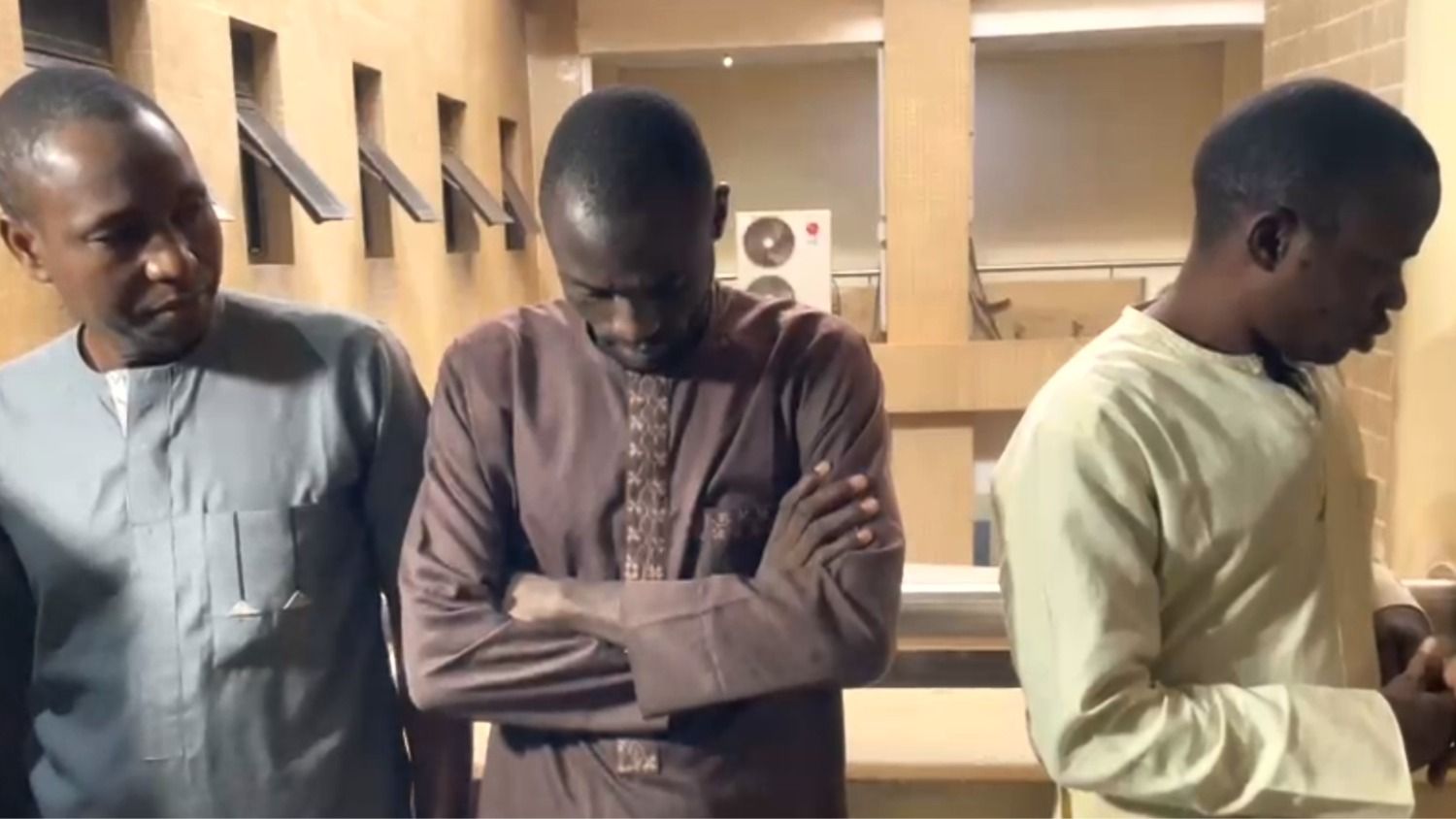
The Department of State Services, DSS, on Thursday re-arraigned five men accused of complicity in the May 15 kidnap of pupils and teachers in Oriire Local Government Area of Oyo State and the subsequent killing of two of the victims.
They were arraigned on a seven-count amended charge marked FHC/ABJ/CR/438/2026, filed by the DSS on behalf of the Federal Government.
The defendants, accused of being members of the Jama’atu Ansarul Muslimina fi-Biladis Sudan (ANSARU) terrorist group, are Mahmud Muhammad (aka Abu Bara’a, Abbas Mukhtar); Abubakar Abbas (aka Isah Adam, Mallam Mahmuda Al-Nigeri); Abdulrazak Umar (aka Abu Khalifa/Abu Khalid); Yunusa Musa (aka Abu Yunusa Bin Musa); and Shamsu Adamu Sani (aka Abu Itisar).
All five defendants, however, pleaded not guilty to the charges when they were read to them by the Registrar of the court.
The Director of Public Prosecutions of the Federation (DPPF), Mr Rotimi Oyedepo, SAN, who led the DSS legal team, applied for the immediate trial of the defendants in line with the provisions of the Administration of Criminal Justice Act, 2015.
He also applied for the names of witnesses lined up to testify in the trial to be shielded and for them to be permitted to wear masks to ensure their protection.
Following no objection from counsel to the defendants, Bala Dakum, Justice Salim Ibrahim granted the request of the DSS counsel.
At the time of filing this report, arrangements for the full-scale trial were being put in place.
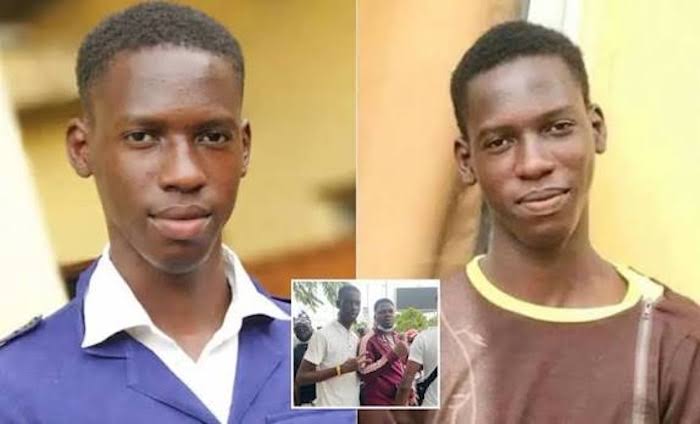
LAGOS — A post-mortem examination conducted by the Department of Pathology and Forensic Medicine at the Lagos State University Teaching Hospital (LASUTH) has confirmed that 20-year-old journalist Pelumi Onifade died from a penetrating firearm injury to the abdomen.
The finding is contained in a six-page autopsy report dated July 30, 2026, and submitted to the Lagos State Coroner’s Court investigating the circumstances surrounding the young journalist’s death during the October 2020 #EndSARS protests.
According to the report, Onifade died from massive haemoperitoneum, a severe accumulation of blood in the abdominal cavity, caused by a high-velocity projectile that penetrated his abdomen.
The forensic finding provides medical evidence establishing a gunshot injury as the cause of death, while the circumstances surrounding who fired the shot and the events that followed remain matters before the coroner’s proceedings.
How Onifade Died
Onifade was a 200-level History student of Tai Solarin University of Education (TASUED) and worked as an intern reporter with Gboah TV, a Lagos-based online news platform.
On October 24, 2020, during the nationwide #EndSARS protests against police brutality, he was assigned to cover an attempted looting at a government palliative storage facility in the Abattoir area of Oko-Oba, Agege, Lagos.
According to accounts presented by his family and colleagues, Onifade was wearing a press jacket and carrying reporting equipment when officers attached to the Lagos State Task Force opened fire while attempting to disperse the crowd.
He was reportedly struck by a bullet and subsequently taken away in a police van, commonly referred to as a Black Maria.
A colleague who was with him at the scene reportedly attempted to identify him as a journalist and explain that he was carrying camera equipment, but those efforts were unsuccessful.
Onifade was not seen alive again after that incident.
Family Searched Police Stations, Hospitals
Following his disappearance, his family and colleagues searched police stations, detention facilities and hospitals across Lagos in an attempt to establish his whereabouts.
According to the family, police authorities denied having him in custody.
Six days later, on October 30, 2020, the family located his body at the mortuary of Ikorodu General Hospital, where it had been registered as a “brought-in-dead” case under body number 1385.
The discovery triggered years of demands for an independent investigation into how the young journalist died and how his remains ended up in the mortuary.
DNA Test Identified the Body
The identity of the body was subsequently confirmed through forensic DNA testing.
Results from the Lagos State DNA and Forensic Centre established a match between the unidentified body bearing tag number 1385 and reference samples obtained from Onifade’s parents.
The DNA confirmation provided a crucial breakthrough after years of uncertainty surrounding the whereabouts and identity of the missing journalist.
Court Ordered Coroner’s Inquest
The search for accountability later moved into the courts.
In July 2024, Justice Ayokunle Olayinka Faji of the Federal High Court in Lagos ordered the Lagos State Government and the police to conduct a coroner’s inquest into Onifade’s death.
The objective of the inquest is to establish the circumstances surrounding his death and determine the facts surrounding the actions of the security personnel involved.
The ongoing proceedings before the Lagos State Coroner’s Court are being presided over by Magistrate Temitope Oladele.
Following the submission of the post-mortem report, the court has directed key witnesses, including police personnel who were on duty in the Oko-Oba area on October 24, 2020, to appear and testify.
Rights Groups Demand Accountability
Media Rights Agenda (MRA), which has supported the Onifade family in its legal efforts, has described the post-mortem findings as significant evidence in the case.
Rights activists, journalist unions, and the deceased’s family continue to demand the public prosecution of the police officers who fired the shot and those who supervised the deployment during the Lagos #EndSARS demonstrations.

Japa on reverse lane as US releases names, photos of 112 Nigerians on deportation list

Oyo kidnap: Five defendants plead not guilty to seven count charges

Autopsy Confirms #EndSARS Journalist Pelumi Onifade Died From Gunshot Wound



-
 News17 hours ago
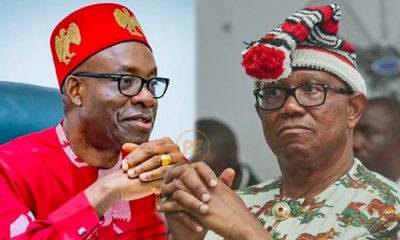
Anambra Govt Releases Records Of Alleged Unpaid Debts By Peter Obi During Tenure As Governor
-
 News17 hours ago
ASUU demands 26% education funding, faults FG over 15% compromise
-

 News17 hours ago
Peter Obi Weighs In On Dangote Refinery Shares
-
 News17 hours ago
2027: Atiku, Amaechi Secretly Buying Dangote Refinery Shares – APC Chieftain Claims
-
 News13 hours ago
Wike is an asset to APC, should not be embarrassed – Jibrin defends FCT Minister(Video)
-
 News17 hours ago
‘Educated Illiterate’ – Soludo Under Heavy Attack After Releasing Alleged Records Of Peter Obi’s Debts
Warning: Undefined variable $user_ID in /home/naijuinz/public_html/wp-content/themes/zox-news/comments.php on line 49
You must be logged in to post a comment Login