
News
Expert warns AI could slow down apps, frustrate users


- /home/naijuinz/public_html/wp-content/plugins/mvp-social-buttons/mvp-social-buttons.php on line 27
https://naijablitznews.com/wp-content/uploads/2025/09/45e8af10-e899-47fb-92f1-e650e9395cc9-1000x600.jpeg&description=Expert warns AI could slow down apps, frustrate users', 'pinterestShare', 'width=750,height=350'); return false;" title="Pin This Post">
- Share
- Tweet /home/naijuinz/public_html/wp-content/plugins/mvp-social-buttons/mvp-social-buttons.php on line 72
https://naijablitznews.com/wp-content/uploads/2025/09/45e8af10-e899-47fb-92f1-e650e9395cc9-1000x600.jpeg&description=Expert warns AI could slow down apps, frustrate users', 'pinterestShare', 'width=750,height=350'); return false;" title="Pin This Post">


By Prosper Olayiwola
A software engineer, Joseph Ajayi, has cautioned that the growing integration of artificial intelligence (AI) into mobile applications may deliver smarter services but also threatens to slow down performance and frustrate users.
Ajayi, a React Native developer with years of experience building apps for healthcare, fintech and e-commerce sectors, said the rush to add features like real-time recommendations, natural language processing and on-device machine learning (ML) models often comes at the expense of speed and stability.
He noted in a statement that users most often don’t care how intelligent an app is if it lags or freezes, saying that a half-second delay can mean the difference between a five-star review and an uninstall.
He explained that AI-driven functionalities require significant CPU usage and memory consumption, continuous data synchronization, which can lead to increased battery drain, higher crash rates and poor performance on mid-to-low-end devices.
Ajayi recounted a recent e-commerce project where the addition of a sophisticated AI recommendation engine doubled user engagement but also caused the crash rate to spike from 0.5 per cent to over 2 per cent.
“What made it worse was that we didn’t have proper monitoring in place for the AI components,” Ajayi explained. “Traditional performance metrics don’t capture the unpredictable resource consumption patterns of machine learning inference. We were flying blind until we implemented proper observability around our AI features.”
## The Hidden Reliability Costs of AI Integration
According to Ajayi, one of the biggest challenges teams face is maintaining reliability when AI services fail. He emphasized the importance of building fallback mechanisms and graceful degradation into AI-powered applications.
“We learned to always have fallback modes during our Black Friday incident,” he said. “When our recommendation engine went down due to a third-party ML service outage, users still needed to browse products effectively. The apps that survived were those with intelligent circuit breakers and backup functionality.”
He noted that AI integration often introduces complex dependency chains that traditional mobile apps don’t face. External ML APIs, real-time data pipelines, and cloud-based inference services all become potential points of failure that require careful monitoring and contingency planning.
## Performance Monitoring in the AI Era
Ajayi stressed that teams need to rethink their approach to performance monitoring when AI features are involved. Standard metrics like response time and memory usage don’t tell the complete story when machine learning models are processing user data in real-time.
“You need to track P95 and P99 latency specifically for AI operations, monitor model inference times separately from general app performance, and set clear Service Level Objectives for AI-powered features,” he explained. “We’ve seen cases where an AI feature works perfectly 90% of the time but creates terrible user experiences during the remaining 10%.”
He recommended implementing feature flags for AI components to enable quick rollbacks when problems arise, and using canary deployments when updating machine learning models in production.
## Real-Time Features: A Performance Multiplier
He said: “Users have become incredibly sophisticated. They might not understand the technical complexities behind their favorite apps, but they instinctively know when something feels off.
“What I’ve discovered is that perceived performance often matters more than actual performance. An app that loads data in two seconds but shows immediate visual feedback feels faster than one that loads in 1.5 seconds but shows a blank screen.
“Every app today wants real-time features. Live order tracking, instant notifications, real-time chat, live data synchronization – users expect their apps to be as responsive as their thoughts. But here’s what nobody tells you: real-time features are performance multipliers. Every real-time connection requires careful capacity planning, every live update needs intelligent caching strategies, and every persistent connection must be monitored for resource leaks.”
Ajayi emphasized that managing real-time AI features requires understanding their unpredictable scaling behavior. Unlike traditional CRUD operations, AI workloads can vary dramatically based on data complexity and user behavior patterns.
## Case Study: Healthcare App Optimization
The software expert noted that one of his most challenging projects was a healthcare application where delays in loading patient records could directly affect care delivery.
According to him, the app initially took three to four seconds to load critical information, which created unacceptable lags for medical staff.
“The AI-powered diagnostic suggestions were impressive, but when doctors had to wait four seconds for basic patient data, the smart features became irrelevant,” he said. “We had to completely rethink our architecture around reliability-first principles.”
He revealed that after three months of intensive optimization focused on performance SLOs and proper load testing with AI workloads, his team achieved a 60 per cent improvement in performance, drastically reducing wait times and improving overall user satisfaction.
Best Practices for AI-Ready Apps
He explained that to avoid such performance pitfalls, developers should optimize apps for low-end devices rather than testing solely on premium models, implement lazy loading to prevent unnecessary data overload, use intelligent caching to cut down redundant API calls without risking stale data, and continuously measure performance in real-world conditions.
Ajayi also stressed the importance of proper capacity planning for AI features. “Unlike traditional features, AI workloads don’t scale linearly. A recommendation engine that works fine with 1,000 users might completely break with 10,000 users due to the computational complexity involved.”
He recommended implementing robust monitoring for AI service dependencies, using circuit breakers to handle ML service failures gracefully, and maintaining comprehensive performance budgets that account for the true cost of intelligent features.
## The Future of Performant AI Apps
“As AI becomes a standard feature in mobile applications, the challenge will not only be to make them smarter but to ensure they remain fast, stable and reliable for millions of users,” he said.
Ajayi added that the best apps are often the simplest ones, noting that the fastest code is the code that doesn’t run and removing a feature is often better optimization than adding a new one.
He cautioned developers to approach AI integration as a trade-off rather than a free upgrade, emphasizing the need for proper Site Reliability Engineering practices when deploying AI at scale.
“Building performant mobile apps at scale isn’t about following a checklist or implementing the latest framework. It’s about understanding the fundamental trade-offs between features and performance, between user experience and technical complexity.
“Every app has a performance budget. Every AI feature has both a computational cost and a reliability cost. The art lies in spending that budget wisely, creating experiences that feel magical while running smoothly on real devices in real-world conditions,” he added.

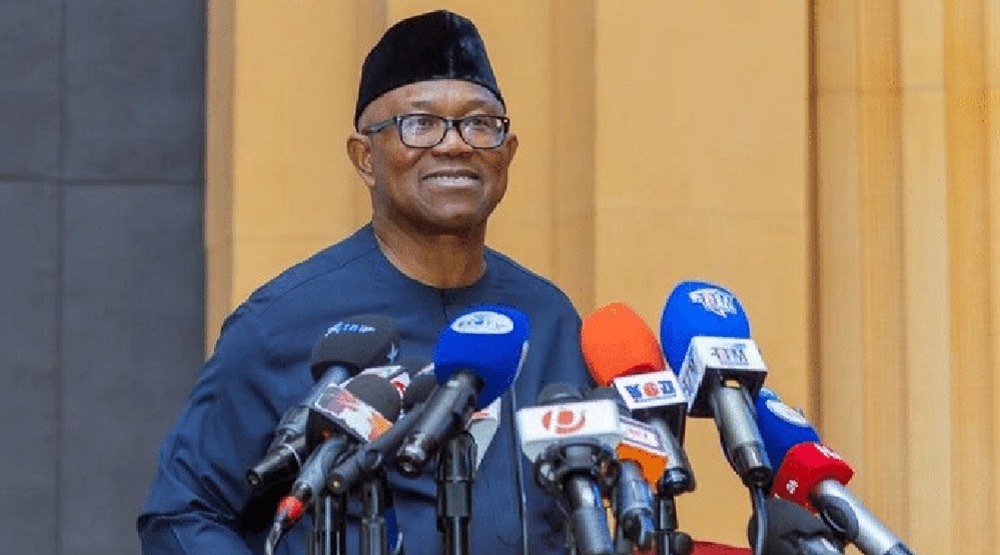
Senior Special Assistant to the President on Public Engagement, Frederick Nwabufo, on Monday criticised the presidential candidate of the Nigeria Democratic Congress (NDC), Peter Obi, describing his recent television interview as further evidence of what he called the opposition leader’s lack of policy depth and understanding of governance.
Reacting in a post on his verified X handle, @FredrickNwabufo, to Obi’s appearance on Channels Television on Sunday night, Nwabufo said the interview showed the NDC candidate had failed to articulate any concrete alternative policy direction.
“Peter Obi’s interview shows him again to be vacant of deep thought, understanding of governance, and taken up by syrupy rhetoric. He still has no plan, no alternative, and no policy plank, beyond a mouthful of sentimental nothings”, he said.
The presidential aide also faulted Obi’s claim that he would unite Nigeria, arguing that the opposition candidate failed to explain how he intended to achieve that objective.
“Obi claimed he would unite Nigeria, but failed to explain how beyond the tired refrain of his cooks and ADC being northerners”, Nwabufo said, adding that “his utterances, actions, and those of his followers have but deepened the chasm”.
According to him, national cohesion is built on “inclusive governance, economic integration, and equitable citizenship”, stressing that “the balancing forces of national cohesion are governance and the economy”.
He argued that strengthening national unity requires governments to ensure that “public resources are delivered to all citizens regardless of faith, ethnicity, or social standing and that the government is fair and just to all”.
Nwabufo said President Bola Tinubu had demonstrated those principles by ensuring that “the six geopolitical zones are equal beneficiaries of its programmes, initiatives, and projects, and indeed, all the accruals of governance”.
He further cited the administration’s appointments into public offices, saying, “He appointed young professionals from diverse backgrounds at an unprecedented scale. For the first time in the evolution of Nigeria, young people are superintending strategic sectors of government”.
The presidential spokesman also defended the President’s approach to national leadership, saying Tinubu had addressed concerns over the composition of the nation’s service chiefs while maintaining a unifying posture.
“There was a time, not so long ago, when the ethnic composition of the service chiefs was often a sore point for controversy, but in his true form as an architect of unity, balancing competence and patriotism, the President put an end to the concerns with wisdom”, he said.
He added that “President Tinubu, by his body language and extempore utterances, has maintained a nationalist and unifying position, bringing all together, and not given to divisive rhetoric. He has continued on the unifier’s path, stitching the national fabric, building a more cohesive nation and forging a shared future for us all”.
Responding to Obi’s criticism of the Renewed Hope Agenda, Nwabufo said the opposition candidate had failed to acknowledge what he described as visible gains from the administration’s reforms.
“Obi needs to get off the high of his rabid movement. The unmistakable trail of Renewed Hope shimmers across all villages, towns, cities, and local government areas in all six geopolitical zones”, he said.
He disclosed that members of the Presidential Communications Team had toured the country’s six geopolitical zones “to see things for themselves, feel the pulse of Nigerians, and conduit feedback to the government”.
Nwabufo added that the administration had documented evidence of economic improvements and transformative programmes, including the Nigerian Education Loan Fund (NELFUND) and interventions by the Small and Medium Enterprises Development Agency of Nigeria (SMEDAN).
“If Obi cares, there’s a digital binder full of reports of Nigeria’s economic turnaround under the current administration, inclusive of many transformative projects, policies, and programmes, such as NELFUND, that are impacting Nigerians at the critical cellular level”, he said.
He concluded that “under Renewed Hope, that hardworking young trader in Amatutu village in Agulu, Anambra can now get support for his small business through SMEDAN, and that brilliant child in Mopa Muro can go to university through NELFUND without the constraints of finance. This is simply Renewed Hope manifest”.

Workers’ unions across Lagos State-owned universities have given the Lagos State Government a seven-day ultimatum to address their outstanding demands or face an indefinite strike.
The unions also called on the state government to immediately implement the Federal Government’s agreements with the Academic Staff Union of Universities (ASUU), Senior Staff Association of Nigerian Universities (SSANU) and National Association of Academic Technologists (NAAT), which they said took effect from January 1, 2026.
They further demanded the release of funds for the payment of the N50,000 palliative promised to staff on May 1, 2026, warning that failure to meet their demands within the stipulated period would trigger an indefinite industrial action.
The ultimatum was announced on Monday at a joint press conference organised by the Joint Action Committee (JAC) of Lagos State-owned universities at the Lagos State University (LASU), Ojo campus.
The briefing was attended by representatives of ASUU, the Non-Academic Staff Union (NASU), SSANU and NAAT, who urged the government to take urgent steps to avert a disruption of academic activities across the state-owned institutions.
The affected institutions are Lagos State University (LASU), Lagos State University of Science and Technology (LASUSTECH), Lagos State University of Education (LASUED) and Lagos State University College of Medicine (LASUCOM).
Speaking on behalf of the unions, Chairman of ASUU-LASU, Prof. Ibrahim Bakare, said Governor Babajide Sanwo-Olu had announced on May 1, 2026, that all Lagos State workers would receive a N50,000 palliative, adding that the official communication from government indicated that tertiary institutions were included in the arrangement.
According to him, while workers in the Lagos State Civil Service received the payment, staff of the state-owned universities were excluded despite repeated engagements with university management and government officials.
Bakare said the unions had written to and held consultations with the offices of the governor, deputy governor, commissioners for Tertiary Education and Establishments and Training, the Head of Service, the Speaker of the Lagos State House of Assembly, the Accountant-General and relevant permanent secretaries in an effort to resolve the matter.
He, however, expressed disappointment over what he described as an unsatisfactory response from the government, noting that a letter received by the unions was vague and failed to provide a clear commitment towards implementing the governor’s promise.
“We explored every peaceful and reasonable avenue available to us because we believe in dialogue. Unfortunately, our members have become exhausted and can no longer continue to wait while other categories of public servants have received the payment,” he said.
Bakare disclosed that after consultations across the affected institutions, the unions resolved to issue a seven-day ultimatum to enable the government process the necessary approvals and release the funds.
He warned that failure to meet the demand before the expiration of the ultimatum would compel the unions to determine their next line of action, including embarking on industrial action.
“We pray industrial action does not happen, but if we are pushed to that point, we will have no other option. We cannot continue to allow our members to suffer under the current economic realities,” he said.
Bakare said Lagos had accumulated seven months of outstanding liabilities under the Federal Government agreements, despite assurances previously given by the Deputy Governor, Obafemi Hamzat that future federal agreements would be implemented promptly to avoid a backlog of arrears.
He noted that several state-owned universities in Ekiti and Osun states had already implemented the agreements, describing Lagos State’s delay as surprising for a state regarded as one of the country’s most developed.
The unions also renewed calls for the fulfilment of other welfare commitments, including the release of staff buses promised by Sanwo-Olu and the resolution of the outstanding 20 per cent salary-related issue discussed during previous negotiations with the government.
Also speaking, Chairman of NASU-LASU, Comrade Obafemi Sanni, said the unions were forced to issue the ultimatum because of what he described as the government’s lackadaisical attitude towards implementing agreements affecting workers in tertiary institutions.
He maintained that if the government failed to act before the ultimatum expires, the unions would have no alternative but to embark on an indefinite industrial action.
The unions said they remain committed to dialogue but insisted that the welfare of workers must receive urgent attention to sustain industrial harmony across Lagos State-owned universities. Union representatives from other universities appealed to the state to accede to their demands,noting that many of their members were dying.
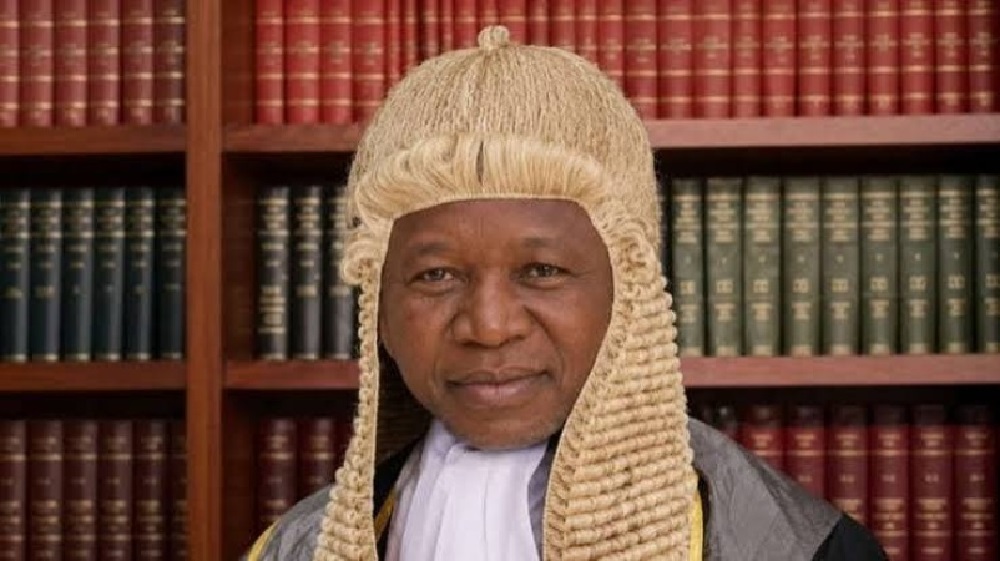
Kidnappers holding Kebbi State High Court Judge, Justice Faruku Hassan Bunza, have demanded a N200 million ransom from his family for his release, as security operatives intensify efforts to rescue him.
Kebbi State Commissioner of Police, Umar Muhammad Hadejia, disclosed the ransom demand while briefing journalists on Monday in Birnin Kebbi.
He said the police received intelligence on the demand after launching a swift response to the judge’s abduction, which occurred in the early hours of Sunday at his residence along Zogirma Road in Bunza.
According to Hadejia, the Command has deployed a combined team of police operatives to comb suspected escape routes used by the kidnappers in a bid to rescue the judge unharmed and apprehend those responsible.
He added that multiple checkpoints had been mounted along strategic routes believed to have been used by the abductors to prevent their escape.
The police commissioner expressed confidence that the ongoing operation would lead to the safe rescue of the judge and the arrest of the kidnappers.
Hadejia also confirmed the killing of a suspected kidnapper, Abdulaziz Dogo, and the arrest of another suspect, Ibrahim Abdulwahab, both residents of Ilesha in Kwara State, over the abduction of former Kebbi State Deputy Speaker, Muhammad Samaila Bagudo, on October 31, 2025.
He advised residents, particularly government officials, to avoid travelling late at night, warning that such journeys expose them to attacks by bandits and kidnappers.
The commissioner said the judge’s family informed the police that he frequently travelled at night despite repeated warnings.
He added that the family also reported that the kidnappers had contacted a registrar of the High Court in Abuja regarding negotiations over the N200 million ransom.

Cholera: Plateau records 14 deaths, 441 suspected cases

Chimsom Chuka emerges first Head of House in BBNaija S11

Obi’s TV interview exposed lack of policy depth — presidential aide




-

 News14 hours ago
Fugitive drug kingpin, ex-int’l footballer bag 24 years jail term for cocaine importation(Photos)
-

 News3 hours ago
UK Eases Student Visa Rules for Three African Nations
-

 News14 hours ago
AGF Reveals Alleged Hijacked State House Letter Helped Fake Agency Get Recognition
-
 News14 hours ago
Reps Order IGP to Produce Alleged Fake Presidential Council DG as Probe Uncovers Fresh Forgery Claims
-

 News12 hours ago
Just in: Ahead 2027, Kano NDC Senators Meet Tinubu over Planned Defection to APC
-

 News18 hours ago
We don’t have current negotiations with US — Iran
-
 News3 hours ago
Nigeria, South Africa Set for Fresh Diplomatic Talks Amid Xenophobia Concerns
-
 News3 hours ago
Stolen BVAS, PVCs Will Be Replaced, Osun Election Safe – INEC
Warning: Undefined variable $user_ID in /home/naijuinz/public_html/wp-content/themes/zox-news/comments.php on line 49
You must be logged in to post a comment Login