Foreign
Exposed! Italy uncovers largest cigarettes factory hidden in underground bunker
- /home/naijuinz/public_html/wp-content/plugins/mvp-social-buttons/mvp-social-buttons.php on line 27
https://naijablitznews.com/wp-content/uploads/2025/09/Cigarettes.jpg&description=Exposed! Italy uncovers largest cigarettes factory hidden in underground bunker', 'pinterestShare', 'width=750,height=350'); return false;" title="Pin This Post">
- Share
- Tweet /home/naijuinz/public_html/wp-content/plugins/mvp-social-buttons/mvp-social-buttons.php on line 72
https://naijablitznews.com/wp-content/uploads/2025/09/Cigarettes.jpg&description=Exposed! Italy uncovers largest cigarettes factory hidden in underground bunker', 'pinterestShare', 'width=750,height=350'); return false;" title="Pin This Post">
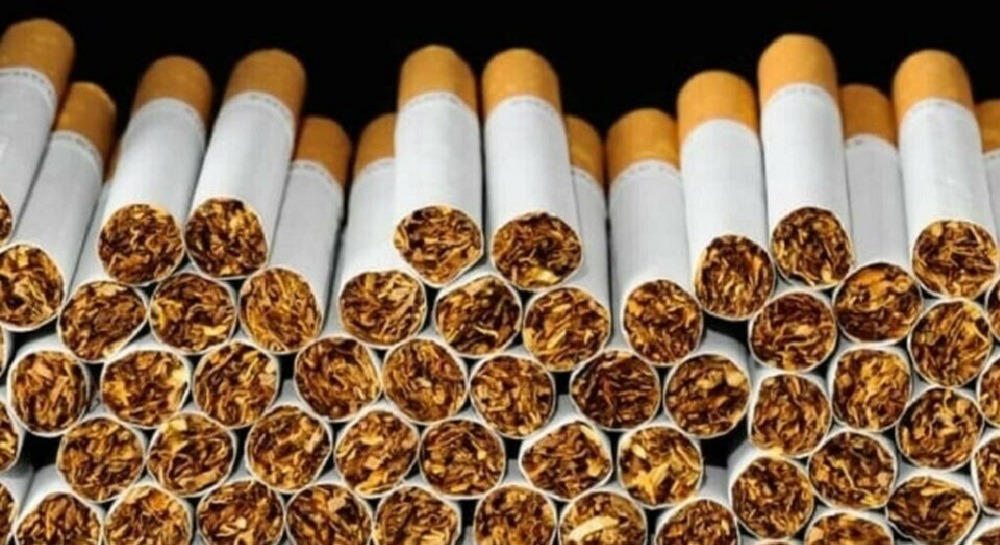
More than 150 tonnes of counterfeit cigarettes were seized from the largest illegal factory ever discovered in Italy, customs police said in a statement on Saturday.

An underground bunker housed the 1,600-square-metre (17,000 square feet) factory near the town of Cassino, southeast of Rome, which produced more than seven million cigarettes a day — around 2.7 billion a year — the police estimated.
The illegal factory was accessed via “a sophisticated hydraulic mechanism that perfectly concealed the bunker where the machines were installed and tonnes of counterfeit cigarettes stored,” the statement said.

Officers discovered electric switches concealed in a cardboard box when searching an “almost empty” logistics warehouse that “showed no sign of suspicious activity”.
The device controlled hydraulic levers in the warehouse, which lifted an aluminium cabin that concealed the entrance to the bunker.
Once inside, the agents discovered a “genuine industrial factory” that had been built “to the most advanced technological standard”, equipped with three tobacco processing and counterfeit cigarette packaging lines.
The clandestine operation, capable of producing around 5,000 cigarettes per minute, was also equipped with a ventilation system that prevented the escape of emissions from the production process, the finance ministry added.
Makeshift accommodations included 18 beds, bathrooms, showers, and a dining room, as well as a workshop for on-site machine repairs, according to the statement.
The ministry estimated annual revenue from the factory exceeded 900 million euros ($1.05 billion).
“To date, the investigation has uncovered a total of around 600 million euros in evaded taxes,” it added. It said that so far, several suspects have been identified and one arrested.
AFP
Foreign
US Targets Alleged ISIS Funding Network, Names Nigerian
The United States government has identified a Nigerian national among several individuals and organisations accused of facilitating financial operations for the Islamic State of Iraq and Syria (ISIS), as part of a broader crackdown on the group’s global funding network.
In a statement issued by the U.S. Department of State, officials said the action targeted three individuals and six entities operating across Europe, the Middle East, and West Africa, who are allegedly involved in moving funds used to support ISIS activities.
According to the department, the measures are aimed at disrupting the terrorist group’s ability to finance attacks and sustain its international operations.
“Under the leadership of President Trump, the United States is dismantling ISIS’s ability to finance terrorism around the world. We are cutting off the financial lifelines from around the world that enable ISIS to fund attacks, support its regional affiliates, and threaten civilians, including religious minorities,” spokesperson Thomas Pigott said.
The statement noted that the network spans France, Syria, Türkiye, and Nigeria, and is believed to have facilitated the cross-border movement of funds linked to the extremist group.
Officials alleged that the designated individuals include a France-based facilitator connected to explosives-related information shared with ISIS supporters, a Syria-based operator who reportedly used cryptocurrency to transfer funds internationally, and a Nigeria-based facilitator whose money exchange businesses were allegedly used as channels for ISIS financing.
The U.S. government said the designations are part of ongoing efforts to dismantle financial pipelines supporting terrorist organisations and to restrict their global operations.
Foreign
Seven PMs In 10 Years: Britain’s Decade Of ‘Change’
Britain will have its seventh prime minister in 10 years after Labour leader Keir Starmer was ousted on Monday by his own party.
The party’s self-inflicted wound was a trend set by the Conservatives when they were in office.
Starmer announced his resignation on Monday following months of nose-diving poll ratings and manoeuvring by his own MPs.

Veteran Labour politician Andy Burnham has confirmed he will seek to replace him.
The main opposition Tories went through five prime ministers between 2016 and July 2024 when Starmer swept to power in a landslide general election victory.
The rapid turnover at the top prompted Starmer — before he became prime minister — to call for an end to the “chaos” of chopping and changing leaders.
After less than two years, Starmer has now met a similar fate himself.
Here’s what happened to his predecessors:
David Cameron (May 2010 to July 2016)

Britain’s decision to leave the European Union ended Cameron’s second term as prime minister.
After the country voted to leave in a June 2016 referendum, Cameron, who had campaigned to remain in the bloc, resigned.
Theresa May (July 2016 to July 2019)

Tolga AKMEN / AFP
May took over amid the fallout from the Brexit referendum after a long tenure in the notoriously difficult post of interior minister.
She called a snap election the following year to strengthen her hand in Brexit negotiations, but the move backfired when her party emerged as the biggest in parliament but without a majority.
Unable to get her Brexit deal through parliament, the Conservatives suffered a drubbing in European Parliament elections in May 2019, leading to her resignation.
Boris Johnson (July 2019 to September 2022)

Johnson, a maverick politician famed for making a career out of breaking the rules, had to navigate the coronavirus pandemic and Britain’s departure from the European Union.
He led the Conservatives to victory in the December 2019 snap general election.
But weakened by scandals, he was eventually forced to step down following a cascade of resignations by ministers and aides.
Liz Truss (September 2022 to October 2022)

Truss was prime minister for just 49 days, the shortest on record, before being ousted over her disastrous tax-cutting mini-budget.
Her economic agenda spooked the markets and took the UK to the brink of financial meltdown, losing her the support of her own party.
Rishi Sunak (October 2022 to July 2024)

Sunak was at the helm for 20 months before losing the 2024 general election to Starmer, bringing to an end 14 years of Conservative rule.
He brought some stability following the Truss debacle but failed to stop bitter Tory infighting.
The privately wealthy former financier ultimately failed to connect with regular voters struggling with a cost-of-living crisis.
AFP
Foreign
Trump To End HIV Funding For South Africa Over Violence
The US government says it will stop funding programmes in South Africa intended to tackle the spread of HIV and Aids.
More than eight million South Africans are living with HIV – the highest number of any country in the world.
The US State Department appeared to link the decision to South Africa’s alleged failure to protect the white-minority Afrikaner community – an allegation the South African government has repeatedly rejected.
South Africa’s health ministry responded by saying that though it had not been informed of this decision, it had “long been working on a self-reliance plan”.
Until 2025, the US was supporting South Africa’s efforts to deal with the virus with an estimated $400m (£300m) a year through the President’s Emergency Fund for Aids Relief (PEPFAR).
But since the inauguration of President Donald Trump, relations between the two countries have increasingly soured.
Shortly after he came into office, Trump issued an executive order alleging that “countless” South African policies dismantled equal opportunities and fuelled violence “against racially disfavored landowners”.
This is disputed by the South African government, which says its Black Economic Empowerment policy is needed to correct economic inequality dating from the apartheid era.
The executive order also highlighted South Africa’s case against Israel at the International Court of Justice and its links to Iran.
The White House said that given these “unjust and immoral practices”, further aid to South Africa would not be provided.
Trump has also falsely alleged that there is a “white genocide” taking place in South Africa, which has led to the administration setting up a refugee programme for Afrikaners – descendants of Western Europeans who settled in southern Africa in the 17th Century.
They are now just about the only refugees being allowed into the US.
The genocide claim has been widely discredited.
Pepfar funding, which had been providing about a fifth of South Africa’s total spending on HIV programmes, got a reprieve last October with what was called a “bridge plan”.
But a US State Department official has confirmed that a “phased drawdown” of Pepfar funding would now start.
This was because of “South Africa’s failure to make demonstrable progress on policy requests by the administration”, the official said.
The US government intended to “foster self-reliance” and reduce dependency on American funding, they added, pointing out that “South Africa is a middle-income country and is more than capable of supporting its own health programs”.
South Africa’s health ministry has said that while Pepfar contributed to the country’s HIV programme, the provision of life-saving antiretroviral drugs was funded entirely separately, with most coming from the government.
Attempts to mend US-South Africa relations have floundered. These include a high-profile White House meeting between Trump and South African President Cyril Ramaphosa just over a year ago, when the US president confronted his counterpart with his claims of white persecution.
The US also boycotted the G20 meeting, a gathering of the world’s major economies, hosted by South Africa last November.
-
News13 hours ago2027: Be Prepared to struggle for power, Wike tells PDP candidates
-
News6 hours agoXenophobic attacks: FG evacuates another 66 citizens from South Africa
-
News6 hours agoViral ‘Sign-Out’ Video: Ondo Govt Withholds WAEC Results of 17 Students
-
News3 hours agoDAY 12 of Projects Commissioning in the FCT: Watch Arterial Road N16 – Ring Road Il Intersection linking Jahi to Gwarimpa District
-
Metro14 hours agoArmed Men Are Vigilantes And Hunters – Police Dismiss Viral Katsina Video
-
News14 hours agoSenate passes bill to double police trust fund allocation to 1%
-
News22 hours agoSokoto High Court slams death sentence on 3 men, including foreign national for terrorism , arms trafficking
-
News5 hours agoICPC arraigns El-Rufai, six others over alleged N8.68bn CCTV contract fraud