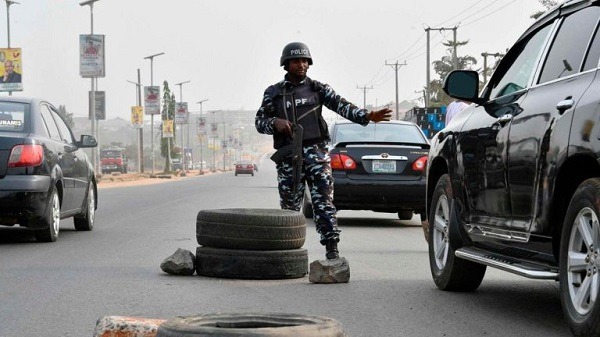
The Defence Headquarters (DHQ) has said that military operations arrested at least 450 terrorists and rescued 180 kidnap victims during ongoing internal security operations in September.


The Military High Command said 39 terrorists surrendered to the military, while various calibers of weapons and ammunition were recovered from the insurgents last month.
The Director of Defence Media Operations, Maj.-Gen Markus Kangye, revealed this in a statement, on Saturday. 
Kangye said the operations were executed under different joint task forces, including Operation Hadin Kai, Operation Fansan Yamma, Operation Enduring Peace, Operation Whirl Stroke, Operation Delta Safe, and Operation Udo Ka.
According to the defence spokesman, troops recovered 63 assorted arms, 4,475 rounds of ammunition, and 294 items, including grenades, improvised explosive device materials, motorcycles, vehicles and handheld radios.
He said troops of Operation Delta Safe recovered ₦112,175,220 worth crude from oil thieves, and destroyed 41 illegal refining sites.
He said, “The Armed Forces remain committed to transparency, accountability, and the lawful execution of all missions in accordance with international and domestic rules of engagement.”
The defence spokesman reaffirmed the military’s commitment to protect civilians, while also ensuring the safety and welfare of personnel.
Red Alert onLassa Fever: 21 states, 106 LGAs affected as cases hit 906 in Nigeria
The Nigeria Centre for Disease Control and Prevention (NCDC) has confirmed that Lassa fever has claimed 168 lives across 21 states in 2025.
In its situation report for epidemiological week 38, the agency revealed a total of 4,543 suspected cases, of which 897 were confirmed positive, with a case fatality rate of 18.7 per cent.
The NCDC noted that four states, Ondo, Edo, Taraba, and Bauchi, remain the epicentres of the outbreak, accounting for 67 per cent of all confirmed cases. Ondo alone has recorded the highest burden, followed by Edo and Bauchi.
Other affected states include Ebonyi, Benue, Kogi, Gombe, Plateau, Kaduna, Nasarawa, Enugu, Delta, Anambra, Rivers, Borno, Oyo, Ogun, the Federal Capital Territory, and Lagos.
The report also highlighted that most of the confirmed cases were among people aged 21 to 40, with both men and women affected.
The NCDC said this age group is the most socially and economically active, making them more exposed to the rodent-borne disease.
Lassa fever is an acute viral haemorrhagic illness transmitted to humans through contact with food or household items contaminated by the urine or faeces of infected rats.
Human-to-human transmission is also possible, especially in healthcare settings without proper infection prevention.
Cases typically peak during the dry season, from December to April, but infections have continued throughout the year. The NCDC has warned that without stronger community awareness and control measures, the disease will remain a persistent public health challenge.
Despite efforts, Nigeria’s current case fatality rate of 18.7 per cent remains above the national target of below 10 per cent. Some states, such as Taraba and Bauchi, recorded higher fatality rates compared to the national average.
The agency emphasised that early presentation at treatment centres significantly improves chances of survival, as ribavirin, an antiviral medicine, is more effective when administered promptly.
The NCDC said it continues to coordinate response efforts, including enhancing surveillance, expanding diagnostic capacity, and supporting treatment centres in high-burden states.
Community sensitisation campaigns are also ongoing to promote preventive practices such as proper food storage, environmental hygiene, and avoiding self-medication.
The agency further called for stronger collaboration among states, communities, and healthcare workers to curb the spread. It urged citizens to store food securely, cover household waste, and reduce contact with rodents, which are the main carriers of the virus.
While progress has been made in detection and treatment, the NCDC warned that Nigeria must remain vigilant, as Lassa fever continues to claim lives across multiple states.