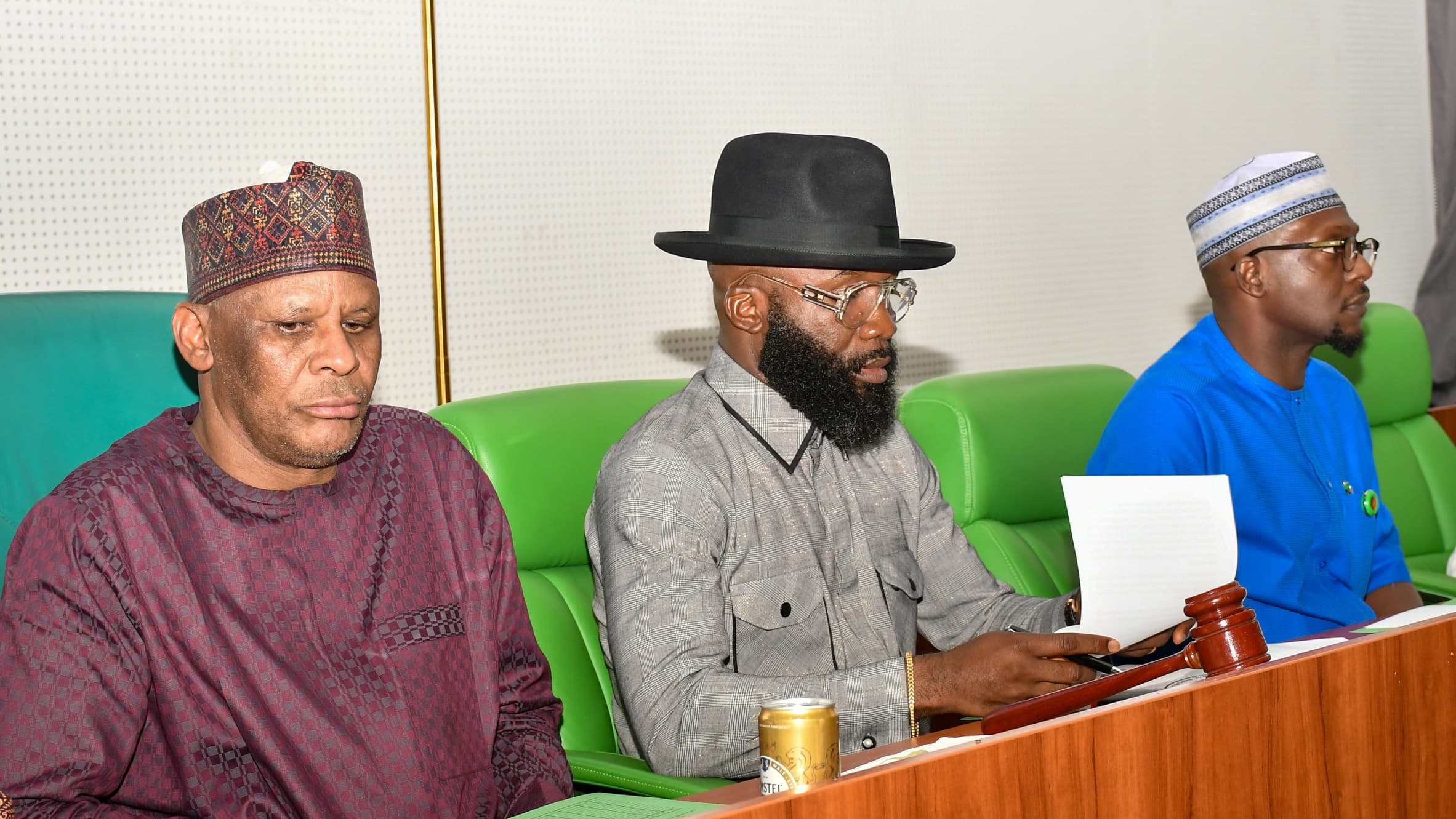
…as Speaker Abbas restate parliament drive for fairness in financial practices


By Gloria Ikibah
The House of Representatives has set up an Ad-hoc Committee to look into the persistent deductions of taxes and other charges from the earnings of public and civil servants, as well as the increasing incidence of multiple bank fees levied on customers nationwide. 
Naijablitznews.com recalled that the House at its plenary of Tuesday 7th October, 2025 debated a motion on “Deduction of Taxes and Sundry Charges from Civil /Public Servants’ Earnings, and Multiple Bank Charges on Customers’ Accounts in Nigeria” and constituted an Adhoc Committee to investigate the nature, purpose, and utilisation of taxes, levies, and sundry charges deducted from civil and public servants’ salaries and non-remittances of such monies to the appropriate Government Institutions or beneficiaries; and the multiplicity of bank charges levied on customers’ accounts, including the practice of imposing VAT on already existing charges (HR.39/10/2025).
During the inauguration, Chairman of the committee, Rep. Kelechi Nwogu, explained that the move was as a result of a surge of complaints from workers and everyday Nigerians who have expressed concern over irregularities in tax deductions and unexplained banking charges.
Rep. Nwogu described the committee’s formation as an important step towards strengthening transparency, fairness, and accountability in financial dealings.
He stressed that the National Assembly can no longer turn a blind eye to the growing discontent of citizens facing arbitrary deductions from their wages and bank accounts.
According to him, the committee was set up to respond to citizens’ concerns and ensure that financial practices across both government and banking institutions align with principles of justice and equity.
“It is with great honour and a profound sense of duty that I stand before you today as the Chairman of the Ad-Hoc Committee to Investigate the Deduction of Taxes and Sundry Charges from the Earnings of Civil and Public Servants, as well as the multiple bank charges on customers’ accounts in Nigeria.
“These issues have contributed to confusion and a lack of trust among our populace,” Nwogu stated. “As their representatives, it is our responsibility to address these concerns directly and ensure that financial practices promote justice and equity”, he said.
Rep Nwogu reiterated that the committee’s mandate includes investigating the nature and application of taxes, levies, and salary deductions affecting civil and public servants, as well as probing possible cases of non-remittance of deducted funds, and also examine the range of bank charges, including Value Added Tax (VAT) applied to existing fees, with the aim of ensuring transparency and fairness.
“We aim to identify any irregularities, recommend essential reforms, and advocate for the rights of all Nigerians.
“We will evaluate the impact of these deductions and charges to ensure they are just and transparent. As we progress, we are prepared to make far-reaching and decisive recommendations, not minding whose ox is gored, and will not hesitate to utilize the full authority of the Legislature when necessary”, he added.
The Chairman therefore called for full cooperation and participation from all stakeholders, including government agencies, banks, regulatory bodies, and civil society organisations. He urged members of the committee and invited experts to work collaboratively and objectively to deliver a report that would result in real change.
He emphasised that the committee’s work would not end with identifying problems but would focus on proposing actionable reforms that strengthen public confidence in Nigeria’s financial systems.
“I encourage each of you, Honourable Members, industry experts, and stakeholders, to engage in this investigation with open minds and a collaborative spirit. Your contributions are essential as we seek effective solutions.
“We encourage participation from a diverse range of stakeholders throughout this process. Together, we can facilitate the establishment of a more equitable financial environment for all Nigerians.
“I extend my gratitude to the Honourable Speaker and the House of Representatives for entrusting us with this significant assignment, as well as to all stakeholders in attendance today. Your commitment will play a crucial role in advancing our nation’s progress,” Nwogu said.
He expressed optimism that the investigation would lead to meaningful policy and institutional changes that would improve financial fairness and accountability in the country.
“Let us collaborate to ensure that this investigation culminates in meaningful changes that enhance the well-being of every Nigerian citizen,” he stated.
Inaugurating the committee, Speaker Abbas, reaffirmed the resolve of the 10th National Assembly to uphold fairness, openness, and accountability within Nigeria’s financial system, particularly in matters relating to tax deductions and the mounting bank charges affecting citizens.
Represented by the Chief Whip, Rep. Usman Bello Kumo, the Speaker noted that the formation of the investigative committee demonstrates the legislature’s responsiveness to the concerns of Nigerians who continue to face unwarranted deductions from their earnings and bank accounts, whether by government agencies or financial institutions.
He stressed that the House has a responsibility to safeguard the financial wellbeing of the people, especially civil and public servants whose already limited incomes are being further strained by unjust charges.
He said: “It is a privilege to stand before you today to inaugurate the House Ad-hoc Committee dedicated to investigating tax deductions and various charges affecting the earnings of our civil and public servants, as well as the excessive bank fees impacting everyday Nigerians.
“As representatives of the people, we are entrusted with the duty to uphold transparency, accountability, and fairness in our financial systems. The deductions faced by our public servants raise serious concerns. These dedicated individuals, who work tirelessly for our nation, should not bear the burden of unjust financial practices that diminish their earnings.”
The Speaker criticised the growing problem of multiple and unclear bank charges, and noted that such practices undermine public confidence and worsen the economic hardship faced by citizens.
Abbas therefore urged the newly inaugurated committee to conduct its assignment with integrity, objectivity, and commitment to the people, engaging all relevant stakeholders to ensure a comprehensive investigation that will lead to practical reforms.
“Moreover, the issue of multiple bank charges erodes public trust and places an undue strain on citizens’ finances. The demands for transparency and fairness in banking cannot be ignored; they require our immediate attention.
“This committee will work diligently and with integrity, engaging stakeholders across various sectors to uncover the truth and provide actionable recommendations for reform that protect the rights of our citizens.
“I encourage each member to approach this task with collaboration and an open mind. Together, we have the opportunity to enact meaningful change and restore confidence in our financial institutions”, he emphasised.
Abbas emphasised that the assignment was part of a broader legislative effort to ensure that Nigerians are not unfairly treated by the institutions meant to serve them, warning that the House would not tolerate exploitative practices in either the public or private sectors.
“Let us remember that our efforts aim to ensure that every Nigerian has a voice and that our actions will shape a just financial landscape for future generations,” he asserted.