
News
Read Peter Obi’s full address as he formally defects from LP to ADC today in Enugu

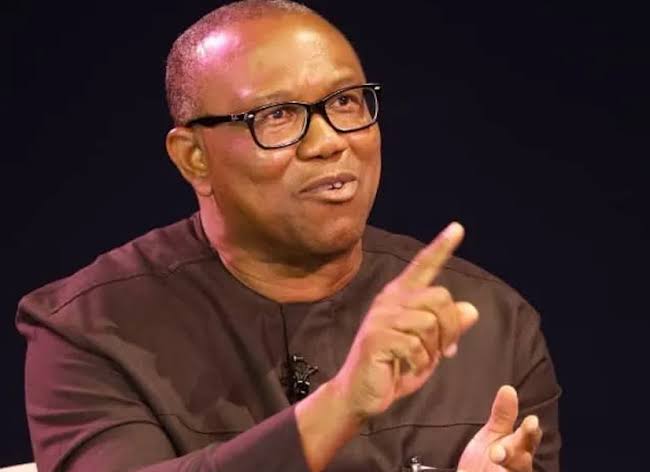


As the year 2025 ends today, we stand on the threshold of a new year, which we hope will mark the beginning of Nigeria’s long-awaited socio economic transformation. For every nation, and people, moments of profound national challenge demand clarity of purpose, courage, and decisive action, for Nigeria, that moment is now!
Many have said that Nigeria is an independent country in name, yet today we must begin a new struggle: the struggle for true independence based on self-determination, human equality, and national reunification. We must reclaim our country from a small group of opportunists who have captured the corridors of power and return it to its rightful owners – the Nigerian people!
What is most painful is that many of those who once benefited from democratic governance have now become accessories to a stolen mandate, shamelessly celebrating electoral injustice in public, and working hard to destroy democracy through coercion, manipulation and outright gangsterism particularly on opposition parties. Let me assure Nigerians that we will defend our fragile democracy and make it resilient. We will decisively defeat any attempt by the ruling party and its agents to manipulate or rig future elections. The will of the Nigerian people is sacrosanct, non-negotiable and those plotting to subvert it in 2027 should rethink their actions. Nigerians have endured enough and will resist any assault on their mandate through all lawful and legitimate means.
Because weak national institutions, particularlythe Independent National Electoral Commission (INEC), contributed significantly to our present crisis, we most strongly demand urgent reforms of the entire electoral process.We demand credible and transparent elections that are free and fair and based on strict adherence to electoral laws, starting with prescribed educational qualification for eligibility for election and transmission of results as voted. At the heart of our coming national transformationis electoral integrity which will promote responsive governance. We can no longer toy with electoral integrity especially as we see the tragedies of truncated democracies across West Africa. Nigeria is too big and important to the black race and the global economy to remain a failure. We must protect democracy in Nigeria by ensuring credible elections in 2027.
Rethinking Nigeria: The Need for Unity:
It is public knowledge that Nigeria is in grave distress. Our democracy is under threat. Our nation is adrift. Our people are in persistent agony. Today, Nigeria is widely described as a failing and disgraced nation. This is not the destiny that Almighty God bequeathed to over 220 million Nigerians. It was not always so and should not remain so. Across all recognized indicators of good governance – accountability, political stability, rule of law, control of corruption, government effectiveness, regulatory quality, and separation of powers – Nigeria records negative marks.
With over 130 million Nigerians living in multidimensional poverty, more than 80 million youths unemployed, worsening insecurity, fiscal recklessness, disunity and the absence of inclusive governance, like many patriotic Nigerians, I am deeply disturbed by the state of our nation. The question on everyone’s lips is whether there is still hope for Nigeria. Despite the gravity of our situation, I remain firmly optimistic! Given our immense human and natural resources, I am convinced that a new Nigeria is possible—a functional, productive and inclusive nation.
Motivated by my desperation for a New Nigeria That Is Possible, I am in constant search for possible solutions to make Nigeria work for all Nigerians, to make Nigeria an inclusive and progressively sustainable nation. While we are faced with litany of socio-economic problems, the absence of unity caused by dishonest, corrupt and ineffective leadership is at the heartof our problems.
In addition to my various leadership training in many renowned institutions including Lagos Business School; Kellogg Graduate School of Management, Harvard, Oxford, and Cambridge universities; INSEAD; IMD and LSE, my desire to see a better and functional Nigeria has sustained my search for knowledge on leadership and nation building. All my readings and travels over many years have been primarily focused on understanding what promotes national unity and national transformation, and how to embed deep rooted unity and effective leadership in our dear nation, Nigeria. Let me mention few insights that are still very fresh in my mind.
Having observed and read extensively on conflict, disunity, reconciliation, unity, and development, I travelled and met with one of the best authors, Professor Nicole Fox of California State University, who wrote on conflict, reconciliation, and the transformation of Rwanda. Her writings inspired in me a confidence that Nigeria can move from conflict and instability to consensus and rapid socio-economic transformation. To have a first-hand experience of how Rwanda was transformed, I travelled to Rwanda and had the opportunity of having a valuable time with President Paul Kagame to further learn from his experiences in the leadership of Rwanda. It has remained one of my most treasured learning experiences.
In discussing and learning from President Kagame, I saw a leader deeply committed to the unity and socio-economic transformation of his country, evident in the growth of GDP per capita from about $200 in 1995 to over $1,000 in 2025—a phenomenal 500% increase. In comparison, Nigeria’s GDP per capita in 1995 was $1,225 and has lamentably declined to below $1,000 in 2025, a decline after 30 years of supposed nation-building in a country proudly called the “Giant of Africa.”
Shocked by the gap in GDP per capita and other development indices between Nigeria and other emerging economies, I got curious to find out the reason for this divergence. This led me to read the book Growing Apart: Politics and Economic Change in Indonesia and Nigeria by Professor Peter Lewis of JohnsHopkins University. In this fascinating and deeply revealing book, Professor Lewis most convincingly showed how policy choices, state institutions, national unity, and leadership shape sustainable economic development or under development. While Nigeria and Indonesia had similar characteristics of high population, cultural heterogeneity, and agrarian economies, the current gap observable in almost all key socio-economic indicators can be attributed to the power of leadership and unity, and their utilisation for effective nation-building and socio-economic transformation.
Disturbed by the insights from the book, I travelled to JohnsHopkins University and met Professor Peter Lewis. The meeting and learning were even more shocking than the revelations from the book. Following that, I travelled to Indonesia and had meetings with Ministers of Education, Planning, Health, Small Villages, Small Businesses, the Vice President, and one of their most popular leaders, President Joko Widodo, to learn more about how they achieved such significant success.
While Indonesia has significantly transformed into a commendable success, with a GDP of above $1.4 trillion, the first in South-East Asia to cross the 1 trillion mark, and a per capita of about $5300, it is the largest economy in South-East Asia. On the contrary, with the GDP of $240 Billion and Per Capita of below $1000 our dear country Nigeria is experiencing socio-economic confusion, de-industrialisation, pervasive corruption, conflict, and increased poverty.
In conclusion, Professor Lewis maintains that Indonesia achieved commendable progress largely due to how its leaders and government managed their resources, while Nigeria became more underdeveloped, fragmented, and poorer due to how we consumed and squandered our resources.
It is the same state of sadness, shock and hope that you get when you read other books like From Third World to the First by Lee KuanYew; How Asia Works: Success and Failures in the World’s Most Dynamic Region by Joe Studwell and Why Nations Fail: The Origins of Power, Prosperity and Poverty by Daron Acemoglu and James A. Robinson.
Fascinated by the insights from these readings and disturbed by the comments of one of the winners of the 2024 Nobel Prize in Economics, Prof. James Robinson, that nations like Nigeria know what to do to prosper but refuse to do so, I travelled to the University of Chicago to meet and further learn from him. A key outcome is that our problem in Nigeria is one of leadership and lack of unity. Our dear nation cannot grow and develop without unity and competent leadership as against the current political leadership adept at exploiting our differences. Their expertise lies in creating more divisions to sustain themselves in power, with little or no interest in unity and the inclusive development of Nigeria.
It is the same desire to learn that informs myintensive engagements in Nigeria, with regular visits and robust relationships across our states, local governments, villages, and communities. What we urgently need is leadership and a government that can deeply appreciate our potential and resiliently unify our diversity for rapid socio-economic transformation and inclusive development.
Nigeria’s problem is not a lack of potential. We are endowed with enormous human and natural resources. Our prevailing tragedy is the result of deliberate sabotage of our potential by a political class that cultivates disunity and feeds fat on our dysfunctionalism. As a nation, we are not poor; we are looted into poverty. As a nation, we are not broken; we are severely betrayed.
The average Nigerian is not lazy, not corrupt, and not incompetent. But the system is rigged against him or her. The system is rigged to reward mediocrity, punish merit, and recycle failure. Nigeria is not collapsing under the weight of its people. Nigeria is suffocating under the weight of impunity and greed of her leadership. This government excels at rewarding illegalities and corrupt practices, and until we confront this truth, no amount of reform will save us. We want a genuine and patriotic political change, not a cosmetic makeover.
To my fellow Nigerians at home and abroad, this is not the time for despair, detachment, diplomatic silence, or ethnic chauvinism. It is a time for us to unite as Nigerians to salvage our dear country. The choice is between despair that leads to the continuity of the decay of power or the courage to disrupt the prevailing decadence, state capture, and formalised criminality in the name of governance.
I have visited every nook and cranny of this country. I have gone to IDP camps, which those in government fear to visit or even refuse topublicly acknowledge their existence. From North to South and West to East, Nigerians have never felt so insecure and so divided; this should not be our fate or our common heritage. For the sake of God and country, for the sake of the hungry, the poor, and out-of-school children, and for the sake of those yet unborn, we must unite and collectively dismantle the criminal enterprise that is destroying Nigeria. A New Nigeria is Indeed Possible!
With unity and effective leadership, we will strategically support agriculture and manufacturing to become the highest contributors to our GDP. To achieve this, special attention must be paid to developing the agricultural potential of Northern Nigeria. With unity, we will move Nigeria from consumption to production. With unity and effective leadership, we will defeat insecurity, corruption, unemployment, inflation, illiteracy, and many other socio-economic problems confronting us. With unity and effective leadership, a new Nigeria—a productive and inclusive Nigeria is Possible!
Let me say something more about national unity. As I travel across the world and listen to leaders who have transformed their nations, I observe that one of the critical ingredients for economic and socio-economic transformation is national consensus. Leaders who build transformative consensus have one common characteristic. They are honest and truthful. They love their people and tell them the truth all the time. This is the reason George Orwell described government as the art of telling the people the truth. Government should be transparent and honest because the people deserve the truth from their leaders. Transformative leaders tell their people the truth; they do not exploit the people to enrich themselves and few cronies.
In the context of the foregoing, it is good to reflect on the current tax fraud saga. I have always said that the goal of a good fiscal policy is to make the people and the country rich. There is no value in boasting of increase in public revenue while the people starve. Tax is a form of social contract. When the people are richer because government supports them with good policies, the people pay more taxes to government. It is bad fiscal policy for the government to make the people poorer and still tax them more. Taxing poverty will not create wealth. It will lead to more poverty. Our new, planned tax regime fails the fundamental principle of good fiscal policy. It does not create wealth for the people; it makes the people poorer.
Today, for the first time in our history, a tax law is reported to be forged. The National Assembly now admits that the tax law on the gazette is not what it passed as law. Government wantsNigerian citizens to pay more taxes based on forged tax laws, with no benefits. Forgery and manipulation are increasingly penetrating government policies and most regrettably defining the foundation of our fiscal policy. We must change this dishonest social order. A forged tax regime cannot create wealth and sustain national unity. Leaders who delight in hurting the people with exploitative taxes are not nation builders. Leaders who delight in telling lies and hiding the ball from the people cannot mobilise the people for transformative work.
To build lasting unity and inclusive prosperity,we need honest, transparent, and responsive leadership. As the great revolutionary, Franz Fanon, once noted, “Every generation, must out of relative obscurity, discover its mission, fulfil it or betray it.” This generation of leaders gathered here today must achieve our mission to courageously lead Nigeria away from its entrapment in poverty and disunity. We are a generation charged with disrupting the structure of criminal governance and recreating a new structure of unity and prosperity for all Nigerians. We can do it and we must do it!Many countries have done it under great leaders. I have studied and conversed with these leaders. If we do what they did, we will achieve even greater success.
In the past months, I have consulted broadly. The message has been consistent. Those who grab power by any means have mismanaged it. They have not led. They have not served. They wished they turned our plural society and democracy into a convenient one-party state. No way. That will not happen. They want to create a false narrative that the Nigerian people are weak and tired. It is not true! Nigerian voters are ready to vote them out. They want to create a false sense of invincibility. That is false. They have built a house of cards with lies and errors. It will collapse as we unite to fight. Democracy offers us the opportunity to reject them at the polls. Our job next time, in 2027, is to vote them out and keep vigil until they are out.
The Declaration
Fellow Nigerians, this is the time for unity and prosperity. The signs are clear, and the mission is settled. Having been part of the coalition from inception, I now respectfully call on my political leaders, associates, supporters, the Obidient Movement, political leaders and members of the opposition parties across the country to join this broad national coalition under the African Democratic Congress led by Sen. David Mark. This decision is guided solely by patriotism and national interest. We are working with leaders across political divides who share a common commitment to rescuing Nigeria. The task ahead is enormous, but it is not insurmountable. History may forgive wrong decisions, but it will not forgive silence in moments of national peril.
Do we deserve a government that thrives on division, propaganda and indifference to the suffering of its people? I do not believe so. Nigeria deserves patriotic leadership that unites and governs with empathy. Let history record that Nigeria’s turning point began here and now.
Together, let us move forward with courage, unity and resolve. A new, united, productive and inclusive Nigeria is possible.
God bless you all, and God bless the Federal Republic of Nigeria.

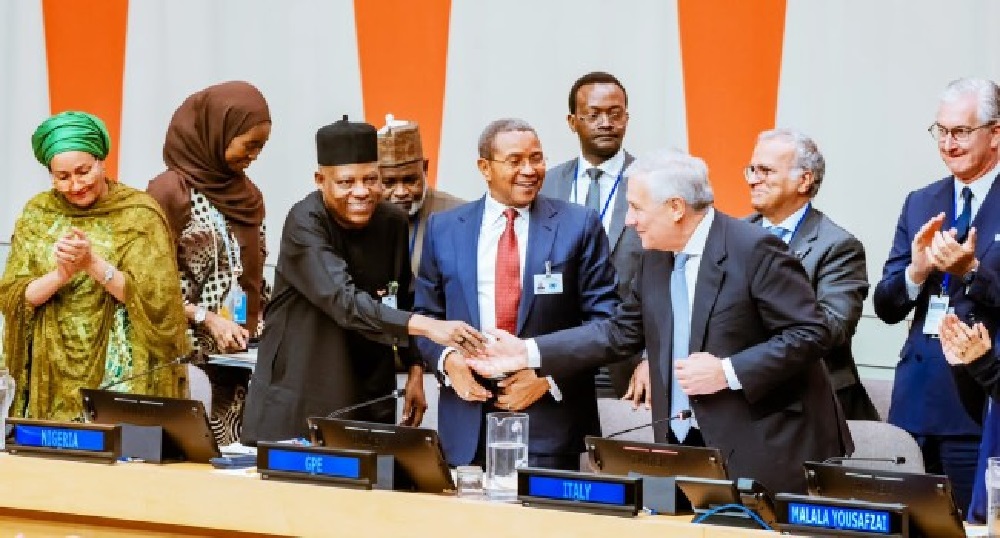
Nigeria and Italy have strengthened collaboration on a campaign to mobilise $5bn for education financing worldwide through the Global Partnership for Education.
The Senior Special Assistant to the President on Media and Communications, Office of the Vice President, Stanley Nkwocha, disclosed this in a statement issued on Wednesday.
According to the statement, the collaboration was highlighted at the “Multiply Possibility: A New Era for Education Financing” high-level event held in New York, United States, on the sidelines of the 81st Session of the United Nations General Assembly.
The statement said President Bola Tinubu, in a video message to the event, noted that the GPE vision aligned with his administration’s agenda of improving educational outcomes by investing in access and capacity building for teachers.
The President also commended stakeholders in the GPE for their efforts towards accelerating education financing globally. Representing the President at the gathering, Vice President Kashim Shettima said education was an investment in Nigeria’s economic future, productivity, prosperity and stability.
He said, “For Nigeria, education is not an expenditure at the margins of our development agenda. It is an investment in our economic future, national productivity, and the prosperity and stability of our people.
“Since President Bola Ahmed Tinubu assumed office in 2023, our Administration has substantially increased resources devoted to education, while pursuing reforms to strengthen basic education financing, expand foundational learning, and improve access to tertiary and technical education.
“Through the Nigerian Education Loan Fund, we are widening access to higher education, while strengthening the link between education, skills, employment and enterprise.”
Shettima said Nigeria was looking beyond traditional budgetary allocations, noting that Tinubu had directed that liquid funds recovered by the Economic and Financial Crimes Commission, once legally cleared and free from litigation, be channelled to the Nigerian Education Loan Fund.
The VP said the Federal Executive Council had also recently approved the consideration of unclaimed dividends and dormant funds for the same purpose, subject to relevant legal requirements.
He said this demonstrated Nigeria’s commitment to mobilising every responsible and lawful domestic source to finance education.
Citing Nigeria’s partnership with the World Bank and GPE through HOPE-EDU, Shettima said, “The programme is expected to reach approximately 29 million children and 500,000 teachers across Nigeria.”
He added: “This is precisely why GPE matters. GPE does not replace national investment; it multiplies it. The ambition before us is to mobilise US$5 billion for GPE and, through that investment, unlock additional financing for education in partner countries.
“Domestic resources must remain the anchor, complemented by development assistance, concessional finance, philanthropy and innovative financing.”
The Vice President said Nigeria’s growing population could become one of its greatest economic assets if its “young people have access to quality education, relevant skills and meaningful opportunities.”
He said the response to declining global aid “must therefore be smarter multilateralism: using scarce international resources to leverage much larger investments.”
Shettima urged participants to ensure that the initiative was not merely a fundraising exercise but “a renewed compact for human capital, bringing together national leadership, international partnership and responsible financing so that every child has the opportunity to learn, thrive and contribute to their country’s future.”
He also expressed Nigeria’s appreciation to the Italian government and GPE for joining the campaign, stressing that Nigeria was participating not merely to seek greater international investment but “to demonstrate that we are investing in education ourselves.”
Earlier, Italian Prime Minister, Giorgia Meloni, praised Tinubu’s leadership and Nigeria’s determination to improve educational outcomes across all levels.
She urged partners in the global alliance to show greater commitment to reversing the trend in developing countries.
The UN Deputy Secretary-General, Amina Mohammed, thanked partners for their interest in improving education financing in developing countries.
She called on international financial institutions to support committed countries in finding the fiscal space needed to improve educational outcomes, including capacity building for teachers.
Also speaking, the Chair of the Board of Directors of GPE, Jakaya Kikwete, underscored the need to accelerate education financing, noting that education remained central to human rights, security and peace.
Girls’ education activist, Malala Yousafzai, also called for greater collaboration in ideas and resources, urging governments and multilateral organisations to commit more resources towards gender equality in education.
The statement said governments and donors at the event made contributions towards the education of at least 370 million children globally, while the Italian government pledged €50m for GPE programmes and interventions.
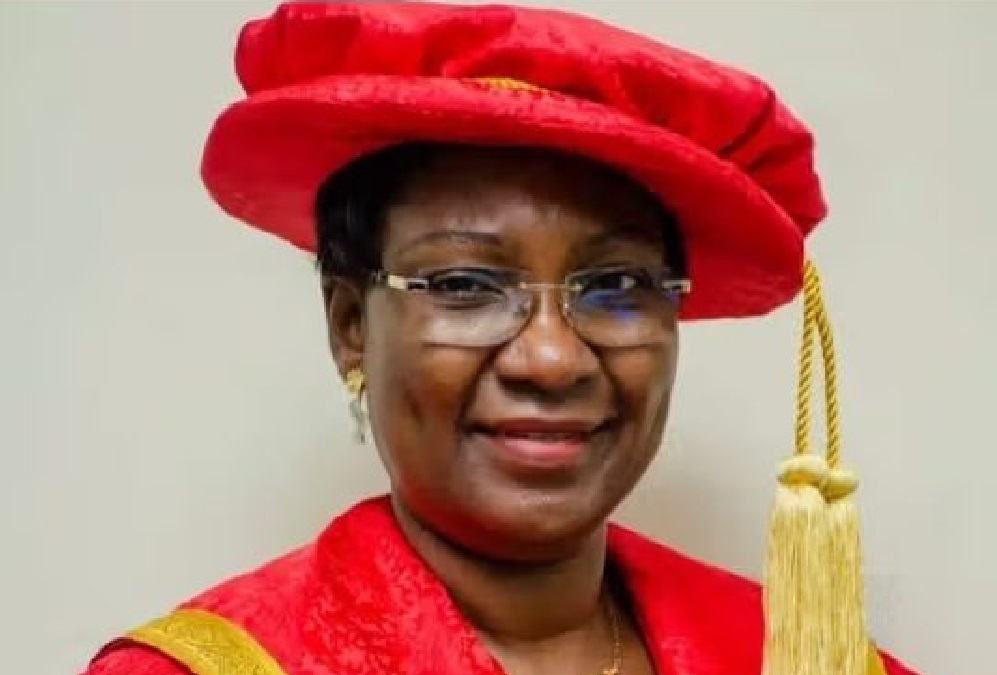
Emmanuel Adeyemi, media aide to the immediate-past Vice-Chancellor of Lagos State University, Prof Ibiyemi Olatunji-Bello, has faulted the misinterpretation of his principal’s remarks on the payment of N1m fees by students of public universities in The PUNCH interview on Tuesday.
A flurry of reactions has trailed excerpts of the interview widely circulated across social media.
In a statement on Wednesday, Adeyemi said Olatunji-Bello did not suggest that students or their parents must pay N1m annually for university education.
He urged the public, media and education stakeholders to consider Olatunji-Bello’s complete remarks rather than isolated portions that, he said, could give a different impression of her position.
He explained that the former VC was speaking about the estimated cost of providing quality undergraduate education, while advocating innovative and diversified funding sources for universities.
According to Adeyemi, Olatunji-Bello’s remarks were made against the backdrop of the desire of Nigerians for university education comparable in quality to what is obtainable in other parts of the world.
He said the former VC had noted that delivering such quality education costs approximately N1m per student annually.
Adeyemi, however, stressed that Olatunji-Bello did not suggest that the entire cost should be transferred to students or their parents.
He said, “The immediate-past Vice-Chancellor of Lagos State University, Prof. Ibiyemi Olatunji-Bello, has been widely quoted across social media as saying that students must pay N1m in fees for public universities to achieve self-sustainability.
“Distinguished Professor Olatunji-Bello’s remarks were made against the backdrop of Nigerians’ legitimate aspiration for university education that is genuinely comparable in quality to what is obtainable in other parts of the world, a standard that stands in sharp contrast to the comparatively low tuition fees currently charged by public universities in Nigeria.
“Her central argument was that delivering the quality of undergraduate education Nigerians rightly desire costs, on average, approximately N1m per student annually.
“Crucially, however, she did not suggest that this cost must necessarily be transferred wholesale onto students or their parents.”
Adeyemi said the remarks, when read in their entirety, reflected Olatunji-Bello’s call for universities to pursue innovation and develop diversified revenue streams to achieve financial sustainability.
He added, “This is precisely why, in response to the interview question on institutional self-sustainability, she began by stating: ‘Universities can achieve financial self-sustainability. If they can innovate and ensure improvements in the institution, money will come in.
“She went on to add: ‘I enjoin parents to ensure their children are well-educated by prioritising their fees. Good quality education needs money.’”
Adeyemi said the ex-VC’s position reflected a broader call for universities to pursue innovation and diversified revenue streams as the primary pathway to financial sustainability, while also reminding parents of the genuine cost implications of quality education and encouraging shared responsibility rather than assigning that burden to any single party.
He said the former VC sought to remind parents of the cost implications of quality education and encourage shared responsibility for funding university education.
“We urge members of the public, the media, and stakeholders in the education sector to engage with Distinguished Professor Olatunji-Bello’s complete remarks in their proper context, rather than isolated soundbites that do not accurately reflect the full weight and intent of her position,” he added.
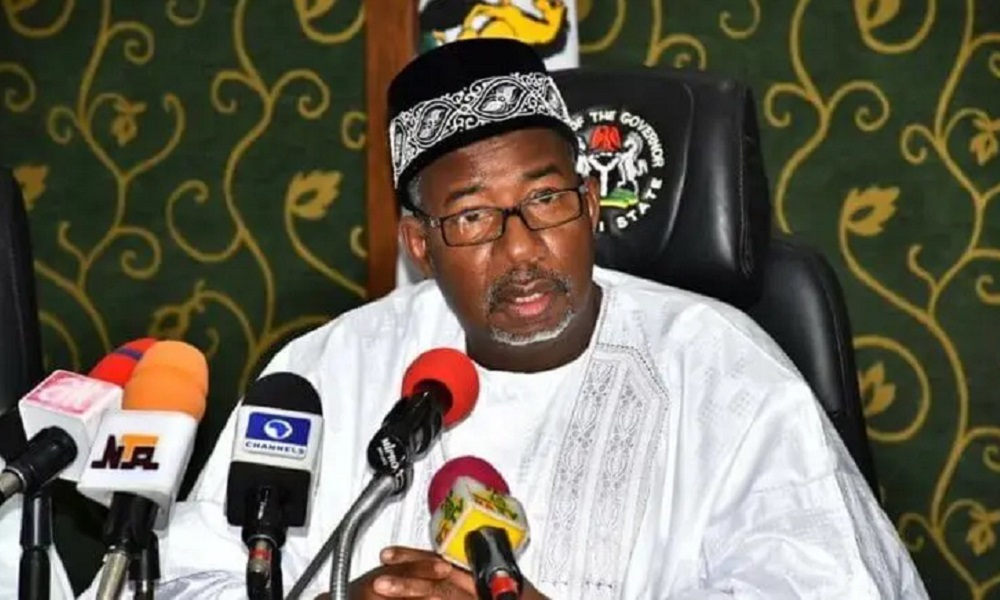
Bauchi State Governor, Bala Mohammed, has directed the commencement of payment of outstanding gratuity to retired civil servants from 2012 to 2016.
The governor, who was represented by his deputy, Auwal Jatau, announced this on Wednesday, saying the exercise would commence with the first batch of beneficiaries, while subsequent payments would be made until all eligible retirees had received their entitlements.
Mohammed said the state government had committed N10bn towards addressing the accumulated gratuity obligations owed to retirees.
He explained that the validated historical records showed that the total outstanding obligations for the period amounted to N11.71bn, comprising liabilities owed to state and local government retirees.
According to him, the state component involves 3,570 beneficiaries with obligations amounting to N6.13bn, while the local government component covers 2,262 beneficiaries with outstanding obligations of N5.58bn.
The governor said the payment would be implemented progressively based on the chronology of outstanding obligations, completeness of supporting records, validation and reconciliation processes, as well as the resources approved for each phase.
He said, “No eligible pensioner should interpret this first phase as an exclusion. We are beginning from defined historical brackets so that government can process systematically and transparently.
“We are starting here, but we are not stopping here. The validated historical records before government cover the accumulated obligations.”
Mohammed noted that many retired workers had waited for more than a decade to receive their gratuity, describing the backlog as one of the most challenging issues inherited by his administration.
He said, “Today, we say to you, your wait is finally coming to an end. Acknowledging the plight of our senior citizens, when we talk about monthly living, there should be dignity.
“It is a systemic injustice when, after finishing years of service, you are unable to receive your hard-earned entitlement. Sadly, we have lost some of our colleagues along the way without them tasting the fruit of their labour.”
The governor said the government recognised the contributions of retirees who spent decades building the state’s infrastructure, schools, healthcare system and administrative machinery.
He added that the government had established the Bauchi State Contributory Pension Scheme to strengthen the management of pension-related matters, including data validation, verification and reconciliation.
Mohammed directed the relevant committee and officials overseeing the exercise to ensure transparency, speed and fairness in the disbursement.
He said there should be no bureaucratic bottlenecks during the verification process and directed that senior citizens should be given priority and treated with dignity.
The governor said the payment was not merely a financial intervention but a demonstration of the government’s commitment to addressing inherited obligations and improving the welfare of retirees.
He urged beneficiaries to provide the necessary documentation, cooperate with the verification process and use the payments prudently to support themselves and their families.
The Speaker of the state House of Assembly, Abubakar Sulaiman, said the legislature unanimously approved the release of funds for the payment of the outstanding gratuity.
Sulaiman said the House had remained concerned about the hardship faced by retirees as a result of the accumulated backlog.
He said, “The commencement of this month’s payment of gratuity is an important step towards addressing a long-standing obligation to the men and women who devoted their productive years to the service and development of our dear state.
“The House has demonstrated its commitment through concrete legislative action by approving the request of the government to secure the necessary financing for the settlement of outstanding gratuity.”
The Speaker said the House approved the measure because gratuity was an entitlement earned through years of dedicated service and should not be regarded as a favour to retired workers.
He commended Governor Bala Mohammed for responding to the resolutions of the House and demonstrating political will towards addressing the longstanding liability.
Sulaiman said the exercise was expected to commence with about 1,700 retirees across the state.
He assured retirees that the House would continue to provide legislative support and oversight to ensure that the welfare and legitimate entitlements of workers and pensioners received adequate attention.

Nigeria, Italy lead $5bn global education financing campaign

Ex-LASU VC’s N1m fee remark misinterpreted – Spokesperson

Bauchi begins N10bn gratuity backlog payment




-
 News24 hours ago
Gov Kefas, Olotu Akpodiete, others Bag ISSS Awards for Excellence in Security Management
-
 News20 hours ago
Fuel price: Lokpobiri asks NNPCL to explain to Nigerians why PH, Warri, Kaduna refineries are not working
-
 News16 hours ago
Photos: Tinubu has redefined infrastructure delivery in FCT – Wike
-
 News22 hours ago
SEDC Launches 200-hectare Farm in Enugu, Targets 1000 Jobs
-

 News17 hours ago
Police Officer Allegedly Caught on Video Making Ethnic Remarks Against Peter Obi
-

 Politics15 hours ago
Kwankwaso Blames Tinubu’s Fuel Subsidy Removal for Nigeria’s Economic Crisis