Foreign
After election, Ugandan opposition leader, Wine, forced into military helicopter
- /home/naijuinz/public_html/wp-content/plugins/mvp-social-buttons/mvp-social-buttons.php on line 27
https://naijablitznews.com/wp-content/uploads/2026/01/sgrre.jpg&description=After election, Ugandan opposition leader, Wine, forced into military helicopter', 'pinterestShare', 'width=750,height=350'); return false;" title="Pin This Post">
- Share
- Tweet /home/naijuinz/public_html/wp-content/plugins/mvp-social-buttons/mvp-social-buttons.php on line 72
https://naijablitznews.com/wp-content/uploads/2026/01/sgrre.jpg&description=After election, Ugandan opposition leader, Wine, forced into military helicopter', 'pinterestShare', 'width=750,height=350'); return false;" title="Pin This Post">
Ugandan opposition leader Bobi Wine was forcibly taken away in an army helicopter from his home on Friday, his party said, a day after elections marred by reports of violence.

President Yoweri Museveni is seeking to prolong his four-decade rule in an election that saw widespread repression and an internet blackout.
His main opponent, singer-turned-politician Bobi Wine earlier said he had been under house arrest after police surrounded his compound.

Late Friday, his party, the National Unity Platform (NUP) said in a post on X that an army helicopter had landed in the compound and “forcibly taken him away to an unknown destination”.
It said Wine’s private security guards were “violently assaulted” in the process.
Museveni was comfortably leading as votes were counted on Friday, with the Electoral Commission saying he was on 73.7 per cent to Wine’s 22.7 with close to 81 per cent of votes counted.
Final results were due around 1300 GMT on Saturday.
Authorities have imposed an internet blackout during the election.
Wine, 43, whose real name is Robert Kyagulanyi, has emerged as the main challenger to Museveni in recent years.
The former singer styles himself the “ghetto president” after the slum areas of Kampala where he grew up.
There were reports of violence against the opposition in other parts of the country.
Muwanga Kivumbi, member of parliament for Wine’s party in the Butambala area of central Uganda, told AFP’s Nairobi office by phone that security forces had killed 10 of his campaign agents after storming his home.
His wife Zahara Nampewo, a law professor, said the 10 were hiding in their garage when security forces fired through the door.
“After killing them, the military continued firing,” Kivumbi said. “And they ensured that they removed all the evidence of the dead. You only have a pool of blood that is left here.”
Local police spokeswoman Lydia Tumushabe gave a different account, saying “a group of NUP goons” had planned to overrun and burn down a local tally centre and police station.
“An unspecified number were put out of action,” she told AFP, adding that 25 others had been arrested and charged with malicious damage of property.
Total control
Analysts have long viewed the election as a formality.
Museveni, a former guerrilla fighter who seized power in 1986, has total control over the state and security apparatus, and has ruthlessly crushed any challenger during his rule.
Election day was marred by significant technical problems after biometric machines — used to confirm voters’ identities — malfunctioned and ballot papers were undelivered for several hours in many areas.
There was a heavy security presence across the country.
The United Nations rights office said last week that the elections were taking place in an environment marked by “widespread repression and intimidation” against the opposition.
On Thursday, Wine accused the government of “massive ballot stuffing” and attacking several of his party officials under cover of the internet blackout, which was imposed on Tuesday.
[Credit: AFP]
Foreign
UK finally pardons Ruth Ellis, 70 years after execution
The United Kingdom authorities have approved a posthumous amnesty for Ruth Ellis, more than 70 years after she was hanged for homicide.
The deceased had been convicted of murder after a trial and executed on 13 July 1955 for shooting and killing David Blakely on 10 April 1955.
The conditional pardon was granted by King Charles III, following a recommendation by Deputy Prime Minister and Justice Secretary David Lammy.
The government said the decision reflects the extraordinary circumstances of the case, including evidence of domestic abuse and coercive and controlling behavior.
The pardon recognizes that the outcome could be different under modern law and understanding. No reprieve was granted, and no appeal was lodged at the time of the verdict.
Ruth, a nightclub hostess and mother of two young children, shot Blakely outside The Magdala pub in Hampstead, London. The two were involved in an affair.
Ruth reportedly had an abortion, which was illegal in the UK then, and was physically abused by Blakely, causing a miscarriage. Her grandchildren filed for the amnesty.
“The shadow of Ruth’s execution has fallen across two generations,” said Laura Enston, a granddaughter. “We have carried shame that was never ours to bear.”
Deputy Prime Minister Lammy noted that though what happened seventy years ago cannot be changed, the government acknowledges that it was “an exceptional case.”
Foreign
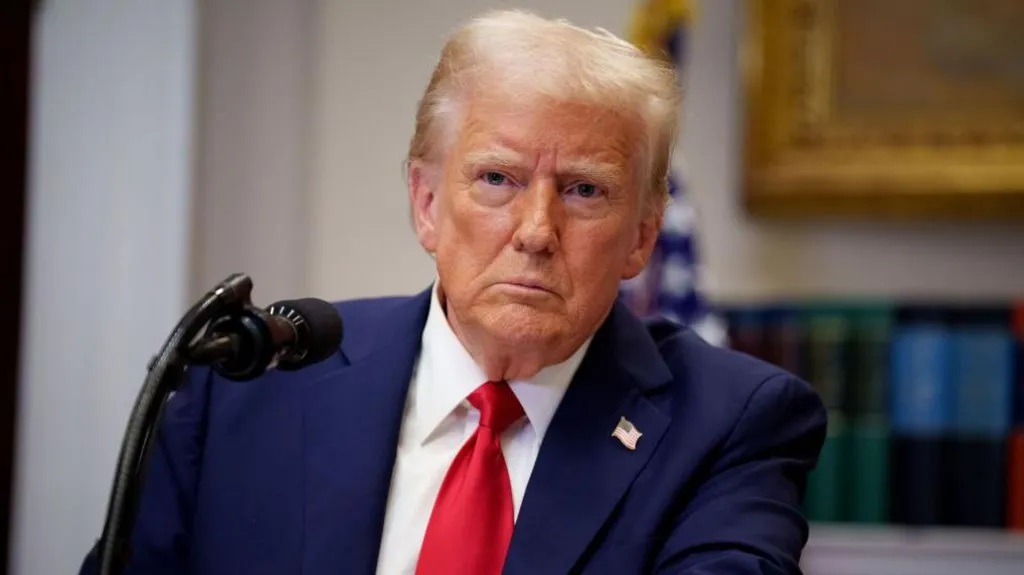
Trump orders new round of strikes after calling Iranian leaders ‘scum’
U.S. forces on Wednesday attacked Iran for a second consecutive day, officials said, hours after President Donald Trump declared the ceasefire between Washington and Tehran “over” and predicted that additional U.S. military action “probably” would occur.
American forces carried out the strikes at the direction of the president “to further degrade [Iran’s] ability to threaten freedom of navigation in the Strait of Hormuz,” according to a statement from U.S. Central Command, which oversees military operations in the region. The waterway has been a source of friction both militarily and economically in recent weeks, as Iranian forces have been accused of attacking commercial vessels and the United States has responded.
Trump, writing on social media, characterized the renewed assault as “retribution for yesterday’s bombing of ships by Iran.”
“If it happens again, it will get much worse!” the president warned in his Truth Social post, which was accompanied by an image of a billowing fire.
Speaking in Turkey earlier Wednesday, Trump said that “I think” a tenuous ceasefire agreement reached between U.S. and Iranian officials in June was “over.” However, he later qualified his remarks, saying that any military action would end “very quickly” and that he didn’t think the U.S. military would return to full-scale war.
Trump’s remarks, at a meeting of NATO leaders here in Ankara, followed a separate U.S. assault on Iranian territory — involving more than 80 strikes — ordered in response to attacks on ships passing through the Strait of Hormuz.
Trump said the U.S. hit Iran “very hard last night” and would “probably hit them hard again tonight.”
The president also suggested that the U.S. could reimpose a naval blockade on Iran and that Washington was “not attacking at the highest level,” repeating previous threats to strike infrastructure such as bridges, desalinization facilities and electricity plants. U.S. officials declined to detail what might be planned but said in a social media post later in the day that more than 20 U.S. warships remain in the Middle East.
Oil prices had eased but quickly spiked on Wednesday. Brent crude futures rose more than 5 percent to over $78 per barrel on fears that a renewed war would further disrupt energy supplies.
But Trump offered an evolving account of his plans in multiple appearances over the course of the day, by nightfall suggesting that any additional fighting was likely to remain contained.
“I don’t think it’s going to start again,” he said at a news conference before returning to the United States. “I think it’s going to go very quickly. They hit a couple of ships, and so we hit them much harder. … We use their language. We speak their language.”
The president spoke after Iran launched heavy retaliation overnight, with the Islamic Revolutionary Guard Corps saying it had targeted 85 U.S. military facilities in Bahrain and Kuwait on Wednesday, according to the semiofficial media outlet Fars.
“They’re scum. They’re sick people. They’re led by sick people, and they’re vicious, violent people,” Trump said in his comments earlier Wednesday. “Far as I’m concerned, it’s just a waste of time dealing with them. They’re liars … there’s something wrong with them. They’re cuckoo. As far as I’m concerned, it’s over.”
Trump said that talks with Iran could continue but that he was deeply skeptical they would be productive.
“They can talk, but I think they’re wasting their time. They’re a bunch of lying guys,” Trump said. “They’re bad people, and frankly, I don’t want to waste my time with them. Now, I’ll let our wonderful negotiators keep talking if they want, but I don’t see it.”
Later in the day, Trump declared that he was Iran’s top target for assassination.Ask The Post AIDive deeper
“I’m their number-one target. It’s out all over the place,” he said. “Because they’re scum. That’s the way they act, and that’s the way they’ve done it for 47 years.”
Adding to speculation about Iranian threats to his life, Trump also abruptly announced Wednesday that he would not be departing Turkey on the new Qatari luxury 747 that he debuted as Air Force One last week. Instead, he said he would depart on one of the older, smaller 747s that have been in service since 1990, jumping back on the fancier plane in Britain.
The Qatari jet — whose $400 million overhaul was accelerated by the U.S. Air Force when it took possession of the plane last year — is unlikely to have the same self-defense capabilities as the older, highly modified plane. That could pose a problem when flying out of Turkey, which shares a border with Iran.
Trump framed the move as a chance for U.S. service members based in Britain to explore the new jet. But asked Wednesday whether he had changed his plans because of security concerns, he didn’t answer directly.
The president’s tone about Tehran was a marked change from his assessment of Iranian leaders just weeks ago, when he praised their interest in making a deal shortly after they agreed to the ceasefire.
Asked why he was now dismissing them as scum, Trump said that “I got to know ’em.”
The secretary general of the International Maritime Organization, Arsenio Dominguez, in a statement Wednesday urged shipowners to avoid exposing their crews to danger by crossing the Strait of Hormuz “as long as the safety and security of crews cannot be assured.”
The U.S. and Iran reached a preliminary peace deal last month to reopen the strait to shipping traffic while continuing to discuss the thornier nuclear issue and possible lifting of U.S. sanctions against Tehran. The strait is a crucial shipping choke point through which 20 percent of global oil products normally flow.
But the tentative agreement appeared to collapse less than halfway through the 60 days that negotiators had allotted to reach a more durable accord. Trump previously expressed hope that the negotiations would lead to strict controls on Iran’s nuclear program.
The renewed hostilities were a setback for the president, who cited his concern about becoming a new Herbert Hoover as a major reason for seeking peace when he announced the initial deal last month. Hoover was president at the start of the Great Depression in 1929.
Iranian leaders, too, had seemed to be interested in peace. The country has been focused on days of mourning and funeral rites for its supreme leader, Ayatollah Ali Khamenei, who was killed in an airstrike during the first hours of the war.
But negotiations have stalled. Talks began with days of delays before Vice President JD Vance flew to Switzerland to kick them off. And the two sides traded barbs, and sporadic strikes, from the get-go. Trump expressed frustration on Wednesday that Iran’s public representation of what was being discussed differed from his understanding.
“We make a deal. Everyone’s agreed. No nuclear weapon. We make a deal. They go outside, joke to the press, they say we never even talked about it,” Trump said.
Iran’s leaders in recent days have appeared emboldened, with several senior officials appearing in public for the first time since the start of the war as part of the mourning rituals for Khamenei.
The possible resumption of war sparked some concern in Congress, which has sought to restrict Trump’s ability to keep fighting.
In June, the House and Senate passed a resolution to block Trump from resuming military action in a bipartisan effort to rein in the Iran war. The White House has argued that the measure does not have the force of law, setting up a clash with congressional Democrats who sponsored the legislation.
Foreign
Iran retaliates, fires missiles, drones at US bases after fresh attacks
Iran’s Revolutionary Guards said on Wednesday claimed that they launched missile and drone attacks on United States military installations in Bahrain and Kuwait, in what they described as retaliation for fresh US strikes on Iran.
This development further escalated tensions in the Gulf, coming hours after Washington carried out a new wave of military attacks on Iranian targets following alleged attacks on commercial tankers in the Strait of Hormuz.
According to reports, Islamic Revolutionary Guard Corps said it carried out a joint operation against “US military facilities, including Bahrain’s Fifth Naval District at Bandar Salman and Ali Al Salem Air Base in Kuwait.”
The Guards also claimed that they shot down a US MQ-9 drone during the operation, although the claim had not been independently verified.
Air raid sirens reportedly sounded in Bahrain and Kuwait as the attacks unfolded.
The Kuwaiti army said its air defence systems were confronting “hostile” missile and drone attacks, while authorities in Bahrain also confirmed the activation of air defence measures.
The latest strikes followed a fresh US military operation against Iran and Washington’s decision to revoke a licence that had allowed Tehran to sell oil.
The US said its action was in response to attacks on three commercial tankers transiting the Strait of Hormuz, one of the world’s most important oil shipping routes.
The US Central Command (CENTCOM) said more than 60 boats belonging to the Revolutionary Guards were among the targets hit during its operation.
Recall that CENTCOM is one of the unified combatant commands of the United States Armed Forces. Established in January 1983, it is responsible for directing and overseeing U.S. military operations and diplomatic partnerships across a vast, strategic area of the globe.
According to Investing, CENTCOM said in a statement, “The unwarranted aggression by Iranian forces is a clear and dangerous violation of the ceasefire and undermines freedom of navigation.”
-
Metro11 hours agoSugar Mummy Beaten To Nearly Death By 20 Year Old University Lover After Finding Her With His Course Mate In Bed
-
News11 hours agoTinubu Hails Wike as Remodeled Abuja City Gate Signals Capital’s Renewal (Photos)
-
News11 hours agoUS Releases List Of Countries No Longer Eligible For Visa Waiver
-
News11 hours agoRenewed Xenophobic Violence: AFPAA President, Nwala Calls for Urgent AU Intervention, Demands Justice for Victims
-
Economy11 hours agoOil prices settle 2% lower as economic worries outweigh supply risks
-
News22 hours agoJust in: FG jerks up salaries soldiers to N100k monthly
-
News11 hours agoInsecurity: Senate Approves N403.1bn Police Trust Fund Budgets For 2025, 2026
-
News11 hours agoNigeria Immigration Service Suspends U.S. Visa Application Centres Indefinitely