
Opinion
Finishing Strong: Behold the Hour Cometh…

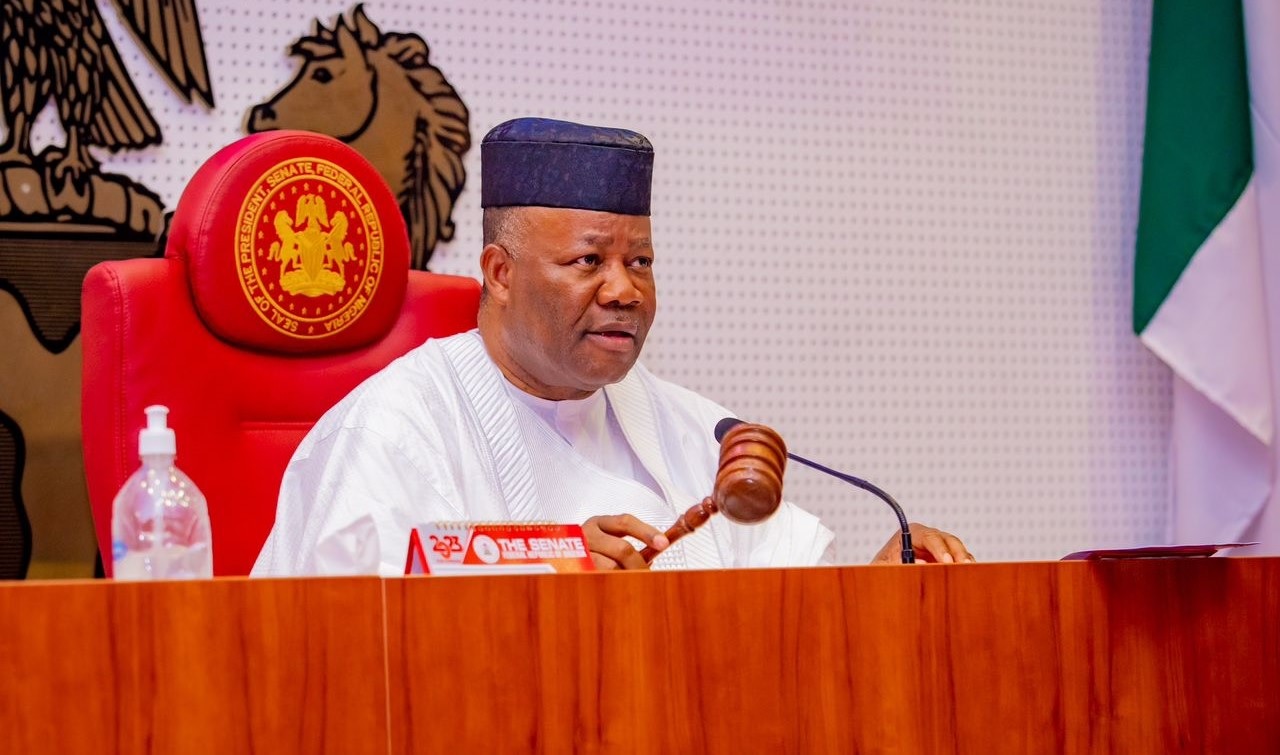


By Rt Hon Eseme Eyiboh, mnipr
There are moments in a nation’s life when institutions are reminded—quietly but unmistakably—that time does not negotiate with comfort. Nigeria’s Senate, returning from the conviviality of Christmas recess and New Year reflection to the discipline of plenary, has arrived at such a moment. The period of acclimatization has passed. The era of testing intentions is over. What remains is a phase in which time asserts itself, when the calendar ceases to be a backdrop and becomes an active force in governance.
When the President of the Senate, Godswill Obot Akpabio, rose to welcome colleagues back to the chamber in early 2026, he spoke with an ease that respected ceremony while remaining alert to consequence. The tone was cordial but unsentimental; reflective without wandering. Beneath the courtesy was a clear intimation that the Tenth Senate had crossed from the comfort of beginnings into the gravity of its defining phase.
He began where seriousness often takes root—not with policy, but with people. The recess, he reminded senators, was not an escape from accountability but an extension of it: time spent among constituents, re-engaging voices that do not echo within the chamber, absorbing frustrations that do not arrive neatly packaged as memoranda, and reconnecting with the human weight behind legislative abstractions. In doing so, Akpabio quietly reaffirmed representation as a lived obligation rather than a procedural formality.
The Senate, however, resumed its work under the shadow of loss. The death of Senator Godiya Akwashiki during the recess lent the chamber a gravity that could not be ignored. Akpabio’s tribute was spare, almost austere, and for that reason it carried weight. He spoke of diligence, humility, and responsibility—not as ornament, but as the unobtrusive virtues that prevent institutions from emptying themselves of meaning. The moment of silence that followed served as a reminder that democracy rests not only on arithmetic and procedure, but on the moral character of those entrusted to serve.
The address then widened its lens to the nation beyond the chamber. Nigeria, Akpabio observed, did not pause while the Senate recessed. Economic pressures persisted. Security challenges endured. Social demands intensified. Yet threaded through this catalogue of strain was a firm insistence on resilience. Nigerians, he argued, have continued to endure and adapt, expressing themselves not only through protest or complaint, but through work, enterprise, and a stubborn conviction that tomorrow need not be a repetition of today.
This framing mattered. It acknowledged hardship without normalizing it, and resilience without romanticizing suffering. More importantly, it returned responsibility to leadership. Public expectations, Akpabio cautioned, have not diminished with time; they have sharpened.
Security, inevitably, commanded attention. The Senate President welcomed ongoing military cooperation between Nigeria and the United States as part of a broader effort to confront terrorism and safeguard stability. Yet strategy did not eclipse humanity. His condolences to families bereaved by insecurity were measured but sincere, underscoring a truth often obscured by briefings and statistics: security is not an abstraction, but the difference between return and absence, between continuity and grief.
Equally sobering was the warning that as many as 35 million Nigerians may face hunger in the coming year. This was not treated as a distant projection to be acknowledged and deferred, but as an imperative demanding legislative urgency, rigorous oversight, and collaboration. Food security, in this context, is not charity; it is statecraft.
As the political season approaches with its familiar excesses, Akpabio’s appeal for civility and restraint was timely. Democracy, he implied, is not weakened by competition but by recklessness; not threatened by ambition but by the abandonment of responsibility. National unity, he warned, must never become collateral damage in the contest for power.
The address also made deliberate space for Nigerians whose lives remain suspended in captivity within their own country. Akpabio urged continued remembrance and prayer, resisting the political impulse to move on too quickly. Progress that ignores unresolved pain, he suggested, is progress in name only.
Threaded through the address was an endorsement of the Renewed Hope Programme of the Tinubu administration—not as a panacea, but as a collective undertaking requiring patience, discipline, and cooperation. Hope, in this telling, is not sentiment; it is work.
Then came the central fact. With less than one year and five months remaining, the Tenth Senate has entered its final stretch. Akpabio stated this plainly, without theatrics. The final stretch, he argued, is where participation yields to performance—where urgency must be embraced without panic, reform pursued without recklessness, and productivity demanded without compromising standards.
What followed was a concise legislative philosophy.
The months ahead must be reform-driven. Laws passed now must strengthen institutions, secure lives and property, unlock growth, and restore confidence in the Nigerian state. There was a pointed warning against legislative clutter and symbolic excess. History, Akpabio reminded his colleagues, is unimpressed by volume; it is persuaded by value.
He described the task ahead as institutional housekeeping: clearing bottlenecks, completing what was begun, and leaving behind laws that function rather than frustrate. The imagery was modest, but the implication was serious. Governance, at its best, is stewardship rather than spectacle.
The vision outlined was ambitious yet restrained: a Nigeria more governable than it was met; more just than it was found; more hopeful than it was entrusted to this generation of lawmakers. Institutions stronger than individuals. Laws that serve rather than burden. It was nation-building language—and an invitation to judgment.
Practicalities were not ignored. The budget, Akpabio noted, requires rigorous scrutiny, responsible passage, and faithful implementation. Oversight should correct rather than merely criticize. Collaboration with the Executive remains essential, grounded in constitutional responsibility rather than convenience.
Perhaps the most demanding reminder was the simplest. Senators, he said, are the ears, the eyes, and the legislative voice of Nigerians. It was not grandiose. It was exacting.
As the address concluded, the themes of time and memory returned. The clock is moving. The nation is watching. History is recording. This, Akpabio insisted, is not a moment for anxiety but for purpose. When the Tenth Senate reaches the end of its tenure, let it be remembered not as a body that slowed near the finish, but one that accelerated.
In many respects, the address captured the tone Akpabio has sought to establish since assuming the Senate presidency: stability over spectacle, substance over noise, legacy over applause. Whether the Senate finishes strong will depend not on rhetoric, but on deeds. As a declaration of intent, however, this was a serious one.
The final stretch has begun! Behold the hour cometh! The work remains unfinished. The trust has been acknowledged; it now awaits to be honored. In the end, nations remember less what was promised at the threshold, and more what was delivered before the door finally closed.
Rt Hon Eseme Eyiboh, mnipr,is Special Adviser on Media and Publicity and Official Spokesperson to the President of the Senate.

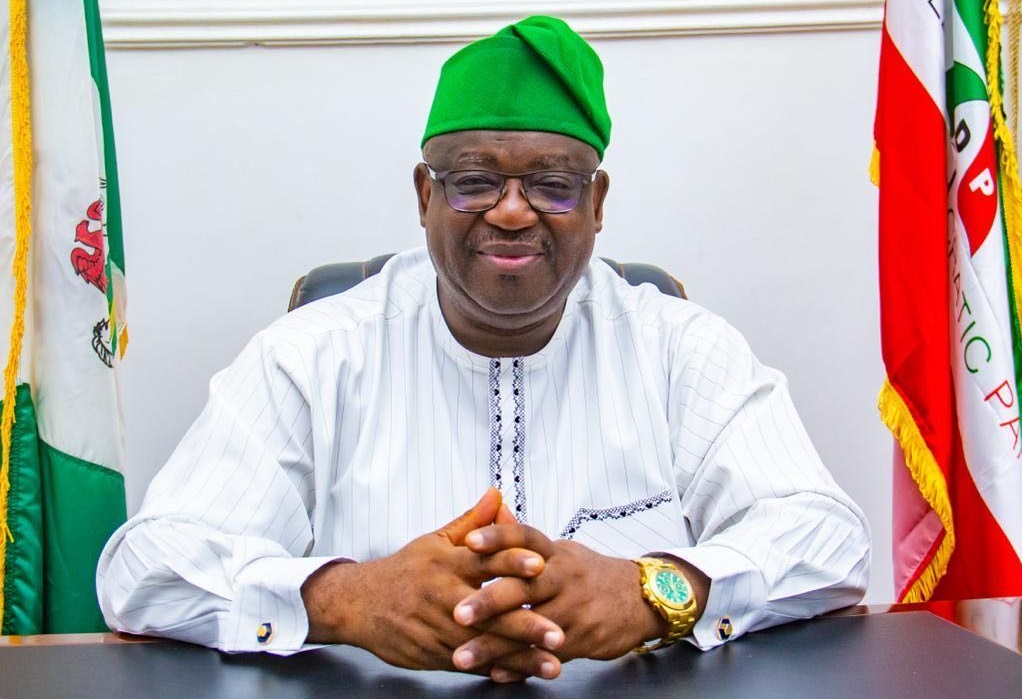
By Chris Ishaku.
For decades, Plateau State has worn the celebrated label, “Home of Peace and Tourism.” Governor Caleb Mutfwang’s administration is now attempting something more ambitious: converting the state’s tourism, culture and creativity from largely celebrated assets into productive economic resources capable of creating jobs, attracting investment and broadening the state’s economy.
That is the significance of the Orange Economy strategy recently presented by the Plateau State Government at the National Institute for Policy and Strategic Studies (NIPSS), Kuru.
The concept encompasses economic activity built around culture, creativity and intellectual property — including film, music, fashion, performing arts, tourism, digital content and design. Significantly, this is also the subject of NIPSS Senior Executive Course 48, whose participants are spending 10 months examining how Nigeria can harness the sector for sustainable development.
For Plateau, the opportunity is unusually compelling.
The state possesses a combination of natural attractions, cultural diversity and creative institutions that few states can replicate. Its more than 50 ethnic groups provide an extensive reservoir of festivals, cuisine, crafts, music, dance and traditions. Jos also hosts the Nigerian Film Corporation and National Film Institute, institutions capable of supporting the development of a larger film and entertainment ecosystem. NIPSS participants themselves identified Plateau’s tourism assets and creative ecosystem during an earlier tour of the state.
The encouraging aspect of the Mutfwang initiative is that the government is beginning to look beyond merely promoting festivals. It is attempting to construct an economic architecture around them.
The administration’s ₦4 billion MSME matching fund with the Bank of Industry, for example, could help address one of the perennial problems confronting young entrepreneurs: access to capital. Executive Order No. 10 of 2024, providing a framework for public-private partnerships, could similarly help bring private capital and expertise into projects government cannot sustainably finance alone.
Equally important is the proposed revival of Hill Station Hotel, Plateau Hotel and Jos Wildlife Park. These are not merely nostalgic landmarks. Properly redeveloped and professionally managed, they can become economic assets supporting hospitality businesses, tour operators, restaurants, transportation providers and hundreds of other enterprises.
The declaration of December as Plateau’s official tourism month also has considerable potential. Tourism thrives partly on predictability. Establishing a recognised annual season gives airlines, hotels, entertainment promoters, tour operators and visitors something around which to plan.
There is also a wider opportunity. Jos has long enjoyed an important place in Nigeria’s creative history. Building a modern ecosystem around film, music, fashion, digital production and entertainment could help retain young talent that might otherwise migrate to Lagos or Abuja.
Indeed, Mutfwang had already told NIPSS in February that the Orange Economy represented a pathway towards economic diversification and sustainable development. The latest blueprint therefore suggests an attempt to translate that proposition into specific interventions rather than leaving it as rhetoric.
There are, nevertheless, hurdles that will determine whether the ambition succeeds. Study Group 4 of NIPSS identified funding, security and legal frameworks among the issues Plateau must address to realise its potential. Security is especially consequential because tourists and investors require confidence in their destinations.
Implementation will consequently be the ultimate test.
The Mutfwang administration should now establish measurable targets: tourist arrivals, private investment attracted, creative businesses financed, jobs generated, hotel occupancy, internally generated revenue and the number of tourism facilities restored. Publishing those figures periodically would allow Plateau residents to judge whether the Orange Economy strategy is delivering tangible results.
What Mutfwang has got right is the direction: Plateau’s mountains, weather, cultures, films, festivals and creative talents should not exist merely as objects of admiration. They are economic assets.
If the administration can provide security, infrastructure, financing and credible private-sector partnerships around them, the familiar description of Plateau as the Home of Peace and Tourism could acquire a more economically meaningful dimension — a home of tourism, creativity, enterprise and jobs.


By Sonny Aragba-Akpore
While findings show that artificial intelligence (AI) is both a driver of efficiency, but a growing challenge, leading AI and cloud providers saw their individual emissions rise between 2020 and 2024, driven by soaring energy demand and expansion of infrastructure.
These findings indicate that AI may provide answers to general energy requirements, but the challenges ahead may reduce the excitement it brings. New studies released by the International Telecommunication Union (ITU) and the World Benchmarking Alliance (WBA), recently have reports that evaluated the climate performance of 200 digital companies globally using publicly disclosed data relating to the 2024 reporting year.
The fifth edition of Greening Digital Companies tracks greenhouse gas (GHG) emissions, energy consumption, climate targets, renewable energy use and, for the first time, climate transition planning before drawing the conclusion of the challenges of AI ahead.
The report released last week in Geneva, Switzerland by ITU says that despite progress in climate reporting and renewable electricity use, digital companies are falling short in cutting emissions at the pace required to achieve global climate targets, quoting the new report Greening Digital Companies: Monitoring Emissions and Climate Commitments 2026.
“While digital technologies offer immense potential for climate action, their rising energy demands and emissions cannot be overlooked,” according to Doreen Bogdan-Martin, ITU Secretary-General adding that “Environmental sustainability must be built into how we design, power and scale the technologies shaping our shared digital future.”
Indeed, AI,s growing energy demand highlights the urgency to align digital opportunities with climate goals.
In what looked like AI,s double edged sword, the report identifies AI as an increasingly important factor shaping the sector’s emission trajectory. “Operational emissions from four major AI and cloud providers have soared, reaching up to 239 per cent of their 2020 levels, while 14 large telecom operators reduced their emissions by 11 per cent over the same period.”
ITU submits that “while AI supports climate action through energy optimization, renewable forecasting, and efficiency gains, it comes with its own environmental costs.
The report underlines the critical need for AI growth to align with clean energy investments and emissions management.” The report identifies priority actions, such as strengthening climate reporting, reducing Scope 3 emissions, improving the implementation of climate transition plans, and aligning AI and digital infrastructure expansion with clean energy development.
“The ICT sector has the innovation, resources, and influence to help shape a more sustainable digital future,” said Cosmas Luckyson Zavazava, Director of ITU’s Telecommunication Development Bureau. “Rearising that potential means turning climate commitments into implementation, cutting emissions, strengthening collaboration among various sector actors and ensuring that digital growth, including AI, advances alongside clean energy development.”
ITU supports this work through collaborative initiatives like its Expert Group on
Telecommunication/ICT Indicators, with a key sub-group developing harmonized national-level indicators for tech-related GHG emissions and energy use.
The latest findings also reinforce ITU’s Green Digital Action Initiative, which calls for greater transparency on energy use, emissions, and progress toward science-based targets. The ITU submits that Climate reporting has improved, but significant gaps remain. “While 89 per cent of companies reported direct emissions (Scope 1) and 81 per cent reported purchased energy (Scope 2), only 47 per cent reported emissions from across all relevant value chain activities (Scope 3).
On Greenhouse gas emissions the report indicates that “In 2024, digital companies reported 301 million tonnes of operational emissions (Scope 1 and 2) in carbon dioxide equivalent, equivalent to 0.8 per cent of global energy-related emissions and a 1.2 per cent increase from 2023.
For companies disclosing value-chain emissions (Scope 3), these dominated their carbon footprint, accounting for 76 per cent of total emissions and underscoring the sector’s challenges in supply chains, manufacturing, and product use.
The report says of electricity consumption that “163 companies reported consuming 494 terawatt-hours (TWh) of electricity in 2024, equivalent to approximately 1.7 per cent of global electricity consumption. Over half of this electricity consumption (54 per cent) was concentrated in just 10 companies, surpassing the yearly electricity use of some countries.”
“While digital companies remain among the world’s largest corporate purchasers of renewable electricity, only 25 of the 200 companies assessed reported sourcing 100 per cent renewable electricity.” The report indicates that Climate targets show that 151 (or 76 per cent) of the assessed companies submitted near-term reduction targets for Scope 1 and 2 emissions, reflecting both voluntary leadership and the influence of investor expectations, scientific and awareness-raising campaigns, and emerging regulatory requirements.
“However, just 114 targets were validated by science-based frameworks with 85 assessed as on track based on progress to date. On Climate transition plans, Only 81 companies (41 per cent) demonstrated comprehensive plans to meet climate goals, including strategic ambition, implementation and engagement strategies, clear metrics, targets, and governance. “This highlights the urgent need for more robust planning to manage the necessary economic, social and energy transitions “adding that
“Digital companies need to engage suppliers and address emissions across the products and services they rely on,” according to Gerbrand Haverkamp, Executive Director of the World Benchmarking Alliance. “For example, the electronics sector, which provides many inputs underpinning digital infrastructure, accounts for 53 per cent of reported emissions across all three subsectors.”
The ITU has put in place global standards and frameworks connecting digital networks with sustainable energy infrastructure. It has also developed technical recommendations—such as ITU-T L.1332 for network infrastructure energy efficiency and ITU-T L.1510 for digital environmental key performance indicators—to measure and reduce power loss in telecom facilities and data centres.
AI and Power Grids are part of measures that the ITU addresses the dual role of artificial intelligence as both a major driver of surging electricity demand and a smart tool for optimizing power grid performance. Through Smart Energy Solutionist creates frameworks like ITU-T L.1385, by providing guidelines for smart industrial energy management systems to improve efficiency and reliability in manufacturing and building infrastructures. And in order to Bridge Global Divides the ITU initiatives emphasize expanding resilient connectivity and investing in foundational energy infrastructure, particularly in developing regions like Africa, to achieve sustainable digital development.

By Garba Shehu
This year, the Leadership newspaper is conferring its prestigious Man of the Year award on two Nigerian icons in recognition of their leadership journeys:
Prince Nduka Obaigbena, one of Nigeria’s most famous and admired media figures is a man who shaped, and continues to shape different eras in Nigerian journalism.
Abdul Samad Isyaku Rabi’u, born on August 4, 1960 is a Nigerian billionaire businessman and cement magnate.
His is a name that goes far beyond the boardroom. While he is renowned as the chairman BUA Group of Companies which he transformed into a global business empire, his contributions extend well beyond the corporate world.
Abdul Samad’s philanthropy is a beacon of hope for millions, and his selfless giving continues to leave lasting impressions on Nigeria, Africa and the world.
By showing that business can move beyond the notion of profit, Samad, as fondly called by friends has showcased how true leadership is not only about business success but also about creating a lasting social impact.
As the executive chairman of BUAFOODS, he drove the expansion of the conglomerate into Nigeria’s most capitalized company, with a share price of approximately ₦760.60 and a market capitalization of roughly ₦13.69 trillion.
Currently, he is Africa’s second richest person with a net worth estimated at between $13 billion and $19 billion in 2026.
Samad has always stood for more than business. To Nigerians, he personifies kindness, purpose, and institution-building. He is Nigeria’s, indeed Africa’s philanthropic giant.
When the Covid-19 crisis rocked and racked livelihoods, lives and even nations across the globe, Nigerian business leaders formed what they called the Coalition Against COVID-19, known as CACOVID. Led by Aliko Dangote, Africa’s wealthiest man, the coalition was backed by Access Bank Group, Zenith Bank, Guaranty Trust Bank, and several others including the BUA Chairman, Abdul Samad.
Rather than solely funding temporary relief, which he noted was the major shortcoming of the CACOVID relief programs he and the others put in place, Abdul Samad seized the momentum to sharpen and accelerate his visionary legacy of transforming lives in Nigeria through philanthropy and social impact initiatives.
It’s the famous American author and motivational speaker Tony Robbins who said
“by changing nothing, nothing changes.”
Like a bolt from the sky, came in 2021, the Abdul Samad Rabi’u foundation, ASR Africa Initiative which is the brainchild of the industrialist and philanthropist, with an annual pledge of $100,000,000 (USD) with Nigeria to benefit $50,000,000 (USD) yearly and the rest of Africa, $50,000,000 (USD) in what is the largest private philanthropic giving of its kind by an individual on the continent.
He believes in using wealth to uplift society and to address some of the most pressing challenges facing humanity. From education to healthcare, water supply to rural development, Samad’s charitable efforts have touched countless lives.
As one of the world’s leading philanthropists of the 21st century, Abdul Samad’s compassionate ethos of giving is evident in his generous donations to education and healthcare.
ASR has built, among many other projects, a N310 million students hostel at the Federal University of Technology, Minna; a N270 million Abdul Samad Rabi’u Sports Complex at the University of Jos; N250 million admin block at the Federal University of Technology, Owerri; N250 million sports center at UNIPORT; N1 billion learning facility at UNILORIN; another billion Naira Integrated Agric Center at the Bayero University, Kano and a language center at the Nigerian Defence Academy, NDA.
The foundation has, to its credit, several other projects including lecture theaters, auditoria, classrooms, libraries, laboratories, staff quarters and offices, ICT facilities, books, journals and periodicals, machines and other research equipment thrown at institutions of learning in Nigeria, Ghana and other African countries.
ASR Africa has also made contributions to the well-being of our defence and security agencies through projects such the N2 billion Naira Nigerian Navy medical center in the FCT; a N500 million immigration staff accommodation for the Immigration Service and another N500 million for the Correctional Center (Prisons Service); a 150 bed mega hospital for the police in Abuja, and a hospital for the immigration service in Bauchi.
The foundation has built a palace for the Royal Igbogila Kingdom in Ijesha in Ogun State for N1 billion; a contribution of N5 billion to the IBB national library project and the ongoing construction of the Malam Abdulkarim Juma’a mosque in Zaria.
The history and extent of his passionate support for health and welfare is another little-known detail about Samad.
Through this foundation, he has enabled the construction and rehabilitation of healthcare facilities, equipping them, developing research capabilities for researchers, healthcare practitioners and community level service providers.
Among the many projects executed include a N2.5 billion teaching hospital at Akwa Ibom State University, Uyo, a N2.5 billion school of nursing at Sokoto State University in Tambuwal, a N2.5 billion school of health technology in Gwadabawa also Sokoto state; a N2.5 billion Oncology and diagnostic center in Ilorin; a N2.5 billion Stella Obasanjo Hospital in Edo state, a N250 million clinic at the Nigerian Law School as well as a record number of hospitals in Kano, Katsina, FCT, Bauchi and Sokoto given ambulances and tuberculosis centers. Ten states got kits for sexual assault repentance centers.
In his effortless stride of his giving, Samad sparked a national enthusiasm when he offered a cash reward package of up to USD1.5 million to the Super Eagles during the 2025 Africa Cup of Nations (AFCON) in January, 2025.
In the end, we lost the semi-final to the host nation, Morocco in a penalty shootout.
Despite the defeat, he still went ahead dishing out USD 500,000 in appreciation of the team’s “resilience, passion, and strong performance throughout the tournament.”
Through philanthropy and strong conviction with an eye on nation building, Abdul Samad continues to create and support countless social uplift programmes in areas such as health, education, national security, water, sports , livelihoods and social welfare, all with one core purpose — to improve the quality of life of those it touches at home in Nigeria and other countries in Africa.
His selection as the 2026 “Man of the Year” by the Leadership Media Group is an eloquent testimony to why Abdul Samad, a major global player, matters.
… And Nduka Obaigbena.
I have told my Nduka story on these pages before but given the importance I attach to it, its bears repeating.
Many years ago, we met at his instance to decide if would partner with him in his upcoming magazine, TheWeek, with ties to the Time Magazine where Mr. Obaigbena had worked in the past.
After all has been said, our representative at meeting asked an important question:
What happens if the beautiful dream crashes? Is there a fallback to it?
Our host, Nduka Obaigbena shoved aside the issue, saying we are all taking a risk, there is nothing to lose. None of us here has a family.
We, (I and my editor, Malam Kabiru Yusuf) decided that this would be a dangerous journey; the the guy is not a serious person, we concluded.
TheWeek took off and crashed but in its place, he went on to found ThisDay.
Malam Kabiru, with a few friends started the Daily Trust which has gone on to break so many barriers and myths and about the success or lack of it in publishing in Northern Nigeria.The Trust Newspapers are today printed simultaneously in Abuja, where they are headquartered in a five-story building, in Kano, Maiduguri, Lagos and Port Harcourt, the only one to so in the country.
Nduka Obaigbena has built ThisDay (Leaders and Company) into one of the country’s most respected media organisations, comprising not only the flagship ThisDay but also several other publications, and Arise International TV network.
Recognizing the potential importance of digital media, Nduka launched Lekeelekee, the first global social media platform built out of Africa, “blending Tik-Tok, X , WhatsApp into a culturally aligned , mobile-first experience for African and the diaspora.” Users say Lekeelekee is fun and easy to use.
In this growing communications empire, ThisDay has a reputation for thorough, accurate, and well-written journalism, setting standards for politics, economy, business and society reporting. Through this paper, Nduka gave this country its first all-color newspaper.
In 1998, the Nigerian Guild of Editors gave him an award in recognition of his transformative contributions to journalism and media in the country.
Arise continues to grow in size and reputation with a tradition of being a watchdog for misdeeds by politicians and aggressive interviewing techniques that have become a subject of discussion among communications scholars and practitioners. Nduka must be credited with a rare ability to create and manage this world class media empire and in the people he choses to run it, the choice of a top flight management team, and a willingness on his part to support the staff in and out of office, even when pressured to do otherwise.
In addition to being publisher, Nduka has led the Newspaper Proprietors Association of Nigeria, NPAN and is a patron of the Nigerian Press Organization, NPO, after leading it as president, giving him, overall, a latitude of authority, wealth, financial power, social privilege, and outstanding public respect.

FG, States, LGs Share N2.338trn From August Revenue

Mutfwang’s Orange Economy Push: Turning Plateau’s Culture Into Jobs and Prosperity

Obi’s 2014 Handover Report Puts Anambra’s Net Balance at N86.67bn




-
 News13 hours ago
Anambra Govt Releases Records Of Alleged Unpaid Debts By Peter Obi During Tenure As Governor
-

 News13 hours ago
ASUU demands 26% education funding, faults FG over 15% compromise
-
 News24 hours ago
Anambra Debt Row: Presidency Challenges Obi to Quit 2027 Race Over His ‘No Debt’ Claim
-

 News13 hours ago
Peter Obi Weighs In On Dangote Refinery Shares
-
 News9 hours ago
Wike is an asset to APC, should not be embarrassed – Jibrin defends FCT Minister(Video)
-

 News23 hours ago
REVEALED: 11 Nigerian-Born Lawyers Hit by U.S. Disciplinary Actions Over Professional Violations