


Connect with us

News

Digital Skills, Wellbeing Take Centre Stage at Abuja Workshop for Lawmakers’ Spouses

Published

on

ADVERTISEMENT
Zoom Ad
ADVERTISEMENT
Zoom Ad

By Gloria Ikibah

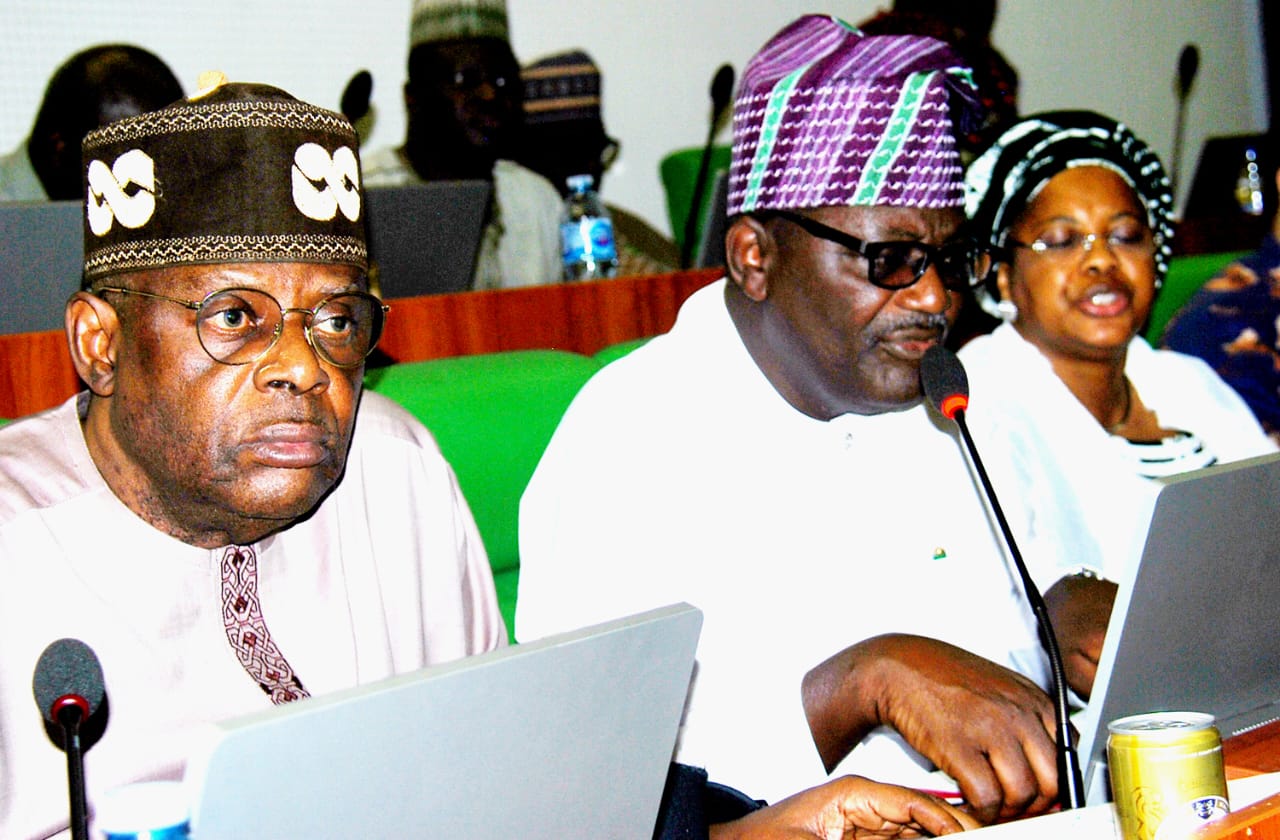
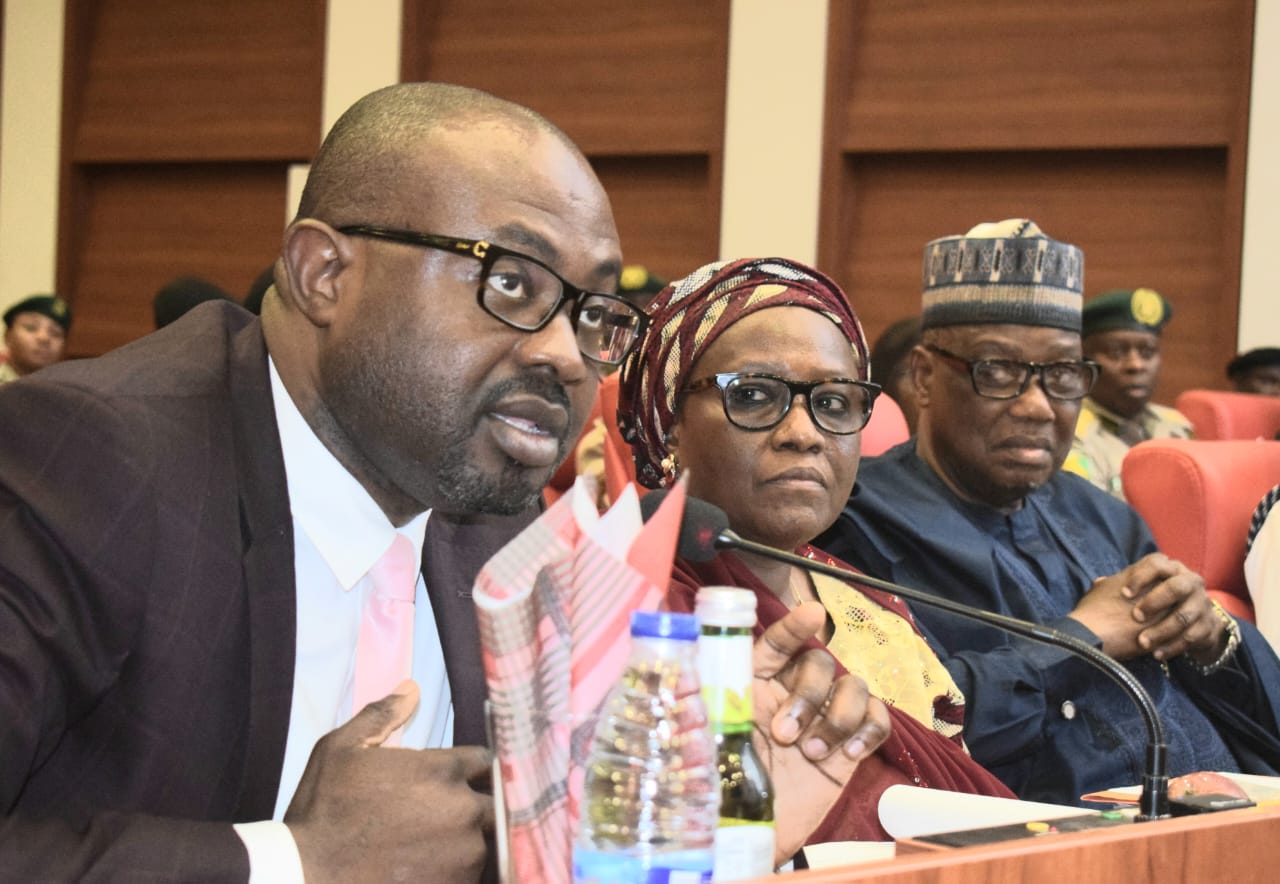
Spouses of members of the House of Representatives have gathered in Abuja for a two-day capacity-building workshop focused on digital empowerment, leadership and personal wellbeing.

The programme, organised by the National Information Technology Development Agency in partnership with the House of Representatives Spouses’ Association, is designed to equip participants with the tools needed to navigate an increasingly digital world while strengthening their roles as community influencers.

The initiative explores how women can harness technology to unlock new opportunities, sharpen leadership skills and expand their impact beyond the political sphere.

Advertisement

Opening the session, wife of the Speaker, Hajia Fatima Tajudeen Abbas, underscored the importance of mental wellbeing and emotional balance. She noted that as partners to public office holders operating in high-pressure environments, maintaining resilience and psychological stability is essential.

The workshop blends conversations around digital innovation with discussions on self-care and personal growth, reflecting a broader push to ensure women are not only technologically prepared but also emotionally grounded as they support national leadership.

She said, “There are expectations to meet, schedules to manage and public perceptions to navigate. As spouses, we are often confidantes and encouragers. We provide stability behind the scenes.

“Yet we, too, need strength. We, too, need tools to manage stress and sustain well-being. Recognising mental health as a component of leadership is a mark of maturity, not weakness.

Advertisement

“The focus on mental health and emotional resilience is equally important. Public life often involves invisible emotional labour”.

She explained that the role of the Speaker demands resilience, patience and ability to listen, even in moments of disagreement.

“As spouses, we witness this up close. We see the sacrifices that public service requires. We also share in them. That is why this Association is so important.

“The House of Representatives Spouses Association is more than a social body. It is a community of women who understand the unique pressures of public life. Visibility brings honour, but it also brings scrutiny. Influence creates opportunity, but it also comes with responsibility.

Advertisement

“In today’s world, these realities are amplified by technology. As highlighted in the programme outline, public exposure now extends beyond physical spaces into digital platforms. Social media, messaging applications and emerging technologies have transformed how we communicate and how we are perceived.

“A single post can travel far beyond its original intent. Misinformation spreads quickly. Children are increasingly exposed to online risks.

“That is why sessions on digital and financial literacy, digital wellbeing and cyber protection are so essential. We cannot afford to be passive users of technology.

“We must understand digital footprints, privacy controls and responsible engagement. We must equip ourselves with the knowledge to protect our families and guide others wisely.

Advertisement

“I am also pleased that this programme addresses entrepreneurship, financial confidence and opportunities in the digital economy.

“Women across Nigeria face barriers to economic participation, yet we know that when women are economically empowered, families and communities benefit”, she said.

The Chief of Staff to the President and former Speaker of the 9th House of Representatives, Hon. Femi Gbajabiamila, has described the spouses of lawmakers as vital players within Nigeria’s governance landscape, stressing that public service does not begin and end with elected office.

According to him, they occupy a distinctive position shaped by moral influence, community confidence and discreet yet effective diplomacy. In his view, their roles as confidants, advisers and steadying forces place them at the intersection of institutions and ordinary citizens, often helping to narrow the gap between policy and lived reality.

Advertisement

Their work in advancing women’s empowerment, youth development, healthcare advocacy and education, he noted, should not be seen as secondary to governance but as central to national progress.

Gbajabiamila also applauded the leadership of Hajiya Fatima Abbas Tajuddeen for championing digital capacity building in collaboration with the National Information Technology Development Agency. He described the move as forward-looking and necessary at a time when technological change is reshaping economies and societies at speed.

He pointed out that digital competence now underpins competitiveness, arguing that technology has evolved from a supporting tool into the backbone of modern economic systems and public institutions. Influence, he added, is increasingly exercised through digital engagement, data and innovation.

The training, he said, aligns with President Bola Ahmed Tinubu’s broader drive for economic renewal and digital transformation, including the 3 Million Technical Talent programme aimed at equipping Nigerians with skills to compete globally.

Advertisement

He urged participants to treat the workshop as more than a routine exercise, encouraging them to see it as an opportunity to deepen their leadership capacity, strengthen their voice and promote digital awareness within their communities, noting that nation-building demands collective effort.
Continue Reading
Advertisement

News

Tinubu Commissions Court of Appeal Judges’ Quarters, Urges States to Strengthen Judicial Infrastructure(Photos)

Published

on

ADVERTISEMENT
Zoom Ad
ADVERTISEMENT
Zoom Ad

President Bola Ahmed Tinubu on Tuesday reaffirmed his administration’s commitment to judicial independence and institutional reforms as he commissioned the newly completed 10-unit Court of Appeal Judges’ Quarters in Katampe District, Abuja, describing the project as a strategic investment in the rule of law and democratic governance.

Represented by the Attorney General of the Federation and Minister of Justice, Lateef Fagbemi (SAN), the President said the housing estate formed part of a series of judicial infrastructure projects being inaugurated to mark the third anniversary of his administration, stressing that a functional justice system requires more than laws and judicial officers.

“We gather on this important occasion for the commissioning of the 10th Court of Appeal Judges’ Quarters here in Katampe. This event is part of a series of judicial infrastructure projects being commissioned over a three-week period to commemorate the third anniversary of this administration,” Tinubu said.

The President noted that the project was a special intervention by the Federal Government, separate from the judiciary’s statutory budgetary allocations, which he said had also increased significantly under his administration.

Advertisement

“Today’s event is much more than the unveiling of physical infrastructure; it is a tangible demonstration of the Federal Government’s enduring commitment to the welfare, independence, efficiency and dignity of the judiciary,” he said.

“A strong and effective justice sector requires not only sound laws and competent judicial officers, but also the infrastructure and support systems necessary to enable the judiciary to perform its constitutional responsibilities without hindrance.”

Tinubu explained that the provision of modern residential accommodation for judges was aimed at enhancing judicial independence, efficiency and service delivery, emphasizing that the welfare of judicial officers should be viewed as a national investment.

“The welfare of judicial officers is a strategic investment in the rule of law. When judges are provided with secure accommodation and conducive working environments, the entire nation benefits,” he stated.

Advertisement

The President also disclosed plans for further expansion of judicial infrastructure within the district, revealing that additional land had been earmarked for judges of the National Industrial Court, the Code of Conduct Bureau, the Federal High Court and the High Court of the Federal Capital Territory.

“With all these developments, this area could easily be declared the ‘Judiciary Boulevard,” he said.

Tinubu commended the Minister of the Federal Capital Territory (FCT), Barr. Nyesom Wike, for executing the project efficiently.

“I wish to commend my dependable, hardworking and diligent Minister of the FCT, Barr. Nyesom Wike, CON, and his team for the efficiency with which this directive was implemented,” he said.

Advertisement

The President further challenged state governments to emulate the Federal Government by investing in judicial infrastructure and welfare.

“The responsibility of supporting the judiciary does not rest solely with the Federal Government. State governments have a corresponding obligation to ensure their respective judicial sectors are adequately funded, properly equipped and provided with the infrastructure necessary for effective service delivery,” he added.

In his remarks, the Minister of the Federal Capital Territory (FCT), Barr. Nyesom Wike urged governors across the country to take greater responsibility for the development of federal judicial institutions located within their states, arguing that the courts primarily serve the citizens of the host states.

“Governors, I say this: if there is a federal judicial division in a state, that governor knows those courts are serving their own citizens. The Federal High Court, the Court of Appeal, the National Industrial Court they do not render services to neighbouring states; they serve the host state,” he said.

Advertisement

Drawing from his experience as Governor of Rivers State, Wike recalled how he facilitated the establishment of a National Industrial Court division and judges’ accommodation to save litigants from travelling to Bayelsa State.

“When I visited the President of the Industrial Court, he said move to have an Industrial Court in Port Harcourt, Rivers State was stalled by lack of infrastructure. He added that there will be an Industrial Court in Rivers State if I will be willing to provide the necessary infrastructure.

“I immediately replied, ‘I am willing. Give me the designs.’ We took the designs, built the court and provided accommodation. Today, our people no longer face the logistical hazards of travelling to Bayelsa to have their cases heard,” he recounted.

The minister dismissed criticisms that such interventions could compromise judicial independence, insisting that providing infrastructure for judges strengthens rather than weakens the judiciary.

Advertisement

“Taking care of these institutions does not cost us more than we can afford, and it directly guarantees the true independence of the judiciary,” he said.

Wike disclosed that President Tinubu personally encouraged him to prioritize judicial welfare and infrastructure.

“Mr. President told me directly: ‘Do not bother; go ahead and do whatever is necessary to improve the welfare of judges and justices,’” he revealed.

President of the Court of Appeal, Hon. Justice Monica Bolna’an Dongban-Mensem, described the project as a milestone in the quest to provide a secure and dignified environment for judicial officers.

Advertisement

She noted that while judicial proceedings occur in courtrooms, the quality of justice delivered is often influenced by the environment in which judges live and reflect.

“These quarters constitute an extension of the intellectual, contemplative space essential to judicial work,” she said.

According to her, secure housing protects judicial officers from undue influence and reprisals, safeguards the integrity of judicial processes, and helps attract and retain experienced judges.

“Building a judiciary fit for the next 50 years requires sustained investment in modern facilities, technological advancement and judicial welfare,” Dongban-Mensem stated.

Advertisement

She expressed appreciation to President Tinubu and Wike for supporting the judiciary, praying that the estate would become a model for replication across other Court of Appeal divisions nationwide.

Earlier, the Executive Secretary of the Federal Capital Development Authority (FCDA), Richard Dauda, disclosed that the project formed part of a larger 40-unit judges’ housing development in Katampe District.

Dauda said the contract, awarded to Messrs. Details to Dots Development Nigeria Limited in September 2024, had been completed according to specifications.

He explained that the estate comprises 10 fully furnished five-bedroom duplexes with detached boys’ quarters, an event centre with a minimum capacity of 150 persons, a neighbourhood shop, recreational facilities, asphalt-paved roads, water supply systems, electricity infrastructure, standby generators, perimeter fencing and a secured gatehouse.

Advertisement

The commissioning comes barely a day after the inauguration of the new Court of Appeal complex in Abuja, underscoring the administration’s renewed focus on judicial infrastructure as part of broader governance reforms.

Continue Reading

News

NASENI Reiterates Commitment to Healthcare Innovation

Published

on

ADVERTISEMENT
Zoom Ad
ADVERTISEMENT
Zoom Ad

NaseniBy Gloria Ikibah

The National Agency for Science and Engineering Infrastructure (NASENI), has restated its commitment to strengthening Nigeria’s healthcare sovereignty through local manufacturing of medical diagnostic technologies.

The Executive Vice Chairman and Chief Executive Officer of NASENI, Khalil Suleiman Halilu, affirmed this while hosting participants of the Harvard University-led Science of Defeating Malaria programme at a closing dinner in Abuja, following their visit to the NASENI-TROMENT Biotechnologies Factory, where they commended the facility’s role in advancing disease control and healthcare innovation in Africa.

The delegation, led by Professor Dyann F. Wirth of Harvard University and comprising about 85 global health professionals, scientists and policymakers, toured the state-of-the-art facility and described it as a significant step towards combating malaria and other infectious diseases across the continent.

Advertisement

Speaking at the dinner, the NASENI boss noted that the commendation further validated the vision behind the NASENI-TROMENT Biotechnologies Factory, a strategic project initiated 18 months ago to reduce Nigeria’s dependence on imported diagnostic kits and strengthen local healthcare manufacturing capacity.

He explained that the facility is designed to produce up to 600 million diagnostic kits annually, enough to meet about 80 per cent of Nigeria’s diagnostic testing needs while creating opportunities for export to other African countries and global markets.

The factory manufactures rapid diagnostic tests (RDTs) and in-vitro diagnostic (IVD) products under the N-CheckUP brand for diseases and conditions including malaria, hepatitis B and C, HIV, typhoid, syphilis, COVID-19, pregnancy and blood glucose monitoring.

According to Halilu, the project aligns with NASENI’s broader mandate of deploying science, technology and innovation to address national challenges, create jobs and build industrial capacity.

Advertisement

He expressed appreciation to Professor Wirth and members of the Harvard delegation for their recognition of the progress made at the facility and reaffirmed NASENI’s commitment to developing innovative solutions that improve lives and position Nigeria as a leading healthcare manufacturing hub in Africa.

The Science of Defeating Malaria programme, which was held in Abuja from June 7 to 13, brought together global experts committed to advancing strategies for malaria elimination and strengthening public health systems worldwide.

Continue Reading

News

Obi Slams Court Ruling Deregistering ADC, Accord, Three Other Political Parties

Published

on

ADVERTISEMENT
Zoom Ad
ADVERTISEMENT
Zoom Ad

By Kayode Sanni-Arewa

Ex-Labour Party presidential candidate, Peter Obi, has condemned the recent judgment of the Federal High Court in Abuja ordering the deregistration of five political parties, including the African Democratic Congress (ADC) and the Accord Party.

Justice Peter Odo Lifu of the Federal High Court reportedly directed the Independent National Electoral Commission (INEC) to immediately deregister the affected parties over alleged constitutional breaches in a ruling delivered on Monday, June 15.

Reacting to the judgment, Obi described the decision as another troubling development that could further erode public confidence in Nigeria’s democratic institutions and the judiciary.

Advertisement

In a statement released on Monday, the former Anambra State governor argued that the court’s decision should be reversed, warning that weakening institutions for political purposes could have far-reaching consequences for the country.

According to Obi, the controversy surrounding the removal of former Chief Justice of Nigeria, Walter Onnoghen, had earlier raised concerns about the independence and sanctity of Nigeria’s institutions.

He noted that while investors can manage security and policy risks, uncertainty in the rule of law and perceptions of judicial vulnerability to political influence remain major deterrents to investment.

Strong economies are built on trust. Investors can manage security risks, policy risks, and even market risks. What they fear most is uncertainty in the rule of law and a judiciary that is perceived to be vulnerable to political pressure,” Obi stated.

Advertisement

The former presidential candidate lamented that many Nigerians have lost faith in institutions meant to protect them, adding that businesses increasingly prefer contracts governed by foreign jurisdictions due to greater confidence in their legal systems

Obi further argued that the judgment ordering the deregistration of the ADC and other political parties would further diminish public trust in the nation’s legal system.

“The Federal High Court judgment ordering the de-registration of the ADC and other political parties is just one of those activities that further reduces the common man’s trust in our legal systems. It should be reversed,” he said.

He pledged to work towards restoring the dignity, independence, and integrity of the judiciary, emphasizing the need for a justice system that is impartial, accessible, and respected by all.

Advertisement

“The common man must have a voice. The business community must be protected from legal uncertainty and intimidation. Justice must be impartial, accessible, and respected by all,” Obi added.

He also called on judges, senior advocates, legal luminaries, and lawyers across the country to defend the rule of law and safeguard Nigeria’s democratic institutions.

“To our judges, legal luminaries, senior advocates, and lawyers: this is your moment. Rise, defend the rule of law, take back your country,” he urged.

Obi concluded his statement with his popular refrain: “A New Nigeria is Possible.”

Advertisement

The ruling has continued to generate debate among legal and political stakeholders, with many awaiting further reactions from the affected parties and the electoral commission.

Continue Reading

Trending

Copyright © 2024 Naija Blitz News