Connect with us

News

Ex-Gov, El-Rufai hits ICPC, others with N1bn suit for illegal raid of residence

Published

on

ADVERTISEMENT
Zoom Ad
ADVERTISEMENT
Zoom Ad

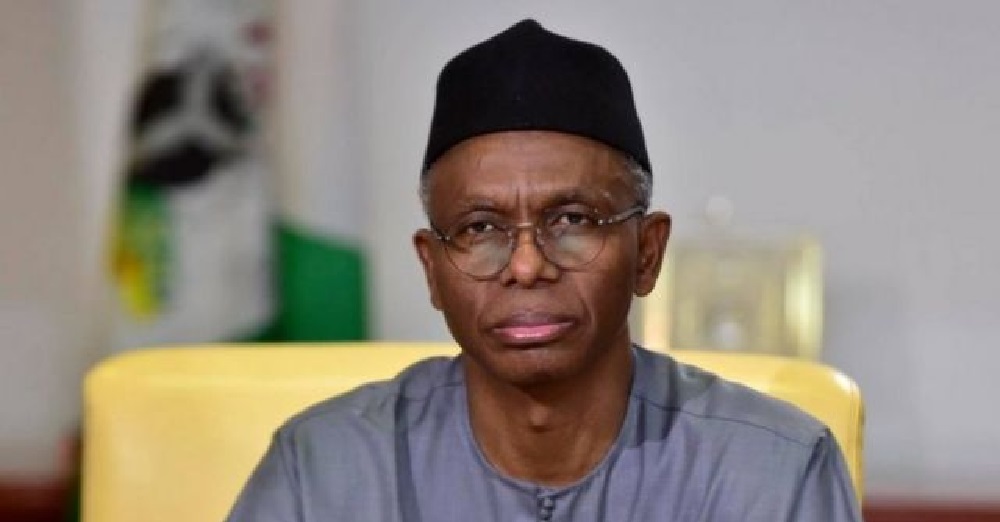
Ex-Gov. Nasir el-Rufai of Kaduna State has filed a N1 billion fundamental rights enforcement suit against the Independent Corrupt Practices and Other Related Enforcement Commission (ICPC) for alleged unlawful invasion of his Abuja reresidence.

el-Rufai
Former Gov. Nasir el-Rufai of Kaduna State has filed a N1 billion fundamental rights enforcement suit against the Independent Corrupt Practices and Other Related Enforcement Commission (ICPC) for alleged unlawful invasion of his Abuja reresidence.


el-Rufai, through his team of lawyers led by Oluwole Iyamu, SAN, prayed the court to declare that the search warrant issued on February 4 by the Chief Magistrate, Magistrate’s Court of the FCT (2nd respondent), authorising the search and seizure at his residence was invalid, null and void.

He urged the court to declare that the search warrant was “null and void for lack of particularity, material drafting errors, ambiguity in execution parameters, overbreadth, and absence of probable cause, thereby constituting an unlawful and unreasonable search in violation of Section 37 of the Constitution.”

The News Agency of Nigeria (NAN) reports that the former governor had, in the originating motion on notice marked: FHC/ABJ/CS/345/2026, sued ICPC as 1st respondent.

Advertisement

el-Rufai named the Chief Magistrate, Magistrate’s Court of the FCT, Abuja Magisterial District; I-G and Attorney-General of the Federation (AGF) as the 2nd to 4th respondents respectively.

In the suit dated and filed February 20 by Iyamu, the detained ex-governor sought seven reliefs.

He prayed the court to declare that the invasion and search of his residence at House 12, Mambilla Street, Aso Drive, Abuja, on February 19 at about 2pm and executed by agents of ICPC and I-G, “under the aforesaid invalid warrant, amounts to a gross violation of the applicant’s fundamental rights to dignity of the human person, personal liberty, fair hearing, and privacy under Sections 34, 35, 36, and 37 of the Constitution.”

He urged the court to declare that “any evidence obtained pursuant to the aforesaid invalid warrant and unlawful search is inadmissible in any proceedings against the applicant, as it was procured in breach of constitutional safeguards.”

Advertisement

el-Rufai, therefore, sought an order of injunction restraining the respondents and their agents from further relying on, using, or tendering any evidence or items seized during the unlawful search in any investigation, prosecution, or proceedings involving him.

“An order directing the Ist and 3rd respondents (ICPC and I-G) to forthwith return all items seized from the applicant’s premises during the unlawful search, together with a detailed inventory thereof.

“An order awarding the sum of N1,000,000,000.00 (One Billion Naira) as general, exemplary, and aggravated damages against the respondents jointly and severally for the violations of the applicant’s fundamental rights, including trespass, unlawful seizure, and the resultant psychological trauma, humiliation, distress, infringement of privacy, and reputational harm.”

el-Rufai did the breakdown of the N1 billion in damages to include “a N300 million as compensatory damages for psychological trauma, emotional distress, and loss of personal security;

Advertisement

A N400 million as exemplary damages to deter future misconduct by law enforcement agencies and vindicate the applicant’s rights.

A N300 million as aggravated damages for the malicious, high-handed and oppressive nature of the respondents’ actions, including the use of a patently defective warrant procured through misleading representations.”

He also sought N100 million as the cost of filing the suit, including legal fees and associated expenses.

In his grounds of argument, the senior lawyer argued that the search warrant was fundamentally defective, lacking specificity in the description of items to be seized, containing material typographical errors, ambiguous execution terms, overbroad directives, and no verifiable probable cause.

Advertisement

He said this was in contravention of Sections 143-148 of the Administration of Criminal Justice Act (ACJA), 2015; Section 36 of the Corrupt Practices and Other Related Offences (ICPC) Act, 2000, and constitutional protections against arbitrary intrusions.

Specifically, Iyamu argued that Section 143 of the ACJA requires that an application for a search warrant be supported by information in writing and on oath, setting forth reasonable grounds for suspicion, which was absent here, as evidenced by the incomplete initiating clause.

He said Section 144 mandates particular descriptions of the place to be searched and the items sought, to prevent general warrants.

He, however, argued that the instant warrant vaguely referred to “the thing aforesaid” without any detail.

Advertisement

“Section 146 stipulates that the warrant must be in the prescribed form, free from defects that could mislead, but the document is riddled with errors in the address, date, and district designation;

“Section 147 allows direction to specified persons, but the warrant’s indiscriminate addressing to ‘all officers is overbroad and unaccountable.

“Section 148 permits execution at reasonable times, but the contradictory language creates ambiguity, undermining procedural clarity,” he submitted.

Iyamu stated that the execution of the invalid warrant on February 19 resulted in an unlawful invasion of his client’s premises, constituting violations of the rights to dignity (Section 34), personal liberty (Section 35), fair hearing (Section 36), and privacy (Section 37) of the Constitution.

Advertisement

He further argued that the search was conducted without legal justification and in a manner that inflicted humiliation and distress.

“Evidence obtained without a valid warrant is unlawful and inadmissible, as established in judicial precedents such as C.O.P. v. Omoh (1969) NCLR 137, where the court ruled that evidence procured through improper means contravenes fundamental rights and must be excluded,” he said.

The lawyer, who also cited the case of Fawehinmi v. IGP (2000) 7 NWLR (Pt. 665) 481, said the court condemned vague warrants as affording unbridled discretion and leading to abuse.

He also presented a plethora of cases to support his argument.

Advertisement

In the affidavit in support of the application, Mohammed Shaba, a Principal Secretary to the former governor, averred that on February 19 at about 2p.m., officers from the ICPC and Nigeria Police Force invaded the residence under a purported search warrant issued on or about February 4.

According to him, the said warrant is invalid due to its lack of specificity, errors, and other defects as outlined in the grounds of this application.

He said the “search warrant did not specify the properties or items being searched for.”

Shaba stated that the officers failed to submit themselves for search as provided by the law before proceeding with the search.

Advertisement

“That the Magistrate did not specify the magisterial district wherein he sits.

“That during the invasion, the officers searched the applicant’s premises without lawful authority, seized personal items including documents and electronic devices, and caused the applicant undue humiliation, psychological trauma, and distress.

“Now shown to me and marked as ‘EXHIBIT B’ is the list of the items carted away.

“That no items seized have been returned, and the respondents continue to rely on the unlawful evidence.

Advertisement

“That the applicant suffered violations of his constitutional rights as a result, and this application is brought in good faith to enforce the same,” Shaba said.


Continue Reading
Advertisement

News

Just in: Security operatives take over Osun Assembly Speaker residence

Published

on

ADVERTISEMENT
Zoom Ad
ADVERTISEMENT
Zoom Ad


The Speaker of the Osun State House of Assembly, Hon. Adewale Egbedun, has reportedly been placed under house arrest, with unidentified security operatives in police uniforms surrounding his residence in Osun State.

According to reports, the security personnel arrived at the Speaker’s residence in more than 10 black Hilux vehicles and allegedly cordoned off the premises.

The Imole Campaign Council said it attempted to contact senior police officers and the Police Situation Room to obtain clarification on the development but was unable to reach them.

Advertisement

It also urged security agencies and political actors to ensure that the electoral process remains peaceful and free from intimidation, fear or interference.

The council called on residents and all stakeholders to remain calm, obey the law and await an official explanation from the relevant authorities.

As of the time of filing this report, there had been no official explanation from the police or other security agencies regarding the reported operation at the Speaker’s residence.

Advertisement
Continue Reading

News

FG reserves 33000 hectares for FCT livestock settlements

Published

on

By

ADVERTISEMENT
Zoom Ad
ADVERTISEMENT
Zoom Ad

The Federal Government has earmarked about 33,000 hectares of land in the Federal Capital Territory (FCT) for livestock settlements as part of efforts to curb cattle movement within Abuja and shift livestock production to a more settled, commercially viable system.

Minister of Livestock Development, Idi Mukhtar Maiha, disclosed this on Friday in Abuja during a ministerial press briefing, fielding questions from journalists.

Maiha said the land, captured in the Abuja Master Plan and located outside the city centre, would provide designated areas where livestock could be raised under improved conditions without competing for space with residents in densely populated parts of the capital.

He said the initiative is part of the Federal Government’s broader livestock transformation programme, focusing on settled production, improved animal genetics, better husbandry practices, and the establishment of Livestock Development Centres across the country.

Advertisement

“The city is not designed to co-mingle livestock with people,” Maiha said.

He explained that livestock owners would still be free to conduct their businesses within the city, while their animals would be kept in designated production areas where adequate feed, water, veterinary services, and other facilities would be provided.

The minister said the Federal Government was already engaging the FCT Administration to rehabilitate existing livestock facilities, including the Cow Grazing Reserve, Karshi, Piko, and Kore.

He said improvements had commenced at the Cow Grazing Reserve, where three boreholes and a digital weather station had been provided to enhance livestock production and management.

Advertisement

Maiha added that discussions were ongoing with the FCT authorities to rehabilitate other facilities and integrate them into the government’s proposed settled livestock production system.

The minister said the government was determined to address the practice of moving livestock over long distances in search of pasture and water, describing the system as economically inefficient and detrimental to animal productivity.

According to him, animals that continuously trek long distances expend energy that should ordinarily contribute to weight gain, milk production and other productive purposes.

He described cattle subjected to such movements as “athletes”, stressing that the extensive production system was partly responsible for Nigeria’s low livestock productivity.

Advertisement

Maiha said animals were not roaming for the sake of movement but because the existing production system compelled livestock owners to search continuously for feed and water.

He said the government’s preferred model would keep animals within designated production areas where they could access feed, water, veterinary care, breeding services and other essential inputs.

The minister noted that the approach would not only increase meat and milk production but also reduce waste and some of the social and economic challenges associated with uncontrolled livestock movement.

Maiha also identified low genetic potential and poor animal husbandry practices as major constraints on Nigeria’s ability to meet growing demand for meat, milk and eggs.

Advertisement

He said indigenous livestock breeds were not necessarily inferior but had not undergone the systematic genetic improvement required to substantially increase their productivity.

According to him, some indigenous cattle require several years to reach marketable weight, whereas genetically improved breeds can achieve considerably higher weights in a shorter period.

He also highlighted the disparity in milk production, noting that many indigenous cows produce between 1.2 and two litres of milk daily, compared with significantly higher yields obtainable from improved dairy breeds.

“The rate of growth matters a lot. Serviceability matters a lot,” Maiha said.

Advertisement

He said genetic improvement, better feeding and modern animal husbandry would therefore be critical components of the Federal Government’s livestock development programme.

Maiha said the creation of the Federal Ministry of Livestock Development in July 2024 had begun to trigger institutional reforms at the state level.

Only three states, he said, had dedicated ministries or agencies responsible for livestock when the ministry was established, but the number has since increased to 20 states.

He said this development would strengthen collaboration between federal and state governments in implementing livestock policies and attracting investment into the sector.

Advertisement

The minister, however, cautioned that transforming a sector that had operated largely through traditional systems for decades would take time.

“It’s a gradual process,” he said, adding that the impact of the reforms should not be assessed solely on immediate outcomes.

Under the emerging framework, the Federal Government would provide policy direction, technical and animal health standards, traceability systems, data infrastructure, investor facilitation and regulatory coordination.

State governments would be expected to provide suitable land and local infrastructure, undertake community engagement and security coordination, and mobilise livestock producers.

Advertisement

Private investors and producer organisations would, in turn, finance and operate commercial activities across livestock value chains.

Maiha said the proposed Livestock Development Centres would serve as commercially oriented production clusters rather than government-owned farms.

The centres are expected to accommodate investments in breeding, feed and fodder production, cattle finishing, dairy production and chilling, sheep and goat fattening, poultry production, pig breeding, feedlots, modern abattoirs and meat processing.

Other opportunities include cold-chain facilities, logistics, biogas and organic fertiliser production, and hides, skins and leather processing.

Advertisement

He said states would be encouraged to develop livestock industries based on their comparative advantages, available feed and water resources, agro-ecological conditions, producer populations, and market demand, rather than adopting a uniform model.

For cattle and dairy production, investment opportunities would include irrigated fodder, hay and silage production, feedlots, breeding and artificial insemination, milk collection and chilling, abattoirs and meat packaging.

The poultry value chain would encompass hatcheries, breeder farms, feed mills, broiler and layer clusters, vaccination and laboratory services, egg grading and packaging, processing and cold-chain facilities.

Similar investment opportunities would be developed for sheep and goats, pigs and micro-livestock, including rabbits, grass cutters, snails and bees.

Advertisement

Maiha said the reforms were aligned with the National Livestock Growth Acceleration Strategy (NL-GAS), which seeks to raise the livestock sector’s contribution to the Nigerian economy from about $32 billion to at least $74 billion by 2035.

The minister said the reforms would also reduce the economic and security risks associated with transporting live animals over long distances from major livestock-producing areas to consumer markets.

He noted that although a significant proportion of the country’s livestock population is concentrated in the North, major markets are located elsewhere, resulting in animals travelling more than 1,000 kilometres.

Maiha said developing livestock production, processing and marketing infrastructure across states would reduce dependence on long-distance movement of live animals.

Advertisement

He said the combination of settled livestock production, improved genetics, adequate feed and water, animal health services, processing infrastructure and private-sector investment would enable Nigeria to produce more meat, milk and eggs while creating jobs and strengthening rural economies.

Meanwhile, the National Veterinary Research Institute (NVRI), Vom, presented awards to Maiha and the Permanent Secretary of the Ministry, Dr Chinyere Ijomah Akujobi, in recognition of their contributions to developing the livestock sector.

The Executive Director and Chief Executive Officer of NVRI, Dr Yakubu Gunya Dashe, presented the awards alongside institute officials.

The institute recognised Maiha for service delivery, while Akujobi was honoured for her leadership and supportive role in advancing the ministry’s mandate.

Advertisement

The recognition highlighted the importance of collaboration among government institutions, veterinary research organisations, livestock producers and private investors in building a modern and productive livestock industry.

Continue Reading

News

NAHCON fixes N7.5m, N7.8m fares for 2027 Hajj

Published

on

By

ADVERTISEMENT
Zoom Ad
ADVERTISEMENT
Zoom Ad

The National Hajj Commission of Nigeria (NAHCON) has announced fares ranging from N7,560,822 to N7,882,822 for Nigerian pilgrims participating in the 2027 Hajj exercise.

The commission made the announcement on Friday in a public notice, stating that the fares were approved by the Federal Government and determined according to pilgrims’ departure zones.

Under the approved structure, intending pilgrims from the Maiduguri/Yola zone will pay N7,560,822, while those from other northern states will pay N7,672,822. Pilgrims from the southern states will pay N7,882,822.

NAHCON said the fares were determined based on consultations with the leadership of the Forum of State Muslim Pilgrims’ Welfare Boards, service providers in Saudi Arabia, prevailing exchange rates and service costs.

Advertisement

The commission said the new fares were guided by the principles of transparency and cost efficiency, as well as the Federal Government’s commitment to the welfare of Nigerian pilgrims.

“In line with the principle of transparency, cost-efficiency, and the Federal Government’s commitment to the welfare of Nigerian pilgrims, the National Hajj Commission of Nigeria (NAHCON) announces the 2027 Hajj fares approved by the Federal Government,” the commission stated.

The 2027 fares are slightly higher than those paid for the 2026 Hajj exercise.

For the 2026 pilgrimage, intending pilgrims from the Maiduguri/Yola zone, comprising Adamawa, Borno, Yobe and Taraba states, paid N7,579,209.96, while those from other northern states and the southern states paid N7,696,769.76 and N7,991,411.76, respectively.

Advertisement

NAHCON urged intending pilgrims who had already made an initial deposit of N5 million to pay the outstanding balance to complete their registration.

Those yet to make any payment but interested in performing the 2027 Hajj were advised to pay the approved fare through their respective State Muslim Pilgrims’ Welfare Boards, Agencies or Commissions, or through approved Hajj Savings Scheme participating banks.

The commission also announced September 26, 2026, as the final deadline for the complete upload of intending pilgrims’ biometric data on the designated Nusuk-Masar digital platform.

According to NAHCON, the deadline is in compliance with the Saudi Ministry of Hajj and Umrah’s policy and will not be extended.

Advertisement

“In strict compliance with the Saudi Ministry of Hajj and Umrah’s policy, NAHCON has fixed September 26, 2026, as the final and absolute deadline for the complete upload of intending pilgrims’ biometric data on the designated Nusuk-Masar digital platform, while remittance of all 2027 Hajj fares by states must be completed by 2nd December 2026,” it stated.

The commission further directed states to complete the remittance of all 2027 Hajj fares by December 2, 2026, warning that failure to meet the deadlines could lead to the forfeiture of allocated Hajj slots.

“No extension will be granted beyond this deadline, as data synchronisation and seat allocations depend entirely on timely remittances,” NAHCON said.

“The Commission wishes to emphasise that failure to meet the set deadlines will result in forfeiture of the allocated Hajj slots,” it added.

Advertisement
Continue Reading

Trending

Copyright © 2024 Naija Blitz News