Connect with us

Foreign

Saudis, Israel pushed Trump to attack Iran

Published

on

ADVERTISEMENT
Zoom Ad
ADVERTISEMENT
Zoom Ad

Saudi Crown Prince Mohammed bin Salman made multiple private phone calls to Trump over the past month advocating a US attack, despite his public support for a diplomatic solution


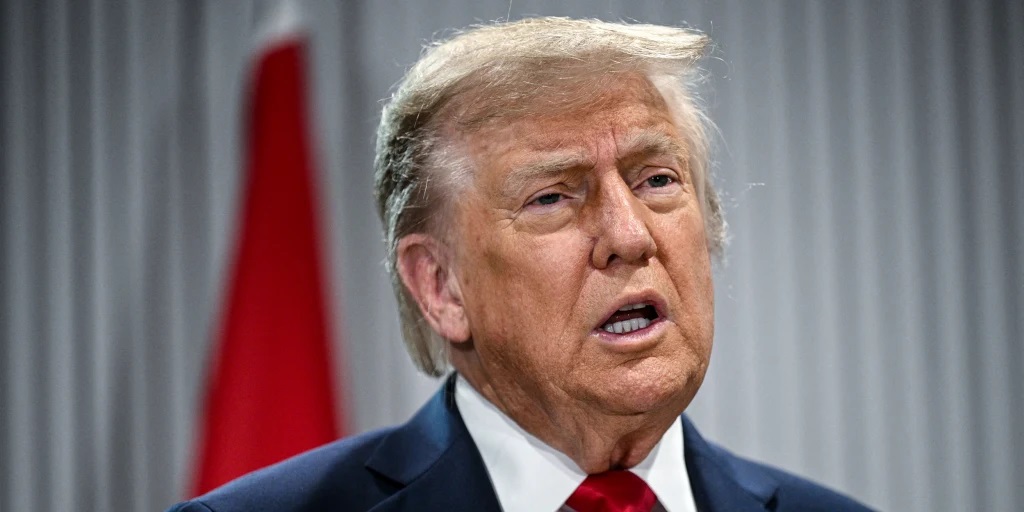
US President Donald Trump launched Saturday’s wide-ranging attack on Iran after a weeks-long lobbying effort by Israel and Saudi Arabia, said four people familiar with the matter, as Israeli and US forces toppled Iranian Supreme Leader Ali Khamenei after nearly four decades in power.

Saudi Crown Prince Mohammed bin Salman made multiple private phone calls to Trump over the past month advocating a US attack, despite his public support for a diplomatic solution, the four people said. Israeli Prime Minister Benjamin Netanyahu, meanwhile, continued his long-running public campaign for US strikes against what he views as an existential enemy of his country. The combined effort helped lead Trump to order a massive aerial campaign against Iran’s leadership and military, which in its initial hour led to the death of Khamenei and several other senior Iranian officials.

The attack came despite US intelligence assessments that Iran’s forces were unlikely to pose an immediate threat to the US mainland, marking a stark shift from Trump’s earlier, narrower military forays.

Advertisement

The Saudi push came as envoy Steve Witkoff and Jared Kushner pursued negotiations with Iranian leaders over nuclear and missile programmes. As talks proceeded, Riyadh said—after a call between the crown prince and President Masoud Pezeshkian—that it would not allow its airspace or territory to be used in an attack on Iran.

However, in discussions with US officials, the Saudi leader warned Iran would emerge stronger and more dangerous if the US did not strike now, after amassing the largest military presence in the Middle East since 2003, said people familiar with the matter. His stance was reinforced by Defence Minister Khalid bin Salman, who held closed-door meetings with US officials in Washington in January and warned about the downsides of not attacking.

The Saudi leader’s position likely reflected a balance between fears of Iranian retaliation against vulnerable oil infrastructure and viewing Tehran as Riyadh’s ultimate foe. Iran, dominated by Shiite Muslims, and Saudi Arabia, led by Sunnis, have long had an intense rivalry that has generated proxy wars in the region. Following the US attack, Iran retaliated against Saudi Arabia.

Witkoff and Kushner held final talks with Iranian officials in Geneva on Thursday—their third since early February—but left believing Tehran was playing games over nuclear enrichment, a senior US official said.

Advertisement

The decision to launch the attack was in some ways foretold by the massive buildup of US forces over the past two months. In explaining his decision, Trump on Saturday reached all the way back to Iran’s 1979 revolution. Earlier on Saturday, Trump said the US had faced “imminent threats from the Iranian regime.” Tehran was continuing to work toward producing a nuclear weapon and development of “long-range missiles that … could soon reach the American homeland.”

Both of those assertions have been challenged. Trump himself has vehemently maintained that the US “obliterated” Iran’s nuclear program with airstrikes this past summer. The International Atomic Energy Agency has said there is no evidence Iran has restarted its uranium enrichment program following those strikes or that it has an active bomb-building plan. In an assessment last year, the US Defence Intelligence Agency cited no indication that Iran was embarking on development of an intercontinental ballistic missile. If it decided to do so, the DIA said, it would take a decade to produce.

Trump directed anti-government Iranians to “take over” their government, but his call included no details. He declared that those within Iran’s extensive military and security infrastructure would be given “complete immunity” but provided no explanation how or by whom that would be done.

And it remains unclear whether aircraft and missile strikes can achieve his ever-expanding goals – among them new, US-friendly regimes in Iran and Venezuela; an end to Iran-backed militant operations in Yemen; and the defeat of Islamic terrorist operations in Nigeria and Somalia. “History is not kind to efforts to fundamentally alter and restructure the internal politics of a country using air power alone,” said Aaron David Miller, a former US diplomat.

Advertisement

Months of planning for the 2003 US toppling of Saddam Hussein included thousands of invading American forces that remained there for nearly a decade. Top Trump officials – some of whom have been sharp critics of the Iraq effort and other US forays into the Middle East – have insisted in recent days that this time will be different. Vice President JD Vance on Thursday told The Washington Post that he still considers himself a “sceptic” of foreign military interventions – a description he said still applied to Trump, too. He said there was “no chance” any military operation by the US in Iran would lead to a drawn-out war involving the Trump administration.

For now, Trump says that he hopes that in the face of the death of Khamenei, Iran’s security forces and police “will peacefully merge with the Iranian Patriots, and work together as a unit to bring back the Country to the Greatness it deserves.” In January, those security forces killed thousands of Iranian protesters.

He vowed that “the heavy and pinpoint bombing, however, will continue, uninterrupted throughout the week or, as long as necessary to achieve our objective of PEACE THROUGHOUT THE MIDDLE EAST AND, INDEED, THE WORLD!”

Souad Mekhennet, Ellen Nakashima and Noah Robertson in Washington; Matt Viser in Corpus Christi, Texas; and Greg Miller in London contributed to this report.

Advertisement
Continue Reading
Advertisement

Foreign

Colombia quake kills 224, leaves 700 injured

Published

on

By

ADVERTISEMENT
Zoom Ad
ADVERTISEMENT
Zoom Ad

At least 224 people have been killed after a magnitude 7.4 earthquake struck western Colombia, with rescue teams continuing to search collapsed buildings for survivors on Tuesday.

The earthquake struck at 7:34 am local time on Monday, with Cali, Pereira and parts of the Choco region among the worst affected areas.

Authorities warned that the death toll could rise as emergency teams reach more affected communities and assess the extent of the destruction.

Cali authorities reported 35 deaths, while officials in the Risaralda region, where Pereira is located, confirmed at least 40 deaths. Nine people were also reported killed in Choco, two in Caldas and one in Antioquia.

Advertisement

At least 700 people were injured in Valle del Cauca alone, according to President Abelardo de la Espriella, who declared a national state of emergency and said the government’s priority was to rescue people trapped under rubble.

More than 1,600 buildings were reportedly damaged or destroyed, including parts of a historic cathedral in Manizales.

Several upper floors of a hospital in Cali also collapsed, trapping some patients and forcing about 600 others to receive treatment outside amid the debris.

Rescue operations continued overnight and into Tuesday, with soldiers, firefighters, emergency workers, volunteers and relatives searching through collapsed buildings.

Advertisement

In Cali, volunteers formed human chains to remove concrete and other debris by hand, while rescue teams repeatedly stopped to listen for survivors.

Firefighters rescued two women and two children from a collapsed building, while rescuers in Pereira were reportedly in contact with a boy trapped beneath a bakery as cranes were used to remove unstable sections of the building.

Authorities have also deployed engineers, rescue workers and search dogs to Choco, where the scale of the destruction remains unclear because many communities are remote and difficult to reach.

The United States Geological Survey identified San Jose del Palmar, a community of about 4,800 people, as the epicentre. The area is about 400km west of the capital, Bogota.

Advertisement

Colombia’s Geological Service reported 21 aftershocks by late Monday and warned that further tremors were possible.

The rescue effort has been complicated by the geography of Choco, where some communities can only be reached by boat or aircraft.

The government has also imposed nighttime curfews in Cali, Armenia and Manizales, while hospitals in five cities were placed on red alert.

Operations at airports in Pereira, Manizales, Quibdo, Armenia, Cartago and Buenaventura were suspended temporarily to allow structural inspections.

Advertisement

Authorities postponed the Petronio Alvarez Music Festival in Cali, which was scheduled to begin on Wednesday, as well as professional football matches.

International assistance has also begun. The United States announced $15.5m in emergency aid for shelters, food and other relief, while the European Union activated its Copernicus satellite service to support rescue operations.

El Salvador and Mexico also offered to provide rescue teams, medical personnel, supplies and other assistance.

Rescuers are expected to face a critical window in the coming hours as they continue searching for people trapped beneath the rubble.

Advertisement
Continue Reading

Foreign

Trump Hid In Catering Truck During Secret Plane Swap Over Iran Threat – Report

Published

on

By

ADVERTISEMENT
Zoom Ad
ADVERTISEMENT
Zoom Ad

United States President Donald Trump secretly switched aircraft after leaving a NATO summit in Turkey last month amid a reported Iranian threat to target his plane, according to the BBC.

The elaborate security operation reportedly involved Trump being moved from Air Force One to a smaller military aircraft using a catering truck, while journalists and some White House staff travelling with him were unaware of the switch.

US officials told CBS News that American intelligence had detected a credible Iranian threat to fire a missile at the aircraft.

The White House has not directly confirmed that the secret plane switch was carried out because of an Iranian missile threat.

Advertisement

Trump had earlier warned during the summit in Ankara that he was Iran’s “number one target”.

The reported operation took place on 8 July, a day after the US resumed military strikes against Iran following the collapse of negotiations between Washington and Tehran.

Trump had arrived in Turkey aboard a newer Boeing 747-8 aircraft donated by Qatar. However, he announced that he would leave Turkey aboard the older Air Force One “for old time’s sake”.

Footage showed Trump boarding the presidential aircraft at Ankara airport. However, according to a report by the Washington Post cited by the BBC, he was later secretly transferred to a C-32A military aircraft, a modified Boeing 757 commonly used by the vice-president.

Advertisement

The transfer was reportedly carried out using a catering truck that had been raised to the level of the aircraft on the opposite side of the plane from where Trump had initially boarded.

Defence Secretary Pete Hegseth reportedly boarded the C-32A separately using external stairs, helping make the operation appear routine.

Meanwhile, journalists and some White House staff boarded Air Force One and were instructed to keep the aircraft’s window shades closed. They reportedly did not know that Trump was no longer on board.

Trump flew aboard the C-32A to the UK before returning to the older Air Force One. He was later seen leaving the aircraft after it landed at RAF Mildenhall.

Advertisement

It remains unclear how Trump was transferred back to the older presidential aircraft.

He subsequently boarded the Qatar-donated Boeing 747-8 for the final leg of his journey to Washington.

During that flight, Trump spoke to reporters about the security threat but did not reveal details of the earlier aircraft switch.

When asked why reporters had been instructed to lower the window shades during the flight from Turkey, Trump said they were “probably on a dangerous flight” because of threats he faced.

Advertisement

He also said he faced a threat “all the time” and described himself as “number one” on Iran’s list.

US intelligence had previously warned of a specific threat against Trump or his aircraft, according to earlier CBS News reporting.

The New York Times had also reported concerns about the security of the Qatar-donated aircraft, including claims that the Secret Service had urged Trump to switch planes after the NATO summit.

The reports come amid wider scrutiny of the $400m Boeing 747-8 donated by Qatar. The aircraft is undergoing modifications to prepare it for presidential use.

Advertisement

Older Air Force One aircraft are equipped with advanced defensive systems, including technology designed to counter incoming missiles. It remains unclear what comparable systems are currently installed on the Qatar-donated aircraft.

White House communications director Steven Cheung did not directly confirm or deny the reported plane switch. He said the new aircraft was equipped with advanced security measures to protect the president and his staff.

White House press secretary Karoline Leavitt also said the new Air Force One was “perfectly safe” for the president’s travels, while noting that additional upgrades were planned.

Advertisement
Continue Reading

Foreign

Colombia earthquake death toll jumps to 111; president declares emergency

Published

on

By

ADVERTISEMENT
Zoom Ad
ADVERTISEMENT
Zoom Ad

Colombia on Monday declared a state of emergency following a powerful earthquake that caused at least 111 deaths and flattened dozens of buildings, trapping more victims underneath.

The 7.4-magnitude quake struck western Colombia at 7:34 am (1234 GMT) and triggered a frantic search for survivors in several cities.

“The national government is maintaining all its capacities deployed to protect lives, assist affected communities and deliver aid to every area that needs it,” President Abelardo de la Espriella stated from Bogota.

The leader appointed just three days ago reported 111 deaths, 87 people injured and over 1,000 buildings were damaged.

Advertisement

The quake’s epicenter was in Colombia’s coastal Choco region at a depth of 100 kilometers (60 miles). Authorities in the impoverished area reported 12 deaths.

The nearby city of Pereira was one of the worst-hit areas, with local authorities earlier announcing that at least 40 people had died in the Risaralda region of which it is the provincial capital.

The quake crumpled a tower of a beloved cathedral in the city of Manizales, an AFP journalist observed.

“A great many buildings” in the city sustained damage, said administrative worker Jaime Zuluaga, 50. “Traffic is paralyzed and people don’t want to go back to their homes for fear of an aftershock.”

Advertisement

– ‘Missing people’ –

At least 20 buildings crumbled in Colombia’s third-largest city, Cali, trapping people beneath the debris, Mayor Alejandro Eder said.

Choco’s governor warned of serious damage in the provincial capital Quibdo, where videos showed more buildings reduced to rubble.

“We are all devastated,” Quibdo community leader Luis Gregorio Moreno told AFP.

Advertisement

“At this moment there are reported deaths, dozens of wounded, but what there are most of are missing people,” he said.

Ecuador, Panama and Venezuela also felt the early-morning quake, which prompted building evacuations in the Colombian capital, Bogota.

Still wearing their pajamas, crowds of people rushed out into the street upon feeling the tremor, AFP reporters saw.

“The quake was very, very strong,” said content creator Valeria Polo, 29, in the capital, where only minimal damage was recorded.

Advertisement

Six small airports in western Colombia suspended operations, the civil aeronautics agency said, and the soccer governing body postponed upcoming football matches.

Washington is “closely monitoring the large earthquake that struck Colombia and stands ready to support the people of Colombia,” US Secretary of State Marco Rubio wrote on X.

European Union chief Ursula von der Leyen said the EU was “ready to provide more support” to the South American country.

“We have already mobilised Copernicus, our satellite service, to help with rescue operations,” she wrote on social media.

Advertisement

Israel, Mexico, Ecuador and France also offered assistance.

Latin America is already reeling from two disastrous quakes that struck Venezuela in June, killing more than 6,000 people and causing widespread destruction.

AFP

Advertisement
Continue Reading

Trending

Copyright © 2024 Naija Blitz News