…as Reps hold public hearing on bills to protect rights defenders and strengthen national commission


By Gloria Ikibah
The United Nations has thrown its weight behind moves by the House of Representatives to reinforce Nigeria’s human rights architecture, pledging continued support as lawmakers consider two key reform bills. 
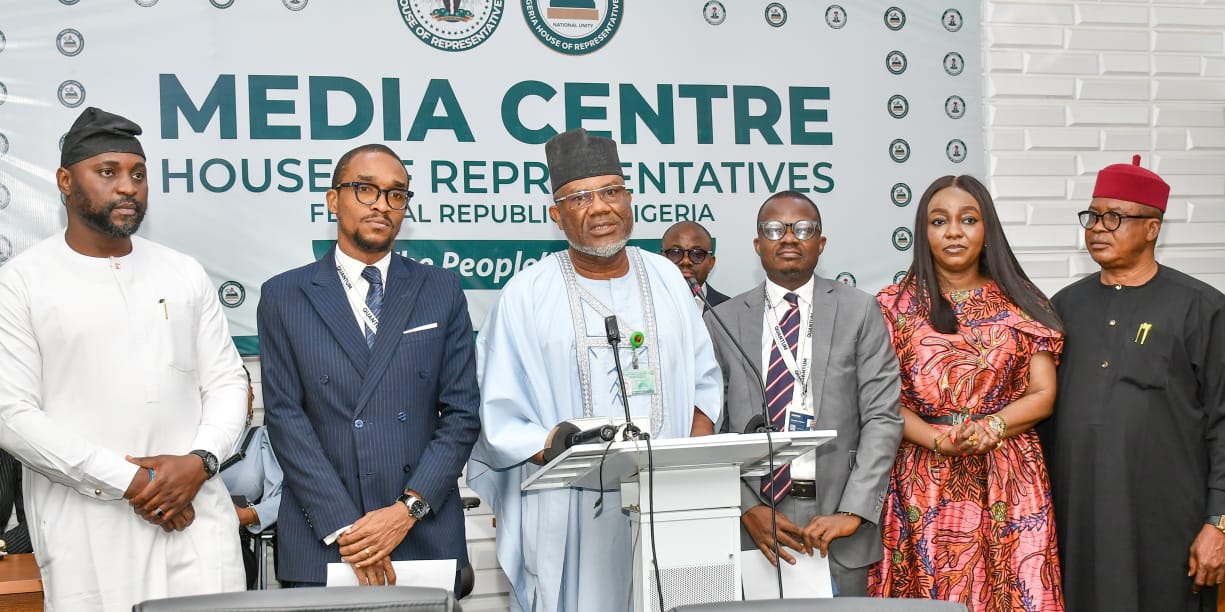
Speaking at a one-day public hearing organised by the House Committee on Human Rights, on Wednesday in Abuja, the United Nations Resident and Humanitarian Coordinator, Assistant Secretary-General, Mohamed Malick Fall, welcomed the proposed reforms.
Represented by Senior Human Rights Adviser, Adwoa Kufuor, the UN envoy commended Nigeria’s efforts to strengthen rights protections.
The hearing focused on the Human Rights Defenders Protection Bill, 2024 and National Human Rights Commission Act (Repeal and Re-Enactment) Bill, 2025. The first bill seeks to formally recognise and protect individuals and organisations who promote and defend human rights, ensuring they can carry out their work without fear of harassment or reprisals. The second proposes to repeal and re-enact the existing law establishing the National Human Rights Commission (NHRC), with the aim of strengthening its independence, investigative powers and financial autonomy in line with international standards, particularly the Paris Principles adopted by the United Nations General Assembly.
He said: “The UN strongly supports the introduction and consideration of the Bill to Repeal and Re-Enact the National Human Rights Commission (NHRC) Act (HB. 2376), and the Human Rights Defenders Protection Bill, (HB. 1867.)”.
According to him, the legislative efforts represent critical progress in reinforcing Nigeria’s human rights framework.
In 2023, Nigeria’s NHRC retained its ‘A’ status accreditation from the Global Alliance of National Human Rights Institutions, reflecting compliance with the Paris Principles.
Fall noted that under the leadership of Chief Tony Ojukwu, the Commission had made commendable progress, but also received recommendations for targeted reforms to address emerging gaps.
While noting that the proposed NHRC Bill HB. 2376 directly responds to these recommendations, he expressed optimism that when adopted, the legislation “will reinforce Nigeria’s commitment to its international human rights obligations and bolster the NHRC’s role in addressing many of the challenges that Nigeria faces.”
“The NHRC Bill aligns with the Paris Principles and enhances NHRI compliance in several ways. These include, but are not limited to: strengthening the mandate for prevention and monitoring, promoting implementation of national action plans; Ensuring adequate and sustainable funding; enhancing enforcement and follow-up mechanisms; guaranteeing independence, impartiality, and transparent processes; and fostering international engagement.
“OHCHR also welcomes the Human Rights Defenders Protection Bill, which, when adopted, formally recognises human rights defenders (HRDs), affirms their rights to promote and protect human rights without discrimination or reprisal, enables defenders to form associations, access resources, seek and disseminate information, and engage with national and international bodies.
“It further proposes establishing a dedicated Mechanism for the Protection of Human Rights Defenders within the NHRC to monitor risks, develop protective protocols, coordinate responses to threats, and foster a safe and enabling environment.
“They will ensure greater alignment with international standards, particularly the Paris Principles on the status and functioning of national human rights institutions, and advance the recognition and safeguards for human rights defenders in line with the UN Declaration on Human Rights Defenders,” Fall said.
He also praised the House Committee for convening the public hearing and assured continued UN support.
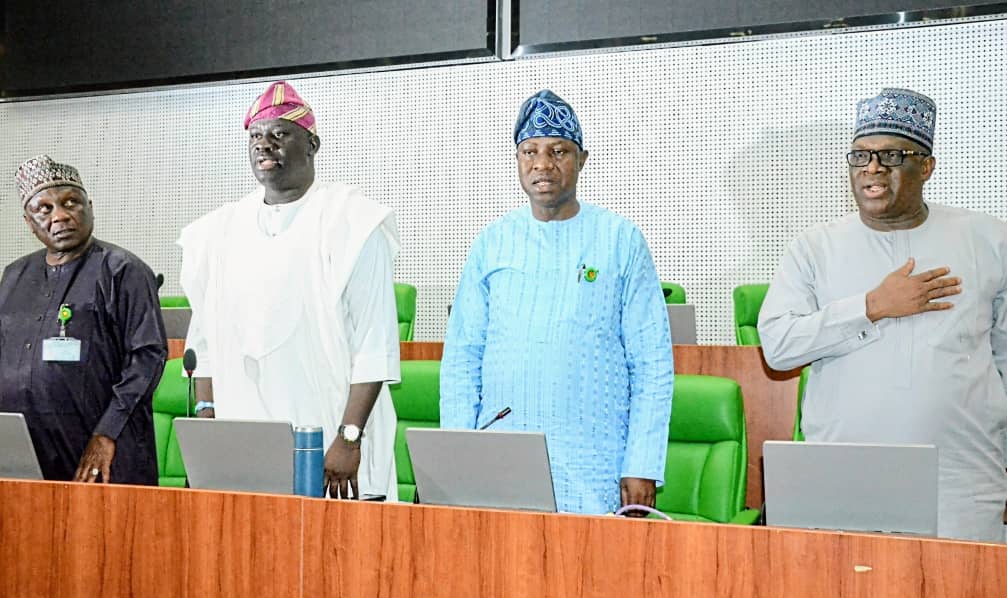
Declaring the hearing open, Speaker House of Representatives, Rep. Tajudeen Abbas, described the bills as both necessary and timely, stressing that the forum was designed for engagement, not confrontation.
He noted that the NHRC has long served as a defender of freedom and accountability.
“It is fair to note that there are fewer more important issues to consider at a period like this when Nigerians frequently face severe threats to their lives and freedoms from kidnappers and other violent criminal gangs, domestic abuses, massive displacements, and economic hardships, among others. It is even more critical when recent narratives question our collective commitment to Justice, fairness and accountability.
“As legislators, we must respond to these challenges the only way we know how: with deliberateness, transparency and firm legislative action in order to protect our constituents, revamp the existing machinery for judicial redress, and elevate our country in the eyes of the world”, he added.
Describing the intent of the bills, he said:
“The first strives to formally establish and protect the rights of the people or organizations who are at the forefront of advocating for the rights of Nigerians, supporting victims, documenting abuses and demanding accountability. We must respect the job they do as partners in nation building rather than as adversaries of the state. As a legislative body we recognise that when supported and properly guided, these human rights defenders strengthen the institutions of government, deepen democracy and enable citizens to get justice.
“The second bill proposes to repeal and reenact the previous law establishing the National Human Rights Commission in order to further strengthen its operations, improve its investigative capabilities and ensure its financial integrity in line with the Paris Principles adopted by the United Nations General Assembly.”
Earlier in his welcome remarks, Chairman House Committee on Human Rights, Rep. Abiola Makinde, said the hearing underscored the House’s commitment to participatory law-making and transparency.
Makinde said: “We are gathered to deliberate on critical legislative proposals aimed at enhancing the protection of human rights and strengthening the institutional capacity of the National Human Rights Commission, as well as providing formal recognition and protection for Human Rights Defenders in Nigeria.
“The purpose of this Public Hearing is clear and fundamental. It is to subject these Bills to thorough stakeholder scrutiny and informed public input. We are here to receive expert opinions on their legal, constitutional, financial, and policy implications; to identity gaps or ambiguities that may require amendment; and to ensure that the final legislative outcome reflects national interest, democratic accountability, and international best practices”.
He urged participants to contribute with candour and precision, assuring that the committee would take stakeholders’ input seriously.
In his goodwill message, Executive Director of the Policy and Legislative Advocacy Centre PLAC, Clement Nwankwo, described the proposed amendments as crucial.
“We all know the circumstances upon wish the commission was created in Nigeria in 1995, following the killing of Ken Saro Wiwa. We have seen the National Human Rights Commission come as far as it has come. Able to ascert the important role that the act or the law that set it up and gave to it. And we continue to see the National Human Rights Commission deliver on expectations of human rights organizations and citizens. It’s role is so crucial,” Nwankwo said.
The Executive Secretary of NHRC, Tony Ojukwu, said the amendment would address gaps in the existing law, stressing the need for apolitical appointments and stronger investigative powers.
“In essence the amendment of the law is also very key. So, this present effort by the House is to harmonise the different acts,” Ojukwu said.
Representing the Attorney-General of the Federation and the Federal Ministry of Justice at the hearing, Chief State Counsel Imarha Oghenenyerowo Rueben expressed firm backing for the proposed reforms, while outlining specific areas the ministry believes require further refinement.
He began by commending the National Assembly for seeking to address longstanding legal inconsistencies affecting the National Human Rights Commission (NHRC).
“The Federal Ministry of Justice acknowledges and commends the committee National Assembly of this proposal to strengthen the National Human Rights Commission by harmonizing the two legal framework which the Executive Secretary rightly pointed out are running concurrently, which is the National Human Rights Commission Act, Cap. N-46, Laws of the Federation of Nigeria, 2004, and the amendment in 2010, which is the proposal of HB 2376, that’s the National Human Rights Commission Bill 2025, to harmonize this legislation.
“We also in acknowledgment of the Human Rights Defenders Bill, Human Rights Defenders Protection Bill, that’s HB 1867, which critically reviews the issue as to defending, um, human rights defenders. It is undeniably stated that the HB 2376, which is the National Human Rights Commission Bill, seeks to address a long-standing legislative misalignment between the National Human Rights Commission Act 1995, Number 22, and the National Human Rights Commission Amendment Act Act 2010, number 24, which the Amendment Act did not actually repeal or neither mention that it’s amending the 1995 Act”, he said.
While reaffirming the ministry’s support, Rueben explained that it had submitted observations on certain provisions of HB 2376.
“The ministry, by reviewing both bills before the National Assembly, and we have some Concerns concerning HB 2376, and which we have also submitted. And the first one is as to the ease of doing business, which Section 5, Subsection 2B of HB 2376 seeks to make it compulsory for relevant businesses to obtain annual business and human rights compliance certificate.
“There’s no doubt that there have been prohibition and issue of prohibition as to businesses concerning their staff, but we think that that provision should be reviewed because, um, why you hinge on issue of getting a certificate, it might prolong regularization of company compliance, with the corporate affairs commission, which might hinder ease of doing business as provided by the Business Classification Miscellaneous Provisions Act, particularly Section 8. So we think that provision should be reviewed”, he added.
He also raised concerns about borrowing powers proposed under the bill.
“Then as to issue of borrowing, Section 15 of the bill addresses issue of borrowing, we think that provision should be reviewed because it seeks to authorise the commission or the National Prevention men leasing to borrow by way of loan or overdraft without requiring approval from a supervising authority, without the ministry, the National Assembly, or the Federal Executive Council. We think that provision should be reviewed because the practice is that borrowing should be supervised to issue or to prevent issue of financial mismanagement”, he noted.
Another issue flagged by the ministry relates to funding provisions affecting companies in key sectors.
“Another issue is issue of introduction of cross-site tax outside the harmonized tax framework, and this could be found in Section 16(2)(b). Of the bill, particularly talking about HB 2376, which makes it mandatory for multinationals, public and private companies operating in the financial, oil and gas, and extractive sectors in Nigeria to contribute 0.3% of their annual profit So we think this should be harmonized with the current tax regime.
“So accordingly, this provision should be considered by the National Assembly and replaced with a funding model like the, um, the Executive Secretary rightly said, which is consistent with Nigerian reform Tax Act. Then on the Bill HB 1867, Human Rights— that’s the Human Rights Defenders Protection Bill.
“The ministry supports the bill subject to the removal of these provisions that we have highlighted above, and we are grateful for this opportunity to give our views. And the Honourable Attorney General has pledged support on behalf of the Federation of Justice to always support the National Assembly in smooth running of its constitutional mandates, and also pledge our support to help tidy up, um, HB 276,” he stated.