
News
Emirates Airline Resumes Dubai–Lagos Flights to Bring Stranded Nigerians Home Amid Middle East Crisis

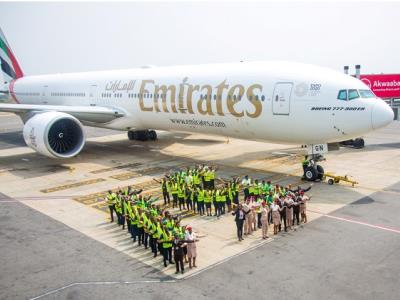


Amid escalating tensions in the Middle East following military confrontations between Israel and Iran, Middle Eastern airline Emirates has announced the resumption of its Dubai–Lagos–Dubai flight operations.
The airline confirmed that flights between Dubai and Lagos resumed on Friday, March 6, 2026. The route had been temporarily suspended last week due to widespread airspace disruptions caused by the intensifying conflict in the region.
Sources close to the airline’s operations revealed that the immediate goal of restarting the service is to transport stranded Nigerians in the United Arab Emirates back home.
Several Middle Eastern carriers had halted flights after multiple countries closed their airspace following coordinated strikes by the United States and Israel on Iranian targets.
U.S. President Donald Trump described the attacks as a major combat operation, prompting global airlines to reroute flights that normally pass through the busy Middle East aviation corridor.
The disruptions affected numerous long-haul routes connecting Asia, Europe, the Middle East, and North America, forcing airlines to quickly adjust schedules amid growing safety concerns.
The situation intensified after missiles were reportedly launched from Israel toward Iran, followed by retaliatory strikes by Iranian forces. As a result, airlines around the world began avoiding certain airspace corridors.
This led to the cancellation or diversion of several international flights, including services linking India, the United Kingdom, Europe, the Middle East, and North America.
After initially suspending its operations, Emirates said it was closely monitoring developments and maintaining communication with aviation authorities before deciding when it would be safe to resume flights. Passengers were advised to regularly check the airline’s travel updates and flight status pages before heading to the airport.
In a message sent to its trade partners in Nigeria, the airline confirmed the resumption of the Lagos route.
“We will be operating the Dubai–Lagos–Dubai flight (EK783 & EK784) on 6th March 2026,” the carrier stated.
The airline said the resumed flights would give passengers an opportunity to continue their travel plans after days of uncertainty caused by the crisis. It also encouraged travellers to secure seats quickly, warning that demand is expected to rise sharply.
While some flights resumed across the Gulf region on Friday, disruptions continued elsewhere. A Lufthansa aircraft bound for Saudi Arabia diverted to Cairo due to safety concerns, while a repatriation flight by Air France was forced to turn back after reports of missile activity.
The outbreak of hostilities involving the United States and Israel against Iran has triggered widespread flight cancellations across the Middle East, leaving thousands of passengers stranded and forcing airlines and governments to arrange emergency repatriation flights.
Many travellers have spent large sums trying to leave the region, with last-minute airport rushes, overland travel to alternative hubs, and in some cases fighter jets escorting commercial aircraft. Some passengers described the situation as “absolute chaos.”
With much of the region’s airspace still closed due to missile and drone threats, wealthy travellers have turned to private jets while charter flights and limited commercial services struggle to evacuate tens of thousands of people.
France’s Transport Minister Philippe Tabarot said the situation highlights the instability in the region and the challenges involved in repatriation efforts.
Meanwhile, Britain’s first repatriation flight from Oman landed at London Stansted Airport early Friday after delays, while similar operations were underway across Europe.
With the conflict showing no signs of easing, aviation disruptions are expected to continue. The European Union aviation regulator European Union Aviation Safety Agency (EASA) has extended its warning about the risks of flying over the region until March 11.
Despite the challenges, Emirates said it aims to restore “100 percent of its network” in the coming days. However, Lufthansa warned that the conflict creates uncertainty for the airline industry.
“The war in the Middle East proves once again how exposed air traffic is and how vulnerable it remains,” said Lufthansa CEO Carsten Spohr.
Air travel between Europe and the Asia-Pacific region has been particularly affected. Data from aviation analytics firm Cirium shows that Emirates, Qatar Airways and Etihad Airways normally transport about one-third of passengers traveling from Europe to Asia and more than half of those heading to Australia, New Zealand, and the Pacific Islands.
At Dubai International Airport (DXB), normally the world’s busiest international hub, flight traffic nearly doubled compared to the previous day but still remained only about 25 percent of normal levels, according to flight-tracking service Flightradar24.
Etihad announced it would operate a limited schedule until March 19, serving about 70 destinations including London, Paris, Frankfurt, Delhi, New York and Toronto.
Emirates also said it is operating a reduced schedule to 82 destinations such as Sydney, Singapore and New York, with transit passengers in Dubai accepted only if their connecting flights are operating.
Meanwhile, the main hub in Doha remains closed, although authorities have arranged limited relief flights from Oman and Saudi Arabia. Airline flydubai also plans to resume flights from the UAE to Israel early next week.
Rising oil prices have added to the aviation sector’s challenges. Jet fuel costs have surged, with Singapore jet fuel hitting a record $225 per barrel this week due to fears of supply disruptions from Middle Eastern refineries.
Ratings agency Fitch Ratings warned that airlines could face financial pressure from higher fuel costs in addition to revenue losses from disrupted flights.

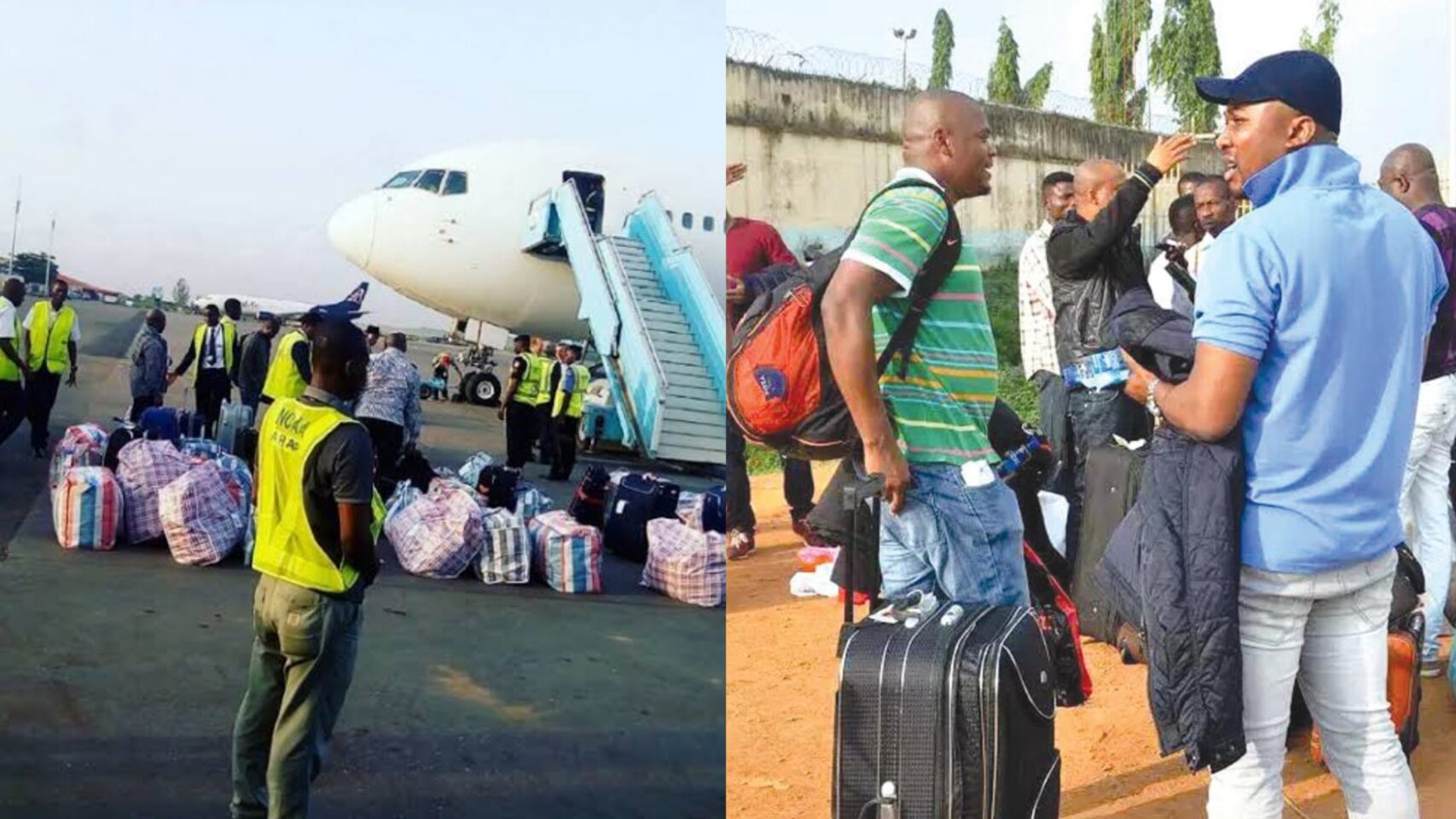
Japa on reverse lane as the United States Department of Homeland Security, DHS, has updated its list of Nigerians facing removal from the country, reducing the number to 112 and publishing their names and photographs online.
The latest list features Nigerians from different parts of the country and was published through the DHS official website.
Among those listed are Cletus Onyali, Olaolu Alabi, Marcus Unigwe, Mkpouto Etukudoh, Blessing Uchanma, Olaniyi Ojikutu, Richard Ugbah, Oluwamuyiwa Olawoye, Anthony Asanya and Ebele Agbasiele
Others identified on the list include Izuchukwu Okoye, Olufemi Olufisayo Olutiola, Abiemwense Obanor, Chibuzo Nwaonu, Oluchi Jennifer Chimdimma Chime, Ifeanyi Okoro, Oluwaseun Kassim, Quazeem Adeyinka and Talatu Dada.
The complete list contains 112 names, with the photographs and details of the other individuals available through the DHS online portal.
The publication comes amid stepped-up immigration enforcement by the US government, particularly involving undocumented immigrants and individuals with outstanding removal orders.
It also comes against the backdrop of efforts by US authorities to obtain increased cooperation from foreign governments in receiving their nationals who have been ordered to leave the United States.
Nigeria has previously faced pressure from the US over the repatriation of its nationals subject to deportation.
The updated publication provides public access to the identities and photographs of the Nigerians currently identified by DHS for removal from the United States.
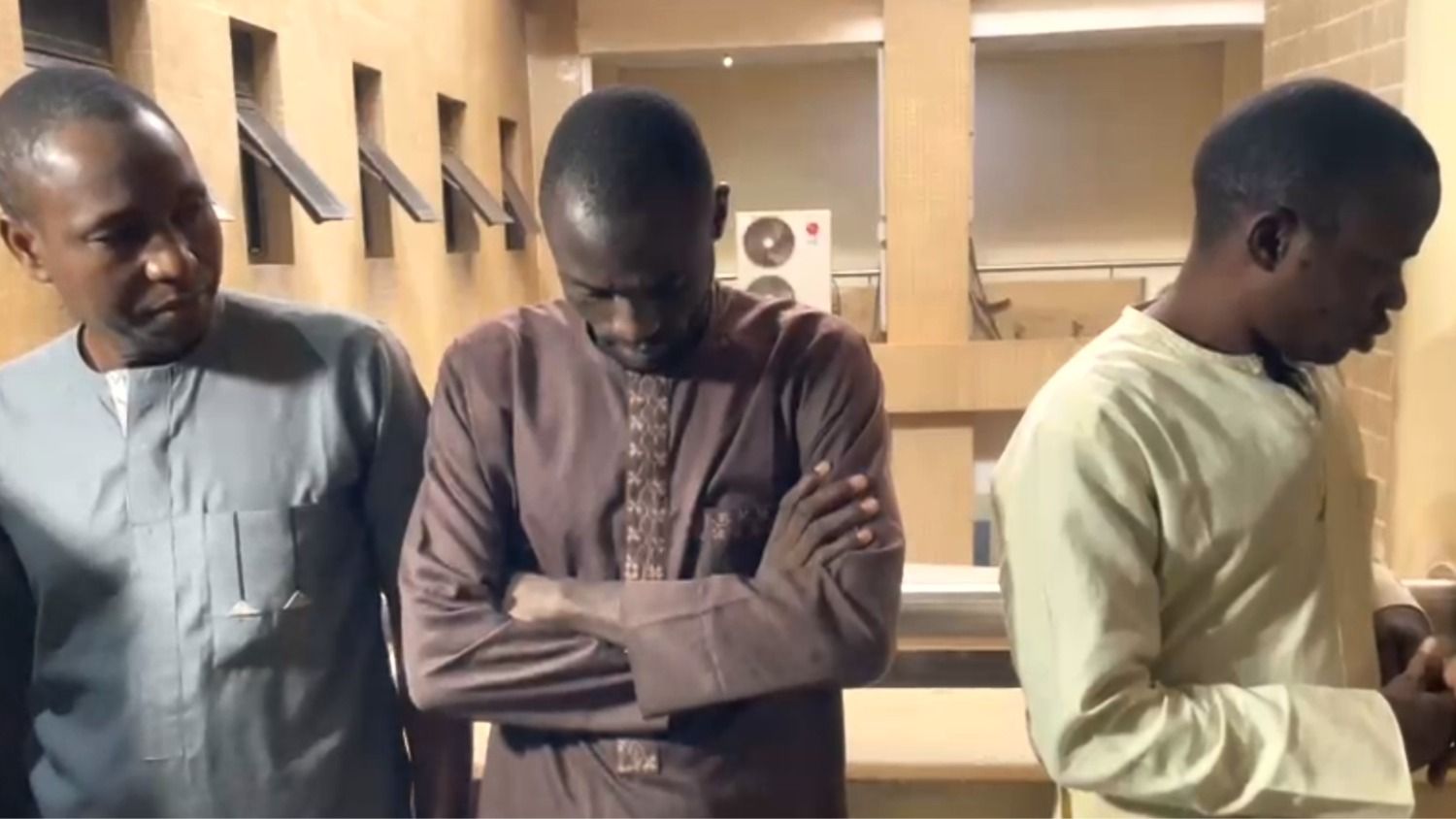
The Department of State Services, DSS, on Thursday re-arraigned five men accused of complicity in the May 15 kidnap of pupils and teachers in Oriire Local Government Area of Oyo State and the subsequent killing of two of the victims.
They were arraigned on a seven-count amended charge marked FHC/ABJ/CR/438/2026, filed by the DSS on behalf of the Federal Government.
The defendants, accused of being members of the Jama’atu Ansarul Muslimina fi-Biladis Sudan (ANSARU) terrorist group, are Mahmud Muhammad (aka Abu Bara’a, Abbas Mukhtar); Abubakar Abbas (aka Isah Adam, Mallam Mahmuda Al-Nigeri); Abdulrazak Umar (aka Abu Khalifa/Abu Khalid); Yunusa Musa (aka Abu Yunusa Bin Musa); and Shamsu Adamu Sani (aka Abu Itisar).
All five defendants, however, pleaded not guilty to the charges when they were read to them by the Registrar of the court.
The Director of Public Prosecutions of the Federation (DPPF), Mr Rotimi Oyedepo, SAN, who led the DSS legal team, applied for the immediate trial of the defendants in line with the provisions of the Administration of Criminal Justice Act, 2015.
He also applied for the names of witnesses lined up to testify in the trial to be shielded and for them to be permitted to wear masks to ensure their protection.
Following no objection from counsel to the defendants, Bala Dakum, Justice Salim Ibrahim granted the request of the DSS counsel.
At the time of filing this report, arrangements for the full-scale trial were being put in place.
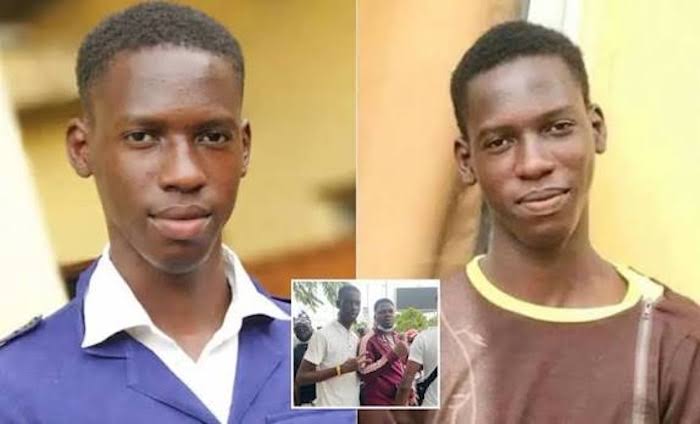
LAGOS — A post-mortem examination conducted by the Department of Pathology and Forensic Medicine at the Lagos State University Teaching Hospital (LASUTH) has confirmed that 20-year-old journalist Pelumi Onifade died from a penetrating firearm injury to the abdomen.
The finding is contained in a six-page autopsy report dated July 30, 2026, and submitted to the Lagos State Coroner’s Court investigating the circumstances surrounding the young journalist’s death during the October 2020 #EndSARS protests.
According to the report, Onifade died from massive haemoperitoneum, a severe accumulation of blood in the abdominal cavity, caused by a high-velocity projectile that penetrated his abdomen.
The forensic finding provides medical evidence establishing a gunshot injury as the cause of death, while the circumstances surrounding who fired the shot and the events that followed remain matters before the coroner’s proceedings.
How Onifade Died
Onifade was a 200-level History student of Tai Solarin University of Education (TASUED) and worked as an intern reporter with Gboah TV, a Lagos-based online news platform.
On October 24, 2020, during the nationwide #EndSARS protests against police brutality, he was assigned to cover an attempted looting at a government palliative storage facility in the Abattoir area of Oko-Oba, Agege, Lagos.
According to accounts presented by his family and colleagues, Onifade was wearing a press jacket and carrying reporting equipment when officers attached to the Lagos State Task Force opened fire while attempting to disperse the crowd.
He was reportedly struck by a bullet and subsequently taken away in a police van, commonly referred to as a Black Maria.
A colleague who was with him at the scene reportedly attempted to identify him as a journalist and explain that he was carrying camera equipment, but those efforts were unsuccessful.
Onifade was not seen alive again after that incident.
Family Searched Police Stations, Hospitals
Following his disappearance, his family and colleagues searched police stations, detention facilities and hospitals across Lagos in an attempt to establish his whereabouts.
According to the family, police authorities denied having him in custody.
Six days later, on October 30, 2020, the family located his body at the mortuary of Ikorodu General Hospital, where it had been registered as a “brought-in-dead” case under body number 1385.
The discovery triggered years of demands for an independent investigation into how the young journalist died and how his remains ended up in the mortuary.
DNA Test Identified the Body
The identity of the body was subsequently confirmed through forensic DNA testing.
Results from the Lagos State DNA and Forensic Centre established a match between the unidentified body bearing tag number 1385 and reference samples obtained from Onifade’s parents.
The DNA confirmation provided a crucial breakthrough after years of uncertainty surrounding the whereabouts and identity of the missing journalist.
Court Ordered Coroner’s Inquest
The search for accountability later moved into the courts.
In July 2024, Justice Ayokunle Olayinka Faji of the Federal High Court in Lagos ordered the Lagos State Government and the police to conduct a coroner’s inquest into Onifade’s death.
The objective of the inquest is to establish the circumstances surrounding his death and determine the facts surrounding the actions of the security personnel involved.
The ongoing proceedings before the Lagos State Coroner’s Court are being presided over by Magistrate Temitope Oladele.
Following the submission of the post-mortem report, the court has directed key witnesses, including police personnel who were on duty in the Oko-Oba area on October 24, 2020, to appear and testify.
Rights Groups Demand Accountability
Media Rights Agenda (MRA), which has supported the Onifade family in its legal efforts, has described the post-mortem findings as significant evidence in the case.
Rights activists, journalist unions, and the deceased’s family continue to demand the public prosecution of the police officers who fired the shot and those who supervised the deployment during the Lagos #EndSARS demonstrations.

Japa on reverse lane as US releases names, photos of 112 Nigerians on deportation list

Oyo kidnap: Five defendants plead not guilty to seven count charges

Autopsy Confirms #EndSARS Journalist Pelumi Onifade Died From Gunshot Wound




-

 News15 hours ago
Anambra Govt Releases Records Of Alleged Unpaid Debts By Peter Obi During Tenure As Governor
-

 News15 hours ago
ASUU demands 26% education funding, faults FG over 15% compromise
-

 News15 hours ago
Peter Obi Weighs In On Dangote Refinery Shares
-

 News11 hours ago
Wike is an asset to APC, should not be embarrassed – Jibrin defends FCT Minister(Video)
-

 News14 hours ago
2027: Atiku, Amaechi Secretly Buying Dangote Refinery Shares – APC Chieftain Claims
-
 News15 hours ago
‘Educated Illiterate’ – Soludo Under Heavy Attack After Releasing Alleged Records Of Peter Obi’s Debts