News
Reps to Fund 60% of Tractor Costs in New Push to Boost Farming
- /home/naijuinz/public_html/wp-content/plugins/mvp-social-buttons/mvp-social-buttons.php on line 27
https://naijablitznews.com/wp-content/uploads/2026/05/download.jpeg&description=Reps to Fund 60% of Tractor Costs in New Push to Boost Farming', 'pinterestShare', 'width=750,height=350'); return false;" title="Pin This Post">
- Share
- Tweet /home/naijuinz/public_html/wp-content/plugins/mvp-social-buttons/mvp-social-buttons.php on line 72
https://naijablitznews.com/wp-content/uploads/2026/05/download.jpeg&description=Reps to Fund 60% of Tractor Costs in New Push to Boost Farming', 'pinterestShare', 'width=750,height=350'); return false;" title="Pin This Post">
By Gloria Ikibah
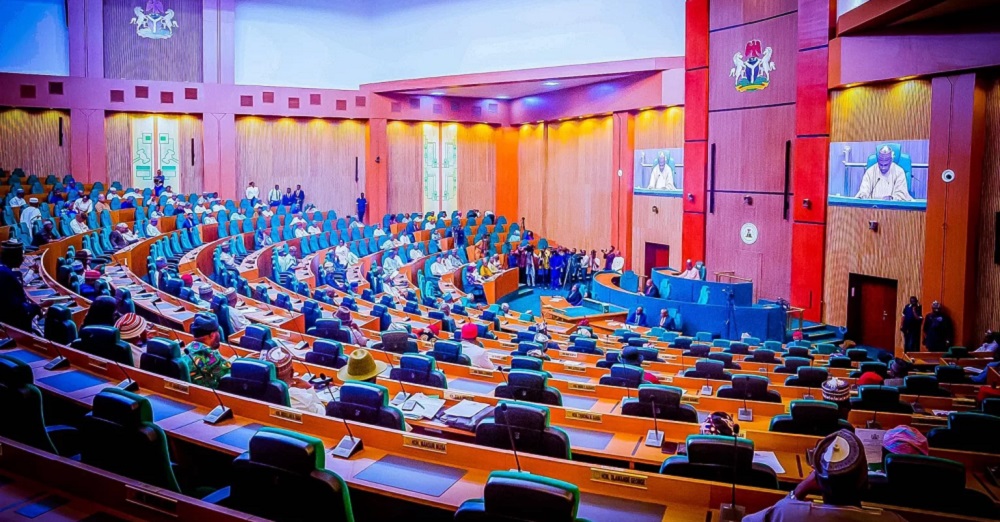
A new push to modernise agriculture and tackle poverty is taking shape in the House of Representatives, with lawmakers set to fund a significant share of a tractor scheme aimed at expanding mechanised farming across Nigeria.
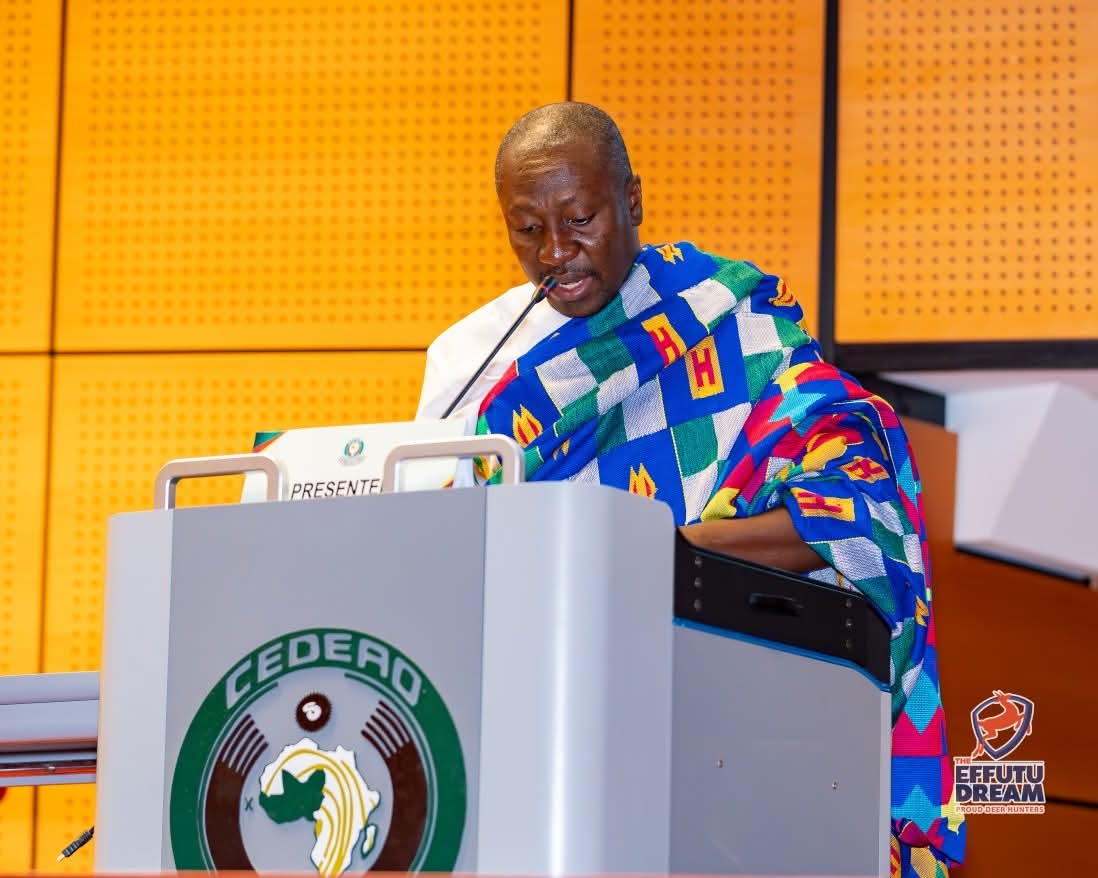
Managing Director of the Bank of Agriculture, Ayo Sotinrin, unveiled the constituency-based initiative during a presentation to the House, outlining a model that places legislators at the centre of efforts to improve access to farm equipment in rural areas.

Under the arrangement, members of the House will cover roughly 60 per cent of the cost of each tractor, which will then be deployed within their constituencies as communal assets rather than private property. The goal is to make mechanisation more widely available to farming communities that currently rely heavily on manual labour.
The scheme is part of a broader strategy by the Federal Government and the Bank of Agriculture to scale up food production, reduce poverty levels and address insecurity, particularly in agrarian regions. It is expected to support cultivation across up to 1.2 million hectares of farmland.
Sotinrin explained that the model is designed to avoid the concentration of tractors in the hands of a few individuals. Instead, it promotes a service-based approach, where operators use the machinery to cover large areas of farmland and serve multiple farmers within a community.
With a large proportion of Nigeria’s rural population engaged in agriculture, the initiative is seen as a practical step towards improving productivity, strengthening livelihoods and easing some of the economic pressures facing farming households.
Hesaid: “The idea is simple. A tractor in the hands of a service provider can mechanise up to 600 hectares annually. With 2,000 tractors, we can reach about 1.2 million hectares. That is how to impact millions of farmers, not just a few”.
Sotinrin said BOA will partner with lawmakers to establish farming hubs in constituencies. These hubs will integrate mechanisation services, input supply, irrigation, aggregation of produce, and access to banking services.
Briefing the newsmen after his presentation, the MD of BOA noted that the bank has digitised its processes, enabling farmers even those without Bank Verification Numbers (BVN) or National Identification Numbers (NIN)—to be onboarded, profiled and gradually integrated into the financial system.
He explained that the bank has moved from direct microcredit to smallholder farmers, opting instead to work through aggregators who provide inputs, technical support and extension services.
“We don’t give cash loans to small farmers anymore. Aggregators help manage the entire farming cycle—from inputs to harvest ensuring better yields and accountability,” he added.
Under the new structure, farmers are expected to increase productivity from an average of one to two tonnes per hectare to higher outputs, supported by improved inputs and irrigation that could enable multiple farming cycles annually.
Sotinrin argued that improved earnings from farming will help lift rural populations out of multidimensional poverty and reduce insecurity.
“If farmers can earn N3m to N4m per cycle, they will stay on their farms and not engage in criminal activities. It’s a natural stabiliser,” he stated.
He also revealed that the programme would be extended to Internally Displaced Persons (IDPs), with tailored support to help them return to productive livelihoods.
On financing, Sotinrin clarified that the tractors are not grants, stressing that beneficiaries must pay for them, while repayments would be recycled to procure more equipment.
He noted that the tractors are priced between N43m and N50m significantly lower than market rates and that lawmakers are expected to pay outright, albeit at subsidised rates.
To further ensure sustainability, he said plans are underway to establish a tractor assembly plant in the Federal Capital Territory in partnership with Belarusian firms, alongside seven mechanisation service centres across the country for maintenance and training.
Sotinrin described the initiative as “the largest mechanisation programme in Africa,” adding that it is structured to be self-sustaining through a continuous cycle of investment and reinvestment.
According to him, “this is not about distributing tractors; it’s about building an ecosystem that transforms agriculture at scale.”
News
2027 election: We’ll all battle to the finishing point, I won’t just surrender -Tinubu tells Atiku, others
President Bola Tinubu has said 2027 presidential election is going to be a battle he is ready to fight till the end.
He warned opposition figures, including former Vice President Atiku Abubakar, that they must defeat him through the ballot box if they hope to unseat him.
The President made the remarks on Tuesday while receiving members of the Catholic Bishops Conference of Nigeria at the Presidential Villa in Abuja.
Speaking during the meeting, Tinubu said he was prepared for a fair democratic contest and insisted that politics is a competitive process where every contestant has an equal opportunity.
“Those who would take it from me will try. They will try. All is fair in politics, and there is equal opportunity. I won’t offer them a red carpet. I won’t offer them the leash to tie me at home. No, we will wrestle each other to the finishing point. That’s the truth.
That is fair in politics,” the President said. Tinubu also rejected allegations that the Independent National Electoral Commission (INEC) is biased, maintaining that the electoral body has remained impartial.
According to him, political opponents questioning the commission’s neutrality are merely expressing fears over their own political prospects.Politics “INEC is neutral. It has never, ever intimidated anybody. If political opponents are crying wolf, then they are afraid of their own shadows and the uncertainty in the company they keep,” he stated.
The President used the meeting to defend the economic reforms introduced by his administration, saying they were beginning to produce positive results despite the initial hardship experienced by Nigerians.
He cited the uninterrupted academic calendar in public universities as one of the administration’s notable achievements, pointing out that the absence of strikes by the Academic Staff Union of Universities (ASUU) had brought relief to students and their families. “None of your children in university today—and I would say they are all your children because you are Reverend Fathers—can say a four-year course is not four years.
ASUU is not on strike. They are not bringing agony to your homes. Is that not an answer to our prayers? To me, that’s an answer,” Tinubu said. The President acknowledged that his administration inherited significant economic challenges from the government of former President Muhammadu Buhari but insisted that the country had now achieved stability and was on the path to economic recovery. “This government has stabilized, and there is prosperity on the horizon. The quality of life is improving,” he said. “I inherited it. I didn’t run away. I asked for this job. I’m in it.”
News
Civil War Row: Plateau Govt Insists Mutfwang Spoke in Spirit of Reconciliation Engagement
The Plateau State Government has defended Governor Caleb Manasseh Mutfwang over the controversy surrounding his recent remarks during an engagement with leaders of the Igbo community, insisting that his comments have been misrepresented and taken out of context.
In a statement issued on Wednesday by the Director of Press and Public Affairs to the Governor, Dr. Gyang Bere, the government said Mutfwang’s remarks were made in the spirit of reconciliation, appreciation and national unity, contrary to interpretations suggesting otherwise.
The clarification follows mixed reactions to comments made by the governor during a courtesy visit by leaders of the Igbo community to the Government House in Jos, with critics alleging that he apologised over the role of Plateau indigenes during the Nigerian Civil War.
Responding to the criticism, the government said the governor neither sought to diminish the experiences of any ethnic group nor distort the historical realities of the civil war.
It maintained that Mutfwang’s remarks were intended to acknowledge the resilience, enterprise and contributions of the Igbo community to the economic and social development of Plateau State while encouraging peaceful coexistence among Nigerians.
“The scars of that period remain part of our national history and deserve to be remembered with empathy, honesty and sensitivity,” the statement said, adding that the lessons of the civil war should strengthen national unity rather than reopen old wounds.
The government also highlighted Plateau’s long history of accommodating people from different parts of the country, describing the state as one of Nigeria’s foremost examples of peaceful coexistence.
According to the statement, successive administrations, beginning with Joseph Dechi Gomwalk and later Solomon Lar, laid the foundation for an inclusive society in which the Igbo community has thrived and contributed significantly to commerce, education, healthcare and industry.
The statement further aligned the state’s inclusive tradition with former Head of State Yakubu Gowon’s post-war “No Victor, No Vanquished” policy and the programme of Reconciliation, Rehabilitation and Reconstruction, describing the approach as a globally recognised model for post-conflict healing.
The government said Governor Mutfwang remained committed to preserving that legacy through policies that promote dialogue, reconciliation and peaceful coexistence.
It urged Nigerians to disregard what it described as distorted interpretations of the governor’s remarks, warning that such narratives could inflame ethnic divisions and distract from the broader message of unity and national cohesion.
Reaffirming the administration’s position, the government said Mutfwang believes every Nigerian, regardless of ethnicity, religion or place of origin, deserves dignity, equal opportunity and a sense of belonging, adding that those principles will continue to guide his leadership of Plateau State.
News
Mabushi bus terminal kick-starts(Watch)
Yes this Mabushi bus terminal in Abuja has kick started for passengers to use.
Watch below:
-
News21 hours agoJust in: Dangote gives ₦18.7 trn of his ₦56.2trn wealth to help the needy
-
Metro11 hours agoNavy Arrests Vessel With 650 Metric Tonnes Of Stolen Crude
-
Metro11 hours agoGunmen Kill Serving Army Colonel In Abuja, Injure Wife, Two Others
-
Politics11 hours agoOsun 2026: Accord Is Like Keke Napep Facing Trailer – APC Mocks Adeleke
-
Sports11 hours agoSuper Falcons Receive Rewards For Historic WAFCON 2024 Triumph
-
Sports11 hours agoWAFCON 2026: NSC Announces $5,000-per-goal Incentive For Super Falcons
-
News21 hours agoPanic over mass arrest of Onitsha market leaders as Intersociety raises alarm, petitions IGP
-
News11 hours agoTinubu Meets New NBA Chair, Badejo-Okusanya