News
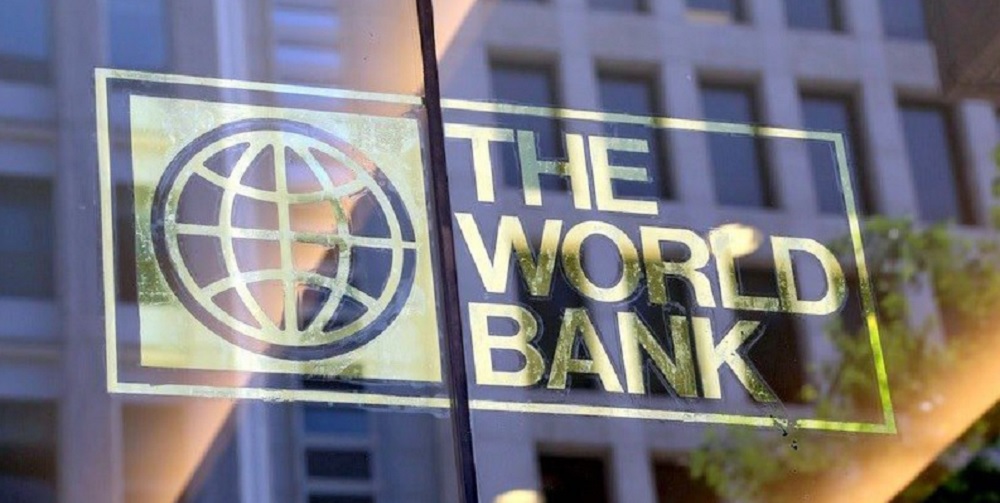
FG in Talks With World Bank For Fresh $1.25bn Loan
- /home/naijuinz/public_html/wp-content/plugins/mvp-social-buttons/mvp-social-buttons.php on line 27
https://naijablitznews.com/wp-content/uploads/2025/04/World-Bank.jpg&description=FG in Talks With World Bank For Fresh $1.25bn Loan', 'pinterestShare', 'width=750,height=350'); return false;" title="Pin This Post">
- Share
- Tweet /home/naijuinz/public_html/wp-content/plugins/mvp-social-buttons/mvp-social-buttons.php on line 72
https://naijablitznews.com/wp-content/uploads/2025/04/World-Bank.jpg&description=FG in Talks With World Bank For Fresh $1.25bn Loan', 'pinterestShare', 'width=750,height=350'); return false;" title="Pin This Post">
The Federal Government is currently in talks with the World Bank for a new $1.25 billion loan, according to a document obtained by Channels Television.

The document titled ‘Nigeria Actions for Investment and Jobs Acceleration’ noted that the proposed loan will finance ongoing economic reforms, job creation, and competitiveness.
According to the document, talks are at the critical stage for the loan facility expected to be presented for approval on June 26, 2026. The loan has progressed beyond the initial concept and appraisal phases.

If approved, it will come off as the second-largest loan facility after the approval of the ‘$1.5bn Reforms for Economic Stabilisation to Enable Transformation Development Policy Financing’ approved by the Bank in June 2024.
The borrower is listed as the Federal Republic of Nigeria, while the Federal Ministry of Finance will serve as the implementing agency.
Nigeria’s external debt as of December 31, 2025, stood at $51.86bn, while its total public debt is currently at $110.97bn.
The loan is now at the decision-meeting stage of the World Bank’s project cycle, a point at which the lender’s management reviews the final appraisal package and determines whether the project should proceed to the Board of Executive Directors for approval.
This stage comes after appraisal and negotiations have been concluded, with key policy actions, financing terms, and reform commitments already agreed in principle between the borrower and the World Bank team.
In the World Bank process, the decision meeting represents a near-final internal clearance, after which the project is prepared for formal Board consideration, where final approval is granted.
The World Bank document stated, “The review did authorise the team to appraise and negotiate,” meaning the project has successfully passed earlier internal checks and is advancing toward final approval.
According to the World Bank, the loan is designed “to support the government’s efforts to expand access to finance, digital, and electricity services, and strengthen competitiveness through tax, trade, and agriculture reforms.”
The World Bank has approved about $9.35bn in loans and credits for Nigeria between June 2023 and May 2026.
These approvals span multiple sectors, including power, education, healthcare, agriculture, social protection, renewable energy, MSME financing, and economic reform support.
Key packages include the $2.25bn RESET and ARMOR reform financing in June 2024, $1.57bn for HOPE and SPIN programmes in September 2024, and $1.08bn for education and resilience programmes in March 2025.
The development comes days after the Accountant-General of the Federation, Dr Shamseldeen Ogunjimi, warned that Nigeria may reject loan facilities from the World Bank if delays in approval and disbursement persist for more than six months.
A press statement last week by the Director of Press and Public Relations at the Office of the Accountant-General of the Federation, Bawa Mokwa, stated that Ogunjimi, who spoke in Abuja during a courtesy visit by a World Bank delegation led by Mrs Treed Lane, stressed that Nigeria expects timely processing of funding requests, given that the facilities are loans and not grants.
He said, “If approvals take more than six months, the Nigerian Government may no longer honour such arrangements,” highlighting concerns over bureaucratic delays in accessing development financing.
The AGF noted that as a responsible borrower, Nigeria should not be subjected to prolonged approval processes that could affect project execution timelines and broader development objectives. He therefore urged the World Bank to “expedite the approval and disbursement of project funds to Nigeria” to support the country’s priorities.
Ogunjimi emphasised that the loans carry repayment obligations, making it imperative that disbursement processes align with project schedules and fiscal planning frameworks.
News
Further plans underway to increase salaries of military personnel -Defence Minister, Musa
Minister of Defense, General Christopher Musa, rtd, has said President Bola Tinubu will soon announce salary increment for personnel of the Nigerian Armed Forces.
In a statement by his media aide, Leah Katung-Babatunde, the minister said the move is part of the Federal Government’s sustained commitment to improving troop welfare and rewarding their sacrifices to the nation.
He recalled previous welfare benchmarks, noting that military pay was successfully raised from N49,000 to N100,000 during his tenure as Chief of Defence Staff.
General Musa stressed that active steps are currently underway to secure an even better package for the troops.
“I want to state here that a few weeks ago, I mentioned that soldiers are now receiving N100,000. When I was Chief of Defence Staff, soldiers were receiving N49,000.
About two years ago, I pushed for an increase to N100,000, and that was achieved. We are, however, making further efforts to increase it again,” Musa stated.
News
After 12years abandonment: Tinubu begins work on Nnamdi Azikiwe road linking GEJ road in FCT(Video)
This Road with two Interchange (Bridge) linking Nnamdi Azikiwe Road (to Area 1 and Apo), Goodluck Jonathan Road (to Galadimawa) was awarded in December 2014.
12 years after, the government of President Tinubu has commenced work on the road project and the FCT Minister, Nyesom Wike, was at the site today to see things for himself.
News
Xenophobic Attacks: Details of What Nigeria, South Africa Discussed
The Federal Government has demanded urgent action from South Africa to end recurring attacks on Nigerians and other African nationals, disclosing that 98 Nigerians have been killed in mob and hate-related incidents in the country since 2022.
The Minister of State for Foreign Affairs, Ambassador Sola Enikanolaiye, made the demand in Abuja on Monday while receiving South Africa’s Minister of International Relations and Cooperation, Ronald Lamola.
Lamola was sent to Nigeria as a special envoy by South African President Cyril Ramaphosa amid growing diplomatic tension over repeated attacks on foreign nationals.
The envoy delivered a message from Ramaphosa to President Bola Tinubu before holding talks with senior Nigerian officials led by Enikanolaiye.Executive Branch
Enikanolaiye said Tinubu directed the meeting to allow both countries to frankly discuss what he described as persistent “Afrophobic attacks” against Nigerians and other African migrants in South Africa.
“We have seen a pattern that has become a concern to the Nigerian government,” he said.
The minister cited outbreaks of anti-migrant violence dating back to 1995 and said official records showed that 98 Nigerians had been killed in mob attacks and hate-related violence in South Africa since 2022.
He warned that the continued attacks could damage the long-standing strategic relationship between Africa’s two largest economies.
Enikanolaiye urged Pretoria to take immediate and concrete measures to protect Nigerians and other foreign nationals legally residing in the country.Politics
The minister disclosed that the Federal Government had evacuated more than 1,500 Nigerians from South Africa following previous attacks.
He described receiving some of the evacuees as an emotional experience, noting that many returned home without their possessions.
“I shed tears when I received the first batch of evacuees. I saw children, women and the elderly returning home with almost nothing after their properties had been looted and destroyed. That is not the Africa we want,” he said.
Enikanolaiye said several victims were lawful residents and raised concerns over the alleged failure of South African security personnel to intervene during some attacks.
He argued that such incidents raised questions about state responsibility and the safety of foreigners living in South Africa.
The minister stressed that Nigeria would not defend citizens involved in drug trafficking or other criminal activities.
He, however, insisted that suspects must be arrested and prosecuted through the legal system rather than subjected to mob violence.
“Nigeria will not support drug traffickers or any criminal activity, but those accused of crimes must be treated in accordance with the rule of law, South Africa’s Constitution and international human rights standards,” Enikanolaiye said.
He maintained that criminal allegations should not be used to justify attacks on Nigerians and other migrants.
Enikanolaiye reminded the South African delegation of Nigeria’s role in the struggle against apartheid and the subsequent cooperation between both countries.
He recalled their collaboration in transforming the Organisation of African Unity into the African Union and promoting the New Partnership for Africa’s Development.
Despite the current tension, the minister reaffirmed Nigeria’s commitment to maintaining cordial relations with South Africa.
He expressed hope that continued dialogue would rebuild confidence, strengthen bilateral relations and protect the principle of African solidarity.
Responding, Lamola said his visit was aimed at reaffirming the historic friendship between Nigeria and South Africa while addressing concerns over violence against foreign nationals.
He acknowledged Nigeria’s contribution to the struggle against apartheid, saying South Africans remained grateful for the sacrifices made.
“We remain deeply indebted to the people of Nigeria for their sacrifice,” Lamola said.
He added that Ramaphosa and the South African government remained opposed to xenophobia, racism, discrimination, homophobia and other forms of intolerance.
The envoy, however, maintained that South Africa had a sovereign responsibility to enforce its immigration laws and combat irregular migration and criminal activities.
He identified drug trafficking, internet fraud and other offences as challenges the government was determined to address.
Lamola described migration as a continental challenge requiring cooperation among African countries under the African Union’s framework on orderly and regular migration.
“We believe that Nigeria and South Africa have a shared responsibility to respond to these challenges within the African continent,” he said.
He added that further details of Ramaphosa’s message to Tinubu would be discussed during a closed-door session.
-
News10 hours agoUK Eases Student Visa Rules for Three African Nations
-
News21 hours agoFugitive drug kingpin, ex-int’l footballer bag 24 years jail term for cocaine importation(Photos)
-
News22 hours agoReps Order IGP to Produce Alleged Fake Presidential Council DG as Probe Uncovers Fresh Forgery Claims
-
News21 hours agoAGF Reveals Alleged Hijacked State House Letter Helped Fake Agency Get Recognition
-
News19 hours agoJust in: Ahead 2027, Kano NDC Senators Meet Tinubu over Planned Defection to APC
-
News10 hours agoStolen BVAS, PVCs Will Be Replaced, Osun Election Safe – INEC
-
News24 hours agoNo Rest Until Key FCT Projects Are Delivered, Wike Declares(Photos)
-
News19 hours agoReps Back President Tinubu’s Economic Reforms, Subject 13 Commerce Bills to Public Scrutiny