Economy
CBN records $1bn daily forex market turnover

- /home/naijuinz/public_html/wp-content/plugins/mvp-social-buttons/mvp-social-buttons.php on line 27
https://naijablitznews.com/wp-content/uploads/2024/02/Olayemi-Cardoso.jpg&description=CBN records $1bn daily forex market turnover', 'pinterestShare', 'width=750,height=350'); return false;" title="Pin This Post">
- Share
- Tweet /home/naijuinz/public_html/wp-content/plugins/mvp-social-buttons/mvp-social-buttons.php on line 72
https://naijablitznews.com/wp-content/uploads/2024/02/Olayemi-Cardoso.jpg&description=CBN records $1bn daily forex market turnover', 'pinterestShare', 'width=750,height=350'); return false;" title="Pin This Post">


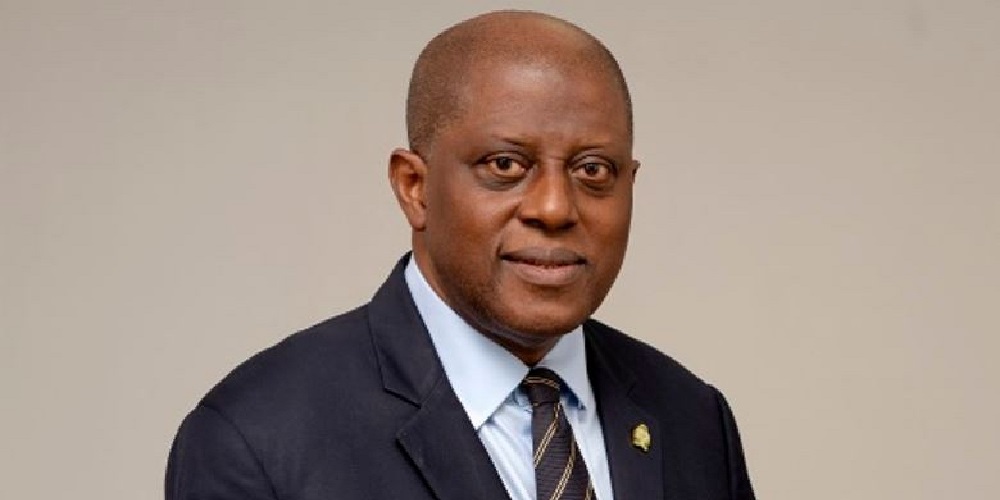
Governor of the Central Bank of Nigeria, Mr. Olayemi Cardoso, has disclosed that Nigeria’s foreign exchange market has recorded daily transactions of up to $1 billion on several occasions in recent months, describing the development as a major improvement in market liquidity and investor confidence.
Cardoso spoke during the official launch of the 4th Edition of the Central Bank’s Foreign Exchange Manual in Abuja, where he said reforms introduced by the apex bank have helped transform the foreign exchange market from a heavily intervention-driven system into a more transparent and active market.
According to him, average daily turnover in the market has risen significantly since the beginning of the current administration.
He explained that when the administration came into office, the foreign exchange market recorded average daily turnover of about $100 million.
However, he said the figure has now increased to between $400 million and $600 million daily, with the market already achieving the $1 billion mark on several trading days.
“When this administration took over, the average turnover per day was about $100 million. Now it has gone to an average of between $400 million and $600 million per day,” Cardoso said.
He added that the long-term target is to consistently achieve daily turnover of about $1 billion in the foreign exchange market.
According to the CBN governor, the improvement reflects growing confidence among market participants and increasing liquidity in the system.
Cardoso explained that Nigeria’s foreign exchange market has become more dynamic because participants now feel more confident entering and exiting the market without unnecessary restrictions.
He said the market has moved away from the previous situation where traders and investors depended mainly on periodic interventions from the Central Bank.
“We’ve gone from a situation where it was more or less a one-way market where the Central Bank came in, intervened and went away, and everybody waited for the next intervention,” he stated.
According to him, the market is now more transparent and active, encouraging greater participation from banks, investors and other operators.
Cardoso noted that deeper liquidity in the foreign exchange market would strengthen the economy and improve market stability over time.
He also stressed that foreign reserves should primarily serve as reserves rather than being constantly used to defend or fund the market.
The CBN governor explained that the revised Foreign Exchange Manual was introduced to improve clarity, consistency and efficiency in the management of the market.
He said the new manual was developed after extensive consultations with banks and other stakeholders to ensure that industry concerns and operational challenges were properly addressed.
According to him, the revised guidelines reflect international best practices and are designed to strengthen transparency and credibility in the foreign exchange market.
Cardoso urged banks, exporters, importers, government agencies and private sector operators to comply fully with the provisions of the new manual.
He stated that maintaining stability and credibility in the foreign exchange market requires collective responsibility and cooperation among all stakeholders.
The governor also disclosed that the revised manual would take effect from June 1, 2026, and would be distributed free of charge to authorised dealers to encourage compliance and proper implementation.
He warned market participants against any form of misconduct or abuse of the foreign exchange system, stressing that the apex bank would strengthen monitoring mechanisms to ensure fairness, accountability and consistency across the market.
Cardoso expressed confidence that the reforms being implemented by the CBN would continue to deepen the foreign exchange market, improve liquidity and support long-term economic stability in the country.
Earlier in his address, Deputy Governor, Economic Policy Directorate of the Central Bank of Nigeria, Dr. Muhammad Sani Abdullahi spoke on some of the major policy changes introduced in the revised manual.
Abdullahi said the CBN has harmonised the disbursement structure for Personal Travel Allowance and Business Travel Allowance with the revised Bureau De Change guidelines. Under the new arrangement, he said 75 per cent of PTA and BTA transactions would be processed electronically while only 25 per cent could be paid in cash.
He also disclosed that the allowable advance payment for imports has been increased from 15 per cent to 30 per cent.
Other major changes include free processing of Form NXP, new provisions for service exports, documentation requirements for technology companies’ remittances, and the introduction of guidelines for PAPSS transactions aimed at supporting regional payments and intra-African trade.
Abdullahi further said the revised manual allows payments for services and fees in foreign currency where receipts are earned in foreign currency. He added that the CBN has introduced Non-Resident Investment Accounts and Non-Resident Ordinary Accounts as part of efforts to improve market operations.
The deputy governor also disclosed that the revised manual now permits payment of tuition fees for undergraduate and postgraduate studies up to a maximum of $25,000 per semester.
He explained that holders of export proceeds and ordinary domiciliary accounts would now enjoy easier access to their funds, including transfers between banks for eligible transactions. According to him, foreign companies operating in Nigeria’s extractive sector would now be allowed full repatriation of export proceeds.
Abdullahi also said the mandatory requirement for Form A in certain transactions involving ordinary domiciliary accounts has been removed, although banks would still be expected to verify the legitimacy of such transactions.
He added that the revised framework now includes provisions aimed at stopping the front-loading of foreign exchange purchases. According to him, the reforms collectively seek to modernise Nigeria’s foreign exchange system, support legitimate business activities, improve efficiency and deepen confidence in the market.
Economy
Oyedele Delivers ₦39.63bn Lifeline to 24,814 Pensioners as PTAD Clears Long-Standing DBS Liabilities

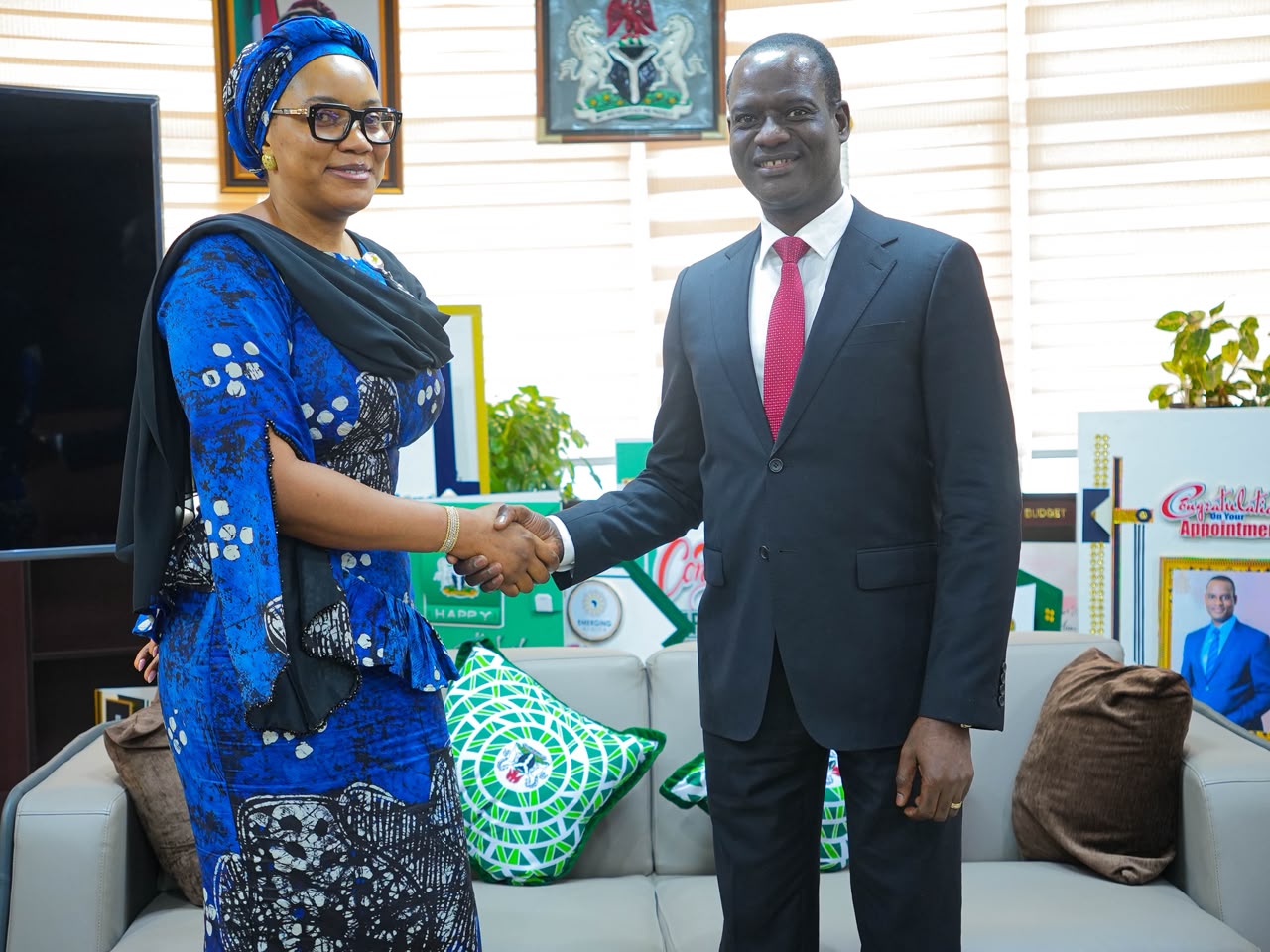
L:R: Director General of PTAD, Mrs Tolulope Odunaiya in a warm handshake with the Minister of Finance, Mr Taiwo Oyedele in Abuja.
The Honourable Minister of Finance and Coordinating Minister of the Economy, Mr. Taiwo Oyedele, has reaffirmed his commitment to improving the welfare of Nigerian pensioners with the successful disbursement of ₦39.63 billion to 24,814 eligible Defined Benefit Scheme (DBS) pensioners, ending years of anxious waiting for thousands of retirees.
Working under the supervision of the Federal Ministry of Finance, the Pension Transitional Arrangement Directorate (PTAD) carried out the payments following the Minister’s directive to prioritise the settlement of verified pension liabilities, bringing relief to beneficiaries across the country.
Mr. Oyedele said the payment reflects the administration’s determination to ensure that retired public servants receive the benefits they earned through decades of dedicated service.
“A nation that values service must also honour those who gave their productive years in its service. This payment is about people, not just figures. It is about restoring confidence, rewarding sacrifice and giving thousands of pensioners and their families the reassurance that they have not been forgotten.”
The Minister explained that the disbursement covered three categories of outstanding pension obligations that had accumulated over the years.
According to him, PTAD paid ₦25,053,703,604.12 to clear the outstanding 35-month pension liability owed to 9,675 eligible Defined Benefit Scheme pensioners of the defunct NITEL/MTEL.
The Directorate also disbursed ₦9,481,886,576.53, representing the initial 50 per cent payment of the Back End Computation (BEC) arrears due to 3,959 eligible PHCN Defined Benefit Scheme pensioners.
In addition, PTAD paid ₦5,094,784,054.27, representing the outstanding 50 per cent balance of the 10.66 per cent and 12.95 per cent pension increment arrears due to 11,180 eligible Defined Benefit Scheme pensioners of the defunct Assurance Bank, NICON Insurance, NITEL and People’s Bank of Nigeria.
For many of the beneficiaries, the payments mark the end of years of uncertainty. They provide the means to meet pressing family needs, pay medical bills, support loved ones and enjoy retirement with greater peace of mind.
Mr. Oyedele said government remains mindful of the real lives behind every pension payment.
“Behind every approved payment is a retiree who served this country faithfully, a family that has waited patiently and a story that deserves a positive ending. We will continue to support measures that improve the lives of our senior citizens while maintaining fiscal discipline and accountability.”
The Minister commended the management and staff of PTAD for the prompt implementation of the directive, describing the successful disbursement as evidence of what can be achieved when institutions work together in the public interest.
“PTAD has demonstrated professionalism in implementing this exercise. The Ministry will continue to provide the policy direction and support required to strengthen pension administration and ensure that verified obligations are settled as resources become available.”
The Director-General of PTAD, Mrs. Tolulope Odunaiya, said the Directorate remained focused on delivering efficient pension administration and expressed appreciation to the Honourable Minister for his leadership and support, which made the release and prompt disbursement of the funds possible.
The latest payment represents another important step in the Federal Government’s efforts to improve the welfare of retirees and ensure that public institutions deliver meaningful outcomes for Nigerians under President Bola Ahmed Tinubu’s Renewed Hope Agenda.

The Black Market Dollar-to-Naira Exchange Rate for 3rd July 2026 Can Be Accessed Below.
NOTE: The exchange rate changes hourly. It depends on the volume of dollars available and the Demand. This means…you can buy or sell 1 dollar at a certain rate, and the price can change (high or low) within hours.
The official naira black market exchange rate in Nigeria today, including the Black Market rates, Bureau De Change (BDC), and CBN rates.
Please note that the exchange rate is subject to hourly fluctuations influenced by the supply and demand of dollars in the market.
What’s the dollar to naira black market today, 3rd July 2026?
The exchange rate for a dollar to naira at Lagos Parallel Market (Black Market) players sell a dollar for ₦1408 and buy at ₦1396 on Friday, 3rd July, 2026, according to sources at Bureau De Change (BDC).
Please note that the Central Bank of Nigeria (CBN) does not recognize the parallel market (black market), as it has directed individuals who want to engage in Forex to approach their respective banks.
Dollar to Naira Black Market Rate Today
Dollar to Naira (USD to NGN) Black Market Exchange Rate Today
Selling Rate ₦1408
Buying Rate ₦1396
Dollar to Naira CBN Rate Today
Dollar to Naira (USD to NGN) CBN Rate Today
Highest Rate ₦1373
Lowest Rate ₦1360
The Black Market Dollar-to-Naira Exchange Rate for 1st July 2026 Can Be Accessed Below.
NOTE: The exchange rate changes hourly. It depends on the volume of dollars available and the Demand. This means…you can buy or sell 1 dollar at a certain rate, and the price can change (high or low) within hours.
The official naira black market exchange rate in Nigeria today, including the Black Market rates, Bureau De Change (BDC), and CBN rates.
Please note that the exchange rate is subject to hourly fluctuations influenced by the supply and demand of dollars in the market.
What’s the dollar to naira black market today, 1st July 2026?
The exchange rate for a dollar to naira at Lagos Parallel Market (Black Market) players sell a dollar for ₦1400 and buy at ₦1390 on Wednesday, 1st July, 2026, according to sources at Bureau De Change (BDC).
Please note that the Central Bank of Nigeria (CBN) does not recognize the parallel market (black market), as it has directed individuals who want to engage in Forex to approach their respective banks.
Dollar to Naira Black Market Rate Today
Dollar to Naira (USD to NGN) Black Market Exchange Rate Today
Selling Rate ₦1400
Buying Rate ₦1390
Dollar to Naira CBN Rate Today
Dollar to Naira (USD to NGN) CBN Rate Today
Highest Rate ₦1385
Lowest Rate ₦1376

Disclaimer: NDLEA alerts public on fraudulent auction offers impersonating officials

2027 reggae dance: New ADC presidential candidate emerges

ANGER: Three Brothers Face Murder Charge for Beating man to death for dating Their Mom




-

 News14 hours ago
Falana To Defend Man Accused Of Forging Tinubu’s Appointment Letter
-

 News14 hours ago
Again, Dangote Refinery slashes price of petrol
-

 News14 hours ago
Read details of meeting between IGP Disu and exIGs
-

 News14 hours ago
Fake agency rumpus: Prince Adeyemi vows to open a can of worms in court
-
 News8 hours ago
FG Clears Inherited N39.6bn Pension Arrears Under Renewed Hope Agenda Drive
-

 Foreign13 hours ago
Sad: Palestinian goalie, Al-Ashpar shot dead in Gaza
-
 News7 hours ago
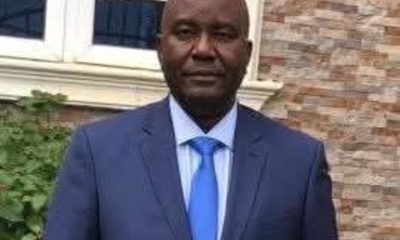
Just in: Ex- Benue SSG, David Salifu killed in suspected kidnappers’ attack
-

 News13 hours ago
US Withdraws Troops from Nigeria, Retains Intelligence Partnership in Counterterrorism Fight