
News
US Report Indicates 30,000 Armed Fulani Militants Behind Insecurity in Nigeria




The United States Commission on International Religious Freedom has raised fresh concerns over the growing insecurity in Nigeria, revealing that about 30,000 armed Fulani militants are currently operating across different parts of the country.
In its May 2026 report titled “Nonstate Violators of Religious Freedom in Nigeria: Fulani Militants,” the commission described the armed groups as some of the deadliest non-state actors fueling violence and religious freedom violations in Nigeria.
According to the report, the militants operate in clusters ranging from small bands of about 10 fighters to larger groups with as many as 1,000 members. The commission said the activities of the armed groups have worsened insecurity, especially in the Middle Belt and parts of Southern Nigeria.
The report stated that attacks linked to the militants led to more deaths in the last year than those carried out by insurgent groups and criminal gangs.
“Violence by Fulani militants caused the highest number of deaths among all religious communities in Nigeria over the last year as compared to attacks by organised insurgent groups and criminal gangs,” the report stated.
The commission noted that although many of the attacks targeted Christian communities, Muslims had also suffered killings, kidnappings and raids.
USCIRF explained that the armed groups do not operate under a single command structure. However, some factions reportedly collaborate with criminal gangs and extremist organisations.
“These actors operate in a variety of contexts and with a multiplicity of likely aims and motivations,” the report said.
“While many Fulani militant groups wage independent attacks, others periodically coordinate with a wide range of other actors, from conventional bandit gangs seeking financial enrichment to recognised terrorist organisations that espouse a violent interpretation of Islam.”
The commission said the attackers often invade rural communities at night using motorcycles, assault rifles and machetes. It added that the strategy was designed to create fear and force residents to flee their ancestral lands.
“They often wield machetes and descend on vulnerable communities during the night, eliciting terror as a way to force victims to quickly leave and to achieve greater control of desired land,” the report stated.
The report further revealed that attacks carried out by Fulani militants and other armed groups had displaced at least 1.3 million people across the Middle Belt. Many victims, it said, now live in overcrowded camps with poor sanitation and inadequate security.
USCIRF highlighted several deadly attacks recorded in 2025 and early 2026, particularly in Benue and Plateau states.
“One attack in Benue in June 2025 killed at least 200 people, including internally displaced persons living in a Catholic mission,” the report stated.
The commission also referenced the Yelwata massacre in Benue State where more than 200 Christians, mostly women and children, were reportedly killed, while over 3,000 residents were displaced.
According to the report, some attacks were deliberately carried out during Christian celebrations to heighten fear and psychological trauma among victims.
“Militant actors have often carried out operations during Christian holidays such as Christmas or Easter to further maximise the psychological impact,” USCIRF said.
The report added that suspected Fulani militants killed at least 32 people in Niger State in February 2026. The attackers also reportedly invaded Holy Trinity Parish in the Kafanchan Diocese of Kaduna State, killing three persons and abducting 11 others, including Father Nathaniel Asuwaye.
USCIRF also documented attacks on Muslim worshippers.
“In February 2026, armed men kidnapped an imam and seven worshipers from a mosque in Plateau,” the report stated, noting that the abductors demanded N16 million ransom.
The commission said Palm Sunday and Easter attacks in April 2026 left dozens dead in Plateau, Kaduna and Benue states.
“On Easter Sunday, Fulani militants reportedly killed five worshippers at two churches in Kaduna State while abducting 31 others,” the report added.
USCIRF noted that debates over the root causes of the violence had continued for years, with some analysts blaming environmental pressures and economic struggles, while others viewed the attacks as religiously motivated.
“Some observers have argued that environmental and economic factors are the driving force behind Fulani militants’ acts of violence, while others have suggested that these actors are engaged in a concerted campaign of outright genocide against non-Muslims, especially Christians,” the report stated.
“In fact, multiple and overlapping factors, including religion in many cases, likely spur Fulani militants to attack communities or individuals.”
The commission criticised the response of both federal and state authorities, saying many communities complained that security agencies often arrived late after attacks had already occurred.
“Victims have long reported that security forces are consistently slow to respond to attacks on their communities,” the report stated.
It also said some Christian groups accused security agencies of bias during investigations and security operations involving affected communities.
According to USCIRF, governors from 11 Nigerian states launched a ranching initiative in June 2025 aimed at reducing clashes between farmers and herders over grazing routes and farmland.
At the federal level, the report linked recent government actions to the decision of former US President Donald Trump in October 2025 to designate Nigeria as a Country of Particular Concern over violations of religious freedom.
Following the designation, President Bola Tinubu reportedly classified kidnappers and violent armed groups, including Fulani militants, as terrorists in December 2025.
The commission said Nigerian security forces rescued 309 hostages during operations in Kogi and Kwara states in January 2026. During the raids, 129 suspected Fulani militants were arrested while 55 others were killed.
The report also drew attention to growing scrutiny surrounding the Miyetti Allah Cattle Breeders Association of Nigeria.
Christian leaders had accused the organisation of failing to prevent violent attacks and land invasions allegedly linked to armed herders. However, the association denied supporting criminal activities.
“We do not support, condone, harbour, finance, or protect any form of criminality, extremism or violence,” the group said.
USCIRF disclosed that the US Congress introduced the Nigeria Religious Freedom and Accountability Act of 2026 in February. The proposed legislation seeks sanctions against the Miyetti Allah Cattle Breeders Association over allegations of involvement in severe religious freedom violations.
Despite recent military operations and peace efforts, the commission warned that insecurity remained widespread across central Nigeria.
“As a result, central Nigeria remains entrenched in an intense, daily, and seemingly perpetual crisis of insecurity,” the report concluded.


By Prosper Olayiwola
A House of Assembly Candidate for Ikole Constituency 1 on the platform of the African Democratic Congress, ADC, Kayode Arewa Sanni, has called on his constituents, party members and supporters to unite ahead of the 2027 general elections.
Arewa Sanni made the call in Ikole-Ekiti while addressing party faithful and supporters at a stakeholders’ meeting convened to strengthen grassroots mobilisation in the constituency.
He said the 2027 elections present a defining moment for the people of Ikole Constituency 1 to chart a new course of inclusive representation, people-oriented legislation and accelerated development.
The candidate noted that disunity among party members and supporters remains the greatest obstacle to victory, stressing that only a united front can dislodge entrenched interests and deliver the dividends of democracy to the people.
“I appeal to all our party leaders, members, supporters and well-wishers across Ikole Constituency 1 to put aside personal differences and work together as one family. Our strength lies in our unity,” he said.
Arewa Sanni said his candidacy was driven by a desire to give Ikole Constituency 1 a vibrant and responsive voice in the Ekiti State House of Assembly, with focus on youth empowerment, education, healthcare and rural infrastructure.
He assured constituents that if given the mandate, he would prioritise quality representation and ensure that government presence is felt in all communities within the constituency.
He also called on supporters of the ADC across Ekiti State to rally behind the party’s vision of good governance, transparency and accountability as preparations for the 2027 polls gather momentum.
The aspirant expressed confidence that with unity, commitment and collective effort, the ADC would emerge victorious in Ikole Constituency 1 and other constituencies across the state.

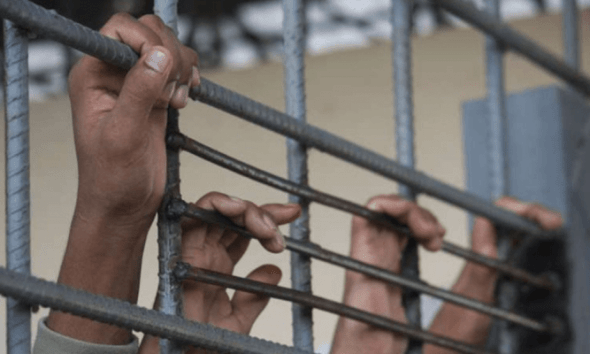
No fewer than six inmates have died within one week following a suspected cholera outbreak at the Kurmawa Maximum Prison in Kano State.
Amnesty International raised the alarm in a post on its official Facebook page, calling on authorities to immediately declare an emergency at the correctional facility.
Amnesty said several other inmates were currently receiving treatment, warning that the death toll could be higher as the suspected disease continues to spread among prisoners.
It urged the authorities to immediately transfer critically ill inmates to hospitals for proper medical attention to prevent further deaths.
The organisation warned that failure to urgently intervene could amount to arbitrary deprivation of life, which it described as a serious human rights violation under international law.
Amnesty also expressed concern over the broader conditions in Nigerian correctional facilities, particularly the prolonged detention of inmates awaiting trial.
According to the organisation, detainees without financial means face greater difficulty having their rights protected, with some spending years in custody without being convicted of any crime.
It further said many inmates were being held in overcrowded and unhygienic cells without adequate food and healthcare.
Amnesty called for urgent reforms to improve conditions in Nigerian correctional facilities and ensure compliance with international best practices.

Popular media personality and self-acclaimed relationship expert, Blessing Okoro, popularly known as Blessing CEO, has reportedly lost her second son while remanded in custody.
The development was confirmed in an online appeal by Amira Agiye, head of the Isaamira Love Foundation, who spoke on Okoro’s behalf to request public financial assistance.
She said, “It is sad to announce to you all that Blessing CEO just lost her second son. My name is Amira Agiye.
“I’m here to appeal on behalf of Blessing CEO, who is currently in custody. I understand that people might have different opinions about her and the circumstances surrounding her case.
“And like every one of us, she deserves compassion and an opportunity for redemption.
She needs N20 million to meet the bail requirements. She also needs N36 million to pay the people she owes who brought the case against her.
“Please, Nigerians, let’s forgive her for the sake of that boy who is still in the mortuary. With Blessing’s full consent and authorisation, I’m appealing to all Nigerians to help donate so we can help her out of this situation.”
Also speaking in a voice conversation played by Amira, Blessing, CEO, said, “My second son, Bryan, was full of life. While in custody, I lost Bryan.
I pray this turns out positive so I can leave this place, pick up the pieces of my life and pay my respects to him.”
Recall that the self-acclaimed relationship expert was remanded in Kirikiri Prison over an N69.15 million property fraud trial.
She was granted N20 million bail in July 2026, with two sureties in like sum, and each surety was required to provide three years’ proof of deposits valued at N20 million.
Following her inability to meet the bail conditions, Blessing CEO, remains in prison facility two months after she was granted bail.

House of Assembly Candidate, Sanni Urges Unity Among Ekiti ADC Members

Between Governor Soludo and Peter Obi: The Truth in Between

Six inmates die in one week amid suspected cholera outbreak in Kano prison


-

 News17 hours ago
How AI Could Cause the catastrophic death of a Billion people — Billionaire Bill Gates Warns
-

 Sports17 hours ago
AFCON Qualifier: Nigeria Defeats Madagascar
-
 News17 hours ago
Police Arrest Officer Who Said Igbo Man Can Never Be President
-

 News17 hours ago
Pastor Adeboye Welcomes 105 Nigerians Repatriated From South Africa
-

 News7 hours ago
PDP group slams Zamfara Governor for attacking Wike, hails FCT Minister’s nationalistic position
-

 Politics7 hours ago
Before dreaming of Aso Villa, APM should first find its feet-Ali Campaign Organization