
News
Act Fast, Nigerians Are Starving, Anglican Primate Urges Tinubu

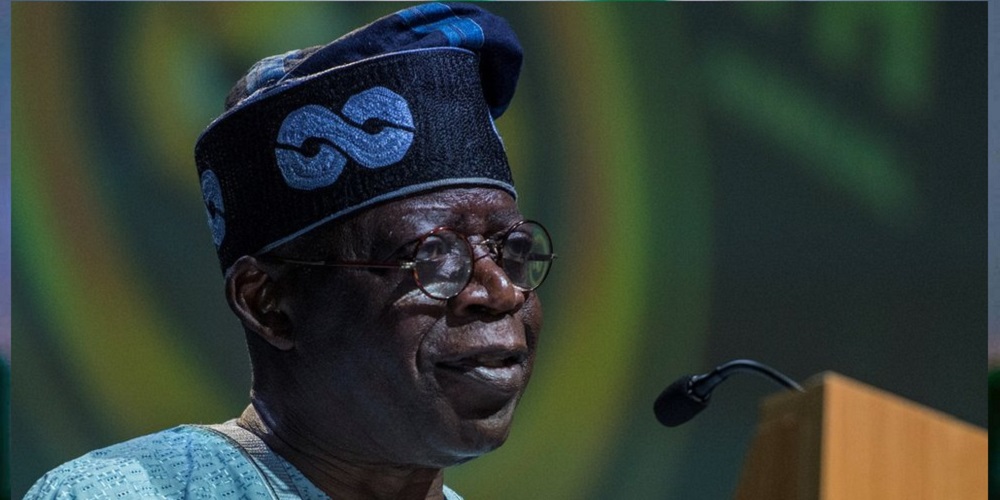
The Primate of the Church of Nigeria (Anglican Communion), Most Rev. Henry Ndukuba, has implored President Bola Ahmed Tinubu to urgently tackle the growing hunger and economic hardship facing Nigerians.
In the wake of a communiqué issued on Sunday in Abuja, after the Church’s Standing Committee meeting, Primate Ndukuba’s message was clear.
The communiqué, endorsed by key church figures including Primate Ndukuba, the Dean Most Rev. Blessing Enyindah, and the General Secretary Ven. Gershinen Paul Dajur, stressed the critical state of national affairs and called for repentance and resistance to apostasy.
The document spotlighted government plans and policy directions, the fight against corruption, judiciary concerns, the faltering economy, and the neglect of quality education.
It also condemned ongoing attacks across several states and urged the government and security forces to uphold their duty to protect citizens and their property.
The communiqué further reiterated the need for a civil and democratic constitution that truly represents the populace, ensuring no group is sidelined or oppressed.
It partly reads, “The Standing Committee meeting of the Church of Nigeria (Anglican Communion) therefore calls on the President and government to rise to the occasion of the challenging issues facing the nation:
“All corrupt public office holders and their collaborators should be brought to book and disciplined accordingly. We call on the Judiciary to do more to guarantee justice in the country.
“The Nigeria economy has been a subject of great concern due to its diverse and biting challenges. It is currently at its lowest ebb since independence with macro-economic indicators moving in discouraging directions. Monetary policies have been inconsistent, non-supportive of economic growth, ineffective and cost-push inflation has been out of control resulting in high food prices. Nigerians are hungry.
“We, therefore, call on the government to have a rethink on its penchant for external borrowing, give proper attention to fiscal policies, and diversify its economic base by harnessing our abundant natural resources.
“The Standing Committee meeting decries the constant attacks in Plateau, Zamfara, Ekiti, Ondo, Benue, parts of Imo and Anambra States and other parts of the country. It therefore calls on the government and statutory security agencies to rise to their responsibilities of protection of the lives and property of the citizenry, giving heed to the call for effective community policing.
“We note with dismay the failure of government to provide quality education for her citizenry, which has compelled Nigerians to seek admission in other countries, thus spending huge sums of money in foreign countries, thereby weakening the Nigerian economy.
“The Standing Committee renews her call for a totally civilian and democratic Constitution made by a sovereign representation of her people and not the continuous amendment of a military formulated Constitution. This will reflect the birthing of the government of the people in a new Nigeria.”
During an extensive interaction with journalists, the Archbishop Ndukuba addressed multiple pressing issues, including the purported involvement of religious organizations in sponsoring terrorism.
He called on the EFCC to operate independently and hold religious bodies accountable without generalizing.
“Religion is expected to be a source of solutions, not to add to societal issues. It’s commendable that these issues are brought to public attention, but that’s not sufficient. The EFCC should be permitted to perform its duties without interference, allowing religious organizations to be held accountable.
“We must avoid blanket judgments of all religious groups and instead focus on actions that promote national unity and progress. All citizens should have the freedom to pursue a good life.
“No reasonable religious person, whether Christian or Muslim, would support terrorism. Yet, the depth of our problems is revealed when identities are weaponized, leading to societal collapse. Those responsible must be held accountable.,” he stated.
On the potential Nigeria Labour Congress (NLC) strike, the Primate advocated for dialogue over conflict and suggested governmental measures to meet national requirements, potentially including a cabinet reshuffle.
While highlighting the injustice of silencing public expression, he said, “Nigeria is a free country, and people should have the right to express themselves. I hope that the government will implement policies that address the nation’s needs, even if it requires a cabinet reshuffle. The people are hungry, and a hungry man is an angry man. It’s unjust to silence their expressions.
“The government and the NLC leaders should pursue negotiation instead of confrontation. The release of those arrested during protests would serve to calm public anger, as selective justice is detrimental.
“Our nation’s problem is not with its ordinary citizens, who ask only for food security and basic infrastructure. Nigerians are not lazy; they are hardworking and deserve the opportunity to provide for their families.”
The Primate also dismissed the idea of moving the capital from Abuja to Lagos, instead advocating for the development of new cities across the six geopolitical zones to reduce congestion and promote balanced development.
Drawing on China’s strategy of constructing new cities, he said, “Abuja was chosen as the Federal Capital Territory for valid reasons, and we must ensure justice for its indigenous people to prevent further agitation. Lagos is already overburdened, and building new cities, like China’s approach, could be a solution for Nigeria’s growing population and economic needs.
“It’s crucial that we work together to harness Nigeria’s human and material resources for the benefit of all. If we can learn from the example of China, which is actively building new cities and industrial centers to accommodate its development, why can’t we do the same?
“With God’s blessings, we have what it takes to establish new satellite cities across the six geopolitical zones. If we could construct one additional city in the North and another in the South, we would alleviate the congestion in both Abuja and Lagos, giving rise to growth and equal opportunities for everyone who settles there.
“These new cities would also aid in our national development. With Nigeria projected to be one of the most populous nations by 2050, we must have robust plans to address the deficits in infrastructure, housing, and employment.”
He emphasized the importance of strategic, long-term planning for Nigeria’s future sustainability and growth.
“Investing in the creation of new urban areas is not just about expansion; it’s about strategic development that can provide a sustainable future for the growing population. It’s about creating a legacy of balanced, equitable growth that embraces all regions and communities.
“In essence, we must commit to long-term, strategic planning that places the wellbeing of all Nigerians at the forefront. By doing so, we can ensure that Nigeria not only meets the challenges of today but also builds a foundation strong enough to support the generations of tomorrow.
“The path ahead is not easy, and it will require sacrifice, unity, and unwavering commitment from all sectors of society—government officials, religious leaders, and citizens. Together, we can forge a path toward a prosperous and equitable Nigeria,” the Primate added.
Archbishop Ndukuba encouraged Nigerians to invest in agriculture and urged the political elite to ensure equitable distribution of national wealth.
He also highlighted the importance of the rule of law in promoting national virtues of faith, love, and progress.
“Nigeria may struggle with these issues in the future, particularly when ‘sacred cows’ exist—people who believe they own the nation and can operate above the law, be they politicians, community leaders, traditional rulers, or religious figures. I am convinced that adherence to the rule of law is essential to safeguard society,” he concluded.


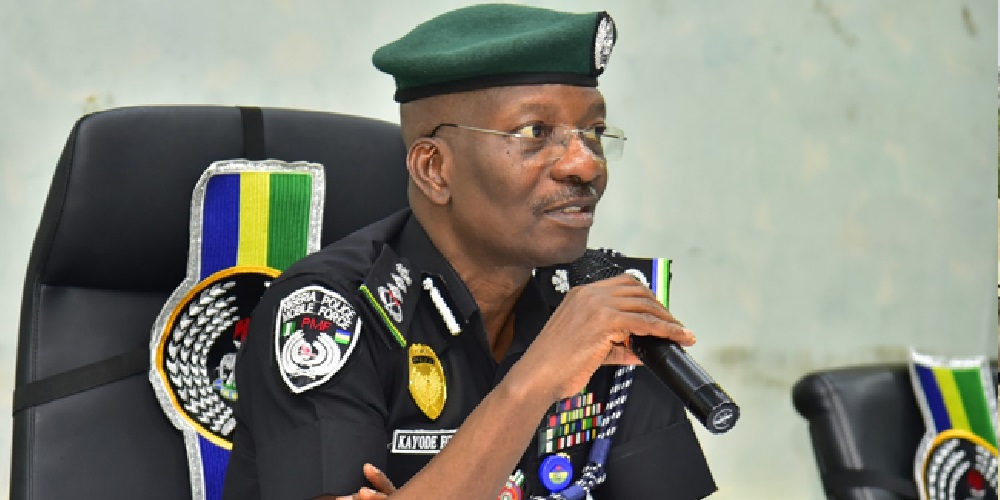
The Nigerian police has finally approved the planned nationwide protests and outlined conditions for participants.
The Inspector General of Police, Kayode Egbetokun, revealed this on Friday while addressing journalists in Abuja.
He urged all groups planning to participate in the proposed nationwide protest to submit their details to the Commissioners of Police in their respective states.
The police boss said this was to ensure the protest was peaceful.
Egbetokun said, “We acknowledge the constitutional right of Nigerian citizens to peaceful assembly and protest.
“However, in the interest of public safety and order, we urge all groups planning to protest to provide necessary details to the Commissioner of Police in the state where the protest is intended to take place.
“To facilitate a successful and incident-free protest, they should please provide the following information: state the proposed protest routes and assembly points; expected duration of the protest; and names and contact details of protest leaders and organisers.”
The police boss said the information expected from the organisers also include measures to prevent hijacking by criminal elements, as well as key identifiers for possible isolation of potential troublemakers.
By providing the information, he said, the police will be able to deploy adequate personnel and resources to ensure public safety.
He said the police needed to know the specific routes and areas for the protest to avoid conflicts with other events or activities.
Mr Egbetokun said the police will “establish clear communication channels with protest leaders to address any concerns or issues that may arise; minimise the risk of violence, property damage, or other criminal activity.
“We encourage all protesters to cooperate with the police, obey the law, and adhere to global best practices for peaceful assembly to guarantee a safe and successful exercise of their rights.



Finally, IGP approves hunger protests across Nigeria

Reps North-West Caucus Beg Youths, Citizens In The Region Not To Join Planned Protest

Reps Applaud FCT Minister, Wike On AICL Improved Revenue, Infrastructure

Just in: Terrorists ambush military truck, kill all soldiers on board

Nigerian Dancer, Korra Obidi Attacked with acid, stabbed on stage In UK

Meet Rare Gem 16 Years Old Chiaza, CEO of ‘RUN MARKET PLACE’
-

 News23 hours ago
Iwuanyanwu was a Heavyweight in all ramifications-Abaribe
-
News22 hours ago
Tinubu, Southern Govs Mourn Iwuanyanwu
-

 News22 hours ago
Sokoto Governor, Aliyu’s Wife Holds Lavish Birthday As Guests Spray Dollar Notes On Her Amid Hunger, Hardship
-

 News22 hours ago
Protest: President Tinubu In Closed-door Meeting With Traditional Rulers (Video)
-

 News23 hours ago
Tinubu’s Presidency Is Failing Nigerians – Afenifere
-

 News18 hours ago
Nationwide protest: ‘Airport Is Filled Up, Govs, Senators, Reps, Ministers Traveling Abroad’ — Fayose
-
 News23 hours ago
IGP Orders DPOs, Their Men To Storm Vulcanizer Shops Ahead Of Planned Nationwide Protest
-

 News23 hours ago
I Participated In Peaceful Protests For Democracy – Tinubu