
Foreign
February on course to break unprecedented number of heat records

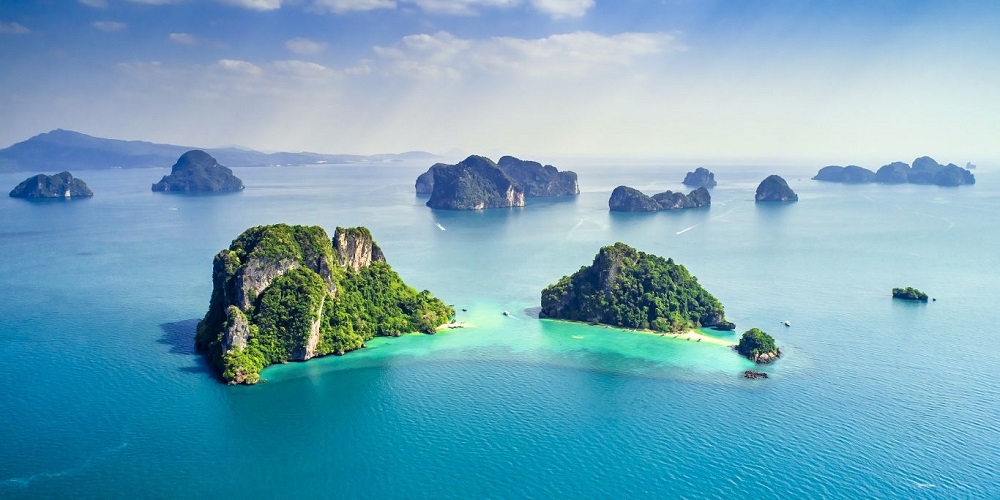
February is on course to break a record number of heat records, meteorologists say, as human-made global heating and the natural El Niño climate pattern drive up temperatures on land and oceans around the world.
A little over halfway into the shortest month of the year, the heating spike has become so pronounced that climate charts are entering new territory, particularly for sea-surface temperatures that have persisted and accelerated to the point where expert observers are struggling to explain how the change is happening.
“The planet is warming at an accelerating rate. We are seeing rapid temperature increases in the ocean, the climate’s largest reservoir of heat,” said Dr Joel Hirschi, the associate head of marine systems modelling at the UK National Oceanography Centre. “The amplitude by which previous sea surface temperatures records were beaten in 2023 and now 2024 exceed expectations, though understanding why this is, is the subject of ongoing research.”
Humanity is on a trajectory to experience the hottest February in recorded history, after a record January, December, November, October, September, August, July, June and May, according to the Berkeley Earth scientist Zeke Hausfather.
He said the rise in recent weeks was on course for 2C of warming above pre-industrial levels, though this should be the brief, peak impact of El Niño if it follows the path of previous years and starts to cool down in the months ahead.
That would normally be good news if a temperature-lowering La Niña follows, but Hausfather said the behaviour of the climate had become more erratic and harder to forecast. “[Last year] defied expectations so much that it’s hard to have as much confidence in the approaches we have used to make these predictions in the past,” he said.
“I’d say February 2024 is an odds-on favourite to beat the prior record set in 2016, but it’s by no means a foregone conclusion at this point as weather models suggest that global temperatures will fall back down in the coming week.
So while I think these extreme temperatures provide some evidence of an acceleration in the rate of warming in recent years – as climate models expect there to be if CO2 emissions do not fall but aerosols do – it’s not necessarily worse than we thought.”

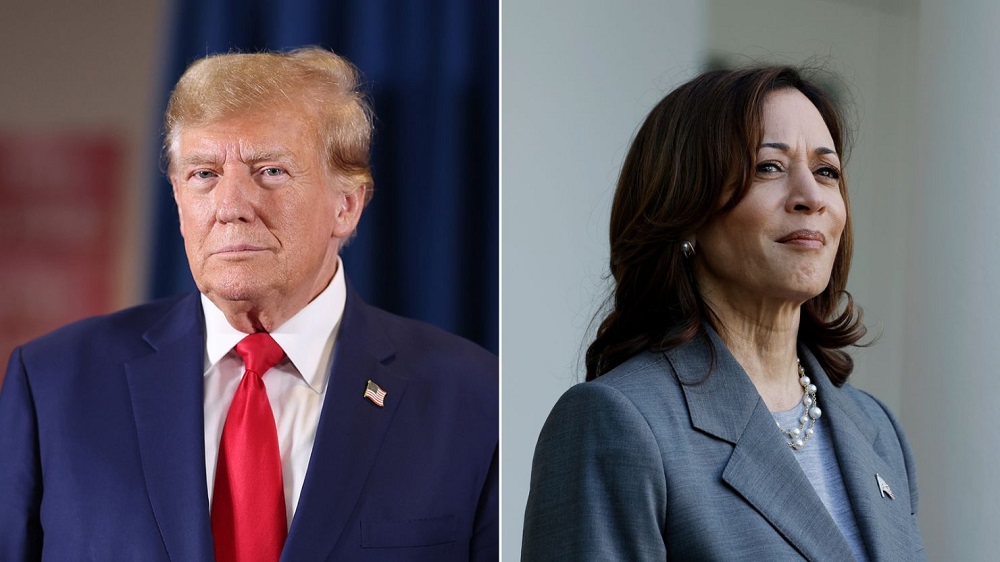
Republican presidential candidate Donald Trump’s campaign, on Tuesday, filed a complaint with the Federal Election Commission, saying that U.S. Vice President Kamala Harris could not legally take over funds raised by President Joe Biden’s reelection campaign.
Biden, an 81-year-old Democrat who was in a tight race with Republican challenger Donald Trump, endorsed Harris when he ended his reelection bid on Sunday.
Harris quickly took control of Biden’s campaign accounts and on Monday night wrapped up the nomination by winning pledges from a majority of the delegates who at next month’s party convention will determine the nominee, according to her campaign.
The fight over the accounts, which had roughly $95 million in the bank at the end of June, is part of a multi-pronged effort by Republicans to stymie Harris’ bid to lead the Democratic ticket.
The Trump campaign argued that Harris undertook a “brazen money grab,” according to the filing by David Warrington, the campaign’s general counsel. In the filing, which Reuters said it saw, Warrington said Harris was in the process of committing what he described as the “the largest campaign finance violation in American history.”
Saurav Ghosh, a lawyer at the Campaign Legal Center, a non-partisan watchdog group, has said that because Harris was already part of “Biden for President” as the vice presidential candidate, her claim on the money should be secure.
In any case, election regulators are unlikely to resolve the issue before the Nov. 5 presidential election.
The FEC said they were unable to comment on unresolved enforcement matters.
U.S. Vice President Kamala Harris laid out her argument against Donald Trump at the first rally of her presidential campaign on Tuesday, while a new poll showed her with a slight lead over her Republican rival.
Harris’ campaign has said it had raised $100 million since Sunday, when Biden stepped back from the campaign and endorsed her – exceeding Biden’s remaining tally in just a few days. Her campaign brushed off the FEC complaint.
“Republicans may be jealous that Democrats are energized to defeat Donald Trump and his MAGA allies, but baseless legal claims – like the ones they’ve made for years to try to suppress votes and steal elections – will only distract them while we sign up volunteers, talk to voters, and win this election,” said Harris campaign spokesperson Charles Kretchmer Lutvak.
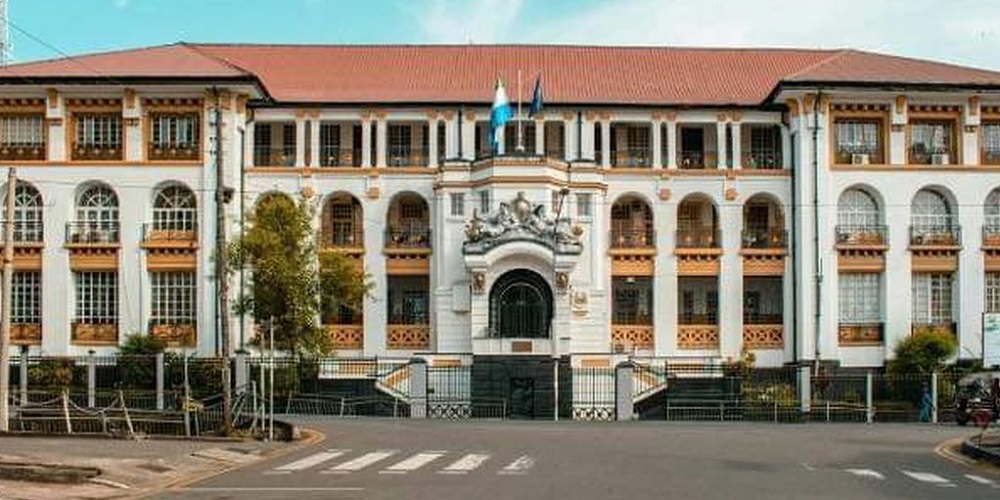
Two female police officers were also sentenced. Ramatu Kamanda Conteh received a 30-year sentence for harboring Koita.
Ahigh court in Sierra Leone has sentenced 11 people, including soldiers and police officers, to lengthy prison terms for their role in a failed military coup attempt last year.
The court’s verdict follows an attack on November 26, 2023, when gunmen targeted multiple military barracks and a prison, freeing about 2,200 inmates and killing over 20 people.
Reuters reports that, after the failed coup attempt, 12 people were charged with treason in January.
However, on Monday, 11 people were convicted in a unanimous jury verdict on 20 counts, including treason, murder, and unauthorized use of military uniforms.
The twelfth accused, Bai Mahmoud Bangura of the opposition All People’s Congress (APC) party, is being tried separately due to health concerns.
Amadu Koita Makalo, a retired army major and former bodyguard to ex-president Ernest Bai Koroma, was sentenced to multiple terms totaling 40 to 70 years in prison, with the sentences to be served concurrently.
Two female police officers were also sentenced. Ramatu Kamanda Conteh received a 30-year sentence for harboring Koita.
The government said the coup bid was led mostly by bodyguards to Koroma, who was later charged with four related offences, before the government decided to let him leave the country on medical grounds.
However, Koroma condemned the coup attempt and his lawyers called the charges “trumped up” and part of a “political vendetta”.
Tensions have resurfaced in Sierra Leone, nearly two decades after the civil war from 1991 to 2002 that claimed over 50,000 lives.
Foreign
Trump Shooter Searched Online For Info On John F. Kennedy Assassination A Week Before Rally, FBI Says

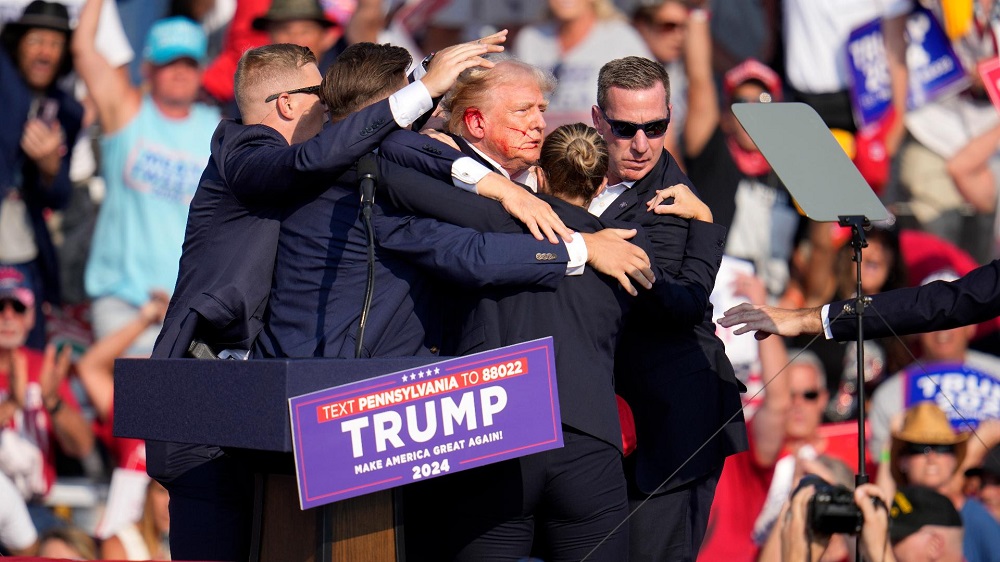
Despite gaining access to Crooks’ electronic devices, including his cellphone, investigators have yet to uncover any significant information regarding his motive or ideology.
FBI Director Christopher Wray revealed during a House Judiciary Committee hearing on Wednesday that the gunman who attempted to assassinate former President Donald Trump at a Pennsylvania rally on July 13 had conducted a disturbing Google search about the assassination of President John F. Kennedy just one week prior to the shooting.
The FBI said it was still working to determine the motive behind 20-year-old Thomas Crooks’ actions, which resulted in the death of one attendee and injuries to Trump and two others, CBS News reports.
Despite gaining access to Crooks’ electronic devices, including his cellphone, investigators have yet to uncover any significant information regarding his motive or ideology.
Wray’s testimony highlighted the complexity of the case, as authorities strive to understand the reasoning behind Crooks’ violent actions. The investigation remains ongoing, with the FBI exploring all possible leads to shed light on this disturbing incident.
A chilling discovery was made on a laptop linked to Crooks. A search history revealed a disturbing query made on July 6, exactly one week before the Pennsylvania rally: “how far away was Oswald from Kennedy?”
This eerie search suggests Crooks may have been drawing inspiration from the infamous assassination of President John F. Kennedy by Lee Harvey Oswald in 1963.
Oswald fatally shot Kennedy from a sixth-floor perch at the Texas Schoolbook Depository in Dallas, with the Warren Commission later determining the distance between the two to be approximately 265.3 feet at the time of the deadly shot.
This striking search term stands out as a significant finding in the investigation, potentially offering a glimpse into Crooks’ motivations or mindset leading up to the attack. As authorities continue to probe the circumstances surrounding the shooting, this haunting query raises more questions about the influences and intentions behind Crooks’ actions.
Crooks fired shots from a rooftop approximately 400 feet away from the target.
The gunfire struck Trump in the ear and injured rally attendees.
According to FBI Director Christopher Wray’s testimony at Wednesday’s hearing, Crooks wielded an AR-style rifle and left behind a trail of evidence, including eight spent bullet cartridges found on the roof.


Finally, IGP approves hunger protests across Nigeria

Reps North-West Caucus Beg Youths, Citizens In The Region Not To Join Planned Protest

Reps Applaud FCT Minister, Wike On AICL Improved Revenue, Infrastructure

Just in: Terrorists ambush military truck, kill all soldiers on board

Nigerian Dancer, Korra Obidi Attacked with acid, stabbed on stage In UK

Meet Rare Gem 16 Years Old Chiaza, CEO of ‘RUN MARKET PLACE’
-

 News21 hours ago
Iwuanyanwu was a Heavyweight in all ramifications-Abaribe
-
News20 hours ago
Tinubu, Southern Govs Mourn Iwuanyanwu
-

 News20 hours ago
Sokoto Governor, Aliyu’s Wife Holds Lavish Birthday As Guests Spray Dollar Notes On Her Amid Hunger, Hardship
-

 News20 hours ago
Protest: President Tinubu In Closed-door Meeting With Traditional Rulers (Video)
-

 News21 hours ago
Tinubu’s Presidency Is Failing Nigerians – Afenifere
-

 News16 hours ago
Nationwide protest: ‘Airport Is Filled Up, Govs, Senators, Reps, Ministers Traveling Abroad’ — Fayose
-
 News21 hours ago
IGP Orders DPOs, Their Men To Storm Vulcanizer Shops Ahead Of Planned Nationwide Protest
-

 Metro20 hours ago
8 School Children Rescued In Lokoja Auto Crash