Connect with us

News

Senate Kicks As Nigeria Lost N17trn To Tax Waivers

Published

on

ADVERTISEMENT
Zoom Ad

By Chukwuka Kanu

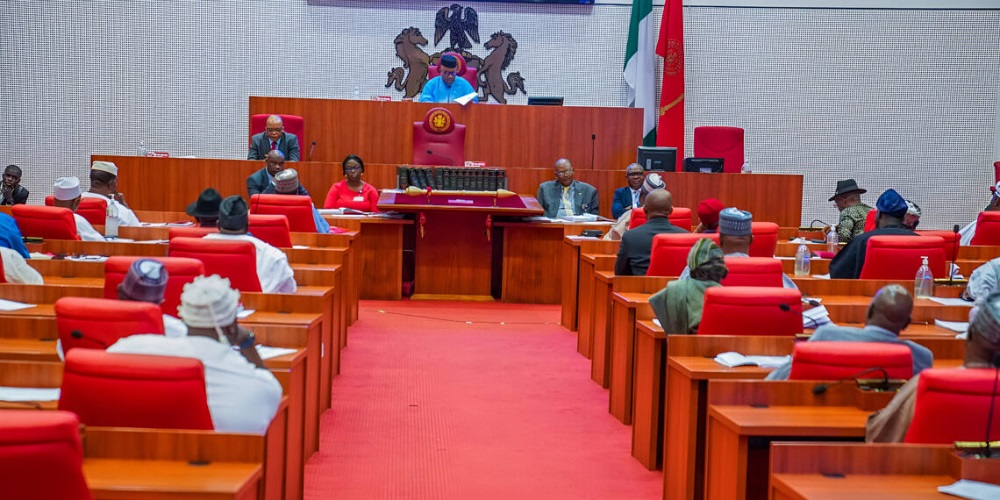
The Senate Committee on Finance on Monday frowned at the N17 trillion the federal government lost to tax waivers within the last five years.

It urged the Federal Inland Revenue Service (FIRS) to suspend the tax waivers and substitute it with a rebating system.

The committee’s chairman, Senator Sani Musa (APC, Niger) during the 2024 budget presentation of FIRS at the National Assembly, said the tax waivers, which he said have been abused, should be suspended.

Advertisement

“Your projection of N19 trillion as total tax collection for 2024 is good when compared to N11.16 trillion achieved in 2023 but the senate believes that you can do more even to the tune of N30 trillion if required measures are put in place.

“The Senate urges you to look at the direction of tax waivers largely being abused with attendant and avoidable losses being incurred every year.

“Available records show that within the last five years, about N17 trillion have been lost by the country to tax waivers.

“It should be suspended and possibly substituted with a rebating system,” he said.

Advertisement

The chairman of FIRS, Zacch Adedeji, who projected N19.4 trillion as the targeted tax collection for 2024, insisted that the fresh N2.7 trillion tax credit for road construction by the Nigerian National Petroleum Company Limited (NNPCL) should be stopped.

He told members of the committee that to save Nigerians from multiple taxation, the FIRS, in collaboration with the panel constituted by President Bola Tinubu, would reduce the 62 different taxes to 8.

“We are already consulting and engaging the state government on it. At the end of the day, we won’t have more than eight or nine taxes that the state and federal government would be collecting,” he said.

On controversy trailing the implementation of the tax credit scheme for road construction by NNPCL, the FIRS boss insisted that the N2.5 trillion earlier committed to it must be fully implemented before thinking of any fresh one.

Advertisement
Continue Reading
Advertisement

News

FG backpedals on tax laws guidelines, cites uncertainty

Published

on

By

ADVERTISEMENT
Zoom Ad

The federal government has halted the issuance of guidelines for the implementation of the new tax laws, citing uncertainty over the final version, Taiwo Oyedele, Chairman, Presidential Tax Reform Committee, has revealed.

He said he had told the Nigeria Revenue Service (NRS) and the Joint Revenue Board (JRB) to wait because guidelines on the implementation of tax laws cannot be issued.

Oyedele spoke in Lagos yesterday while responding to questions after delivering a keynote address on the 2026 Economic Outlook organised by the Institute of Chartered Accountants of Nigeria, with the theme ‘ICAN@60: Accountability as the Bedrock for National Development.’

He said concerns over whether the documents currently in circulation represent the final version of the laws prompted him to instruct his team to buy a printed copy of the law from the government’s printer.

He said the feedback from his staff revealed that the National Assembly had taken custody of all printed copies of the tax laws and directed that they should not be sold or made available to the public until lawmakers conclude their review.

Efforts by Daily Trust to get a reaction from the Senate’s spokesman, Senator Yemi Adaramodu (APC, Ekiti South), were unsuccessful as he neither answered several phone calls nor responded to a WhatsApp message seeking his comments on the matter.

Also, calls to the mobile telephone line of the spokesperson of the House of Representatives, Akin Rotimi, did not go through last night.

While acknowledging that legislative review is a normal part of the lawmaking process, Oyedele noted that the restriction on access has reintroduced uncertainty into the tax reform process.

He said: “The Acts Authentication Act says whatever the government printer publishes is the evidence of the law that was passed.

“That government printer published something, which we said is the official version. Lawmakers said it is not what they passed. So, they said they would do their own gazettes.

“They set up their committee, they did their own review, they did their own gazettes. They sent me a copy, soft copy. But that’s not what the Acts Authentication Act says.

“So, I sent my staff, go to the government printer and go and buy. They went there, but as of last week, they said it’s not ready. That they should wait.

“So, I also told everybody, the NRS, JRB, you too wait, because we cannot issue guidelines.

“We are not 100 per cent certain that this is the final official position. I called my staff this (yesterday) morning, I said go back there, follow up every day, go, go there, don’t call them, go and sit down there.

“And I got feedback as I was here that says that… I don’t even know whether I should say this or not because I don’t know what the press will report. But in the interest of accountability and transparency, my staff told me that they said everything that they printed, the National Assembly collected from them and said they shouldn’t sell to anyone; that they want to complete their review. While that is good, it also creates uncertainty again.”

The laws — the National Revenue Service (Establishment) Act, the Joint Revenue Board of Nigeria (Establishment) Act, the Nigeria Tax Administration Act, and the Nigeria Tax Act — which took effect on January 1, had elicited criticisms following alleged alterations to the gazetted laws as against the versions passed by the National Assembly.

At the House of Representatives’ plenary in December, Abdussamad Dasuki (PDP, Sokoto) had raised a matter of privilege, alleging discrepancies between the tax laws passed by the National Assembly and the versions gazetted and made available to the public.

Rising under Order Six, Rule Two of the House Rules, Dasuki said his legislative privilege had been breached, insisting that the content of the gazetted tax laws did not reflect what members debated, voted on, and passed.

He said after spending the past three days to carefully review the gazetted copies alongside the Votes and Proceedings of the House as well as the harmonised version adopted by both chambers, he observed discrepancies.

The House later set up a seven-man committee to investigate the allegations and report within one week, which elapsed on December 25.

The legislature on January 3 released Certified True Copies (CTCs) of the approved versions of the tax laws as earlier passed by both chambers and transmitted for presidential assent.

A comparison of the CTCs to the earlier “altered” gazetted versions showed that the discrepancies had been addressed, with the National Assembly approving the versions it passed and disowning the controversial gazetted copies that had stirred public concern.

Reacting yesterday to the allegations that the tax laws had been altered, Oyedele downplayed the impact of any changes, saying they should not affect the core provisions of the tax laws.

“So, in other words, what I’ll say to you is, the explanation we have provided about the law, because all this issue of they’ve altered, they’ve not altered, it’s not even a lot.

“There are few items that shouldn’t affect the main thing that people need, nothing about the tax rate, about the tax burden, the filing deadline.

“So, but this is the best I can say to you, as we speak,” he said.

Oyedele expressed worry over stiff opposition to the tax reforms, including spread of misinformation aimed at undermining the reforms.

The tax expert said some Nigerians were being paid to protest against the report.

“We’ve seen people who have been paid to protest against this reform.

“You see a group, they gave them N30 million to go and protest. In the process of sharing N30 million, this agreement broke. Some of them went to the media and said, we are not doing it again,” he said.

He narrated how misinformation made Nigerian stocks lose a whopping N4.6trn in a day in November 2025.

“The new tax laws exempt someone who sells up to 150 million Naira a year. Why are people selling 1 million Naira in panic?

The danger of misinformation. That fake news, because it’s fake, it’s not supported by data, led to real losses for people, including some people whose pensions are with PFAs, lost money,” he said.

Speaking on the theme, Oyedele described accountability as a bridge between reform and results.

“Your reforms can be brilliant. I’ve never seen any reform idea in Nigeria that is not brilliant.

“We’re just not very good with execution. And one of the reasons why execution failed is poor accountability,” he said.

He called on Nigerians and professionals to build trust and seek knowledge while demanding accountability.

“When trust rises, reforms are easier, and resistance to reform declines and results are better. Number two, let’s seek knowledge,” he said.

At the panel session, the Director-General of the Lagos Chamber of Commerce and Industry (LCCI), Dr Chinyere Almona, demanded interagency engagement during the implementation of the tax reform laws in order to produce the desired result.

Almona noted that usually there are conflicts within the policy execution architecture, while calling for the use of technology and a centralized system in monitoring execution of the policies.

Also speaking, the Director-General of the Manufacturers Association of Nigeria (MAN), Segun Ajayi-Kadir, called for the policy implementation that brings about inclusive growth “without compromising competitiveness.”

He said contribution of the manufacturing sector to the GDP has not been up to 10 per cent, while lamenting the myriad of challenges confronting the sector.

He also expressed worry over what he called escalation of the unsold inventory, which he puts at N2 trillion across the sector.

Earlier, the chairman in session, Mohammed Hayatudeen, noted that Nigeria was entering 2026 with a delicate but defining moment.

He said after the turbulence of the 2023–2024 reform cycle, the economy had regained stability with inflation moderated, the exchange rate stabilised, and external revenue strengthened.

Despite this, Hayatudeen expressed worry that the poverty rate is still high in the country.

He called for proper implementation of the tax reform laws into “favourable outcomes.”

He said: “This also raises important questions for practitioners and policymakers alike. Will ambition in tax policy be matched by capacity in tax administration and compliance? Laws alone do not raise revenue, capacity does. Systems do and professionals do. How these reforms are executed will test institutions in terms of their durability and efficacy.”

In his welcome remarks, the ICAN President, Mallam Haruna Nma Yahaya, said accountability remains critical to Nigeria’s economic stability and long-term development, as the country navigates ongoing reforms and fragile recovery.

He said the 2026 ICAN Economic Outlook was a deliberate platform to link professional responsibility with national progress.

Yahaya noted that Nigeria’s economy showed signs of stabilisation in 2025, with real GDP growth rising above 4 per cent in the second quarter, driven by improvements in manufacturing, trade, and services.

He added that inflation eased toward the mid-14 percent range by the end of the year, reflecting tighter monetary policy and improved supply conditions, with expectations of further moderation in 2026 if fiscal discipline is sustained.

According to him, external buffers also strengthened as foreign exchange reserves rose to multi-year highs, supported by stronger exports and reforms in the foreign exchange market. He said trade and current-account balances returned to surplus, while private-sector activity improved, with the Purchasing Managers’ Index (PMI) reaching 57.6 points, indicating strong expansion and improved business confidence.

Despite these gains, Yahaya warned that progress remains fragile and could be undermined without discipline, transparency, and strong institutions.

“Accountability is not merely governance ideal; it is an economic imperative,” he said, stressing that weak enforcement of laws, corruption, and poor consequences for misconduct continue to erode public trust and slow economic transformation.

He cited global evidence showing that countries with strong institutions and transparent systems perform better economically than those with weak governance structures.

The ICAN president urged participants to move beyond diagnosis to proposing practical solutions that strengthen institutions and improve governance outcomes.

He expressed optimism that ICAN’s impact in the coming years would surpass its achievements over the past six decades, calling on members and stakeholders to remain committed to accountability as a driver of national development.

Reacting on Wednesday to the allegations that the tax laws had been altered, Oyedele downplayed the impact of any changes, saying they should not affect the core provisions of the tax laws.

“So, in other words, what I’ll say to you is, the explanation we have provided about the law, because all this issue of they’ve altered, they’ve not altered, it’s not even a lot.

“There are few items that shouldn’t affect the main thing that people need, nothing about the tax rate, about the tax burden, the filing deadline.

“So, but this is the best I can say to you, as we speak,” he said.

Oyedele expressed worry over stiff opposition to the tax reforms, including spread of misinformation aimed at undermining the reforms.

The tax expert said some Nigerians were being paid to protest against the report.

“We’ve seen people who have been paid to protest against this reform.

“You see a group, they gave them N30 million to go and protest. In the process of sharing N30 million, this agreement broke. Some of them went to the media and said, we are not doing it again,” he said.

He narrated how misinformation made Nigerian stocks lose a whopping N4.6trn in a day in November 2025.

“The new tax laws exempt someone who sells up to 150 million Naira a year. Why are people selling 1 million Naira in panic? The danger of misinformation. That fake news, because it’s fake, it’s not supported by data, led to real losses for people, including some people whose pensions are with PFAs, lost money,” he said.

Speaking on the theme, Oyedele described accountability as a bridge between reform and results.

“Your reforms can be brilliant. I’ve never seen any reform idea in Nigeria that is not brilliant.

“We’re just not very good with execution. And one of the reasons why execution failed is poor accountability,” he said.

He called on Nigerians and professionals to build trust and seek knowledge while demanding accountability.

“When trust rises, reforms are easier, and resistance to reform declines and results are better. Number two, let’s seek knowledge,” he said.

At the panel session, the Director-General of the Lagos Chamber of Commerce and Industry (LCCI), Dr Chinyere Almona, demanded interagency engagement during the implementation of the tax reform laws in order to produce the desired result.

Almona noted that usually there are conflicts within the policy execution architecture, while calling for the use of technology and a centralized system in monitoring execution of the policies.

Also speaking, the Director-General of the Manufacturers Association of Nigeria (MAN), Segun Ajayi-Kadir, called for the policy implementation that brings about inclusive growth “without compromising competitiveness.”

He said contribution of the manufacturing sector to the GDP has not been up to 10 per cent, while lamenting the myriad of challenges confronting the sector.

He also expressed worry over what he called escalation of the unsold inventory, which he puts at N2 trillion across the sector.

Earlier, the chairman in session, Mohammed Hayatudeen, noted that Nigeria was entering 2026 with a delicate but defining moment.

He said after the turbulence of the 2023–2024 reform cycle, the economy had regained stability with inflation moderated, the exchange rate stabilised, and external revenue strengthened.

Despite this, Hayatudeen expressed worry that the poverty rate is still high in the country.

He called for proper implementation of the tax reform laws into “favourable outcomes.”

He said: “This also raises important questions for practitioners and policymakers alike. Will ambition in tax policy be matched by capacity in tax administration and compliance? Laws alone do not raise revenue, capacity does. Systems do and professionals do. How these reforms are executed will test institutions in terms of their durability and efficacy.”

Accountability critical to economic stability – ICAN President

In his welcome remarks, the ICAN President, Mallam Haruna Nma Yahaya, said accountability remains critical to Nigeria’s economic stability and long-term development, as the country navigates ongoing reforms and fragile recovery.

He said the 2026 ICAN Economic Outlook was a deliberate platform to link professional responsibility with national progress.

Yahaya noted that Nigeria’s economy showed signs of stabilisation in 2025, with real GDP growth rising above 4 per cent in the second quarter, driven by improvements in manufacturing, trade, and services.

He added that inflation eased toward the mid-14 percent range by the end of the year, reflecting tighter monetary policy and improved supply conditions, with expectations of further moderation in 2026 if fiscal discipline is sustained.

According to him, external buffers also strengthened as foreign exchange reserves rose to multi-year highs, supported by stronger exports and reforms in the foreign exchange market. He said trade and current-account balances returned to surplus, while private-sector activity improved, with the Purchasing Managers’ Index (PMI) reaching 57.6 points, indicating strong expansion and improved business confidence.

Despite these gains, Yahaya warned that progress remains fragile and could be undermined without discipline, transparency, and strong institutions.

“Accountability is not merely governance ideal; it is an economic imperative,” he said, stressing that weak enforcement of laws, corruption, and poor consequences for misconduct continue to erode public trust and slow economic transformation.

He cited global evidence showing that countries with strong institutions and transparent systems perform better economically than those with weak governance structures.

The ICAN president urged participants to move beyond diagnosis to proposing practical solutions that strengthen institutions and improve governance outcomes.

He expressed optimism that ICAN’s impact in the coming years would surpass its achievements over the past six decades, calling on members and stakeholders to remain committed to accountability as a driver of national development.

Continue Reading

News

AFCON: BUA chairman to fulfil $500,000 pledge to Super Eagles despite loss

Published

on

By

ADVERTISEMENT
Zoom Ad

Abdul Samad Rabiu, the founder and chairman of BUA Group has said he will go ahead with his promised $500,000 gift to Nigeria’s Super Eagles, despite their 4-2 loss to Morocco on penalties.

The billionaire philanthropist made the promise on Wednesday night after the cracker that saw the Moroccans move to the final, trying for their first AFCON trophy in 50 years.

“To our brave Super Eagles,” Rabiu posted on X almost immediately after the match.

“You fought with your hearts, gave your all, and showed true courage and determination on the pitch. Though it wasn’t meant to be this time, you have made every Nigerian proud.

“Sometimes, even our best efforts don’t bring the outcome we hope for, but the spirit, passion, and unity you displayed are what truly matter. You left everything on the field, and that is worthy of celebration.”

The industrialist said he was going ahead with the gift despite the loss to reward the Eagles’ hard work and dedication.

“As a token of appreciation for your remarkable journey and effort, I am still going ahead to fulfill the pledge of $500,000 USD. This is in recognition of your hard work, dedication, and the joy you have brought to our nation,” he said. “Keep your heads high, Super Eagles – the experience, lessons, and spirit will fuel even greater success next time. Nigeria will always be proud of you, and we believe in your future victories.”

Nigeria will now face Egypt on Saturday for a third place play off while Morocco will face Senegal on Sunday for the final.

Continue Reading

News

NYSC ready to adopt inclusion of corps members with disabilities – DG

Published

on

By

ADVERTISEMENT
Zoom Ad

The National Youth Service Corps (NYSC) says the scheme is ready to adopt and implement a standardised protocol for inclusive handling of corps members with disabilities throughout the orientation course and service year.

The Director-General of the NYSC, Brig. – Gen. Olakunle Nafiu said this on Wednesday in Jos, at the opening ceremony of the NYSC 2026 pre-orientation workshop.

Nafiu said the initiative focused not only on compliance but also on dignity, inclusion, and equal opportunity.

“It emphasises our commitment to leaving no one behind and positioning the NYSC as a humane, progressive, and nationally responsive institution,” he said.

The D-G, who delivered the keynote address, described the pre-orientation workshop as a strategic platform rather than a routine administrative exercise.

According to him, the workshop provided an opportunity for critical planning and reflection ahead of one of the most important phases of the NYSC service year, which is the orientation course.

“The orientation course constitutes the bedrock of the entire NYSC service year.

“It is where service begins, character is forged, and citizenship is affirmed,” he said.

He emphasised the need for the continuous reimagining of the orientation programme in line with national realities, global best practices, and the evolving behaviour of youths.

The D-G noted that the theme of the workshop, “Revamping the NYSC Orientation Course Experience as a Foundation for Impactful Service by Corps Members”, aligned with the scheme’s goal of producing disciplined, patriotic, and socially responsible citizens.

The NYSC boss commended the dedication and professionalism of management and camp officials.

He specifically applauded the seamless conduct of the 2025 Batch ‘C’ Orientation exercise, which he said demonstrated the power of teamwork and institutional discipline.

He said the 2026 workshop would feature innovative sessions, an open-mic discussion to address emerging challenges, improved camp management strategies, enhanced stakeholder collaboration, and the introduction of practical training modules to equip corps members with post-camp skills.

Nafiu urged participants to engage actively in the sessions to produce practical and actionable outcomes that would strengthen the orientation course nationwide.

The News Agency of Nigeria (NAN) reports that the workshop commenced on Jan 13 and would end on January 16.

(NAN)

Continue Reading

Trending

Copyright © 2024 Naija Blitz News