
Economy
Dollar “kasala”: CBN to raise BDC’s share capital to N2bn

By Kayode Sanni-Arewa
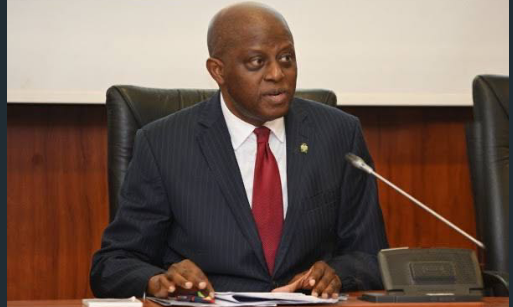
The Central Bank of Nigeria is considering increasing the share capital of Bureau De Change operators to N2bn and N500m for Tier 1 and Tier 2 licences.
The currency operators were previously charged N35m for a general licence.
This was contained in the draft paper of a “Revised Regulatory And Supervisory Guidelines For Bureau De Change Operations In Nigeria” published by the apex bank on Friday.
The new guidelines contain several new changes to the guidelines for BDC operations in the country and if endorsed will be effective at a date decided by the CBN.
Recently, operations of the currency operators have suffered heavy backlash following the free fall of the naira against the dollar.
Government officials have severely blamed the black market operators for this fall though liquidity remains a huge challenge.
This week, operatives of the Economic and Financial Crimes Commision arrested over 250 BDC operators in Abuja and many more in other states of the federation.
Under the minimum capital requirements, the central bank is introducing a two-tier license for BDC operators in the country.
The guidelines read, “A Tier 1 BDC is authorised to operate on a national basis can open branches and may appoint franchisees, subject to the approval of the CBN.
“A Tier 1 BDC (which is the franchisor) shall exercise supervisory oversight over its franchisees. All franchisees shall adopt their franchisor’s name, branding, technology platform, and rendition requirements.
“Also, a Tier 2 BDC is authorised to operate only in one state or the FCT. It may have up to three locations – a head office and two branches, subject to approval of the CBN. It is not permitted to appoint franchisees.”
“Under Tier 1, operators are expected to have N2bn as minimum share capital while also depositing a Mandatory Caution Deposit of N200m.
The application and licence fee is also N1 million and N5 million respectively.
“Under Tier 2, operators are expected to have N500 million as minimum share capital while depositing a Mandatory Caution Deposit of N50 million. The application and licence fee are also N250,000 and N2 million respectively.”
The apex bank also stated that the prescribed minimum capital of BDCs and any subsequent capital injection shall be subject to verification by the CBN.

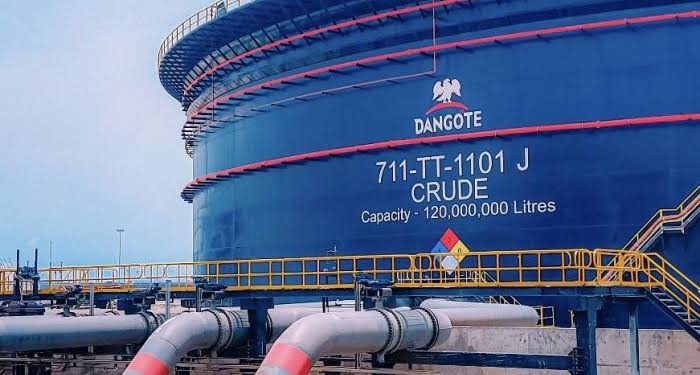
The Dangote Petroleum Refinery has received four cargoes of crude oil from the Nigerian National Petroleum Company Limited under the naira-for-crude sale agreement, officials of the refinery and the Federal Government confirmed on Tuesday.
It was gathered that the four cargoes of crude were delivered to the refinery within the past three weeks when the government kick-started the sale of crude to local refineries in the local currency.
Informed sources about the local crude sale deal told our correspondent that the refinery was still waiting to receive more crude oil cargoes from NNPCL, the organisation managing the country’s hydrocarbon resources.
They also confirmed that the $20bn Lekki-based plant was now set to begin the direct sale of refined Premium Motor Spirit, popularly called petrol, to domestic dealers.
A source close to the Technical Subcommittee on Domestic Sale of Crude Oil in Local Currency, who did not want to be mentioned because he was not permitted to speak with the press, confirmed to The PUNCH that “more cargoes (of crude) would be delivered to the Dangote refinery in the coming weeks.”
The official disclosed that the programme started with the Dangote refinery as the only petrol-producing facility in Nigeria at the moment.
Speaking with our correspondent, a senior official of the refinery confirmed the development, saying the first phase of the naira-crude sale agreement would last for six months unless it is renewed by the Federal Government.
The official said she could not tell the cost of the crude oil per barrel.
“The naira-for-crude deal has started. The Dangote refinery has received four cargoes so far and we are still expecting more. The four cargoes have been delivered to the refinery within the past three weeks. We are still expecting more cargo in the coming week.
“Don’t forget that this first phase of the naira-crude sale is just for six months. The government may decide to renew it at the end of the first six months and they may decide not to. So, we don’t know what will happen yet after the first six months.”
Recall that the 650,000 barrels per day capacity refinery was greeted by crude challenges when it began operations some months ago.
The President of the Dangote Group, Alhaji Aliko Dangote, had cried out, saying some international oil companies were planning to sabotage the investment by refusing to supply crude.
The Dangote Group had alleged that the IOCs insisted on selling crude oil to its refinery through their foreign agents.
It said the local price of crude would continue to increase because the trading arms offered cargoes at $2 to $4 per barrel, above the official price.
The group also alleged that the foreign oil producers seem to be prioritising Asian countries in selling the crude they produce in Nigeria.
Despite the intervention of the Nigerian Upstream Petroleum Regulatory Commission in July, the group insisted that the IOCs were still frustrating the refinery.
The Vice President, Oil & Gas, Dangote Industries Limited, Mr Devakumar Edwin, said, “If the Domestic Crude Supply Obligation guidelines are diligently implemented, this will ensure that we deal directly with the companies producing the crude oil in Nigeria as stipulated by the Petroleum Industry Act.”
Edwin insisted that IOCs operating in Nigeria had consistently frustrated the company’s requests for locally-produced crude as feedstock for its refining process.
He highlighted that when cargoes were offered to the oil company by the trading arms, it was sometimes at a $2 to $4 (per barrel) premium above the official price set by the NUPRC.
“As an example, we paid $96.23 per barrel for a cargo of Bonga crude grade in April (excluding transport). The price consisted of a $90.15 dated Brent price plus $5.08 NNPC premium plus a $1 trader premium. In the same month, we were able to buy WTI at a dated Brent price of $90.15 + $0.93 trader premium including transport. When the Nigerian National Petroleum Company Limited subsequently lowered its premium based on market feedback that it was too high, some traders then started asking us for a premium of up to $4m over and above the NSP for a cargo of Bonny Light.
“Data on platforms like Platts and Argus shows that the price offered to us is way higher than the market prices tracked by these platforms. We recently had to escalate this to NUPRC,” Edwin said in July, urging the commission to take a second look at the issue of pricing.
Concerned by the controversies, President Bola Tinubu, during a Federal Executive Council meeting on July 29 proposed the sale of crude to local refineries in naira.
The Federal Executive Council adopted the proposal by Tinubu to sell crude to the Dangote refinery and other upcoming refineries in the local currency.
FEC approved that the 450,000 barrels meant for domestic consumption be offered in naira to Nigerian refineries, using the Dangote refinery as a pilot.
A media aide to the President, Bayo Onanuga, said in July that “the exchange rate will be fixed for the duration of this transaction.”
It could not be immediately confirmed whether or not the Federal Government had fixed the exchange rate in this current transaction with Dangote.
Operators have suggested that the current price of PMS would crash if the government sells crude to local refineries, pegging the exchange rate at N1,000 to a dollar instead of using N1,600.
Our correspondent recalled that the implementation committee headed by Edun said the sale of crude oil in naira commenced on October 1 as scheduled by the committee.
On September 13, 2024, the committee announced that the Federal Executive Council approved the sale of crude to local refineries in naira and the corresponding purchase of petroleum products in naira.
“From October 1, NNPC will commence the supply of about 385,000 barrels per day of crude oil to the Dangote refinery to be paid for in naira,” the committee had declared.
This implies that NNPC is to supply about 11.5 million barrels of crude oil to the Dangote refinery monthly, and based on the deal, the plant will release equivalent volumes of refined diesel and petrol to the domestic market also in naira.
With four cargoes received, the refinery is expected to sell petrol, diesel, and aviation fuel to marketers in naira.
Marketers react
The National Publicity Secretary of the Independent Petroleum Marketers Association of Nigeria, Chinedu Ukadike, said the supply of crude to Dangote refinery would address complaints of shortfall in PMS supply to the NNPC and other marketers.
”It is a very good gesture to allow Dangote to get enough crude to be able to refine petroleum products for us. I’m aware that the NNPC is complaining that Dangote is not producing enough. So, now that they have supplied up to four cargos to Dangote, it will reflect that PMS and other by-products of crude oil will be adequate. And we will no longer complain of a shortfall in supply; because a shortfall in supply of crude oil will lead to a shortfall in supply of refined products,” Ukadike remarked.
On pricing, he posited that demand and supply would determine the price of PMS as time goes by.
“Let us allow the factor of demand and supply to determine the price. I know there will be a time when these products will start descending instead of going up. I’m very sure,” the IPMAN spokesman submitted.
PMS import drops
Petrol shipments to Nigeria dropped sharply in the first two weeks of October, S&P Global Commodity Insights ship-tracking data said, adding that the arrival of domestic supply from the Dangote refinery appeared to dim export appetite.
According to S&P Global Commodities at Sea data, just 280,400 barrels of gasoline and blendstock were dispatched to Nigeria in the first week of the month, ending October 6, down from a weekly average of 1.3 million barrels in August.
“In the week ending October 13, just one product tanker reported shipping gasoline to Nigeria, with just 290,567 barrels departing from Antwerp for delivery to Lagos. These two October cargoes fall significantly lower than the 12 dispatched in the first half of August and September respectively,” S&P Global said.
“The slump in export activity signals the first disruption to a previously well-established flow, mostly from Northwest Europe to West Africa, with the arrival of its own domestic refining capacity.
“Without its own domestic supply chains, Nigeria — Africa’s largest demand hub — has typically imported around 200,000-300,000 b/d of gasoline to service the bulk of its fuel supply, creating a dependency that Africa’s richest man, Aliko Dangote, sought to overhaul with the inauguration of his new refinery in January,” the report added.
Yet, with shipments to Lagos appearing to preemptively decline, traders were said to have flagged a potential shortfall in availability as domestic production remains insufficient to service consumption of over 300,000 b/d.
A document titled ‘Summary of Volume Loading’, said to have emanated from the state oil company has said the Dangote refinery was able to supply only 317 million litres out of the 1.065 billion litres it requested between September 15 and October 20.
However, another official said the refinery is ramping up production, saying it has about 245 million litres stored in its storage tanks, even as it targets 30 million litres of PMS daily.
“A faster-than-expected ramp up would accelerate pressure on global gasoline cracks in the Atlantic Basin to as early as first-quarter 2025, though as a very large single-train refinery, the plant remains exposed to outages and disruptions.
“Commodity Insights anticipates that the refinery will displace around 260,000 b/d of gasoline flows from Europe to West Africa by 2026, while sweet hydrocracking margins are seen as unlikely to recover substantially from an expected average of minus $1.50/b through Q4 2024 in Q1 2025,” S&P Global reports.
In the heat of the crude supply crisis, Oil producers, under the aegis of the Independent Petroleum Producers Group, also warned against being forced to sell crude oil to the Dangote Refinery and other local ones in Nigeria.
The IPPG also called on the NNPC to re-direct its allocated crude oil volumes to Dangote Refinery and other local refineries to mitigate the current crude supply shortage being experienced by the local refiners that is impacting local product availability in many parts of Nigeria.
The Chairman of IPPG, Abdulrazak Isa, in a letter dated August 16, 2024, and addressed to the Chief Executive of the NUPRC, Gbenga Komolafe, said the NNPC should utilise its allocated 445,000 barrels per day intervention crude oil volume to salvage the current situation as it did in many instances in the past.
Isa said some IPPG members already owned and or were supplying crude oil to local refineries but insisted that the NNPC was in a good position to mitigate the current crude supply shortfall faced by local refiners by leveraging its statutory crude allocation for meeting local domestic consumption.
“Historically, NNPC has always had an intervention crude oil volume (445kbopd) meant to satisfy the nation’s domestic consumption. This volume has always been used, under various swap mechanisms, to import refined products for domestic consumption.
“Since there is now domestic refining capacity to meet consumption, this dedicated volume should be reserved for all domestic refineries under a price hedge mechanism that can be provided by a suitable financial institution such as Afrexim Bank,’’ he stated.
Isa, however, maintained that, “Any national production above this allocated volume should be treated strictly as export volumes, adhering to the willing buyer, willing seller framework of the international market especially since the refiners will need to export excess products that surpass domestic demand thus boosting FX earnings.”
Specifically, IPPG said some of its members had received letters from the Dangote Refinery for crude supply nominations for October, and faulted the approach as bringing them under an obligation, saying it conflicted with the spirit of the willing-buyer, willing-seller framework prescribed by the Petroleum Industry Act 2021.
He asserted that the objective of enhancing the country’s petroleum value chain should be done within the confines of the law and existing obligations, expressing the confidence that an amicable solution could be reached by all stakeholders without jeopardising the existing commercial agreements, economic interests and business models of each segment of the oil and gas sector.
“While we fully support and commend the efforts of Nigerian entrepreneurs to enhance domestic refining capacity, it is important that no private sector business is unduly pressured into arrangements that may effectively subsidise another within the oil and gas value chain under any guise whatsoever.
“Under this willing-buyer, willing-seller framework, it is essential for refiners to negotiate and execute long-term crude oil Sales and Purchase Agreements with producers and their marketing agents. These agreements should follow industry best practices, with typical tenures ranging from one to five years,’’ the IPPG chairman said.
He added that some of them also received allocation letters from NUPRC for the supply of specific volumes of crude oil to the domestic market for the second half of 2024, expressing concerns about its potential implications for the economy, especially the foreign exchange earnings through royalties and taxes.
The group noted, “We understand that the current allocation methodology appears to be based on a matrix of production forecasts by producers, issued technical allowable rates as well as crude oil requirements of domestic refineries, rather than actual local consumption needs. This raises significant concerns as it suggests that allocations are being determined based on the demands of refiners, which may exceed what is needed for domestic consumption.
“Such an approach could lead to inefficiencies and unfairly disadvantage producers. Therefore, refineries with excess capacity beyond local consumption mustn’t exploit the Domestic Crude Oil Supply Obligations to the detriment of oil producers and other stakeholders, including the Government,’’ he said in August.
Credit: PUNCH
The International Monetary Fund (IMF) has downgraded Nigeria’s economic growth forecast to 2.9% for 2024, citing several challenges, including insecurity in oil-producing regions, the effects of flooding, and lower-than-expected activity in the first half of the year. This revision was disclosed in the IMF’s latest Global Economic Outlook report, released on Tuesday.
Previously, the IMF had projected Nigeria’s economy to grow by 3.3% in April, which was later adjusted to 3.1% in July. However, further disruptions in oil production and other economic hurdles have prompted a more cautious estimate.
The report, presented by Pierre-Olivier Gourinchas, Director of the IMF’s Research Department, and Daniel Leigh, Division Chief, outlined the specific challenges facing Nigeria, which are common among emerging and developing economies. The combination of civil unrest, insecurity, and extreme weather conditions continues to weigh on the country’s economic prospects.
In emerging market and developing economies, disruptions to production and shipping of commodities—especially oil—conflicts, civil unrest, and extreme weather events have led to downward revisions to the outlook for the Middle East and Central Asia and that for sub-Saharan Africa,” part of the report read.
Globally, the IMF forecast remains stable, but growth is expected to remain modest. The fund estimates that global growth will stabilise at 3.1% over the next five years, a rate the IMF described as “mediocre” compared to pre-pandemic levels.
The Central Bank of Nigeria (CBN) has once again extended the suspension of processing fees on cash deposits above N500,000 for individuals and N3,000,000 for corporates until March 31st, 2025.
This latest decision allows individuals and corporate entities to continue depositing cash exceeding these thresholds without incurring additional charges until the end of the first quarter of next year.
Banks across Nigeria have started sending out notifications to their customers, informing them of the extended grace period. This is a continuation of the CBN’s efforts to ease the burden of transaction costs on large cash deposits, initially announced earlier this year.
The suspension of fees on large cash deposits dates back to May 2024 when the CBN announced that it was halting the application of the charges outlined in its “Guide to Charges by Banks, Other Financial Institutions and Non-Bank Financial Institutions,” originally issued in December 2019.
The processing fees, set at 2 percent for individual accounts and 3 percent for corporate accounts, were previously applied to any cash deposits exceeding N500,000 and N3,000,000, respectively.
However, after briefly reinstating these charges on May 1st, 2024, some confusion arose among bank customers, who were suddenly faced with fees on their large deposits. In response, the CBN swiftly issued a new circular on May 6th, 2024.
Signed by Adetona Adedeji, Director of Banking Supervision, the circular confirmed the suspension of these fees until September 30th, 2024, a timeline that has now been extended to March 31st, 2025.
Impact of the Fee Suspension
The CBN’s decision to extend the suspension has come at a critical time for Nigeria’s banking sector. The extension of the fee suspension is widely seen as a move to encourage customers to continue depositing large sums of cash into the banking system, thereby boosting liquidity.
In line with this, banks have urged their customers to take advantage of the extended suspension. Depositors who exceed the N500,000 threshold for individuals or the N3,000,000 threshold for corporate accounts will continue to avoid the 2 percent and 3 percent processing fees previously levied on such transactions. This is expected to provide a significant relief for large depositors and encourage them to keep their funds within the formal banking system.
The decision to extend the suspension comes against the backdrop of Nigeria’s ongoing economic reforms. The CBN has been working to stabilize the financial system amid inflationary pressures, exchange rate fluctuations, and other macroeconomic challenges.
By maintaining this suspension, the CBN aims to sustain confidence in the banking sector, ensuring that both individual and corporate customers feel secure in depositing their funds without incurring additional costs.
The move is also part of broader efforts to promote financial inclusion and digital transactions. By eliminating fees on large cash deposits, the CBN hopes to encourage more Nigerians to embrace the formal banking sector, reducing the reliance on cash-based transactions.


At last, Tinubu sacks five ministers, makes seven fresh nomination

Reps To Consider Increase In Derivation Fund From 13% to 50%
Reps Pass For Second Reading Bill To Create National Honours Award Commission

Just in: Terrorists ambush military truck, kill all soldiers on board

Nigerian Dancer, Korra Obidi Attacked with acid, stabbed on stage In UK

Meet Rare Gem 16 Years Old Chiaza, CEO of ‘RUN MARKET PLACE’
-
 News22 hours ago
Reps Pass For Second Reading Bill To Create New Oyo State
-
News22 hours ago
Reps Examine Bill Seeking Military Involvement In Farming, Ranching
-

 News17 hours ago
Just in; FG to remove VAT on essential commodities
-

 News8 hours ago
Death Toll Hits 181, another 80 in Critical Condition in Hospital
-

 News23 hours ago
Reps Want 50% Agricultural Lending For Small Holder Farmers
-

 Metro16 hours ago
SAD! Five senior Air Force officers die in road accident
-

 News22 hours ago
Constitution Review: Reps to Engage NGF, NGE, LG Chairmen, CSOs, Others
-

 News15 hours ago
Man who allegedly murdered lover, baby appears in court