News
Senegal’s President Sall agrees to step down in April but sets no poll date
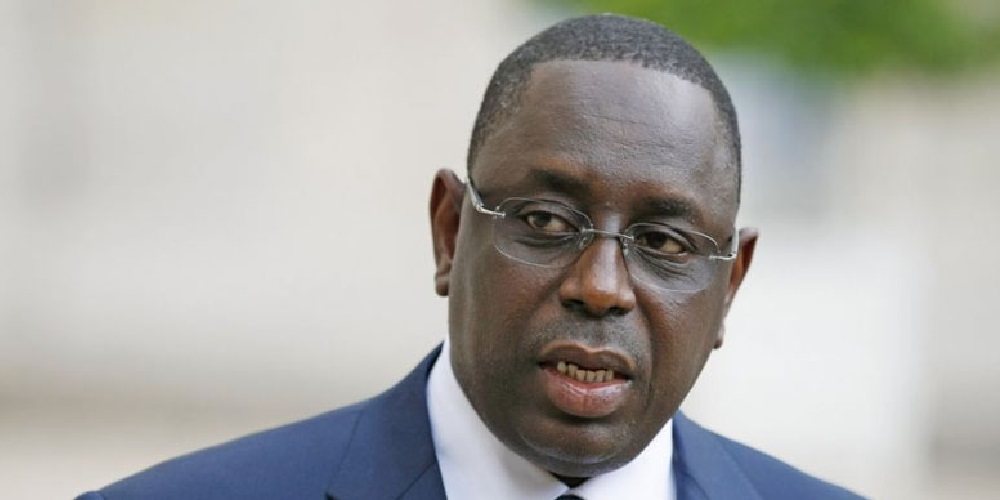
Senegal’s President Macky Sall has said he will leave office when his term comes to an end on 2 April, but tensions remain over an election date.
His recent decision to delay the vote, originally scheduled for Sunday, to mid-December sparked deadly protests.
In a televised interview, Mr Sall said an election date would now be decided in political talks to start on Monday.
But the opposition has refused to take part in the proposed dialogue dashing hopes of resolving the turmoil.
Sixteen of the 19 presidential hopefuls have said they will not be turning up for what the president has termed a “national dialogue”. A number of civil society organisations have also declined to take part in the exercise.
Mr Sall, who is on his way to the Nigerian capital, Abuja, for an extraordinary summit of the regional bloc Ecowas, has been under pressure to announce a new date since Senegal’s highest court declared last week that the postponement of the poll was illegal.
His original decree to delay the vote received strong condemnation from the international community.
Many feared the postponement would lead to President Sall’s remaining leader of the country indefinitely in a region plagued by coups and military governments.
Speaking on national television on Thursday evening, Mr Sall said he felt there was not enough time to vote in a new president by the time he steps down on 2 April. He said that the dialogue forum would decide what should happen if this was the case.
In a show of good faith, the president said he was prepared to release the popular opposition politician, Ousmane Sonko, from prison. His arrest sparked nationwide protests last year.
Dozens of the president’s opponents have already been set free since Senegal’s Constitutional Council ruled that his decision to postpone the election was illegal.
But the fact that the president did not set a new election date has further fuelled suspicions by his critics that this is just another stalling tactic.
President Sall has served two terms as Senegal’s leader and when he was first elected in 2012 he promised he would not overstay.
His televised interview has not yet restored his country’s reputation as a bastion of democracy in an increasingly totalitarian region.

News
N22.8bn fraud: A’Court affirms ex-Air Chief Amosu’s acquittal
The Court of Appeal, Lagos Division, on Monday upheld the acquittal of former Chief of Air Staff, Air Marshal Adesola Amosu, along with two other senior Nigerian Air Force officers, in a N22.8bn fraud case brought by the Economic and Financial Crimes Commission.
A three-member panel, led by Justice Yargata Nimpar, delivered a unanimous judgment via Zoom, holding that the EFCC’s failure to comply with statutory conditions precedent deprived the trial court of jurisdiction, effectively undermining the prosecution’s case.
Justice Paul Bassi, who read the lead judgment, noted that the issue had been settled in binding judicial authorities, leaving no reason for the appellate court to depart from established law.
Earlier, at the Federal High Court in Lagos, Justice Chukwujekwu Aneke had upheld preliminary objections filed by the defendants, striking out the charges on the grounds that the court lacked jurisdiction.
The judge ruled that Amosu, Air Vice Marshal Jacob Adigun, and Air Commodore Gbadebo Olugbenga were serving military officers when the alleged offences occurred, and prosecuting them without following the procedures outlined in the Armed Forces Act was unlawful.
The defendants were initially arraigned on June 29, 2016, alongside seven companies, facing charges including conspiracy, stealing, money laundering, concealment of proceeds of crime, and conversion of funds allegedly belonging to the Nigerian Air Force, dating back to March 5, 2014.
Justice Bassi explained that the appeal arose from the Federal High Court ruling of February 6, 2024, which had dismissed the case entirely.
On the issue of preliminary objections, the appellate court clarified that while objections to the validity of a charge are generally considered alongside substantive issues, objections concerning jurisdiction, abuse of process, or failure to meet statutory conditions can be determined at the preliminary stage.
The court agreed with the defendants that their applications challenged the court’s jurisdiction, not merely the validity of the charges. It held that while defects in a charge may sometimes be curable, failure to satisfy statutory conditions precedent to the court’s assumption of jurisdiction is fatal.
The appellate court relied on evidence showing that investigations commenced while the respondents were still serving officers, including a January 30, 2015 letter issued during investigations of DG Oil and Gas Limited.
Sections 121 and 123 of the Armed Forces Act, which prescribe mandatory procedures for handling allegations against serving officers, including reporting to commanding officers, were not followed by the EFCC.
Consequently, the Court of Appeal dismissed the EFCC’s appeal in its entirety, affirming the Federal High Court judgment and effectively ending the case against the three former Air Force officers.
News
How ‘fake orders’ sought to install Lawan as Buhari’s APC choice
A new biography of late former President Muhammadu Buhari has lifted the lid on intense power struggles within the Presidential Villa, revealing how influential aides allegedly issued fake presidential orders to top security chiefs in a failed bid to impose former Senate President Ahmad Lawan as the All Progressives Congress (APC) presidential candidate ahead of the 2023 primaries.
The book also discloses that former First Lady Aisha Buhari played a key role in the eventual removal of the then Director-General of the Department of State Services (DSS), Lawal Daura, while detailing a family dispute that culminated in gunfire within the Presidential Villa.
The revelations are contained in “From Soldier to Statesman: The Legacy of Muhammadu Buhari,” authored by Dr Charles Omole, and presented on Monday at the State House Conference Centre, Abuja.
The high-profile launch was attended by President Bola Ahmed Tinubu, Gambian President Adama Barrow, First Lady Senator Oluremi Tinubu, wife of the Vice President Nana Shettima, governors, traditional rulers, members of the diplomatic corps, former First Lady Aisha Buhari, Buhari family members, former aides and senior security officials.
According to the book, influential individuals close to Buhari approached the Inspector-General of Police (IGP), the DG of the DSS, and the DG of the National Intelligence Agency (NIA) on the eve of the APC presidential primaries in Abuja, claiming to be acting on Buhari’s instruction to deploy security forces to ensure Ahmad Lawan emerged as the party’s “consensus” candidate.
Former IGP Alkali Baba, quoted in the book, said he rejected the directive outright and persuaded his counterparts that the matter required immediate clarification from the President himself.
“The trio decided to seek an urgent audience with the President,” the book recounts. “When they asked if there was any additional instruction regarding the convention, the President said there was none.”
Buhari, according to the account, laughed when told that celebrations were already underway in Lawan’s neighbourhood over claims of presidential endorsement.
“He made it clear: he had not anointed anyone. Nigerians should choose, and the security agencies must not interfere,” the book states.
The IGP subsequently returned to inform those behind the move that Buhari had no preferred candidate and that the security services would not be used to manipulate the primaries.
The episode, the author notes, illustrated Buhari’s consistent resistance to turning state security institutions into political tools, even when such restraint proved uncomfortable for his party.
On the controversial removal of DSS boss Lawal Daura in 2018 by then Acting President Yemi Osinbajo, the book reveals that Buhari deliberately refused to overturn the decision, despite intense pressure.
“Buhari had handed executive authority to his vice president. To reverse the action would have undermined institutional order,” the book quotes an aide as saying.
It further states that Aisha Buhari was a major instigator of Daura’s removal, a detail not widely documented at the time.
The book also recounts a disturbing incident in which gunshots were fired inside the Presidential Villa following a family dispute involving a policeman attached to the First Lady’s office.
Buhari’s Chief Security Officer, Idris Abubakar, promptly arrested and detained the officer. When investigations revealed deeper involvement by members of the First Family, Buhari ordered consequences without hesitation.
“A nephew was told, in essence, to pack his things and leave this house,” the book records, adding that Buhari made it clear that blood ties would not shield misconduct.
Dr Omole writes that these episodes collectively portray a leader often misrepresented as passive, but who, in reality, exercised restraint rooted in principle rather than weakness.
“Again and again, people close to Buhari exploited proximity and misrepresented him, sometimes with grave consequences, but often without his knowledge,” the book states.
By documenting these moments, the book, From Soldier to Statesman, specifically seeks to separate Buhari the man from the myths around his presidency, offering what the author describes as a factual, insider account of power, loyalty, restraint and betrayal at the highest levels of the Nigerian state.
News
NAF airstrikes kill many terrorists, destroy their logistics hub in Borno
The Nigerian Air Force (NAF) has executed a successful air interdiction operation against a major terrorist logistics hub at Dabar Masara in the Southern Tumbuns, Borno.
This is contained in a statement by the Director of Public Relations and Information, NAF, it Commodore Ehimen Ejodame, on Monday in Abuja.
Ejodame said the operation conducted on Sunday by the Air Component of Operation HADIN KAI, followed credible intelligence on the presence of a terrorist workshop and sustained movement of armed elements in the area.
He said the mission was intelligence-driven and preceded by coordinated Intelligence, Surveillance and Reconnaissance (ISR) operations.
According to him, prior ISR missions revealed repeated terrorist activities and a concentration of vehicles concealed under vegetation, confirming the location as an active terrorist logistics hub.
“Further surveillance on the day of the operation validated the earlier findings, with terrorists observed manoeuvring within the location and around the identified vehicles.
“Following positive identification and in strict adherence to the Rules of Engagement, the targets were engaged,” he said.
Ejodame added that post-operation Battle Damage Assessment confirmed the destruction of the identified vehicles and the neutralisation of terrorist elements.
He said the successful mission underscored the NAF’s commitment to precise, intelligence-led air operations aimed at degrading terrorist networks and enhancing security across affected regions.
-
News18 hours agoPDP Hopes for a Strong 2027 Comeback Under New Leadership
-
News17 hours agoJust in: Supreme Court Upholds President s Power To Declare Emergency Rule Suspend Elected Officials
-
Economy13 hours agoNaira Slides Against Dollar On Monday, December 15
-
News17 hours agoTrouble looming as Dangote wants probe of NMPDPRA boss, Farouk by CCB over alleged scam
-
Opinion23 hours agoTaxation Without Production: Nigeria’s Road to Social and Economic Strangulation
-
News52 minutes agoPolice To Resume Tinted Glass Permit Enforcement In January
-
News13 hours ago70% Of 2025 Budget To Be Rolled Over Into 2026 – Finance Minister Confirms
-
News17 hours agoBuild Strong Institutions to Secure Democracy, Oshodi Urges ECOWAS on Regional Stability