
Foreign
Trump administration seeks legislative backing to terminate vaccine funding

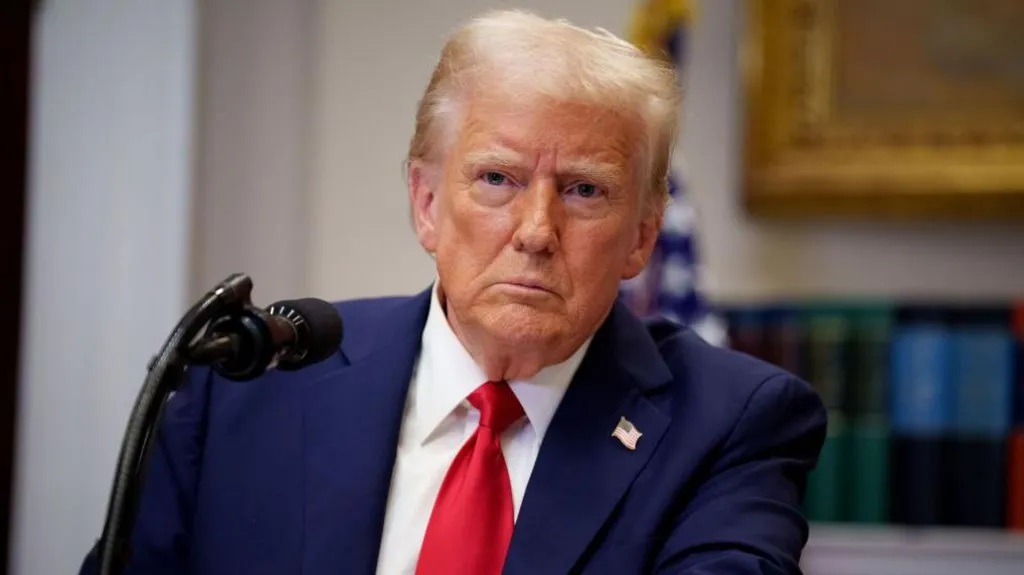
The President Donald Trump administration plans to terminate the United States’ financial support for the Global Alliance for Vaccine and Immunisation, the organization that has helped purchase critical vaccines for children in developing countries.
Some other programs terminated is funding for the United Nations Food and Agriculture Organization, which conducts surveillance for diseases that can be transmitted from animals to humans, including bird flu, in 49 countries. Some major programs to track and fight malaria, one of the world’s top killers of children, have also been ended.
Those decisions are included in a 281-page spreadsheet that the United States Agency for International Development sent to the US Congress, listing the foreign aid projects it plans to continue and to terminate.
The New York Times obtained a copy of the spreadsheet and other documents describing the plans.
For many years, developing countries have relied on GAVI support to combat malaria.
Gavi is estimated to have saved the lives of 19 million children since it was set up 25 years ago. The United States contributes 13 percent of its budget.
The terminated grant to Gavi was worth $2.6 billion through 2030.
By Gavi’s own estimate, the loss of U.S. support may mean 75 million children do not receive routine vaccinations in the next five years, with more than 1.2 million children dying as a result.
The U.S. has been among the top donors to the organization since its creation, and became the largest during the Covid-19 pandemic.
Gavi was counting on a pledge made last year by President Joseph R. Biden Jr. for its next funding cycle.
New vaccines with the promise to save millions of lives in low-income countries, such as one to protect children from severe malaria and another to protect teenage girls against the virus that causes cervical cancer, have recently become available, and Gavi was expanding the portfolio of support it could give those countries.
The loss of U.S. funds may set back the organization’s ability to continue to provide its basic range of services — such as immunization for measles and polio — to a growing population of children in the poorest countries, let alone expand to include new vaccines.
While European countries have historically provided significant funding, many are now reducing foreign aid spending as they grapple with the change in U.S. policy on Ukraine and the U.S. demand that they increase their defense spending.
Japan, another major Gavi donor, is struggling with a depreciating currency.
GAVI’s chief executive, Dr. Sania Nishtar said that she hoped the Trump administration would reconsider the decision to end its support. “Gavi’s work keeps people everywhere, including Americans, safe. In addition to protecting individual children, vaccination reduces the possibility of large outbreaks. The organization maintains global stockpiles for vaccines against diseases such as Ebola and cholera, deploying them in rapid response efforts for epidemics,” she said.
Gavi’s structure requires countries to pay part of the cost of vaccines, with their share growing as income levels rise; middle-income countries are weaned from support.
The Trump administration, according to the letter has decided to continue 898 U.S. Agency for International Development Awards and to end 5,341.
It says the remaining programs are worth up to $78 billion.
But only $8.3 billion of that is unobligated funds — money still available to disburse, because the amount covers awards that run several years into the future.
The figure shows a massive reduction in the $40 billion that U.S.A.I.D. used to spend annually.
The administration has decided to continue some key grants for medications to treat H.I.V. and tuberculosis, and food aid to countries facing civil wars and natural disasters.
The cover letter details the skeletal remains of U.S.A.I.D. after the cuts, with most of its funding eliminated, and only 869 of more than 6,000 employees still on active duty.
The memo says that 869 U.S.A.I.D. personnel were working as of last Friday, while 3,848 were on administrative leave and 1,602 are in the process of being laid off.
Of 300 probationary employees who were initially fired, 270 have returned to work following a court order prohibiting their dismissal.
A spokesperson for the State Department, which now runs what is left of U.S.A.I.D., confirmed the terminations on the list were accurate and said that “each award terminated was reviewed individually for alignment with agency and administration priorities, and terminations were executed where Secretary Rubio determined the award was inconsistent with the national interest or agency policy priorities.”
Although the administration has repeatedly said publicly that its foreign assistance review process has been concluded, the information in the documents suggests that there is still some fluidity in which programs will survive.
Staff members of one major malaria program that was terminated weeks ago, and which appears on the list of canceled projects sent to Congress, for example, were informed on Monday that it is being restored.
Nevertheless, cuts to malaria response are deep. While awards that fund the bulk purchase of bednets and malaria treatments have been preserved, many of the programs to deliver these and other malaria control efforts in individual countries such as Cameroon and Tanzania — among the most affected in the world — have been terminated.
Some organizations with awards that have not been officially canceled have received no funds for more than two months, and have folded. Without them, there is no one to take treatments from ports to local clinics, or deliver them to children.


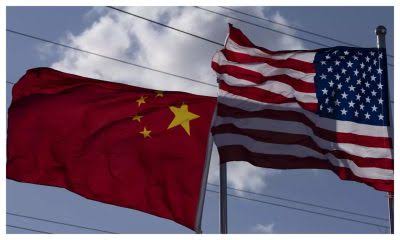
China will impose 84 percent tariffs on US imports, up from 34 percent, the finance ministry said Wednesday, hours after similar levies by the United States came into force.
US President Donald Trump’s latest salvo of tariffs came into effect on dozens of trading partners Wednesday, including punishing 104 percent duties on imports of Chinese products.
Beijing has consistently opposed tariff rises and said Wednesday it would take “firm and forceful” steps to protect its interests.
Its finance ministry later said in a statement that “additional tariff rates” on imports originating in the United States would “rise from 34 percent to 84 percent”, effective from 12:01 pm on Thursday.
“The tariff escalation against China by the United States simply piles mistakes on top of mistakes (and) severely infringes on China’s legitimate rights and interests,” the ministry said.
Washington’s moves “severely damage the multilateral rules-based trade system”, it added.
In a separate statement, Beijing’s commerce ministry said it would blacklist six American artificial intelligence firms, including Shield AI Inc. and Sierra Nevada Corp.
The companies had either sold arms to Taiwan or collaborated on “military technology” with the island, the commerce ministry said.

The European Commission said on Monday it had offered a “zero-for-zero” tariff deal to avert a trade war with U.S. President Donald Trump as EU ministers agreed to prioritise negotiations, while striking back with 25% tariffs on some U.S. imports.
The 27-nation bloc faces 25% import tariffs on steel and aluminium and cars and broader tariffs of 20% from Wednesday for almost all other goods under Trump’s policy to hit countries he says impose high barriers to U.S. imports.
On Monday evening, the Commission proposed its first retaliatory tariffs at 25% on a range of U.S. imports in response to Trump’s steel and aluminium tariffs rather than the broader levies.
However, the list was shortened after the EU executive bowed to pressure from member states and removed bourbon, wine and dairy after Trump threatened a 200% counter-tariff on EU alcoholic drinks. France and Italy, major exporters of wine and spirits, were particularly concerned.
EU trade chief Maros Sefcovic said earlier on Monday the retaliation would impact less than the previously announced 26 billion euros ($28.4 billion). The tariffs for most of the goods will go into effect May 16 and some from December 1.
Ministers overseeing trade met in Luxembourg on Monday to debate the EU’s response and discuss relations with China. Many said the priority was to launch negotiations to remove Trump’s tariffs, rather than fight them.
Michal Baranowski, deputy economy minister of Poland, told a press conference after the meeting that his EU counterparts did not want to be “trigger-happy”.
Sefcovic said discussions with Washington were at an early stage and that he had offered “zero-for-zero” tariffs for cars and other industrial products, expressing hope that discussions could begin.
However, Trump’s top trade adviser on Monday dismissed tech-billionaire Elon Musk’s push for “zero tariffs” between the U.S. and Europe, calling the Tesla CEO a “car assembler” reliant on parts from other countries.
“While the EU remains open to – and strongly prefers – negotiation, we will not wait endlessly,” Sefcovic said, adding the bloc would push ahead with countermeasures and steps to avoid floods of diverted imports.
The EU is set to approve the first retaliatory measures this week. The bloc will start collecting the tariffs on April 15, with a second tranche starting a month later.
The removal of bourbon from the list of items subject to the EU’s retaliatory tariffs on U.S. imports “would be great news, and we are hopeful this is the case,” said Chris Swonger, chief executive of the Distilled Spirits Council of the United States. “It would be the first step toward getting the U.S.-EU spirits sectors back to zero-for-zero tariffs and untangling distilled spirits products from these wider trade disputes.”
EU KEEPS ALL RETALIATION OPTIONS OPEN
The bloc is expected to produce a larger package of countermeasures by the end of April, as a response to U.S. car and broader tariffs.
Sefcovic said the EU was ready to consider all retaliatory options. One is the EU’s Anti-Coercion Instrument, which allows it to target U.S. services or to limit U.S. companies’ access to EU public procurement tenders.
“We are prepared to use every tool to protect (the) single market,” he said, echoing the views of French Trade Minister Laurent Saint-Martin.
In a war of tariffs on goods, Brussels has less to target than Washington, given EU goods imports from the U.S. totalled 334 billion euros ($366.2 billion) in 2024, against 532 billion euros of EU exports to the U.S.
Some EU countries, particularly those exposed to trade with the United States, urged caution. Irish Foreign Minister Simon Harris described the Anti-Coercion Instrument as “very much the nuclear option.”
Baranowski of Poland said EU members were willing to keep options open, with a stress on proportionality.
“There were various ideas put on the table. Some countries mentioned services. Others didn’t. Some countries mentioned digital services, others didn’t,” he said.
Outgoing German Economy Minister Robert Habeck said the EU should realise it was in a strong position – if it was united.
“The stock markets are already collapsing and the damage could become even greater … America is in a position of weakness,” he said in Luxembourg.
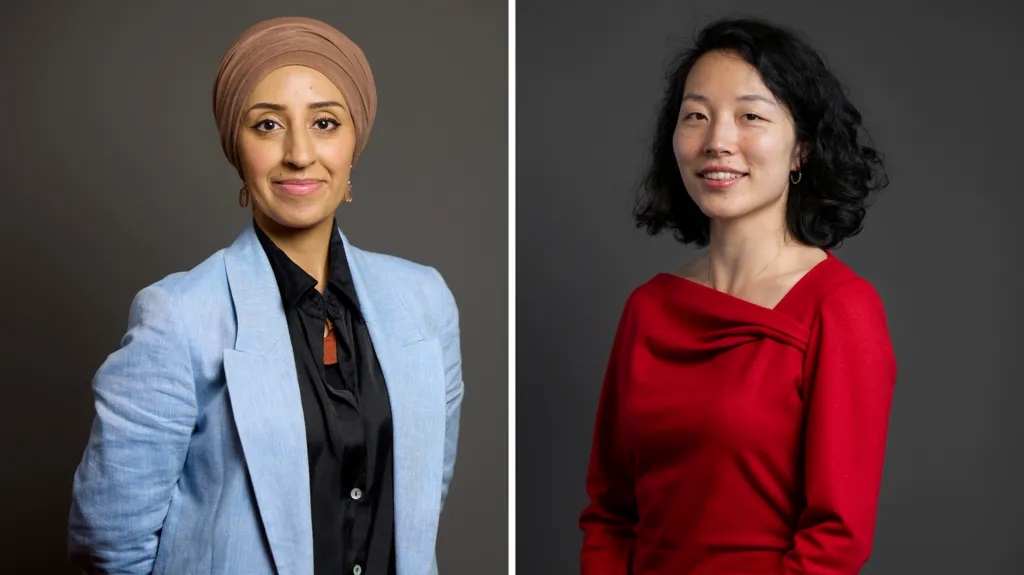
Two Labour MPs say they are “astounded” to have been denied entry to Israel while on a trip to visit the occupied West Bank.
Abtisam Mohamed and Yuan Yang said it was “vital” parliamentarians were able to witness the situation in the occupied Palestinian territory first-hand.
They were refused entry because they intended to “spread hate speech” against Israel, the nation’s population and immigration authority said.
Foreign Secretary David Lammy criticised Israeli authorities, describing the move as “unacceptable, counterproductive, and deeply concerning”.
But Conservative leader Kemi Badenoch said Israel had a right to “control its borders”, adding it was “significant” there were Labour MPs other countries did not want to let in.
Yang, the MP for Earley and Woodley, and Mohamed, the MP for Sheffield Central, flew to Israel from London Luton Airport with two aides on Saturday afternoon.
The Israeli immigration authority said Interior Minister Moshe Arbel denied entry to all four passengers after they were questioned. It accused them of travelling to “document the security forces”.
The Israeli embassy in London said in a statement on Saturday that the country “will not allow the entry of individuals or entities that act against the state and its citizens”.
It said Mohamed and Yang had “accused Israel of false claims” and were “actively involved in promoting sanctions against Israeli ministers”.
It also said they had supported campaigns aimed at boycotting the country “at a time when Israel is at war and under attack on seven fronts”.
The UK Foreign Office said the group was part of a parliamentary delegation. However, Israel’s immigration authority said the delegation had not been acknowledged by an Israeli official.
The Israeli embassy said the MPs “were offered hotel accommodation, which they declined” and the cost of their return flight to the UK was covered.
Israel’s Interior Ministry said the MPs left the country early on Sunday.
Mohamed and Yang said their trip had been organised with UK charities that had “over a decade of experience in taking parliamentary delegations”.
“We are two, out of scores of MPs, who have spoken out in Parliament in recent months on the Israel-Palestine conflict and the importance of complying with international humanitarian law,” the MPs said in a joint statement.
“Parliamentarians should feel free to speak truthful in the House of Commons, without fear of being targeted.”
Lammy said the Foreign Office had been in touch with both MPs to offer support, adding: “I have made clear to my counterparts in the Israeli government that this is no way to treat British parliamentarians.”
The Council for Arab-British Understanding and Medical Aid for Palestinians – the latter of which is a registered UK charity – said in a joint statement that they had organised the trip.
“This visit was part of that long-standing programme,” they said.
“When questioned, the group was clear, open and transparent about the aims and objectives of the visit, which included visiting a range of projects run by humanitarian and development organisations operating in the West Bank.
“The group had informed the UK consul general in Jerusalem of their visit and was planning to meet with them as part of the itinerary.”
Both Yang and Mohamed – who were first elected in 2024 – have made several interventions on the Israel-Hamas conflict in Parliament.
In February, Mohamed initiated a cross-party letter, signed by 61 MPs and lords, calling for a ban on goods from Israeli settlements on Palestinian territory, citing an opinion from the International Court of Justice (ICJ).
She has also criticised Israel for withholding humanitarian aid from Gaza, telling the House of Commons in October that international law “prohibits the starvation of civilians as a method of warfare”, and has mentioned humanitarian organisations’ claims of “ethnic cleansing” in Gaza.
In January, Yang spoke in favour of bringing sanctions against Israeli ministers Itamar Ben-Gvir and Bezalel Smotrich, after they suggested building Israeli settlements in northern Gaza to encourage Palestinians to leave.
She has also highlighted the dangerous conditions journalists and medical professionals face while in the Palestinian territory.
When asked about Israel’s decision, Conservative leader Kemi Badenoch told the BBC’s Sunday with Laura Kuenssberg that countries “should be able to control their borders”.
“What I think is shocking is that we have MPs in Labour [who] other countries won’t allow through,” Badenoch said. “I think that’s very significant.”
Her comments were rebuffed by Emily Thornberry, the Labour chair of the foreign affairs select committee, who described Yang and Mohamed as “highly respected parliamentarians” and “potential leaders”.
“Israel is badly advised to try and alienate them, to humiliate them and to treat them in this way,” she told the programme.
“I think that it’s an insult to Britain and I think it’s an insult to Parliament.”
Sir Ed Davey accused Badenoch of “yet another complete shocker”.
The Liberal Democrat leader said she “has once again shown unbelievably poor judgement by failing to back two British MPs denied entry to Israel”.
Lammy called Badenoch’s comments “disgraceful”, asking her: “Do you say the same about Tory MPs banned from China?”
During the war in Gaza, there have been protests, violent incidents and raids by Israeli forces in the West Bank. Hundreds of deaths have been reported there.
Israeli troops have been engaged in an extended operation in the occupied Palestinian territory, where two Palestinians were killed on Friday.
The current war began on 7 October 2023, when Hamas fighters launched a surprise attack on Israel, killing around 1,200 people and taking 251 hostages back to Gaza.
Since then, Gaza’s Hamas-run health ministry says more than 50,000 people have been killed. It said 1,309 people have died since a ceasefire ended on 18 March.
Lammy said: “The UK government’s focus remains securing a return to the ceasefire and negotiations to stop the bloodshed, free the hostages and end the conflict in Gaza.”




-
 News24 hours ago
OERAF held memorial lecture on conflict resolution, security/safety of community in Nigeria
-

 News8 hours ago
Banditry:” I was chained for 32days while in their den, killed my wife as I watch-Nat’l Assembly DD narrates experience
-
 News24 hours ago
HoR Minority Caucus decries killings in Plateau, Benue states, urges immediate presidential decisive actions
-

 News4 hours ago
Police Inspector Slumps, Dies While Celebrating After Arsenal Wallop Real Madrid 3-0
-

 News16 hours ago
Bandits have seized control of 64 communities in Plateau – Gov Muftwang
-
 News10 hours ago
US revokes more than 500 foreign student visas
-
 News11 hours ago
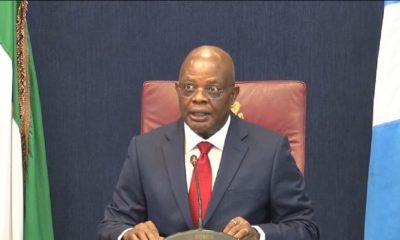
Ibas picks administrators for 23 Rivers LGs(SEE list)
-

 Economy16 hours ago
Mobile Money transactions hit $1.68trn in one year