Home Blog Page 4

Timaya vows he cannot disrespect Fela or his family

0


Popular Nigerian singer Timaya has described late Afrobeat pioneer Fela Anikulapo-Kuti as one of the major figures responsible for the global growth of Nigerian music.

Timaya made the remarks while speaking on the Afrobeats Intelligence podcast, where he reflected on Fela’s influence on Nigerian artistes and the wider African music scene.

The singer said Fela’s contribution to music had gone beyond Nigeria, noting that the late musician continued to command significant recognition in other African countries.

According to Timaya, Fela’s music and legacy remain particularly respected in Cameroon, where he claimed a radio programme is dedicated to playing his songs on weekends.

Without Fela, nobody would have known us and we wouldn’t be here singing music. I call him Baba because he didn’t inspire only me and other Nigerians,” Timaya said.

The singer added that Fela’s impact on Nigerian music was so significant that he could not disrespect the late musician or members of his family.

Fela is the greatest man I can never in my life disrespect him nor his family,” he added.

Timaya’s comments highlight the enduring influence of Fela, whose music, activism and Afrobeat sound have continued to shape generations of Nigerian and African musicians.

Bandit Threat Shuts School, Hospital, Orphanage in Kwara — Cleric

0

A suspected bandit threat has forced the temporary evacuation of more than 100 people from a ministry facility in Idofian, Ifelodun Local Government Area of Kwara State, disrupting the operations of a school, hospital, orphanage and other support centres.

The founder of Word Assembly Ministries, Rev. Isaac Omolehin, disclosed this while speaking on the security situation at the facility, saying he, his wife and children had also been forced to flee their residence.

According to Omolehin, police officers arrived at the facility in the early hours of May 31 and advised residents to evacuate following intelligence suggesting that an attack was imminent.

He said the evacuation affected ministry workers, students, patients, nurses, children and other vulnerable persons receiving care at the facility.

“The school cannot open, the hospital is not functioning, and the patients and nurses all ran for their lives,” he said.

The cleric said the facility also houses an orphanage, an old people’s home and a rehabilitation centre, making the security situation particularly concerning.

He alleged that suspected bandits later arrived at the location but found the premises largely deserted following the evacuation.

Omolehin said he had not been able to return to his residence or the ministry camp since the incident, adding that his family had been moving between different locations for safety.

He said the ministry had written to the police, the Department of State Services and the Kwara State Ministry of Social Welfare, seeking clearance and adequate security for residents to return.

However, he said no confirmation had yet been received that the area was safe.

The cleric also alleged that his hometown in Kogi State came under attack three days after the Kwara incident, with some residents reportedly killed.

Although the ministry’s buildings were not destroyed, Omolehin said some belongings were stolen after the facility was abandoned. He, however, distinguished the alleged looters from the suspected bandits, saying the major concern was the threat of abduction.

He appealed to the Federal Government and the Kwara State Government to urgently strengthen security around the facility, particularly because of the vulnerable children and other people under the ministry’s care.

Omolehin said some of the children at the orphanage had reportedly been placed there through government intervention, stressing the need for urgent action to protect them and enable essential services to resume.

Despite the disruption caused by the security situation, the cleric said the incident had not weakened his commitment to the ministry or its humanitarian activities.

Decoupling Sovereignty Index (1): The Anatomy of Becoming Nobody

0

By Max Amuchie | The Sunday Stew

On 7 June 2026, this column unveiled the Decoupling Sovereignty Index (DSI) as the quantitative extension of the Trinity of Sovereignty Decay (TSD) theory, formerly known as the Trinity of State Decay. It is a measurement instrument designed to track the degree to which a state’s formal authority has separated from its practical, lived reality on the ground. But the index measures a condition with a human face—and that face belongs to a peculiar kind of disappearance: one that does not require a person to die.

A person can remain alive, remain within the borders of a country, retain a name, a nationality and perhaps even a national identity document, and yet become progressively invisible to the institutions that are supposed to make citizenship meaningful.

The person has not left the country. The state has not officially ceased to exist. The constitution may still be in force, parliament—or, in the case of Nigeria, the State Assembly—may still sit, courts may still open their doors, police stations may still bear the name of the state, ministries may still issue statements, and elections may still be conducted. And yet, somewhere within the territory, sovereignty has begun to thin out.

 The question is not simply whether a state exists. The deeper question is where, how, and to what degree sovereignty reaches the individual. What happens when the state still claims a person but can no longer reliably see, protect, serve or represent them?

Perhaps the most concise answer is that they begin to become nobody.

Not nobody in the philosophical sense of non-existence. Nobody in the institutional sense.

The DSI Begins With the Zone

DSI does not begin with the country as its unit of observation. It begins with the zone—the sub-national space in which sovereignty is actually experienced. A country may remain formally sovereign while sovereignty is experienced very differently across its territory. A national government can exercise effective authority in one part and encounter competing authority, weak institutional reach or negotiated compliance in another. The country provides the sovereign frame; the zone provides the analytical field. The question, therefore, is not simply whether the state exists, but where—and for whom—it actually exists.

That distinction is essential. An observation about the Port-au-Prince Metropolitan Zone is not a statement that Haiti as a whole has ceased to function as a sovereign state. An observation about Catatumbo is not a statement about Colombia in its entirety, and an observation about Zamfara is not a description of Nigeria as a whole.

The comparative question is therefore not “Which country has failed?” It is this: what happens to sovereignty inside particular zones when the state’s formal territorial claim becomes detached from its effective institutional reach?
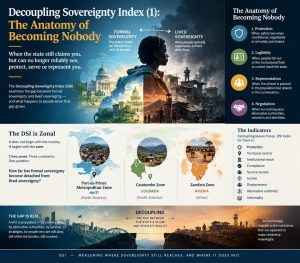
Three Zones, Three Continents

Consider the Port-au-Prince Metropolitan Zone in Haiti, the Catatumbo Zone in Colombia and the Zamfara Zone in Nigeria. They differ in geography, history, political systems and the forms of insecurity they have experienced. They are not three versions of the same crisis. They are three configurations of decoupling.

Port-au-Prince: territorial sovereignty contested. Haiti remains a sovereign state, with international recognition, constitutional institutions and territorial claims. But in parts of the metropolitan area, armed groups have acquired an extraordinary capacity to determine how people move, trade, work and access essential services. When an armed group controls a road, decides who may pass, extracts revenue or determines which population can remain in a neighbourhood, it inserts itself between the state and the citizen.

The resident’s question becomes brutally practical: whose authority determines whether I can move, trade, work or remain here? That is a DSI question. The person’s nationality has not changed, but the lived geography of sovereignty may have.

Catatumbo: sovereignty in competition. In Colombia’s Norte de Santander, the state has not simply disappeared. Armed organisations have competed for territorial and social control alongside formal institutions, in a region shaped by armed conflict, illicit economies and displacement. The escalation of violence in early 2025 produced mass displacement and severe humanitarian consequences.

What matters for DSI is that different forms of authority operate within the same space. The state retains legal sovereignty, an armed organisation may control movement in a locality, an illicit economy may determine livelihoods, and a community may build its own mechanisms of protection. The citizen lives within overlapping systems of authority. This is not the disappearance of sovereignty but the fragmentation of its lived expression.

Zamfara: the negotiated space. In Zamfara, the state remains present: institutions, security agencies and political authority are all formally intact. Yet persistent bandit violence, displacement and attacks on rural communities have created environments in which survival can require strategies beyond ordinary reliance on formal institutions. In some instances, communities have negotiated locally with armed groups.

The DSI question is not whether such negotiations are legitimate or lawful. It is why a community reaches the point of feeling compelled to negotiate its security outside the state’s formal architecture. The community may not have rejected the state. It may simply have found that survival has acquired another institutional address. And once survival acquires another address, sovereignty has begun to move.

These are not a league table of state failure, and DSI is not making one. Nor should every alternative institution be treated as the same phenomenon. A community organisation providing emergency support is not analytically identical to an armed group controlling territory. An informal market is not criminal governance. A negotiated local arrangement is not automatically the displacement of state authority.

The work of DSI is to distinguish these configurations: to determine what has become decoupled, how far the decoupling extends, which institutions have been displaced or bypassed, and what forms of authority have emerged in the space.

The Anatomy of Becoming Nobody

Modern citizenship rests on a quiet assumption: that behind the passport, the identity card, the address, the school record and the court system is an organised authority capable of recognising the individual. The citizen says, in effect, I exist, and the state knows that I exist.

That recognition is more consequential than it appears. To be recognised is to be counted. To be counted is to be legible. To be legible is to be reachable by institutions. And to be reachable is one of the foundations of meaningful sovereignty.

When those connections break, a person may be legally recognised but practically unreachable. A farmer may own land on paper but be unable to cultivate it safely. A victim may report a crime and find that the institution capable of responding has little effective presence. A resident may pay taxes yet rely on private, communal or informal systems for the protection and services that taxation is supposed to support.

The formal relationship remains. The functional relationship weakens. This is sovereignty decoupling.

We tend to look for spectacular signs of state collapse: abandoned buildings, anarchy, the complete disappearance of public authority. But sovereignty can decay without such images. A state can remain visibly present while functionally absent: a police station without effective policing, a court without meaningful access to justice, a school without dependable education, a citizenship document without the protection it is supposed to signify. A government can remain present as an institution while becoming absent as an experience.

Three Disappearances

Protection. The sovereign promise begins with something fundamental: the individual should not have to negotiate their physical existence alone. When that promise becomes unreliable, people search for substitutes: family, community, traditional authorities, political patrons, private security, armed groups, money, migration, silence. The more they depend on these, the less exclusive the state’s protective function becomes. When protection becomes conditional, negotiated or privately purchased, sovereignty has begun to decouple from everyday life.

Legibility. A person can be physically present but administratively absent, with limited access to identification, formal employment, financial systems, education, healthcare or justice. Formal institutions find them hard to reach, and they find the state harder still. That produces a dangerous asymmetry: the state continues to claim sovereignty over the person, while the person experiences little practical access to the institutions through which that sovereignty is supposed to operate. Sovereignty can be claimed from above while being experienced as absence from below.

Representation. An individual may be present, legally recognised and even periodically counted, yet remain politically peripheral. They may vote but have little influence over decisions affecting their immediate security. Policies are made for them and statistics are collected about them, but their institutional voice is weak. They are present in the population and absent in the conversation.

When the Citizen Becomes a Negotiator

At some point, the individual stops assuming that institutions will simply work. Protection, movement, access, justice and economic opportunity must all be negotiated, and sometimes even identity and allegiance. The citizen no longer relates to sovereignty through a stable institutional relationship. The citizen navigates sovereignty as an environment.

People rarely accept institutional invisibility passively. They build networks, find patrons, create informal markets, establish community security, develop alternative ways of settling disputes, migrate, conceal and learn which authority matters in which circumstance. Society does not become empty. It becomes layered.

The person who can no longer rely on one institutional identity begins to acquire several. The citizen becomes a negotiator, the resident an intermediary, the victim a survivor, the worker an informal entrepreneur, the community its own security system. The individual learns to wear different identities because sovereignty itself has become fragmented.

The Sovereignty Gap

Imagine two maps. The first shows the formal territory of a state. The second shows where its institutions can actually perform their functions reliably. The two should overlap. Where they do not, a gap emerges, and the gap is not empty. It may be occupied by community authority, informal economies, political patronage, criminal governance, armed actors, private enterprise or simply the individual’s own survival strategies.

The point is not that every alternative institution is illegitimate or destructive. It is that the growth of alternative systems can reveal where formal sovereignty is no longer performing its functions exclusively or effectively. That is why DSI is not another measure of state failure. It asks a different question: what happens when sovereignty remains formally intact while becoming functionally distributed, displaced or detached?

So the conventional question, “Does the state control the territory?”, gives way to more granular ones. Does the state protect the people who live there? Can they reliably reach its institutions? Can those institutions enforce their decisions? Does institutional presence correspond to institutional function?

Sovereignty is not experienced uniformly across space. It can be strong in a city and weak in a rural community, strong by day and weak after dark, strong in law and weak in practice. That is why the unit of analysis cannot always be the state as a whole, and why the zone is often more revealing.

A decoupled zone is therefore not a territory where government has vanished. It is a space where the relationship between formal and lived sovereignty has weakened enough that alternative forms of authority, protection, compliance or survival begin to fill the gap.


Making Decoupling Visible

The language of sovereignty is often too broad, and the language of state failure too blunt. A country can be described as sovereign while millions of people experience radically different degrees of protection, institutional access and political recognition. DSI begins from the proposition that this variation should be made visible.

If decoupling is real, it should leave observable traces in protection, territorial control, institutional reach, compliance, service access, justice, displacement, alternative authority and informality. The challenge is to determine which signals matter, how they interact and how they should be measured. That is where DSI moves from philosophy into methodology.

It is not another number produced because numbers look scientific. It is a disciplined way of asking a difficult question: how far has formal sovereignty become detached from lived sovereignty? And if that detachment can be observed, compared and measured, perhaps we can identify its stages before the language of collapse becomes necessary.

The Question DSI Leaves Us With

The state may say: you belong to us. The individual may answer: but do I still belong to the protection, institutions and authority that make that belonging meaningful?

Between those two statements lies the territory of decoupled sovereignty. And somewhere inside it is the person who remains legally visible but becomes institutionally invisible. Still a citizen. Still alive. Still within the borders. Still counted. But increasingly forced to survive outside the dependable reach of the institutions that are supposed to define and protect citizenship.

That is what I mean by becoming nobody. It is not disappearance from society.

It is disappearance from the effective field of sovereignty.

The DSI begins there. Not with the collapse of the state.

But with the moment when the map of formal sovereignty and the map of lived sovereignty begin to drift apart.

And perhaps the first task of measuring sovereignty is therefore not to ask whether a state exists.

It is to ask:

Where does it still reach?

Where does it no longer reach?

Who lives in the distance between the two?

And, most importantly:

What happens to them there?

××××××

 A Note on the Sign-off

 Some phrases become associated with an institution. Others become part of a writer’s voice. And sometimes, as the work evolves, the language evolves with it.

 For me, two expressions have accompanied The Sunday Stew in its earlier seasons: “Trust is sacred” and “Stay seasoned.”

 Both have served their purpose.

 “Trust is sacred” remains particularly important because it is the official motto of Sundiata Post. As the institution has grown, its place has become clearer. It belongs to Sundiata Post—not simply as a sign-off, but as a statement of institutional identity.

 “Stay seasoned,” meanwhile, became part of the personal voice of The Sunday Stew. It carried the flavour of the column and its invitation to readers to remain thoughtful, discerning and engaged.

 But The Sunday Stew has been changing too.

 So this is simply a moment to allow the language of The Sunday Stew to catch up with the journey of the work.

 “Stay seasoned” is now retired.

 And “Trust is sacred” returns fully to its institutional home at the Sundiata Post.

 In their place, the column will now close with:

From the desk to the world.

 It feels right because every article in The Sunday Stew begins at a desk.

 That is where the real journey begins.

 The new sign-off is therefore less a departure from what came before than an acknowledgment of where the work is going.

 The work continues.


From the desk to the world

•Dr. Max Nwabueze Amuchie is a Scholar-Journalist and Media CEO, and Lead Researcher at the Sundiata Post Intelligence Unit, Abuja. An Expert Member and Peer Reviewer at ScienceOpen, he is a member of the League of Nigerian Columnists.


X @MaxAmuchie

Email: [email protected]

We should not relent in building educational root that raised us, for the sake of our kids- IGSOSA President, Adidi (Photos)

0


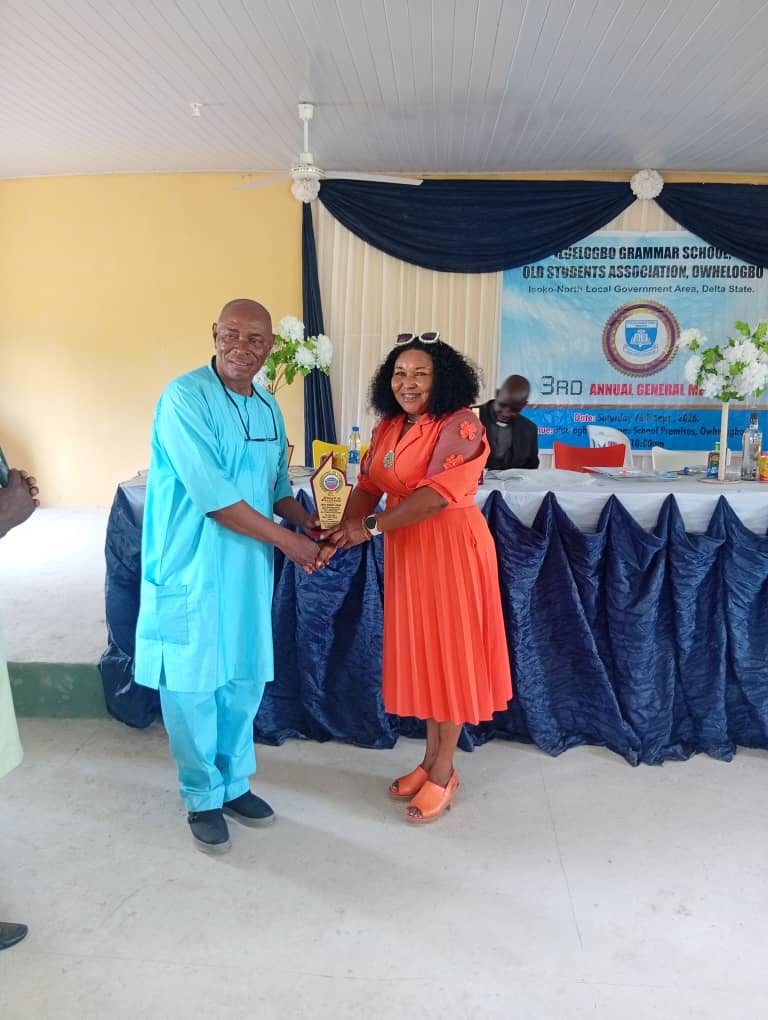
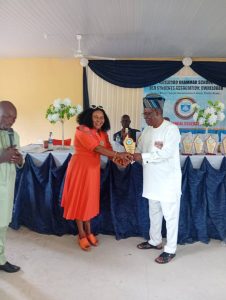
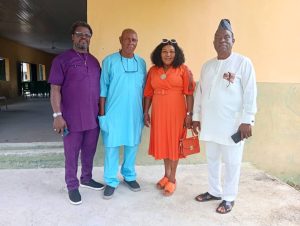
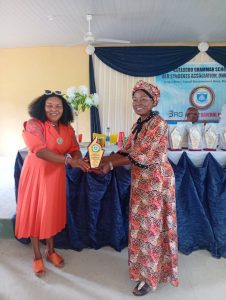
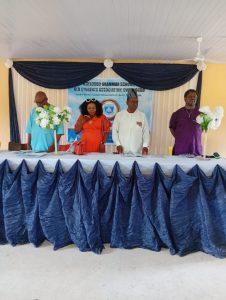
President of Iluelogbo Grammar School Old Students Association, IGSOSA, Engr David Owhairoruo Adidi has urged fellow old students not to relent in building their educational root that raised then for the sake of their children.

Speaking at the 2025/2026 Annual General Meeting, AGM of the association held in Owhelogbo , in Isoko North LGA of Delta State on Saturday,, Engr Adidi encouraged members of the association to continue the good work as it will serve as an ever lasting legacy.

Giving account of his exco’s stewardship in the last one year, he chronicled the challenges and how they were surmounted.

He said, “you will recall that following elections concluded on 28th June 2025 we were inaugurated on 12th July 2025.

” Our mandate is clear: build on the foundation of our predecessors and reposition our alma mater for sustainable growth.

“We met two urgent challenges:
Staffing Crisis, Acute shortage of teachers in core subjects, poor attitude to duty, and internal divisions.
Leadership Vacuum: The then Principal was incapacitated by illness.

“We engaged stakeholders immediately. Through advocacy, we secured the posting of four teachers in core subjects and a new substantive Principal. The ailing Principal was transferred on health grounds.

He gave a blow by blow account of of the various interventions to rejuvenate the IGS to bring it to its present state.

“With the cooperation of well-meaning teachers, issues of indiscipline were addressed and peace restored. We thank all who mediated during disagreements on our platform.

“With the support of _Chief Mathias Otobo, the school premises and field are now cleared and regularly maintained by him.

“Initial water intervention was done by Deaconess Vivian Edoghogho Okpobrisi. The pump was later overhauled.

“We celebrate the new SolarPowered Water Project donated by Engr. Monday Akporuno as his give-back.

“On power, Exco replaced the school’s solar inverter after a thunder strike at the CBT center.

” The inverter was also affected and replaced. Proper earthing and Thunder Arrestor since there non and battery replacement are urgently needed to restore full functionality.

“Under the new Principal, IGS successfully held the Annual Inter-House Sports after some years.
Our students won 1st position in the Debate Competition sponsored by Gen. Anthony Okpobrisi (rtd).

“Exco is engaging the Ministry of Secondary Education to scope interventions including _classroom renovations_ and _repair of failed portions of the perimeter fence_.

Adidi appreciated all sponsors who massively supported the EXCO in championing various intervention projects through the year.

Major highlights of the AGM include:scholarship was awarded in waiting for the following students that will emerge in the subjects below with sponsors:

1. Jonah Omamode Omowhovivie – 200 barges for students uniform
2. Morrison Iluesure Esq. – 100 barges for students uniform
3. Micheal Emamuzou Ahworeno – 100 barges for students uniform and #50,000 for best Chemistry student
4. Simon Enajedu – Best Biology Student and Best English student during the mock examination – #50,000 each
5. Engr Dr. Lucky Omidi – Best student in Geography from SS2 – SS3 – A set of Geography text books and #20,000
6. Engr. Gabriel Oloroh – Best mathematics and Physics students in SS3 – #50,000 each
7. Orife Jonathan – Over all best student from SS2 to SS3 – #200,000
8. Engr. David Adidi – 2nd best runner up for Mathematics and Physics for the graduating class during their mock examination- #50,000 each.
9. Umukoro Jonathan (JP) – 10 best students in Accounting #20,000 each
10. Deaconess Vivian Okpobrisi – 3 Best students in Government and Literature in English – #30,000 each
11. Comrade Patrick Adaighofua – Best student in English language #30,000, best student in Literature in English #20,000
12.

10m beneficiaries of cash transfers don’t have phones, not on social media – APC Chairman

0

The National Chairman of the All Progressives Congress (APC), Nentawe Yilwatda, says more than 10 million vulnerable Nigerians who benefited from the N75,000 conditional cash transfer programme do not have access to mobile phones or social media.

Yilwatda disclosed this on Saturday while speaking with journalists after a three-day retreat of the APC National Executive Council in Maiduguri, Borno State.

The beneficiaries, whom he described as poor and vulnerable Nigerians, were largely unable to participate in public discussions about government policies because they lacked access to phones, television and social media.

“We have given 75,000 naira to over 10 million Nigerians across the country using the conditional cash transfer under the Ministry of Humanitarian Affairs and Poverty Reduction.

“Mind you, these people who are poor and vulnerable don’t have telephones to make calls; they are not on social media. They don’t have a television. They cannot come and challenge and discuss as we are doing here, but they are out there,” he said.

Yilwatda also criticised former Vice President and African Democratic Congress presidential candidate, Atiku Abubakar, over his position on the fuel subsidy.

“We are constructing roads and paying people that are working on the road site, and construction is going across the country,” he said.

“Over 30 states could not pay salaries and pensions. After we removed subsidies, all states can pay salaries and pensions, and no state is left behind.

“Today, if you return it, you are saying states shouldn’t pay salaries again. And what suffering are you bringing to Nigeria?”

The APC chairman also argued that a return to fuel subsidy would affect the government’s student loan scheme and other projects.

“The projects we’re doing across the country, like the coastal road and gas project to the north, which have passed Abuja, which are aimed at easing the suffering of Nigerians, will be suspended,” he said.

Yilwatda further accused Atiku of seeking to reverse the gains of the Tinubu administration in pursuit of the presidency, saying the APC and Nigerians would not accept such a move.

The APC chairman said the NEC retreat also reviewed the party’s activities at the national, state, local government, ward and polling-unit levels.

According to him, the party concluded that it remained strong and prepared for the 2027 general elections.

He said the NEC passed a vote of confidence in President Bola Tinubu, Vice President Kashim Shettima and other APC candidates who emerged from the party’s primaries for the 2027 elections.

‘I’m like three women’ — Ivie Atuwatse rules out polygamy for Olu of Warri

0

Ivie Atuwatse III, wife of Ogiame Atuwatse III, the Olu of Warri, has opened up on the joys and challenges of being married to the traditional ruler, saying she takes pride in seeing people celebrate his achievements.

Ivie spoke in a recent interview with BBC News Pidgin, where she discussed life as the wife of the monarch and the demands that come with his position.

She said one of the things she enjoys most about the marriage is watching people appreciate her husband’s personality and achievements.

“The thing wey I like about being married to His Majesty is that, all the fame or the popularity wey him get, na say I get to see the world celebrate his genius, his swag also, cos me too I dey celebrate am,” she said.

“And when the world dey celebrate am, e dey ginger me more. I dey extremely proud of am as a human being, and to see that they also appreciate am dey give me much joy.”

However, Ivie admitted that the Olu’s responsibilities can sometimes make it difficult for her to have enough time with him.

“But on the other side, dem say food wey dey sweet sometimes flies dey like to chop from am,” she said.

“Sometimes e dey busy and it can be hard to want to share my husband with all the many different duties that he has, and so that can be equally difficult.”

She said they were learning to adjust to the demands of his position.

“And so, we are learning to navigate it because sometimes I just want him to myself,” she added.

The interviewer also asked whether she would accept another wife if the Olu changed his position on polygamy, having previously said he was not open to it.

Ivie dismissed the possibility, insisting that she was confident her husband would not change his mind.

“Firstly, His Majesty no go fit change him mind about polygamy. Make we just settle that one for there,” she said.

“Me alone, one me, I be like three women, so I dey alright for am.”

My ex-husband always wanted threesome – US-based Nurse Sugar alleges

0

Nigerian-American registered nurse Bukola Akinpelu, popularly known as Nurse Sugar, has alleged that her former husband persistently requested threesomes during their intimate moments.

The nurse stated this during an interview with Ifedayo Agoro, where she spoke about some of the challenges she experienced in the relationship.

“I would say if we got intimate 10 times, he would ask 9.5 times,” she said.

Nurse Sugar said she often agreed to the requests, explaining that saying no would only prolong the discussion.

“I would say yes every time that he asked. But because there was no means. Because if I didn’t say yes, it would keep going,” she said.

Nurse Sugar added that her former husband’s requests typically came up during intimate encounters rather than being discussed separately as an issue within their relationship.

Beyond the alleged repeated requests, she described her traditional wedding as the most humiliating experience she endured during the marriage.

“Of every day that I’ve been humiliated in the relationship, my traditional wedding day, nothing tops it,” she said.

Nurse Sugar further disclosed that some vendors who attended the ceremony later reached out to her, saying they had witnessed the incident.

The nurse also addressed an altercation with her former husband, admitting that she once held him by his shirt during a confrontation but maintained that she did not hit him.

She claimed her ex-husband frequently insulted her parents, adding that she began responding by insulting his family whenever he spoke negatively about hers.

“So if you say, ‘This and this is your mom,’ I’ll say, ‘This and this is your mom as well,’” she said.

TikTok agrees to teen limits in US settlement

0

TikTok on Friday agreed to pay Alabama at least $100 million and enact time limits and other restrictions for teen users, avoiding trial with a settlement modelled on Instagram-owner Meta’s recent agreement with US states.

A trial had been set to begin Monday in the southern US state over claims by Alabama that TikTok misled parents about tools meant to shield children from harmful content.

Attorney General Steve Marshall hailed the settlement as “a great day for Alabama parents.”

“Tonight, they can rest easier knowing real protections are in place to shield their children from the dangers of social media addiction,” he said.

Under the settlement, TikTok will send $100 million to Alabama and could possibly pay up to $300 million in total if other states accept similar agreements.

Alabama’s suit was the latest in a wave of litigation targeting social media companies across the United States over the harm their apps allegedly cause young users.

In August, Meta agreed to pay $18 billion to settle a sweeping lawsuit brought by US states accusing it of designing Instagram and Facebook to get children addicted.

TikTok’s settlement with Alabama mirrors safety provisions agreed by Meta, including a two-hour daily time limit for teens, restricted access from midnight to 6:00 am, and suspending notifications during school hours.

It will also strengthen age verification, ban beauty filters for teenagers, and offer young users a non-personalised content feed.

In addition, it includes a conditional restriction that Meta also agreed to: expanding the nighttime shutdown period to 10:00 pm to 7:00 am, if other platforms also commit to do the same.

– More suits pending –

“TikTok’s priority has always been fostering a safe and positive space where people can be creative, discover what they love, and connect with their community,” a company spokesperson told AFP.

“This builds on our commitment and core objective to continually enhance our robust safety tools to protect teens,” the spokesperson added.

More than a dozen other states, including California and New York, still have active suits against TikTok.

The company has previously settled cases against it that were headed for trial, including a Los Angeles lawsuit brought by a young woman and a suit from a Kentucky school district.

Meta, by contrast, has taken its chances in court — with bruising results.

In March, a jury in New Mexico ordered the Facebook and Instagram owner to pay $375 million after finding it had misled the public about the safety of its platforms for children.

That same month, a Los Angeles jury found Meta and Google’s YouTube negligent in the case of a 20-year-old woman who said she became hooked on social media as a child, awarding her $6 million.

Going to trial would have exposed TikTok to unprecedented public scrutiny of how it handles safety internally, with company documents and executive testimony potentially aired in open court.

Alabama originally sued TikTok and its Chinese parent company ByteDance in April 2025, alleging the app was engineered to hook young users “just like a sophisticated gambling machine.”

The state later narrowed its case to claims under Alabama’s Deceptive Trade Practices Act, focusing on whether TikTok misrepresented the effectiveness of features such as “Restricted Mode” and “Kids Mode.”

Despite TikTok’s assurances that users in that mode should not see mature themes, the accounts were quickly served videos about suicide, self-harm, eating disorders, alcohol and sex, according to the filing.

AFP

FIFA Endorses Nigeria’s Football Reform Plan, Shehu Dikko Says

0

National Sports Commission (NSC) Chairman Shehu Dikko says FIFA has endorsed Nigeria’s plan to comprehensively reform the country’s football administration following the mass resignation of the Nigeria Football Federation (NFF) board and General Secretary.

Shehu Dikko disclosed this in an interview with Arise News on Friday, September 25, after meeting FIFA and Confederation of African Football (CAF) officials in Switzerland.

Dikko said the resignations created a leadership vacuum because the NFF statutes did not provide a clear process for a situation in which the federation had no legally constituted leadership.

“After the resignation of the entire board of the NFF and the General Secretary, naturally we have a lacuna, because there was no provision in the rulebook for situations like that, where we have nobody now to run the NFF legally within the rulebook,” he said.

The NSC chairman said the government presented its reform proposals to FIFA, with the plans covering the wider structure and administration of Nigerian football.

“We told them, this is our position as a government. The government wants to undertake a comprehensive reform of the football structures in Nigeria, which is something that even FIFA knew has been on the cards for decades in Nigeria,” he noted.

“So we discussed comprehensive proposals from the government, which are the issues that we think should be reformed, based on the concerns of the stakeholders, and we all agreed on that.”

He added that FIFA endorsed the resignations and reform plans but insisted that the process must comply with the relevant statutes and regulations.

Dikko said FIFA could establish an independent normalisation committee to oversee the reform process, with the committee expected to operate for between six months and one year depending on the scope of the reforms.

“That committee is not appointed by the Nigerian government alone. No, the committee is normally called a normalisation committee. It’s a FIFA committee,” he explained.

“It’s FIFA that looks at what is on the ground, and they appoint the committee with clear timelines, clear terms of reference and everything, and what they should deliver.”

He said members of the committee would have to remain independent and would not be allowed to contest future NFF elections for a specified period.

“The committee will be independent. That’s why it doesn’t have to be anybody who is involved within the system, or who has an interest in contesting the election.

“In fact, once you participate in that committee, you are barred from contesting the election or being part of the NFF for a certain amount of time, so that you can be neutral and just do the work that is supposed to be done.”

Dikko said the committee would report directly to FIFA while consulting with the Nigerian government, with FIFA responsible for funding its work.

“The committee is reporting directly to FIFA, in consultation with the government. And the committee is even being paid by FIFA when they are doing the work. That is how it is done,” Dikko said.

The NSC chairman said consultations with NFF Congress members had already begun ahead of a planned FIFA visit to Nigeria.

“The first thing is, let’s have some conversation with some of the stakeholders to discuss the blueprint of the comprehensive reform, which we started even yesterday [Thursday, September 24].

“I held a meeting with some of the Congress members. We have shared the document with them for them to provide input. And then FIFA will eventually come here to have an on-site visit, where we can eventually invite other stakeholders to come and have a conversation, so that we have perfected the document.”

Dikko said reforming the NFF electoral system would also form part of the process, with the government considering a system that would require presidential candidates to declare their teams before elections.

“Part of the reforms is also to rebuild the electoral code, to rebuild the electoral system and make it very transparent,” he noted.

He explained that candidates could be required to present their proposed vice-president, secretary and other officials as part of their election bid.

“So it’s a whole team that will contest the election. The other candidate will declare his own candidate. By the time people are voting, they know this is the person they are voting for, these are the people they are voting for, and they are all aligned in the same vision,” he noted.

Dikko said the reforms would be divided into immediate, medium-term and long-term measures because some changes could extend beyond the tenure of a normalisation committee.

“The reform we want to do is very, very comprehensive. It might not be able to be done within the framework of the NFF.

“So the NFF will divide the reforms into the immediate, medium and long term. We can see what we can be able to achieve during the normalisation committee’s engagement, and then what can be passed to the next NFF committee.”

PDP fixes September 29 for fresh Gombe governorship primary

0

The Peoples Democratic Party has fixed September 29, 2026, for a fresh governorship primary election in Gombe State following a Federal High Court order nullifying the process that produced former Minister of Communications and Digital Economy, Isa Pantami, as the party’s candidate.

The Federal High Court sitting in Gombe, on Thursday, September 24, ordered the PDP to conduct a fresh primary after nullifying Pantami’s emergence as the party’s candidate for the 2027 governorship election.

In a statement issued on Friday, the PDP Publicity Secretary in Gombe State, Abdulkadir Ahmed Dukku, directed eligible delegates to assemble at their respective ward areas for the fresh exercise.

The statement read in part, “The Peoples Democratic Party (PDP), Gombe State Chapter, wishes to inform all its card-carrying members that a repeat Governorship Primary Election will be held on Tuesday, 29th September 2026.

“All eligible delegates are hereby directed to assemble at their respective ward areas to participate in the exercise and vote for the aspirant of their choice.”

The party also urged its members, supporters and well-wishers to cooperate with the arrangements for the exercise and conduct themselves peacefully and orderly.

It said the fresh primary would be conducted in line with the court’s directive and would determine its candidate for the 2027 governorship election in the state.

Pantami had emerged as the PDP’s candidate through a voice affirmation at the party’s May 26 governorship primary.

His emergence was subsequently challenged by PDP governorship aspirants, including Usman Garry, who argued that the process did not constitute a valid primary.

The court ordered the PDP to conduct a fresh primary in accordance with its guidelines and relevant electoral laws.

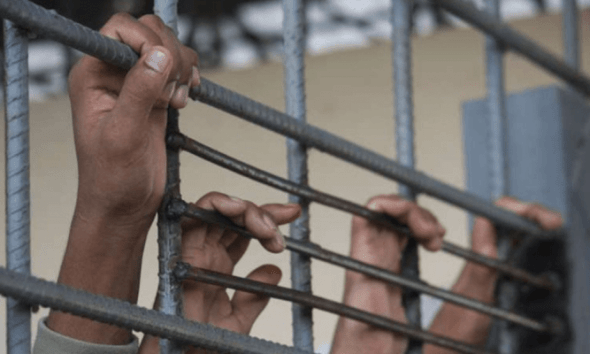
Cholera outbreak kills two inmates at Kano custodial centre

0

Two inmates have died following a cholera outbreak at the Kurmawa Medium Security Custodial Centre in Kano State, the Nigerian Correctional Service has said.

The NCoS said the outbreak was confirmed through laboratory tests on September 23 by its medical team and Kano State public health authorities.

In a statement issued on Saturday by its spokesman, Chief Superintendent of Corrections, JN Osuji, the Service said the outbreak was first detected on September 17 after an inmate developed vomiting and diarrhoea.

“The inmate was immediately admitted and treated at the facility’s medical centre, while emergency medical protocols were activated the following morning as health workers intensified medical intervention and monitoring,” Osuji said.

According to the statement, one of the deaths occurred at the custodial centre, while the other was recorded at the Kano State Infectious Diseases Hospital.

The Controller-General of Corrections, Sylvester Ndidi Nwakuche, expressed condolences to the families of the deceased and directed that measures to protect inmates and personnel be sustained.

“The Service regrets that the outbreak claimed two lives; one at the facility and the other at the Kano State Infectious Diseases Hospital,” the statement said.

The NCoS said its coordinated interventions had brought the outbreak under control, adding that no further deaths had been recorded since the diagnosis.

It said additional preventive measures had also been introduced in collaboration with the Kano State Government to reduce the risk of another outbreak.

The service added that continuous disease surveillance, early detection and prompt medical intervention were being strengthened across custodial facilities.

Nwakuche also directed a team of senior medical personnel from the Service’s National Headquarters to proceed to the facility for sustained monitoring.

“The Controller-General has further directed a team of senior medical personnel from the Service’s National Headquarters to proceed to the facility for sustained monitoring of the situation,” the statement added.

The service reassured the public that healthcare services remained available to inmates through qualified medical personnel and urged Nigerians to rely on verified information from official channels.

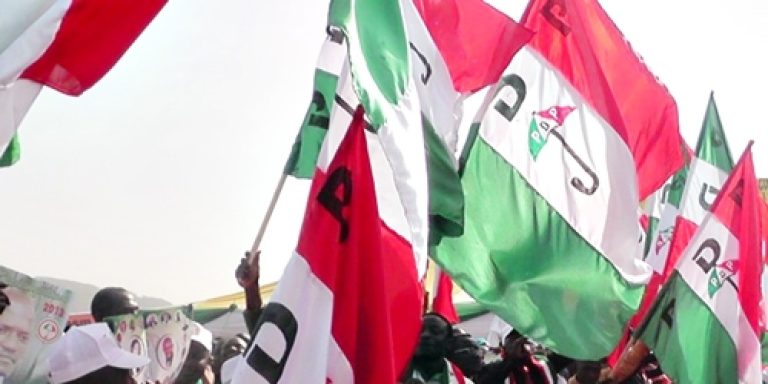
2027: NDC chairmen reject Obi-Kwankwaso structures

0

State chairmen of the Nigeria Democratic Congress have insisted on the supremacy of the party’s structures amid disagreements over the operations of the Obi-Kwankwaso Movement ahead of the 2027 general elections.

While some of the chairmen accused the movement of sidelining existing party structures, others said there was no dispute in their states and that efforts were being made to accommodate the various support groups.

The NDC leaders, who spoke with Sunday PUNCH across 10 states, maintained that the Obidient and Kwankwasiyyah movements were support groups and could not establish parallel campaign structures or conduct activities without party approval.

The crisis

Their positions followed concerns over the relationship between the NDC’s formal structures and the support groups mobilising for the party’s presidential candidate, Peter Obi, and his running mate, Rabiu Kwankwaso.

The NDC had, on September 19, disowned the 59-member Presidential Campaign Council announced by the Obi-Kwankwaso Movement, popularly known as the OK Movement, for Obi and Kwankwaso.

The party also warned that no individual, candidate or support group was authorised to constitute or announce any campaign council or structure in its name without approval from its National Working Committee.

Supporting the party’s position, the NDC National Leader, Seriake Dickson, criticised the activities of the OK Movement, warning political support groups affiliated with the party against operating as parallel structures or competing with the party for control.

However, the Director-General of the OK Movement, John Ughulu, rejected the NDC and Dickson’s position, stating that the group would not collapse or surrender its structure to the NDC.

State chairmen draw battle lines

But some NDC state chairmen rejected the OK Movement’s stance, declaring that the group could not override the supremacy of the party.

Some of the chairmen alleged that the movement had sidelined or taken over existing party structures.

Speaking with Sunday PUNCH, the NDC Chairman in Osun State, Charles Omidiji, said no movement or group was superior to the party.

He noted that there was nothing wrong with candidates having separate campaigns, provided they obtained the party’s approval and carried the party structure along.

The chairman said it was inappropriate for any candidate to organise a campaign without involving the party, arguing that the party would be held responsible if any crisis arose during such activities.

He maintained that the party was supreme and that the composition of the campaign structure was the responsibility of the party.

“They are just groups and we have said that the groups cannot do their campaign in isolation. They may have one-on-one campaigns because you cannot tell a candidate not to campaign on his own. They can campaign on their own, but they will refer back to the party to carry them along.

“It is illegal for any candidate to go for a campaign in a particular place and there is a crisis. It is the party people will hold responsible.

“Authorities cannot give a candidate permission to campaign except the party gives a nod. It is just like an agent; candidates cannot have their agents without the party. It is the party that owns agents. The party supervises the election. So, the party is supreme over any individual group. There is no controversy over that and they have resolved it. We have made it clear to them,” Omidiji stated.

The chairman added that candidates who went ahead with separate campaigns in the name of their movements would be doing so independently of the party structure.

He said, “If they went ahead to have their separate campaign in the name of their movements, it means they will do the election on their own. The party will leave them to their fate because there won’t be anybody to monitor the election for them if they decide to campaign in isolation. Who will monitor; who will be their agent? It is the party that will take care of all these. Nobody to blame if they do it in isolation. They have to abide by the party constitution.”

Speaking on the mechanism put in place by the party for the campaign, he disclosed that the party was working with all support and interest groups to organise a robust campaign.

No movement can campaign without approval – Ogun NDC

Similarly, the Ogun State NDC Chairman, Femi Alao, said no movement could campaign without the approval of the party, stressing that the party was supreme.

He said, “There is nothing like disagreement between the NDC and the OK Movement. What we are saying is that the party is supreme and we should all come together to have a common front.

“You cannot have a campaign without the approval of the party. We have put in place a mechanism to accommodate all interest groups.”

OK Movement must obey party rules – Kano NDC chair

Also, the Kano State NDC Chairman, Hussaini Meriga, said the Obi-Kwankwaso Movement must abide by the party’s rules and regulations, stressing that the movement operated under the party.

“The party is supreme over any other movement. Though Peter Obi and Rabiu Kwankwaso had their separate movements before coming into the same platform to contest, their movements are under the party. They must obey the party’s rules and regulations,” he stated.

Speaking with Sunday PUNCH, the NDC Chairman in Anambra State, David Chukwudifu, stated that the Obidient Movement had sidelined him and the 326 ward chairmen in the state.

He said the party was waiting for the intervention of the national headquarters to resolve the matter between it and the Obidient Movement.

He also accused Obi of not responding to his calls to intervene in the crisis.

“I am the founder and chairman of the NDC in the state. I brought the party to Anambra State from Abuja. But there are no political activities in the state because of the way the Obidients are doing things. They have sidelined every one of us, including me and the 326 ward chairmen in the state. All the existing structures in the state have been sidelined and this is affecting us.

“This crisis won’t only affect the party but also the coming election. We are only looking up to the national leadership of the party to resolve this issue.

“Since the Obidient Movement came to the party on May 3, 2026, they have sidelined everybody. We have called on Peter Obi himself, but he is not responding to our calls. If we continue this way, the party will have issues in the coming election.”

In his contribution, the Edo State NDC Chairman, David Olukoga, described the OK Movement as a support group under the party, alongside other interest groups.

“Both Obi and Kwankwaso movements are support groups and we have various support groups within the party, just as we have the students’ movement, traders’ movement and traditional movement. Very soon, we are going to inaugurate our campaign, and everybody will be included to have a robust campaign.”

NDC South-East vice-chair urges common front

Meanwhile, the NDC National Vice Chairman, South-East, Teddy Obey, called on party stakeholders and the OK Movement to work together for the party’s victory in the 2027 election.

He said it would not be in the party’s interest for any candidate or support group to operate in isolation.

Obey, however, noted that the party was working with both movements to establish a common front ahead of campaign activities.

He also reiterated the supremacy of the party over the movements, describing them as support groups.

“They cannot have a separate platform for the campaign. We must have a common front. It won’t augur well for us to have a different platform for campaign activities. However, the party has been working together with both movements to make sure we have a common ground.

“The party has put a mechanism in place to accommodate everyone because the party is supreme. I am also an Obidient. Peter Obi is my principal. We are doing everything possible to make sure we deliver the South-East for him.”

OK Movement not operating in isolation – Convener

However, the National Convener of the Obi-Kwankwaso Movement, Jackie Wayas, denied the chairmen’s allegations, stating that the group was not operating independently of the party structure.

Wayas, speaking with Sunday PUNCH, said, “There is no way the movement can work in isolation. The party is our party, and our principal is in the party. I don’t think the goal of the movement is to work in isolation.

“We are trying to fly the flag of the party. That is where our principal is contesting. Whatever the party is doing, we will support it and continue to push the party forward.”

No division among us – Adamawa NDC chairman

This came as the NDC Chairman in Adamawa State, Ibrahim Bebetu, debunked reports of a dispute between the party and the OK Movement.

Bebetu said the campaign list to be released by the national headquarters would accommodate all interest groups.

“We are working together. There is nothing like division among us. We will still have another campaign list to accommodate every interest group.

“The mechanism we have put in place is showing the record of our candidates. I believe everyone contesting has their own records. We have every resource to go out to campaign for our candidate, Peter Obi.”

Also, the NDC Chairman in the Federal Capital Territory, Haruna Pai, said the matter had been resolved.

He said he met with the leaders of the OK Movement in Abuja on Tuesday, where the matter was resolved.

“That has been resolved. I had a meeting with the chairman of the Kwankwasiyyah Movement in the FCT and the Obidient Movement chairman in the FCT, Daniel Dumije. We are waiting for the national office of the party to release the campaign list, and I believe all the chairmen across the 36 states will be included. What happened earlier between the three parties was just misinformation,” he stated.

To avoid conflict, the NDC in Plateau State said it created a directorate to oversee the affairs of support groups and foster a common front.

Speaking with Sunday PUNCH, the NDC Chairman in the state, Ndam Solomon, said, “What I have done is to create a Directorate of Support Groups and appoint the Obidient Movement Coordinator in the state, Dr Jerry Bako, to head it.

“We have put all the support groups under this directorate to screen and register them so that we can have a common front.”

Similarly, the NDC Chairman in Enugu State said the party and the Obidient Movement were working harmoniously in the state.

He said, “Politically, we are doing our best. The Obidient Movement and the NDC are working together harmoniously.”

The Akwa Ibom State Chairman of the NDC, Dr Willie Bassey, also maintained that there was no disagreement between the state chapter of the NDC and the Obi-Kwankwaso Movement, stressing that both groups were working together in unity.

“There is nothing like a dispute between us and the OK Movement. We are working together in Akwa Ibom,” he stated.

The Niger State NDC Secretary, Joseph Mamman, also said the party had a cordial relationship with the Obidient Movement in the state.

Credit: PUNCH


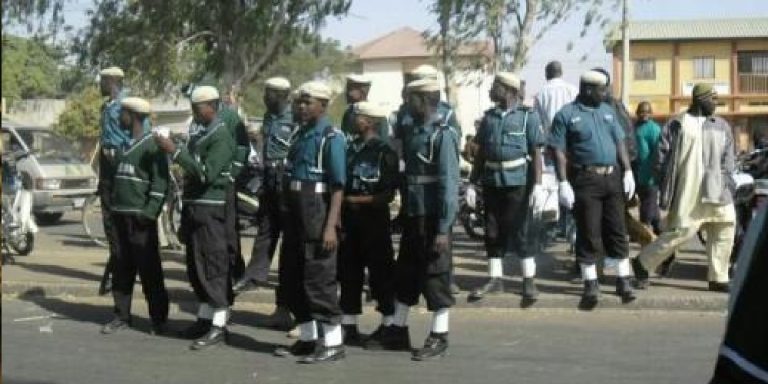
Hisbah arrests eight over homosexuality in Jigawa

0

No fewer than eight persons have been arrested over alleged homosexual acts in Kazaure Local Government Area of Jigawa State following a complaint lodged by a resident in the Kanti area of Kazaure town.

Confirming the arrest in a statement made available to PUNCH correspondent on Saturday in Dutse, the Jigawa State capital, the Public Relations Officer of the Jigawa State Hisbah Board, Dauda Hadejia, said the Corps received a complaint from a 22-year-old man.

According to Hadejia, the complainant alleged that nine individuals had engaged in homosexual acts with him on different occasions.

The PRO said the complainant also claimed that he later contracted HIV, which he attributed to the alleged acts.

Hadejia said the complainant therefore appealed to the Hisbah authorities to seek justice over what he described as deception and actions that negatively affected his life.

He explained that following the complaint, Hisbah operatives launched an investigation and began searching for the nine individuals mentioned by the complainant.

“Our men swung into action after receiving the complaint and so far eight suspects have been arrested, while efforts are ongoing to arrest the remaining suspect,” Hadejia said.

The PRO added that during preliminary investigations, the eight arrested suspects reportedly admitted to having engaged in the act with the complainant.

He noted that the Hisbah Corps had compiled relevant information and evidence for presentation before the court.

Hadejia, in the statement, quoted the Deputy Commander-General of the Jigawa State Hisbah Board, Dr Hussain Baban, as advising parents to be more vigilant about their children’s upbringing.

“Dr. Baban urged parents to pay greater attention to the upbringing of their children and monitor the people they associate with,” Hadejia said.

He also said the DCG called on members of the public to fear God and remain mindful of the consequences of their actions.

Accordingly, the PRO added that the investigation was still ongoing and the suspects would be charged to court upon completion of the investigation.

According to Hadejia, the DCG expressed appreciation to the Jigawa State Government for its support and cooperation with the Hisbah Board in carrying out its responsibilities.

Nigeria’s Public Debt Hits N166.79trn as Borrowing Rises by N7.44trn

0

Nigeria’s total public debt stock has risen to N166.79 trillion as of June 30, 2026, up from N159.35 trillion recorded as of March 31, 2026, according to the Debt Management Office (DMO).

The latest figures showed that domestic debt accounted for N91.59 trillion, representing 54.91% of the country’s total debt portfolio, while the total debt stood at $120.93 billion in US dollar terms.

The dollar-denominated figure comprises $54.52 billion in external debt and $66.41 billion in domestic debt. The DMO said it converted the external debt stock using the Central Bank of Nigeria’s official exchange rate of N1,379.1842/$ as of June 30, 2026.

The Federal Government remains the dominant borrower, accounting for about N152.77 trillion of the total debt, while states and the Federal Capital Territory accounted for approximately N14.01 trillion.

According to the DMO, the Federal Government’s external debt stood at N65.77 trillion, representing 39.44% of the total public debt, while states and the FCT accounted for N9.42 trillion, or 5.65%.

On the domestic side, the FGN owed N87 trillion, representing 52.16% of the total debt, while states and the FCT accounted for N4.59 trillion, or 2.75%.

FGN bonds remained the largest component of the Federal Government’s domestic debt, with an outstanding value of N64.84 trillion, representing 74.53% of its domestic debt.

The latest figures also showed that Nigerian Treasury Bills stood at N19.48 trillion, while FGN Sukuk amounted to N1.19 trillion and savings bonds stood at N122.45 billion.

The DMO data further showed that Nigeria’s public debt has increased significantly from N87.38 trillion recorded as of June 30, 2023, shortly after President Bola Tinubu assumed office.

External debt rose from $42.49 billion in December 2023 to $51.86 billion by December 2025, while domestic debt increased from N59.1 trillion to N89.4 trillion within the same period.

PHOTOS: Jerry Eze leads thousands in prayer at Man United’s Old Trafford

0

Old Trafford, Manchester United’s 74,000-capacity stadium, became a house of worship on Saturday as Nigerian pastor Jerry Eze led the NSPPD UK Prayer Conference, drawing believers from across Britain and beyond.

Hosted by Streams of Joy International, the conference brought together believers from across the United Kingdom and around the world for prayer, worship and fellowship.

Worshippers at the NSPPD UK Prayer Conference held at Old Trafford, Manchester, on Saturday. Photo: X / @AgborMoses34

Admission to the event was free, though attendees were encouraged to register in advance as places were limited.

Despite that, demand reportedly outstripped availability, with some social media users claiming the event was fully booked and turning to TikTok in the days leading up to the conference in search of spare tickets.

Worshippers during the NSPPD UK Prayer Conference at Old Trafford, Manchester, on Saturday. PHOTO: NSPPD/YouTube

Worshippers during the NSPPD UK Prayer Conference at Old Trafford, Manchester, on Saturday. PHOTO: NSPPD/YouTube

The gathering featured several well-known gospel ministers alongside Eze, including Sunmisola Agbebi, Mercy Chinwo, Dunsin Oyekan and Kaestrings.

Worshippers during the NSPPD UK Prayer Conference at Old Trafford, Manchester, on Saturday. PHOTO: NSPPD/YouTube

(Credit: Saturday PUNCH)

Drew Uyi Celebrates Moses Simon On His 100 Caps Feat For Super Eagles

0

Renowned FIFA licensed football agent and sportspreneur, Dr. Drew Uyi has joined millions of football loving Nigerians to celebrate Super Eagles star winger, Moses Simon for achieving 100 caps with the national team.

Uyi, who is also a sports marketing and brand strategist, was particularly happy with the FC Paris star player, as he stated that it is not a mean feat.

“It’s not easy to get 50 caps with the Super Eagles. And for a player to reach the 100 caps milestone, is awesome. Without a doubt, Moses Simon deserves all the encomiums and accolades, he has received, so far.

“He is an exemplary player and a wonderful personality. He would remain a positive influence and a shinning light for the younger footballers.

“Once again, I join millions of Nigerians to say, congratulations to this incredibly gifted footballer and patriot,” Uyi added.

Police, DSS, ICPC Cleared Me of PFIPC Scam Allegations — Gbajabiamila

0

The Chief of Staff to President Bola Tinubu, Femi Gbajabiamila, has stated that the Nigeria Police Force, Department of State Services, DSS, and Independent Corrupt Practices and Other Related Offences Commission, ICPC, cleared him of wrongdoing over allegations surrounding the purported Presidential Foreign Investment Promotion Council, PFIPC.

Gbajabiamila made the remark on Saturday during the 2026 Gbaja Mega Empowerment Programme in Lagos State.

“The allegations against me had been investigated, and the reports of the investigations were in the public domain,” he stated.

Gbajabiamila was linked to the establishment of the Presidential Foreign Investment Promotion Council, PFIPC, headed by its Director-General, Adeniyi Adeyemi.

Adeyemi had accused Gbajabiamila of demanding a 48 per cent kickback from a N27.3 billion grant to the council.

He also claimed that he paid N400 million to Tinubu’s Chief of Staff through a proxy and owed an additional N200 million.

Following the allegations, Adeyemi was arrested, detained and later released.

After his release, Gbajabiamila dragged Adeyemi to court over alleged defamation.

House of Assembly Candidate, Sanni Urges Unity Among Ekiti ADC Members

0

By Prosper Olayiwola

A House of Assembly Candidate for Ikole Constituency 1 on the platform of the African Democratic Congress, ADC, Kayode Arewa Sanni, has called on his constituents, party members and supporters to unite ahead of the 2027 general elections.

Arewa Sanni made the call in Ikole-Ekiti while addressing party faithful and supporters at a stakeholders’ meeting convened to strengthen grassroots mobilisation in the constituency.

He said the 2027 elections present a defining moment for the people of Ikole Constituency 1 to chart a new course of inclusive representation, people-oriented legislation and accelerated development.

The candidate noted that disunity among party members and supporters remains the greatest obstacle to victory, stressing that only a united front can dislodge entrenched interests and deliver the dividends of democracy to the people.

“I appeal to all our party leaders, members, supporters and well-wishers across Ikole Constituency 1 to put aside personal differences and work together as one family. Our strength lies in our unity,” he said.

Arewa Sanni said his candidacy was driven by a desire to give Ikole Constituency 1 a vibrant and responsive voice in the Ekiti State House of Assembly, with focus on youth empowerment, education, healthcare and rural infrastructure.

He assured constituents that if given the mandate, he would prioritise quality representation and ensure that government presence is felt in all communities within the constituency.

He also called on supporters of the ADC across Ekiti State to rally behind the party’s vision of good governance, transparency and accountability as preparations for the 2027 polls gather momentum.

The aspirant expressed confidence that with unity, commitment and collective effort, the ADC would emerge victorious in Ikole Constituency 1 and other constituencies across the state.

Between Governor Soludo and Peter Obi: The Truth in Between

0


Beneath the war of words over Anambra’s books lies a more important question than who borrowed what: are the people of the state better off?

By Osamhanze Idahosa

Anambra politics is rarely short of drama, but the latest exchange between Governor Chukwuma Charles Soludo and his predecessor-but-one, Peter Obi, has turned the state’s balance sheet into a public battleground. What began as a quarrel over figures has reopened a question that has trailed the state for more than a decade: what exactly did Mr Obi leave behind when he handed over power in March 2014, and what should properly count as debt, assets, liabilities and available resources?

At first glance, the dispute looks simple. The Soludo administration says it inherited loans and other obligations from previous governments, including Mr Obi’s, and is still servicing some of them. Mr Obi insists he neither borrowed commercially nor issued bonds on the state’s behalf, and that he left Anambra in robust financial health. The details, however, demand far more nuance than either side’s political messaging allows.Speaking through the Commissioner for Finance, Izuchukwu Okafor, and the Commissioner for Information, Dr Law Mefor, the state government says it is still servicing obligations traced to the Obi years. Citing Debt Management Office figures, it says eight external facilities contracted between 2007 and 2013 carried a combined value of about $123.77 million, of which some $92.35 million remained outstanding as of 30 June 2026. It also points to salary arrears, including at the Anambra State Water Corporation, as liabilities it has had to clear.Mr Obi’s reply has been categorical. He says that in his eight years he never approached any financial institution for a loan or issued a bond on behalf of the state, and that he left office owing no salaries, pensions, gratuities or certified contractors. Far from leaving debts, he insists, he left behind substantial funds and investments.An old argument in new clothesNone of this is new. The debate over what Mr Obi handed to his successor, Willie Obiano, has followed him for more than a decade. About eight years ago, Chief Dan Ulasi argued on national television that although Mr Obi spoke of the bank balances he left behind, he also left liabilities large enough to require a clean-up. The argument resurfaces whenever the Obi model of prudence is held up for national admiration, and with Mr Obi now the 2027 presidential candidate of the Nigeria Democratic Congress, its return was always going to be louder.That context matters, but it should not distract us. This is not a personality clash between two of Anambra’s most prominent sons. It is a question of stewardship, accountability and responsibility, and the people of Anambra are entitled to a clear answer.Obi’s case: “wrong public accounting”Appearing on Arise Television’s Prime Time on Thursday, Mr Obi dismissed the state government’s figures as “wrong public accounting”. His argument has three parts.First, the facilities in question were not loans he sought. They were concessionary development programmes, largely backed by the World Bank and the International Fund for Agricultural Development, negotiated by the Federal Government and extended to participating states through subsidiary arrangements.

Second, they were multi-year facilities, and not all of the money was drawn down before he left office; he should not be charged for sums disbursed under his successors. Third, even on the worst-case figure, he says he left behind more than $150 million earning about $10 million a year. Had successive administrations preserved those investments and applied the income to the debt, he argues, the loans would have been retired by now, with the capital still intact.On the Water Corporation arrears, he contends that the corporation’s workers were never on the state government’s payment schedule.Obi did not walk into a bank. But the state he governed signed on to obligations that outlived his tenure.The question neither side has fully answeredMr Obi’s distinction between applying for a loan and joining a federally negotiated facility is real, but it is thinner than it sounds.

Under Nigeria’s on-lending arrangements, states that join such programmes typically sign subsidiary agreements and bear the repayment, which is deducted at source from their federal allocations. That is precisely what the state government says is happening today.That raises the question that most deserves an answer: could Anambra have declined? If the state could have said no, then accepting those facilities was a decision taken on Mr Obi’s watch, however worthy the projects. If it genuinely could not, then the obligations were imposed without meaningful consent, and that should have been placed on the public record at the time rather than relitigated twelve years later. Either way, the liability sits on Anambra’s books, and Anambra’s taxpayers are paying for it.Yet the Soludo administration’s framing also flattens important distinctions. Concessionary development finance, with long tenors and low interest and tied to agriculture, water or community projects, is not the same as commercial borrowing to pay salaries or build white elephants.

Labelling it “Obi’s debt” is its own form of political accounting. And if portions were drawn down after 2014, those portions belong in the ledgers of the administrations that drew them and decided how to spend them.There is also a question for Mr Obi’s successors. If he did leave savings and investments on the scale he claims, what became of them? Were they sold, drawn down or left to erode? Mr Obi’s counterfactual holds only if we know what happened to those assets, and that is an account the state, not Mr Obi, is best placed to give.Loans are not the enemy, and thrift is not a virtue in itselfIt is worth stepping back from the arithmetic. Borrowing is not necessarily bad governance, and avoiding debt is not necessarily good governance. A government can sit on healthy cash balances while roads crumble, hospitals run out of drugs and young people leave in search of work.

Another can borrow sensibly for assets that pay for themselves many times over. The real test of any naira borrowed or saved is what it bought, and whether it improved the lives of the people in whose name it was raised.For a state still crying out for roads, erosion control, reliable water, industrial growth and jobs, the true measure of performance cannot be a debt figure or a bank balance at handover. It is whether the people are better off than they were when a government met them.Where the truth liesThe truth, as it so often does, lies somewhere in between. Mr Obi did not walk into a bank to borrow, but the state he governed took on obligations that outlived his tenure, and it is fair to ask him to own them. The Soludo administration is servicing real liabilities, but branding them one man’s personal debt on the eve of a presidential season serves politics more than clarity.The way forward is transparency, not duelling press statements. The state should publish the relevant loan agreements, drawdown schedules and repayment records, alongside a full account of the funds and investments handed over in 2014 and what became of them. An independent reconciliation, whether by the state’s Auditor-General or a credible external panel, could settle in months what twelve years of television appearances have failed to settle.Until then, the people of Anambra remain where Nigerian citizens too often find themselves: caught between competing claims, footing the bill, and still waiting to be told the whole truth.

Six inmates die in one week amid suspected cholera outbreak in Kano prison

0


No fewer than six inmates have died within one week following a suspected cholera outbreak at the Kurmawa Maximum Prison in Kano State.

Amnesty International raised the alarm in a post on its official Facebook page, calling on authorities to immediately declare an emergency at the correctional facility.

Amnesty said several other inmates were currently receiving treatment, warning that the death toll could be higher as the suspected disease continues to spread among prisoners.

It urged the authorities to immediately transfer critically ill inmates to hospitals for proper medical attention to prevent further deaths.

The organisation warned that failure to urgently intervene could amount to arbitrary deprivation of life, which it described as a serious human rights violation under international law.

Amnesty also expressed concern over the broader conditions in Nigerian correctional facilities, particularly the prolonged detention of inmates awaiting trial.

According to the organisation, detainees without financial means face greater difficulty having their rights protected, with some spending years in custody without being convicted of any crime.

It further said many inmates were being held in overcrowded and unhygienic cells without adequate food and healthcare.

Amnesty called for urgent reforms to improve conditions in Nigerian correctional facilities and ensure compliance with international best practices.