Economy
Naira crashes to N1,534 against US dollar at foreign market
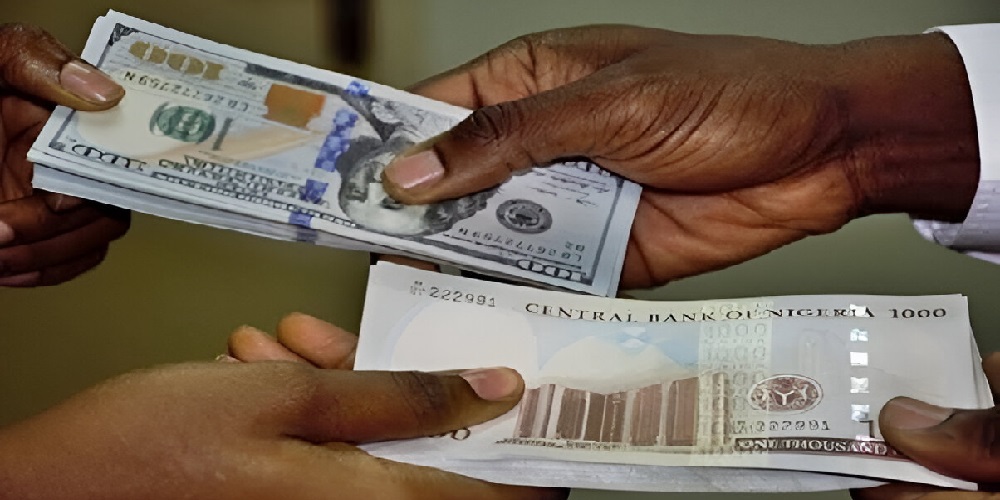
The Naira depreciated to a record low of N1,534.39 against the US dollar at the foreign exchange market on Monday.

Data from FMDQ showed that the Naira dropped to N1,534.39 per US dollar on Monday from N1,469.97 on Friday.
This represents a 4.2 per cent or N64.42 depreciation compared to N1,469.97 recorded at the close of trading on Tuesday.

With the development, the Naira is back to the exchange rate it traded on Monday, January 29, when the Central Bank of Nigeria introduced ‘Financial Markets Price Transparency and Market Notice of a Revision to the FMDQ FX Market Rate Pricing Methodology’ and other reforms.
Similarly, at the Parallel Market, Naira increased to N1,495 per Dollar on Monday from N1,490 on Friday.
Meanwhile, the Central of Nigeria governor, Olayemi Cardoso, assured exchange rate stability when he spoke at an interface with the Senate Joint Committee on Banking, Insurance and Financial Institutions in Abuja on Friday.

Economy
Iran war triggers cooking gas supply crunch, Nigeria hit
A supply crunch triggered by the Iran war has tested the resilience of emerging Liquefied Petroleum Gas (cooking gas) markets across sub-Saharan Africa, with Nigeria suffering the sharpest disruption as import constraints and lower domestic production pushed demand down by almost 23 per cent.
This was disclosed in a latest report by energy intelligence provider Argus, which said African LPG markets had largely withstood the price volatility and global supply tightness caused by the conflict, although the disruption exposed vulnerabilities in some of the region’s nascent markets.
Nigeria, the region’s largest LPG consumer, recorded the most severe impact, with demand falling to a seven-month low of 123,000 tonnes in June, according to data from the Nigerian Midstream and Downstream Petroleum Regulatory Authority.
The decline represented an almost 23 per cent drop from the March level. Argus reported that domestic production also fell by more than 20 per cent during the period, following lower output from inland gas processing plants and maintenance at the Dangote refinery’s 218,000 barrels-per-day residual fluid catalytic cracker.
The supply shortfall prompted Nigerian LPG operators to increase imports. Argus reported that imports surged to a six-month high of 46,000 tonnes in June, compared with 3,000 tonnes in May and no imports in April.
The market subsequently received some relief after international LPG prices declined following the United States-Iran peace deal in June and weaker competition from Asian buyers.
The Argus butane West Africa index fell by more than 40 per cent to $513.50 per tonne on June 24, from a March peak of $860.50. The lower prices, it was learnt, helped the Nigerian market move to a 30,000-tonne surplus after four consecutive months of deficit.
Local production also rebounded in July, helping to ease the pressure on the market. Supplies from the Dangote refinery increased by 71 per cent to 25,800 tonnes, while supplies from gas processing plants rose by 88 per cent to 47,000 tonnes.
The improved domestic supply allowed Nigeria to cut imports just as hostilities between the United States and Iran resumed and international LPG prices began to rise again.
The supply recovery also brought some relief to consumers. Nigeria’s average LPG retail price fell by 10 per cent month-on-month to N1,491.75 per kilogramme in July, while demand increased by seven per cent to 136,500 tonnes, marking the first increase since March.
Elsewhere in the region, Ghana also faced tighter LPG supplies as seaborne imports fell by almost a third year-on-year to about 24,000 tonnes per month between April and August, according to vessel-tracking firm Kpler.
The reduction in imports pushed Ghana’s LPG stocks down by more than three-quarters to 5,500 tonnes in early July, equivalent to about eight days of consumption.
However, higher domestic production helped cushion the impact, with much of the additional supply coming from the new 40,000 barrels-per-day Sentuo refinery, which Argus said was operating at full capacity.
A planned restart of the residual fluid catalytic cracker at the 45,000 barrels-per-day Tema refinery is expected to further increase Ghana’s local LPG supply.
Despite the supply pressure, Ghana’s LPG consumption rose by almost 11 per cent year-on-year to 96,000 tonnes in the second quarter, although this represented a significant slowdown from the 24 per cent growth recorded in the first quarter.
Kenya also recorded continued growth in LPG demand, although at a slower pace. Demand increased by nearly five per cent year-on-year to 125,000 tonnes between April and June, compared with 18 per cent growth in the first quarter.
Seaborne LPG imports into Kenya rose by 15 per cent to 53,000 tonnes per month during the first eight months of 2026, following the opening of Tanzanian company Lake Gas’ 10,000-tonne Vipingo LPG terminal last year.
The increased competition among importers helped contain price increases, with the retail price of a 13kg LPG cylinder rising by just over 11 per cent to 3,471 Kenyan shillings between March and June.
Argus noted that the supply disruptions had occurred against the backdrop of a continuing expansion of LPG infrastructure across sub-Saharan Africa. Tanzanian company Taifa Gas is close to completing a 30,000-tonne LPG terminal at Mombasa, Kenya, which will be capable of receiving very large gas carriers.
Lake Gas also plans to add 15,000 tonnes of storage capacity at its Vipingo terminal by September 2027. According to Argus LPG World, 10 projects are expected to add more than 180,000 tonnes of LPG storage capacity across the region by 2028.
In Cameroon, the state-owned Société Camerounaise de Dépôts Pétroliers increased storage capacity at its Douala terminal by 1,000 tonnes this summer, taking capacity to 3,500 tonnes. Another 2,000-tonne storage sphere is under construction.
The company also plans to double the terminal’s transloading capacity to 1,950 tonnes per day to ease supply bottlenecks. African countries are said to be introducing policies aimed at expanding LPG access as part of efforts to increase clean cooking adoption.
Nigeria launched its National Grassroots LPG Penetration Programme in July, introducing a cylinder recirculation model that requires retailers to own, track and refill cylinders.
The scheme is designed to shift the cost of cylinder ownership and maintenance away from households, with the government targeting five million homes and LPG consumption of about five million tonnes annually by 2030.
Some 54,000 cylinders have been distributed since the programme’s launch. Ghana, which has also promoted the cylinder recirculation model, is seeking to expand LPG access to 50 per cent of the population by 2030.
Argus said the clean cooking drive was also extending into the transport sector, with Nigeria exempting autogas vehicles from value-added tax, while Kenya’s Equity Bank partnered with distributor Proto Energy to finance vehicle conversions.
The developments show that while the Iran war has exposed supply vulnerabilities in Africa’s emerging LPG markets, investment in local production, import terminals, storage and distribution infrastructure continues to expand across the region.
Economy
See Black Market Dollar to Naira exchange rate today 16th September, 2026
The Black Market exchange rate today 16th September 2026 can be assessed below:
NOTE: The exchange rate changes hourly. It depends on the volume of dollars available and the Demand. This means…you can buy or sell 1 dollar at a certain rate, and the price can change (high or low) within hours.
The official naira black market exchange rate in Nigeria today, including the Black Market rates, Bureau De Change (BDC), and CBN rates.
The exchange rate fluctuates hourly based on the supply and demand of dollars in the market.
What’s the dollar to naira black market today, 16th September 2026?
The exchange rate for a dollar to naira at Lagos Parallel Market (Black Market) players sell a dollar for ₦1410 and buy at ₦1383 on Wednesday, 16th September, 2026, according to sources at Bureau De Change (BDC).
Please note that the Central Bank of Nigeria (CBN) does not recognize the parallel market (black market), as it has directed individuals who want to engage in Forex to approach their respective banks.
Dollar to Naira Black Market Rate Today
Dollar to Naira (USD to NGN) Black Market Exchange Rate Today
Selling Rate ₦1385
Buying Rate ₦1380
Dollar to Naira CBN Rate Today
Dollar to Naira (USD to NGN) CBN Rate Today
Highest Rate ₦1329
Lowest Rate ₦1324
Economy
Nigeria’s inflation falls to 15.39% as food inflation slows – NBS
Nigeria’s headline inflation rate declined slightly to 15.39 per cent in August 2026, down from 15.43 per cent recorded in July, according to the National Bureau of Statistics, NBS.
The NBS disclosed this in its Consumer Price Index, CPI, report for August 2026 released on Tuesday.
The bureau said the CPI, which tracks changes in the prices of goods and services, rose to 146.3 points in August from 145.3 points in July, representing an increase of 1.0 point.
According to the report, the headline inflation rate dropped by 0.04 percentage points compared to the 15.43 per cent recorded in July. The figure was also considerably lower than the 23.14 per cent posted in August 2025.
On a month-on-month basis, headline inflation slowed to 0.71 per cent in August from 1.57 per cent in July.
“This means that in August 2026, the rate of increase in the average price level was lower than the rate of increase in the average price level in July 2026,” the bureau stated.
The NBS further reported that the average CPI for the 12 months ending August 2026 rose by 16.30 per cent compared with the average recorded in the preceding 12-month period.
It noted that this represented a decline of 12.02 percentage from the 28.32 per cent recorded in August 2025.
The report showed that urban inflation stood at 15.88 per cent year-on-year in August, while month-on-month urban inflation fell sharply to 0.28 per cent from 1.90 per cent in July.
The 12-month average urban inflation rate was put at 16.28 per cent, compared with 29.73 per cent recorded in the corresponding period of 2025.
For rural areas, the bureau reported a year-on-year inflation rate of 14.23 per cent in August.
However, rural month-on-month inflation rose to 1.79 per cent from 0.78 per cent recorded in July.
The 12-month average rural inflation rate stood at 16.02 per cent in August, lower than the 26.47 per cent recorded a year earlier.
The NBS also reported a moderation in food inflation, which declined to 19.57 per cent year-on-year in August, compared with 25.30 per cent in August 2025.
Month-on-month food inflation also dropped significantly to 1.02 per cent in August from 5.56 per cent recorded in July.
According to the bureau, the easing in food inflation reflected changes in the prices of commodities such as palm oil, carrots, pepper, onions, cassava flour, beef, yam flour, water yam, melon, fresh ginger, fresh fish, Irish potatoes, wheat grain, frozen chicken and turkey meat.
The report indicated that while food prices continued to rise in August, the pace of increase was slower than what was recorded in July.
-
News12 hours agoAnambra Govt Releases Records Of Alleged Unpaid Debts By Peter Obi During Tenure As Governor
-
News12 hours agoASUU demands 26% education funding, faults FG over 15% compromise
-
News22 hours agoAnambra Debt Row: Presidency Challenges Obi to Quit 2027 Race Over His ‘No Debt’ Claim
-
News12 hours agoPeter Obi Weighs In On Dangote Refinery Shares
-
News8 hours agoWike is an asset to APC, should not be embarrassed – Jibrin defends FCT Minister(Video)
-
News22 hours agoREVEALED: 11 Nigerian-Born Lawyers Hit by U.S. Disciplinary Actions Over Professional Violations