Connect with us

Economy

See Exchange Rate As Dollar Continues To Rise Against Naira

Published

on

ADVERTISEMENT
Zoom Ad
ADVERTISEMENT
Zoom Ad

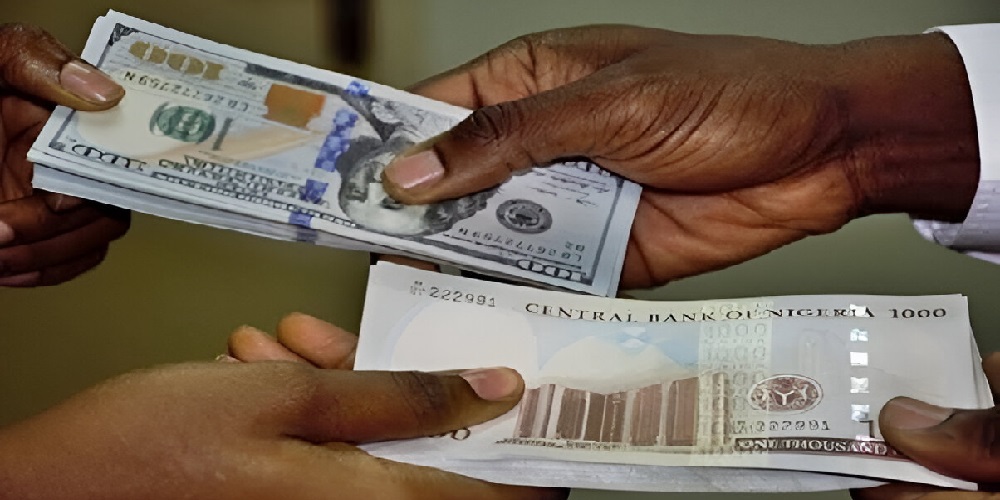
Dollar traded near three-month highs to major peers on Wednesday giving the naira little room to maneuver as forex traders pushed back bets for a first Federal Reserve interest rate cut following surprisingly hot U.S. inflation figures overnight.


The naira traded settled around N1,499/ from an all-time low of N1,534/$ on the official Nigerian Autonomous Foreign Exchange Market.

At the black market where residents who can’t access the official market are forced to obtain foreign currency, the naira traded stronger at N1,517 per dollar

The naira is facing strong headwinds as the availability of the greenback in local markets plummeted sharply, adding pressure on CBN to raise interest rates to attract foreign exchange inflows at its policy meeting scheduled to be held later this month.

Advertisement

The CBN at the start of the year has taken several monetary actions to improve investor confidence, pricing, and market dollar liquidity.

The CBN’s chief, Mr. Yemi Cardoso informed lawmakers that FPIs have already started to provide the economy with much-needed foreign cash because of the changes, revealing that more than $1 billion has been drawn into the market consequently.

The US Consumer Price Index (CPI) reported headline and core inflation figures for the monthly and annual benchmarks that were higher than anticipated.

The positive surprise is a cold shower for markets that were expecting deeper deflation and were solely concerned about a rate cut in March or June. Given these circumstances, even a rate cut in June is beginning to seem quite unlikely.

Advertisement

According to LSEG’s rate probability app, federal funds futures currently price in no rate cut in March and a lower than 50% chance of easing in May. This comes after the U.S. consumer price index (CPI) increased 3.1% from a year ago in January, compared with an estimated 2.9% rise.

The recent CPI report has indicated that the disinflationary path that investors had anticipated no longer reflects the real scenario.

March rate reductions are implausible, and as of right now, June rate cuts seem improbable as well. It’s now time for another push-and-pull readjustment in the US dollar, with the DXY moving to 105 and greater upside this time.

There is still one more CPI report, and the March decision is more than a month away. The US dollar strengthened, and the markets took a hit, but volatility is expected to persist.

Advertisement
Continue Reading
Advertisement

Economy

Naira gathers marginal momentum against US Dollar

Published

on

ADVERTISEMENT
Zoom Ad
ADVERTISEMENT
Zoom Ad

The Nigerian naira recorded a marginal gain against the United States dollar at the official foreign exchange market on Tuesday, April 14, 2026, as improved liquidity and increased interbank activity supported the currency.

Data from the Central Bank of Nigeria showed that the naira strengthened to N1,356.19 per dollar in the Nigerian Autonomous Foreign Exchange Market, extending last week’s gains when the currency appreciated by 1.76 percent. Intraday trading ranged between N1,354.50 and N1,362.50 per dollar, reflecting stronger supply conditions.

Interbank turnover rose significantly to $114.89 million across 141 deals, up from $71.16 million recorded in the previous session. The parallel market also recorded gains, with the currency trading at N1,385 to N1,410 per dollar, while the gap between official and parallel rates narrowed slightly.

However, FX inflows into the official window declined sharply to $571.8 million from $1.06 billion in the previous week, indicating tighter supply conditions. Foreign portfolio investors remained the dominant source of FX supply, contributing $282.2 million, while the CBN accounted for $103.2 million.

The naira’s recent strength is largely liquidity-driven, not structural, and may prove difficult to sustain without consistent FX inflows,” said an economist at a Lagos-based research firm. “The decline in weekly inflows highlights ongoing pressure on supply, especially as global financial conditions remain tight.”

The positive movement came as Nigeria achieved a significant milestone, becoming a net exporter of premium motor spirit in March 2026. The Dangote Petroleum Refinery exported 44,000 barrels per day of petrol, including a 317,000-barrel cargo delivered to Mozambique, allowing the country to earn fresh foreign exchange to help boost the naira’s value.

Despite the currency’s recent stability, global rating agency Fitch projected that Nigeria’s external reserves would decline to $47 billion by the end of 2026, from $49.4 billion at the end of March, reflecting higher spending pressures and external risks. The agency affirmed Nigeria’s long-term foreign currency issuer default rating at ‘B’ with a stable outlook.

“We forecast a marginal decline to $47 billion at end 2026, reflecting higher spending pressures and external risks,” Fitch stated in its latest assessment.

The agency noted that while reserves provide about seven months of import cover above the median for countries within the ‘B’ rating category, fiscal pressures and external vulnerabilities could drive modest currency depreciation in the near term. Fitch expects Nigeria’s budget deficit to widen to nearly five percent of gross domestic product in 2026, while inflation is projected to average 16 percent.

Nigeria’s external reserves recently hit a 17-year high of $50.02 billion on March 11, before easing to $48.80 billion as of April 10. The CBN has pledged to stabilise the naira and boost sales of high-yield short-term debt to attract dollar inflows.

Economists remain cautiously optimistic about the naira’s trajectory, though structural challenges persist. The Centre for the Promotion of Private Enterprise reported that the naira stabilised within a relatively narrow band of about N1,340 to N1,430 to the dollar in the official market during the first quarter of 2026, helping to moderate imported inflation and boost business confidence.

However, analysts warned that the ongoing Middle East conflict introduces fresh upside risks, with Brent crude trading above $100 per barrel, which could feed into domestic fuel costs and create renewed cost-push inflation pressures.

Continue Reading

Economy

See Dollar to Naira exchange rate today, April 13, 2026

Published

on

ADVERTISEMENT
Zoom Ad
ADVERTISEMENT
Zoom Ad

The Nigerian Naira opened the new trading week with slight variations against the United States Dollar on Monday, April 13, 2026, across the various segments of the foreign exchange market.

In the Nigerian Foreign Exchange Market (NFEM), which serves as the official trading window, the Naira began the session at approximately N1,358.84 per Dollar. Real-time data indicates that the currency experienced brief volatility during the early hours, reaching a peak of N1,362.08 before settling back toward the N1,358 mark. This performance highlights a continued trend of stability as the Central Bank of Nigeria maintains its strategic oversight of liquidity within the banking system.

Meanwhile, the parallel market, or black market, recorded slightly higher rates as demand for the greenback persisted among small businesses and individuals. Reports from currency dealers in major commercial centers like Lagos, Kano,and Abuja show the Dollar trading between N1,460 and N1,485. The disparity between the official and informal rates remains a key point of interest for market analysts, who are watching for further convergence as fiscal policies evolve.

Market sentiment remains guarded as investors look toward upcoming economic reports and potential interventions by the monetary authorities. For many Nigerians, the cost of the Dollar continues to influence the pricing of imported commodities and logistics services, making the daily movement of the exchange rate a critical factor in household and corporate budgeting.

As of 6:39 AM WAT, the trading environment is characterized by steady volume, with financial experts predicting that the Naira will remain within its current range for the duration of the day’s session.

Continue Reading

Economy

FG Announces Correction Underway For Nigeria’s New Tax Law, Admits Errors

Published

on

By

ADVERTISEMENT
Zoom Ad
ADVERTISEMENT
Zoom Ad

Nigeria’s minister of state for finance, Taiwo Oyedele, has finally admitted that Nigeria’s new tax reform laws contain errors.

He, however, assured that corrective measures are already underway to address the identified issues.

Oyedele made the known while speaking recently at the 2026 annual conference of the Nigerian Bar Association (NBA).

According to a statement from the Presidential Fiscal and Tax Reforms Committee on Friday, he admitted that inconsistencies emerged during the law-making process due to procedural lapses.

Oyedele urged Nigerians to await the outcome of the legislative probe into the alleged discrepancies.

Oyedele admitted, “That errors occurred due to manual processes and multiple stages of review” in the drafting and legislative process.

He, however, assured that the issues would be addressed through a proposed finance bill aimed at making corrections.

“What we need is a more transparent and reliable legislative process where every version of a law is publicly available,” he said.

Oyedele stressed that enforcement of the tax reforms would not be arbitrary, noting that the policy was anchored on transparency, fairness, and clear intent.

“If policies can change overnight, it sends the wrong signal to investors. Consistency is critical,” he said.

Recall that on December 17, 2025, Abdussamad Dasuki, a member of the House of Representatives from Sokoto State, had alleged that the versions of the tax laws in circulation differed from what lawmakers passed.

His revelation has sparked confusion; thereafter, the national assembly set up a committee to address the discrepancies.

The new tax laws took effect on January 1, 2026, after signing the tax bills on June 26, 2025.

Continue Reading

Trending

Copyright © 2024 Naija Blitz News