

News
Reps laud TETFUND for promoting research amongst Nigerian students, youth
…as Kalu calls for more innovative hubs in S/East
Tertiary Education Trust Fund (TETFund) has been applauded by the House of Representatives for championing creative researches and establishing innovative hubs for the promotion of science and technology education amongst Nigerian students and youth.

Speaking at the closing ceremony of a two-week cohort learning for some select Nigerian students, researchers and academia at the Abuja Innov8 Hub over the weekend, the Deputy Speaker of the House of Representatives, Rt. Hon. Benjamin Okezie Kalu said the Parliament would continue to support creative activities that tended to develop the minds of Nigerian youth with innovations, such as the one undertaken by the TETFund.
Termed “Research for Impact Initiative (R4i)”, the programme is a collaborative endeavour by TETFund and Innov8 Hub, launched in year 2022, to usher in a new era of innovation, technology, research and development in Nigeria with the aim to spur economic growth and comprehensive national development.
Kalu said: “The House is interested in providing solutions to the hydra headed needs of the Federal Republic of Nigeria.
It has also come to our mind that, the problems that we are trying to solve year-in, year-out, using the usual tradition, has not given us the expected level of production in this country, therefore, the call for innovation that will challenge tradition, to increase production; that call cannot be overemphasized”.
The Deputy Speaker said that in today’s rapidly evolving world, innovation is no longer a luxury but a necessity, stressing that it is the key to unlocking economic growth, tackling complex challenges, and building a brighter future for the youth and generations to come.
“For Nigeria, this need for innovation is even more crucial. We face
numerous challenges, from unemployment and poverty to security threats and climate change. To overcome these obstacles and achieve sustainable development, we must unleash the immense potential of our people, particularly our young minds brimming with creative ideas and
entrepreneurial spirit.
“This is where initiatives like the Innov8 Hub by i-FAIR come into play. By
providing mentorship, resources, and collaboration platforms, these
programs empower our innovators, inventors, and entrepreneurs to
transform their ideas into tangible solutions”, Kalu added.
The Deputy Speaker also acknowledged the role of the Embassy of the State
of Israel in Nigeria and the Israeli community, in “partnering with Nigeria in
this crucial endeavor. Your commitment to fostering innovation and entrepreneurship in Nigeria is truly commendable, and we, as a nation,
deeply appreciate your support”.
He said that it is the lot of President Bola Ahmed Tinubu for Nigeria to innovate for the good of the country even as he expressed joy that TETFund is planning to expand the hub and provide the needed platforms for innovation.
“The President (Tinubu) believes that we need to innovate. Nigeria believes that we need to innovate. That is why every agency of government, such as TETFund, has been given all that is needed to push innovation from where this administration met it, to where it ought to be. And I’m happy, speaking from the parliament, that the man who is driving it is my good friend, he is not sleeping, he is interested in pushing. I’m proud of you. I’m really proud of you!
“You are thinking outside the box, how we can build this nation, not by doing the usual, but by considering the possible and fighting the impossible elements, so that the possibility will be showcased to make our lives easier. I’m proud of the work you are doing and you should do some more.
“And I know when I heard what you said in that speech that you are planning to multiply this, I was impressed. When I heard you are planning to even incorporate those who innovated outside this hub, that you will provide a platform for them; I was very impressed, because, by so doing, you will harvest innovations you have not invested in, and then prune it for a greater future”, Kalu told TETFund.
The Deputy Speaker also called for the establishment of such innovation hubs across the South East region of Nigeria, to mitigate the impacts of insecurity and underdevelopment, which is part of the programs being undertaken by the Peace in South East Project (PISE-P).
“Furthermore, this initiative can be strategically linked to the Peace in South
East Project (PISE-P), a comprehensive program ideated by my office in
collaboration with legislators from South East Nigeria aimed at addressing
socio-economic challenges and fostering peace in the region. By engaging young people in innovation and entrepreneurship, we can provide them
with meaningful alternatives to violence and instability, contributing
significantly to lasting peace and development.
“Therefore, I call upon i-FAIR to consider establishing a similar facility in the
South East of Nigeria. This region, renowned as our nation’s manufacturing
hub, presents immense potential for harnessing innovation and
entrepreneurship”, he stressed.
Earlier in his speech, the Executive Secretary of TETFund, Arc. Sonny Echono said the initiative is part of the Fund’s strategy to reposition public tertiary institutions as a catalyst for national rebirth to a knowledge economy for socio-economic development.
He appreciated Innov8 for partnering TETFund to propagate and advance an innovation ecosystem in Nigeria’s tertiary education sphere, saying the role of the firm in providing the technical expertise needed to bring the ideas of participants to life is highly commendable.
Highlights of the event included the presentation of certificate of participation to participants in the 2-week training; exhibition of group works innovated during the period as well as conducting the Deputy Speaker round the facilities to appreciate many creative activiti goes ongoing at the hub.

News
Senate President summons emergency plenary for Tuesday
President of the Senate, Godswill Akpabio, has called for an emergency plenary sitting of the Senate.
The sitting has been scheduled for Tuesday, February 10, 2026 at 12 noon.
The directive for recovering the Senate was contained in a statement signed by the Clerk of the Senate, Emmanuel Odo, PhD.
The statement said that all Senators were kindly requested to be in attendance.
*The notice of the emergency sitting was contained in a memo dated 8 February and circulated to senators.*
Senators will reconvene for an emergency plenary session on Tuesday amid Nigerians’ demand for the inclusion of mandatory electronic transmission of results in the amendment to the Electoral Act.
The upper chamber had adjourned plenary for two weeks last Wednesday after passing the Electoral Act amendment bill, to enable lawmakers engage heads of Ministries, Departments and Agencies (MDAs) in the defence of their 2026 budget proposals.
The notice of the emergency sitting was contained in a memo dated 8 February and circulated to senators. It was signed by the Clerk of the Senate, Emmanuel Odo.
In the memo, Mr Odo said he was acting on the directive of the Senate President, Godswill Akpabio.
“I am directed by His Excellency, the President of the Senate, Distinguished Senator Godswill Obot Akpabio, GCON, to inform all Distinguished Senators of the Federal Republic of Nigeria that an Emergency Sitting of the Senate has been scheduled to hold as follows: Date: Tuesday, 10th February, 2026. Time:12:00 Noon. Venue: Senate Chamber.”
He urged senators to attend the sitting and apologised for any inconvenience it might cause.
“Distinguished Senators are kindly requested to note this Emergency Sitting date and attend. All inconveniences this will cause to Distinguished Senators are highly regretted, please.”
The memo did not state the reason for the emergency plenary. However, there are strong indications that it is connected to the public outrage over the Electoral Act amendment bill passed last Wednesday before the adjournment.
Although several provisions of the law were amended, public attention has focused mainly on one controversial clause: the rejection of mandatory electronic transmission of election results from polling units to the Independent National Electoral Commission’s (INEC) Result Viewing Portal (IREV).
Public opinion has been largely divided. However, many political parties, politicians and activists have condemned the amendment and urged lawmakers to reconsider it.
Some civil groups and activists have called for protests at the National Assembly. A group operating under the banner Enough is Enough has begun mobilising supporters using the hashtag #OccupyNASS.
Amid the criticism, some senators in the minority caucus told journalists on Thursday that the Electoral Act amendment bill does, in fact, accommodate electronic transmission of election results.
The senators were led by Abia South senator, Eyinnaya Abaribe of the All Progressives Grand Alliance (APGA). He said confusion over the provision arose from side conversations during the clause-by-clause consideration of the bill in plenary.
However, Mr Akpabio, speaking at a book launch on Saturday, acknowledged that the Senate removed the provision for mandatory real-time electronic transmission of results during the clause-by-clause consideration of the amendment.
The senate president said the decision was informed by concerns that enforcing real-time transmission could lead to legal disputes in the event of network failures during elections.
*Major clauses of the amendment*
The lawmakers rejected the proposal to make the electronic transmission of election results from polling units to the Independent National Electoral Commission’s Result Viewing Portal (IREV) mandatory after vote counting.
Instead, under Clause 60, the Senate retained the provision in the 2022 Electoral Act that allows election results to be transmitted to the collation centre.
On voter identification under Clause 47, lawmakers rejected a proposal to allow alternative forms of identification for voting other than the Permanent Voter Card (PVC). Rather, they replaced “smart card readers” with the Bimodal Voter Accreditation System (BVAS) for accreditation and voting, thereby retaining the PVC as the sole mandatory means of identification at polling units.
Initially, the bill had proposed that since BVAS does not read the microchip embedded in PVCs, the card should no longer be compulsory for voting, allowing the use of the National Identification Number (NIN), Nigerian passport, or birth certificate. However, the Senate disagreed with this proposal and retained the PVC as the primary mode of voter identification.
On Clause 22, which prescribes penalties for PVC-related offences, lawmakers rejected a proposed 10-year jail term for the buying and selling of PVCs. Instead, they retained the two-year imprisonment term and increased the fine from ₦2 million to ₦5 million.
Regarding proof of non-compliance, the Senate deleted Clause 142, which would have allowed parties to prove non-compliance solely through original or certified documents without oral evidence. The lawmakers, during the clause-by-clause consideration, argued that the provision would amount to a “waste of time in court.”
On ballot paper inspection, Clause 44 retained the existing procedure, which gives political parties two days to submit written approval or disapproval of their representations on sample ballot papers. INEC is also required to invite parties to inspect sample electoral materials at least 20 days before an election.
Under Clause 29, the deadline for political parties to submit their candidate lists was reduced from 120 days to 90 days before the election.
To curb vote buying, lawmakers amended Clause 22 to impose stiffer penalties, increasing the fine for offenders from ₦500,000 to ₦5 million.
On post-election disputes, the Senate amended Clause 136 by removing the power of election tribunals to declare winners outright in certain circumstances. The amendment now provides that where a candidate is found not to have been validly elected for failing to score the majority of lawful votes, a rerun election shall be conducted, with the disqualified candidate and the sponsoring party barred from participating.
This section contradicts the provision of the 2022 Electoral Act, which provides that where an election tribunal nullifies an election on the ground that the candidate with the highest votes was not qualified, the candidate with the second-highest number of valid votes should be declared elected.
(C) Premium Times
This may not be unconnected to the backlash that followed passage of the Amended Electoral Act Bill.
News
Six years after, old freinds, (MCSS Landers) hangout in Abuja(Photos)
Six years after, MCSS, Abuja came back to life as former president,Titi Fabamwo nee Akinwunmi hosted old classmates at Grills City in Abuja on Sunday.
In attendance at Grills City, Landers; Okerum Benson,Tayo Akinbiyi née Elegbede, Jife Tobun nee Okagbare
, Titi Fabamwo nee Akinwunmi, Emmanuel Ovuakporie.
It was fun galore all the way.
News
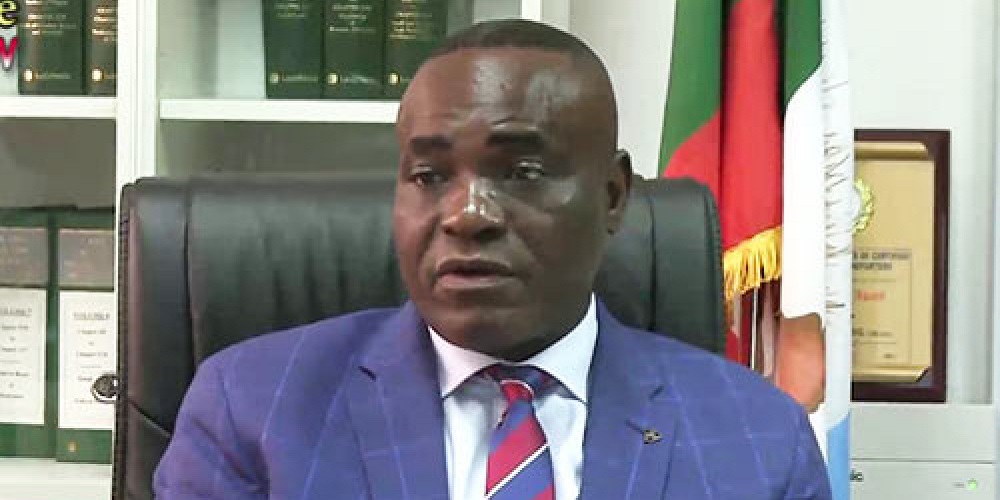
SERAP petitions CCB over ‘alleged abuse of office in Electoral Act amendment, tax reform laws’
…demands probe of lawmakers
c probe the conduct of members of the Senate who allegedly participated in the removal of the provisions on electronic transmission of election results from the Electoral Act amendment Bill during plenary after the majority of the senators had voted for the inclusion of the provisions and without any debate on the proposed removal of the said provisions.”
SERAP also “requests the Bureau to promptly and effectively investigate the conduct of any members of the National Assembly and officers of the executive branch who allegedly altered the Tax Reform Bills which resulted in the reported discrepancies between the harmonised versions of the tax reform bills passed by the National Assembly and the copies signed into law and gazetted by the Federal Government.”
The petition was sent to Dr. Abdullahi Usman Bello, Chairman, Code of Conduct Bureau.
In the petition dated 7 February 2026 and signed by SERAP deputy director Kolawole Oluwadare, the organization said, “The petition raises issues of conflict of interest, abuse of office, non-disclosure of interests, lack of due process, and erosion of the Code of Conduct for Public Officers in the exercise of legislative power.”
According to SERAP, “the petition is submitted pursuant to paragraphs 1 and 9 of the Code of Conduct for Public Officers contained in the Fifth Schedule, Part 1 to the Nigerian Constitution 1999 (as amended) and sections 5 and 13 of the Code of Conduct Bureau and Tribunal Act.”
SERAP’s petition, read in part: “Where lawmaking is shaped by abuse of office and conflict of interest, it ceases to be a legitimate exercise of constitutional and fiduciary responsibility and becomes a legal and ethical infraction prohibited under the Code of Conduct for Public Officers.”
“The processes leading to the passage of the Electoral Act amendment Bill by the Senate and the signing into law of the Tax Reform bills were allegedly marked by: a) alterations to bill provisions without debate and due process of law; b) alterations of the passed Tax Reform Bill without the approval of the National Assembly.”
There are also allegations that certain amendments may have been removed or introduced to the Electoral Act Amendment Bill and the Tax Reform Laws to serve private or political interests rather than the public interest.”
“Paragraph 1 of the Fifth Schedule to the Nigerian Constitution prohibits public officers from placing themselves in situations where personal interests conflict with official duties. This constitutional provision mandates integrity, ensuring that personal gain does not interfere with the objective performance of public functions.”
“Members of the National Assembly and officers of the executive branch of government are public officers within the meaning of Paragraph 19 of the Fifth Schedule to the Nigerian Constitution and are therefore bound by constitutional provisions on the Code of Conduct for Public Officers.”
“Section 15(5) of the Nigerian Constitution imposes the responsibility on public institutions to “abolish all corrupt practices and abuse of power including in the context of lawmaking.”
“According to paragraph 12 of the Code of Conduct for Public Officers contained in the Fifth Schedule, Part 1 to the Nigerian Constitution, ‘any allegation that a public officer has committed a breach of or has not complied with the provisions of this Code shall be made to the Code of Conduct Bureau.’”
“Paragraph 3 (e) of the Third Schedule Part 1 to the Constitution provides that, ‘the Bureau shall have power to receive complaints about non-compliance with or breach of the provisions of the Code of Conduct or any law in relation thereto, investigate the complaint and, where appropriate, refer such matters to the Code of Conduct Tribunal.’”
between the tax reform bills passed by the legislative body and the tax reform laws gazetted by the Federal Government.”
“A Sokoto lawmaker, Abdussamad Dasuki, raised the issue under a matter of privilege, drawing the attention of the House to the alleged discrepancies between the harmonised versions of the tax reform bills passed by both chambers of the National Assembly and the copies gazetted by the Federal Government.”
“The lawmakers said the alterations contained in the gazetted copies did not receive legislative approval. These alleged unlawful alterations raise questions over the legality and legitimacy of both the law-making processes and the versions of the tax laws circulated by the Federal Ministry of Information.”
SERAP is requesting the Code of Conduct Bureau to register the petition as a formal complaint and to:
Promptly, thoroughly, transparently and effectively investigate the conduct of the lawmakers and officers of the executive branch allegedly involved in the conduct which is the subject-matter of this petition;
Examine whether inducements, benefits, or promises were offered or received in connection with those acts;
Examine whether the alleged cumulative conduct of lawmakers and officers of the executive branch amounted to abuse of legislative power, conflict of interest and due process of law, contrary to the Code of Conduct for Public Officers.
Refer any substantiated violations of the Code of Conduct for Public Officers to the Code of Conduct Tribunal; and
Take all necessary steps to vindicate the principle that public office is a public trust.
-
News18 hours agoCAC Delists 400,000 Inactive, Non-compliant Companies
-
News18 hours agoPlateau Confirms Lassa Fever Outbreak, Records 11 Cases, Four Deaths
-
News18 hours agoCBN raises alarm over Nigeria fintech’s foreign reliance
-
News18 hours agoNIS denies report of passport issuance ban in southeast
-
Politics18 hours ago2027 presidency: Kwankwaso supporters propose joint ticket with Obi
-
News18 hours agoDestabilising Nigeria will put Christians at greater risk — US lawmaker
-
Metro18 hours agoTerrorists kidnap Catholic priest, 10 others, kill 3 in Kaduna
-
News18 hours agoNAF begins withdrawal of firearms from retiring veterans