

By Segun Sanni
Nigeria is a peculiar place where those who know absolutely nothing about a topic would be making outlandish claims on the topic with supreme confidence that would make even a subject matter expert green with envy. To this nameless author that made the rounds all over the social media in the past week, 99% of bank MDs and executives are thieves and they are the ones behind the ongoing economic and currency crises bedeviling Nigeria. He obviously took his cue from a similar erroneous claim by elder statesman, Chief Bode George, to the effect that bankers were the ones behind the collapse of the Naira. He even mentioned some names to personify the object of his anger but with tremendous respect, Baba only waxed very angry and emotional, pretty much symptomatic of the current mood in the land, widespread anger at the government and at anyone perceived to either contribute to or is not/less affected by the spreading hunger and general hardship in the country. It would not occur, neither matter, to them that bankers are not exempted from the national calamity and they almost compete in number with doctors, nurses and other healthcare professionals on the Japa exodus queues. But back to Baba George, he did not make ANY single valid charge against Wigwe or the other bankers that he mentioned in his diatribe, and I will try quote him verbatim:
“Emefiele, Elumelu, Adeola…all of them, stupendously wealthy now! Wigwe, who became MD of Access Bank immediately the other young man left, has now established a university. He has the temerity to be advertising that university on CNN. Wigwe University! That’s personally established by him! Where’s the money? Where’s his factory??Access Bank! What is the practice? They release dollars to them on monthly basis. They use the dollars! If it’s at 1 to 100, they will get it through the Mallam to say 1 to 200. You see that profit, what do they do with it? Who are the commercial people that really need it and get it? Most people get back to the Mallam to buy dollars. You hardly would get from the bank unless you are…Is that commercial activity?? So, what they had done to this nation, they must all be invited for discussion because the rottenness started from there, and it’s been going on for years! But it has exploded now on our faces!…”* 
And let us do the analysis: a man who had a strong passion and track record for excellence came out and said he wanted to establish a world class university with international standard facilities and top notch foreign professors and university administrators to attract students from Nigeria and other African countries who ordinarily would have been targeting European and American universities. And we knew this guy to be an unbeatable go-getter who had the uncommon grace to achieve virtually all he set his sight on, where should we expect him to advertise the culmination of his dream project and to invite students? On Radio OYO or LTV Channel 8??? We’re so used to things not working around here that we forget this school could be, or could have been, a major source of pride, prestige, foreign exchange, profit and academic prowess to our country! Are we aware of how much revenue and foreign exchange British universities attract to Britain every year? Recently, I read a report that British universities made £5.4bn from overseas students in 2015-2016 academic session (one session) but the same figure had grown 71% to £9.7bn (about N20 Trillion which would equal Nigeria’s one year debt-funded budget) by the 2021-2022 academic session, amounting to 21.5% of all incomes earned by the universities in the same year. This is a huge source of income/liquidity aside the attendant spillover effects on housing, food, tourism and general aggregate demand in the economy from the influx of international students. Why do we believe we cannot replicate the same here, at least from within the African region?? Are we going to reach Africa through NTA Channel 7?
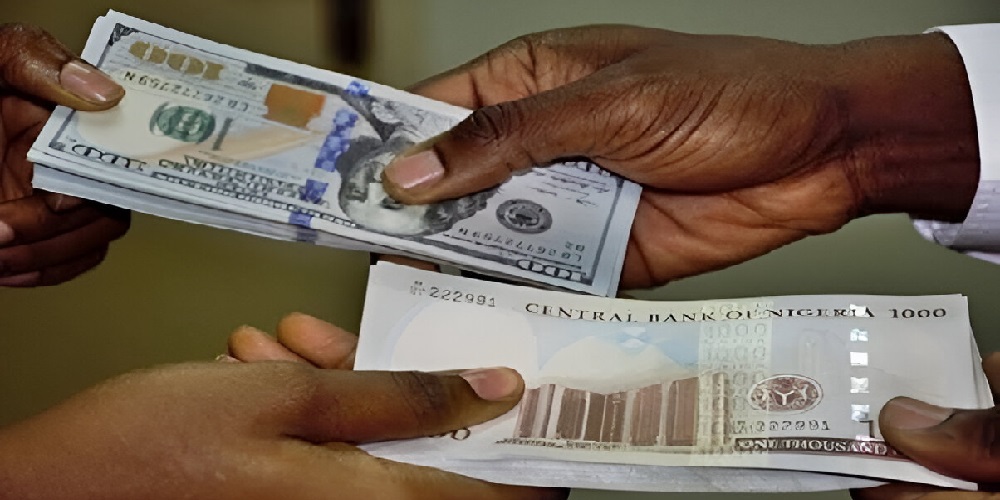
Now back to Baba’s charges: 1. That bankers make their profit from selling and round tripping foreign exchange! 2. That Nigerians don’t get dollars to buy in the banks bcs the bankers have sold the dollars to Mallams??? Haba!!! Do you know of any industry that is as strictly monitored and regulated in Nigeria as banks?? If you know one that comes close, please mention it here. The Central Bank has a whole Banking Supervision (and Examination) Department, headed by a Director and a coterie of banking experts and auditors whose jobs would also be on the line should they fail to spot and report any infractions or violations or red flags which later became an issue or got discovered after their visit. CBN is almost overbearing on the banks and is always on their backs, issuing circulars and directives with threats and actions of serious penalties and consequences should there be a violation. Some in our midst think the CBN just allocates dollars to the banks to disburse as they deem fit and the banks then take the dollars to the Mallams. But that is not how things work. Every dollar that the CBN releases to the banks is backed by an actual transaction with a customer completing and signing the forms (sometimes electronic forms) and with the funds released directly to the eligible destination depending on the nature of the transaction. Every dollar the CBN releases to the banks is tied to a customer request and can be easily traced and confirmed in the customer’s account. And the customer’s foreign exchange transactions can be traced across all the banks because the accounts are all connected to a BVN.
From the above, the allegation that Nigerians don’t get dollars from the banks is a very false and unfair allegation. There was no big problem with dollar funding for eligible transactions until our economy was grounded by serious mismanagement and dollar flows dried up in the economy. It is not the making of the banks. The banks do not print or manufacture dollars. Is there anyone here who travelled abroad three to four years ago and couldn’t buy PTA dollars from his banker and had to buy from Mallams?? Is there anyone here whose child attended school abroad up till about four years ago and didn’t get dollars/Pounds from the banks and had to buy from Mallams?? Is there anyone here whose business opened an LC up to four years ago and whose bank would not remit the FX and had to buy from Mallams?? It was only recently that the sh.t hit the fan and the utter mismanagement and complete grounding of our economy became a crisis where the system ran out of dollars. The fact is that the system ran out of dollars, and not that the bank MDs gave the money to Mallams.
The question of “where is your factory?” is a rather old fashioned, almost archaic, way to look at business and wealth in today’s world. In the years leading to the 18th to early 19th centuries, farming was the way to make money for most people and the guy who had the biggest farm and the most number of people on his farm was the wealthiest guy, and that was the main reason behind inter tribal warfare and slavery, the quest for manpower. Later on from around the 1820s, the engine was (re)invented and there resulted the Industrial Revolution. With that came the tractors, etc and the resultant less need for human hands (a tractor would do in thirty minutes what hundred men would do on a farm in a whole day). That was one of the big reasons behind the abolition of slave trade. And with the Industrial Revolution came a new need, the need for large scale raw materials to feed their factories, and that was the big basis for colonialism and the Partition of Africa.
The rich people were then the industrialists, those who owned factories. Those were the days of the Rockefellers (oil), the Carnegies (steel), the Fords (automobiles), the Vanderbilts (rail and shipping), etc. And after the World Wars and with the emergence of economic and political stability, the global population grew tremendously and the products and services to sustain the large populations were then the focus. And that is the background to the question of “where is your factory?” whenever they would investigate how people made money. The industrialists were the champions of those days, just as the plantation owners before them, but the world has evolved and the needs of the ever growing world population have also evolved. Technology (including telephony), banking and logistics have emerged very strongly and have become the dominant businesses in today’s world. As at 1990, the 20 largest global companies were:
1 General Motors
2 Ford Motor
3 Exxon Mobil
4 Intl. Business Machines (IBM)
5 General Electric (GE)
6 Mobil
7 Altria Group
8 Chrysler
9 DuPont
10 Texaco
11 ChevronTexaco
12 Amoco
13 Shell Oil
14 Procter & Gamble
15 Boeing
16 Occidental Petroleum
17 United Technologies
18 Eastman Kodak
19 Marathon Oil
20 Dow Chemical
Source: S&P 500.
But the tech companies have taken over in the past decade. Today, the tech companies are the global giants. The top ten largest companies in the world in 2020 are:
- Apple Inc
- Microsoft Corp
- Alphabet Inc
- Amazon
- Berkshire Hathaway Inc
- Ali Baba Group
- JP Morgan Chase
- Tancent Holdings Limited
- Visa Inc.
These are mostly new/young companies which came in and took centre stage way beyond the global players of the past.
In most countries of the world today, the largest companies are the tech companies, the phone companies, the banks and the oil companies, not the factories.
In all of history, an economic crisis always leads to mass anger, resentment and frustration with the government, the wealthy and even with many in the middle class. Baba is only expressing similar frustration but those of us who know should not join in those claims which have no foundation at all. How can anyone claim to miss the obvious and unusual entrepreneurial passion, courage and the can-do spirit bristling in and driving Herbert and Aig? How can one imagine it’s CBN’s FX that would be behind a Nigerian bank being one of the largest banks in Africa and building sizable subsidiary businesses in the UK, US and China aside its tentacles in the African continent?? Even if all of Nigeria’s meagre FX was given to Access Bank alone, how much would that amount to?? If that was how easily CBN dollars were available for banks to corner and make huge profits upon, why have we had so many bank failures in Nigerian history? Are you aware that many more banks have failed in Nigeria than survived?? Or dollars just became available in the banks when Herbert and Aig set up their bank?
Now please note, young folks are also operating and making waves in the Fintech world today, the Flutterwaves of this world. They’re filling a gap and rendering much needed payment services and are making good money, legitimately. We better get used to them and pray that our children be like them and the successful clean bankers.
I pass no judgment on the Access-Intercontinental Banks acquisition issue which has also been beaten to death in the social media since Herbert died. I have not the full details to make a fair judgement, but on this claim that it’s banks not allowing you to get dollars, I say fa…fa…fa…foul, in the voice of Pa Zebrudayah Nwogbo, alias 430. 😀😂
And if you care to know what led us to where we are, they’re three or four main things. Let me quickly summarize them:
- The last government borrowed huge sums of money domestically and internationally. We mostly don’t know what the loans were spent upon. Nigeria is currently spending over 50% of dollars accruing to us on servicing the debts that we cannot account for.
- Unprecedentedly large volumes of Nigeria’s oil was stolen between 2021 and 2023. At a point, we were losing up to 1m barrels of oil DAILY with the government not raising any alarm and with no one arrested so far. Dollars were not coming in to Nigeria bcs the remaining oil that was not stolen, NNPC took the proceeds as “petrol subsidy” recovery.
- From the above, the government started printing/taking illegal empty money from the CBN, money that merely expanded the monetary base and was not backed by any production. At the last count, over N25 Trillion was so printed. Our leaders apparently did not watch “The Rise and Fall of Idi Amin” in the 1970s. How can we repeat this error in today’s world??
3a. This primarily is the source of the serious inflation that we’re experiencing in Nigeria apart from food shortages arising from weather and insecurity.
3b. In a staggering error that begs for explanation, the CBN kept trying to tackle the inflation by raising the interest rate rather than cut the source of the problem, the illegal money being printed for the government. This raised interest rates for the productive sectors of the economy and crowded them out of the loans market.
3c. The illegal money so printed and which expanded the monetary base (money supply) of the economy is also joining other (existing) monies to chase for fx (some even allege the politicians are using the empty money to buy FX). - In continuation of the reckless borrowing and spending which defined the last government, they had also taken loans and pledged future oil production as payment source. So, much of the oil we’re producing today, the money is not coming in as it is being used to service those debts.
Numbers 1,2 and 4 above contributed to deplete our foreign reserves while number 3 led to/aggravated inflationary and fx pressures. For the first time in history, oil prices have been high in the past two years since Putin attacked Ukraine but Nigeria is broke in the period of oil boom. Unprecedented but it is what it is.
From the above, do you still think it’s the banks taking your dollars and selling them to Mallams?? Why is CBN not arresting them and flooding the market with dollars?
Please ‘hep’ me ‘on’ television make I watch Pa Zebrudayah. 😂
-Segun Sanni is an ex-banker and trouble maker in the Ibadan-Lagos axis of political and economic conversations. 😂