

News
Reps to partner with Navy to fish out crude oil thieves
- /home/naijuinz/public_html/wp-content/plugins/mvp-social-buttons/mvp-social-buttons.php on line 27
https://naijablitznews.com/wp-content/uploads/2024/02/AA49DD1C-E113-4D76-9EFD-8E76B82C2159.jpeg&description=Reps to partner with Navy to fish out crude oil thieves', 'pinterestShare', 'width=750,height=350'); return false;" title="Pin This Post">
- Share
- Tweet /home/naijuinz/public_html/wp-content/plugins/mvp-social-buttons/mvp-social-buttons.php on line 72
https://naijablitznews.com/wp-content/uploads/2024/02/AA49DD1C-E113-4D76-9EFD-8E76B82C2159.jpeg&description=Reps to partner with Navy to fish out crude oil thieves', 'pinterestShare', 'width=750,height=350'); return false;" title="Pin This Post">
By Francesca Hangeior
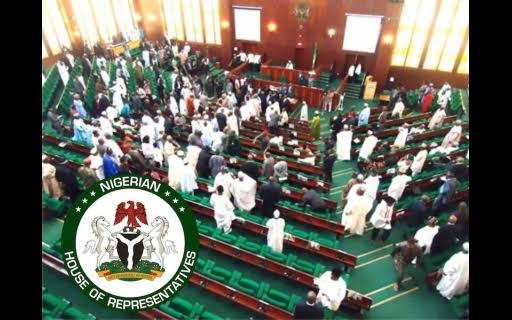
The House of Representatives Special Committee on Crude Oil Theft and Losses has appealed to the Nigerian Navy to assist it with relevant information to unravel those behind the perennial stealing of the country’s crude oil.

Rep. Alhassan Ado Doguwa, the Chairman of the Committee, said in a statement made available to newsmen on Sunday in Abuja after its engagement with the Chief of Naval Staff, Vice Adm. Emmanuel Ogala.
He assured Ogala that information obtained confidentially by the committee would be handled with the utmost care.
According to him, crude oil theft is a major concern for the economy of our country, Nigeria, and on that note, we feel we have to extend our hands of fellowship to the relevant security stakeholders.
“The parliament budgeted about N28.77 trillion for the year 2024 based on the crude oil benchmark of $77.96 per barrel and the production of 1.78 million barrels per day.
“In January 2024, Nigerian oil production rose to about 1.42 million barrels per day; this represents an increase of about 6.85 per cent compared to the production figure of 1.39 million barrels per day in December 2023.
He said there seemed to be a gradual improvement in oil production, but added that the country was still below the OPEC quota of 1.58 million barrels per day in the 2024 budget benchmark.
Doguwa said that the major reason the country was not meeting its production targets was largely attributed to crude oil theft.
“This theft is being carried out in collusion, which not only threatens the economy of the country but has even precipitated a crisis concerning national security.”
The statement quoted the Chief of Naval Staff, who agreed that oil theft remained a major challenge to the country’s economy, stressing the recent report by NNPC Ltd. of the rise of crude oil production to about 1.78 million bpd.
This, he said, was the highest in the last three years, adding that it was still below Nigeria’s OPEC quota while ensuring that the Navy would work in collaboration with others to ensure the quota was met.
He, however, lamented the shortage of personnel in the face of the vastness of the country’s waterways, which he said were over 1/10th of Nigeria’s land.
He said the Navy had less than 30,000 personnel to man the vast sea space with the operational guidelines of policing, enforcing, and assisting in coordinating enforcement.
News
Body of States Attorneys-General intervenes in NBA leadership crisis, urges calm
The Body of States Attorneys-General has stepped into the leadership crisis rocking the Nigerian Bar Association (NBA), calling on all parties to exercise restraint and allow ongoing efforts aimed at resolving the dispute through established institutional processes.
In a communiqué issued on Friday, following its meeting, the Body appealed to members of the legal profession and other stakeholders to refrain from making public statements capable of inflaming tensions as moves continue to find a lasting solution to the crisis.
The communiqué, jointly signed by the Chairman of the Body, Dr. Ben Uruchi Odoh, and its Secretary, Senior Ibrahim Sulyman, expressed support for an amicable resolution of the dispute.
The Attorneys-General urged all parties to embrace dialogue in line with existing court directives and work towards resolving the impasse in the interest of preserving the unity, dignity and integrity of the Nigerian Bar Association.
The Body also called for the urgent convening of an emergency meeting of the General Council of the Bar (GCB), the statutory body established under Section 1(1) of the Legal Practitioners Act, Cap. L11, Laws of the Federation of Nigeria 2004, which is responsible for the management of the affairs of the NBA.
According to the communiqué, the emergency meeting would provide the appropriate platform to facilitate an amicable resolution of the issues that have given rise to the current leadership crisis.
Reaffirming its commitment to the rule of law and the independence of the legal profession, the Body stressed the need to preserve the unity and institutional integrity of the NBA.
It expressed confidence that the dispute could be resolved through constructive engagement, mutual respect and strict adherence to the law.
News
‘Unauthorised Jumu’ah mosques to face sanctions’ – Kano Sharia Commission
The Kano State Sharia Commission has warned that anyone who establishes a Jumu’ah (Friday) mosque without its approval will face sanctions in accordance with the law.
The commission’s Second Commissioner, Sheikh Ali Danabba, gave the warning while addressing journalists in Kano.
According to him, the Commission will no longer recognise or approve any Jumu’ah mosque established outside the prescribed legal process.
“Anyone intending to establish a Jumu’ah mosque must first seek and obtain approval from the Kano State Sharia Commission and fulfil all the prescribed legal and administrative requirements,” Sheikh Danabba said.
He stressed that the Commission was determined to enforce the regulation and ensure that all Friday mosques operate within the provisions of the law.
The commissioner urged individuals, communities and religious organisations to comply with the state’s guidelines on establishing places of worship to promote order and peaceful religious activities across Kano State.
He also assured residents that the Commission would continue to monitor religious affairs to ensure strict compliance with the law.
News
Alia blames illiteracy, poverty for Nigeria’s insecurity
Benue State Governor, Hyacinth Alia, has identified illiteracy, poverty, unemployment, inequality, weak institutions, ethno-religious tensions, poor governance and declining social values as major factors fueling Nigeria’s persistent insecurity.
The governor made the remarks on Friday while delivering a lecture at the quarterly lecture series of Yakubu Gowon University in Abuja.
Alia said Nigeria had witnessed an unprecedented wave of insecurity in recent decades, citing the Boko Haram insurgency, banditry, terrorism, kidnapping and recurring herders-farmers clashes, which he said have claimed thousands of lives, destroyed property and posed serious threats to national security.
According to him, the Boko Haram insurgency represents a direct attack on Western education, underscoring the need for governments to strengthen the country’s education system as part of efforts to address insecurity.
The governor stressed that building an efficient public service and strengthening institutions remain critical to tackling the country’s growing security challenges, noting that the public service plays a central role in delivering essential services and meeting the needs of citizens.
He said effective public service delivery would help build stronger and more resilient communities, stimulate economic growth and promote social cohesion.
“Through efficient and effective public service delivery, we can build stronger and more resilient communities, foster economic growth, and promote social cohesion,” he said.
Alia also called for greater investment in inclusive, equitable and quality education, lifelong learning opportunities, technical and vocational skills development, teacher capacity building and safe learning environments across all levels of education.
He argued that education remains one of the most sustainable approaches to addressing the root causes of insecurity, including illiteracy, ignorance, poverty, religious extremism and unemployment.
According to him, when deliberately deployed as a national development strategy, education can reduce vulnerability to violent extremism, promote tolerance and empower citizens with the knowledge and skills needed for productive livelihoods.
The governor maintained that rather than relying solely on military action or threats, Nigeria should prioritise accessible, compulsory and functional education capable of fostering social cohesion, religious tolerance and economic empowerment.
He added that strengthening the education sector would not only improve human capital development but also contribute significantly to building a more peaceful, stable and secure society.
-
News20 hours agoDAY 23 of Projects Commissioning in the FCT
-
Sports20 hours ago2026 World Cup: Morocco Coach Ouahbi praises France’s victory
-
News13 hours agoKidnapped Oyo Pupils, Teachers finally Regain freedom – Presidency
-
Sports20 hours agoMbappe gives reason why he missed penalty in France’s World Cup Quarter-Final Victory Over Morocco
-
News18 hours agoJoint troop foil multiple ISWAP infiltration attempts in Borno
-
Metro2 hours agoMan who slashed his manhood set it ablaze back in the street
-
News18 hours agoVice President narrowly escapes Military helicopter crash
-
News2 hours agoTinubu overjoyed as Oyo abductees finally regain freedom