Connect with us

News

Deadline on NIN/account linkage: Most banks yet to implement directive

Published

on

ADVERTISEMENT
Zoom Ad
ADVERTISEMENT
Zoom Ad

As the deadline given to banks to link all bank accounts to NIN elapsed last Thursday, many banks in the country are yet to implement the directive.


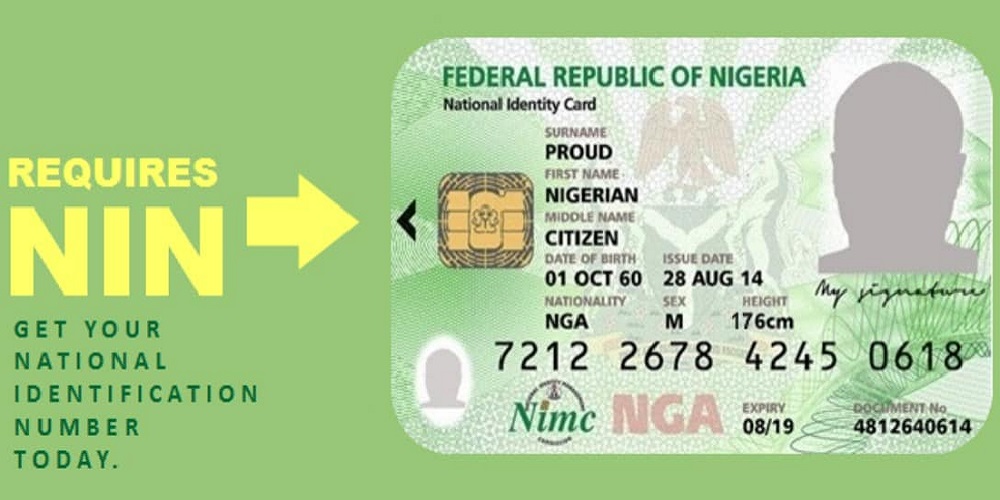
Recall that the Central Bank of Nigeria, CBN had issued a directive to all commercial banks in the country last year to restrict tier-1 accounts without proper Biometric Verification Number, BVN and National Identity Number, NIN link by Thursday, March 1st, 2024. And as at that date, approximately 91 million bank accounts faced the risk of being frozen by their respective banks.

Vanguards’ investigation has revealed that against expectations that banks will start blocking accounts not linked to NIN/BVN, few banks were only focused on blocking accounts without BVN but allowed customers that are yet to link their NIN unhindered access to their accounts.

Further investigation also revealed that some customers that have not linked their SIM cards to their NIN were barred by their network providers from using the SIM cards, which consequently affected the mobile transactions of such customers.

Advertisement

Vanguard’s visit to some of the new generation banks around Old Ojo Road at Abulado axis in Lagos State showed partial compliance to the CBN’s directive.

Out of the four banks (Zenith Bank, Ecobank, Access Bank, and Stanbic IBTC Bank) visited by Vanguard only Zenith Bank has started implementation of the directive.

When Vanguard visited Zenith Bank branch around the axis, some customers who visited the bank to rectify blockage were seen trying to fill NIN update form in order to have their accounts unblocked.

An official of the bank told our correspondent that several accounts have been blocked as a result of non-linkage of customers’ account to NIN.

Advertisement

“Several accounts that are not linked to NIN, especially corporate accounts, have been blocked. People who are affected have been coming in to sort it out. Once you fill the NIN update form and submit, the account will be unblocked,” he said.

A customer of Zenith Bank, who simply identified herself as Ngozi, told Vanguard that two separate transfers she made did not go through even though she was debited.

“When I came to the bank to find out what happened, they said that I have to link my NIN to my account,” she said.

However, a customer relations staff at Stanbic IBTC Bank told Vanguard that no account has been blocked in the bank due to non-compliance.

Advertisement

“I am not aware of any customer’s that has been as a result of failure to link their account to NIN. Nobody has complained about it today” she said.

Our findings also revealed that Ecobank has not started implementation of the directive as well. An official of the bank, who spoke with our correspondent, simply said that no account has been blocked and she isn’t aware of when the bank would start implementing the directive.

The story was the same at Access Bank where customers have full access to their accounts without any form of hindrance.

A customer relations officer at the bank told our correspondent that only accounts without BVN are being denied access.

Advertisement

Meanwhile, a visit to GT Bank located along Lasu-Igando road showed that the bank is yet to commence implementation.

Speaking on the development, Mrs Ibekwe Onyedikachi, a customer of GT Bank said: “The reason I came to the bank for assistance is not because my GTB account was blocked but because my sister’s GTB account in Nigeria was affected. She cannot carry out any bank transactions because her Nigeria phone number has been barred due to her not linking NIN to her SIM.

Also speaking, Mr Babs who banks with First Bank said: “For some time now I have been receiving messages from my network company that I should link my NIN to my SIM, I have linked my NIN and SIM before, but when the messages kept coming often and often, I decided to go and link my SIM and that was successful.

“It was hectic, trying to link or do anything in Nigeria is always stressing, you will go through hassles to achieve what you would have achieved ordinarily. But I have a First Bank account that I am using, but I cannot use the account for any transaction for now because when I wanted to do a transaction they instructed me to go and link because that account has been barred.”

Advertisement

Meanwhile, a visit to Fidelity Bank in Alaba International Market shows that the bank is yet to implement the directive to block bank accounts that are not linked to NIN.

However, a staff of the bank told Vanguard that the Bank could commence implementation of the directive by the middle of March.

Speaking on the condition of anonymity she said: “For now, our customers are still carrying out their banking transactions without hassles as we are yet to implement the directive. However, information reaching us is that our bank can commence in the middle of the month.”

Also the Alaba International branch of Union Bank is also yet to implement the directive as the bank customers were seen going about their banking transactions unhindered.

Advertisement

Although, the customer care section was crowded with customers wanting to link their NIN to their bank accounts.

Meanwhile in Abuja, some commercial banks have begun implementation of the policy of freezing defaulting accounts.

Checks by Vanguard revealed that some of the banks have already commenced the implementation of the policy, restricting noncompliant customers from accessing their accounts.

When our reporter visited Fidelity bank branch at Federal Housing Estate, FHA, Lugbe, Abuja, staff of the bank confirmed that the policy had commenced and that affected customers were being directed to provide all the necessary information before their accounts could be defrozen.

Advertisement

The banker who pleaded for anonymity said, “Yes we have started implementing the policy, we freeze any account not linked to BVN and NIN, and for us to defreeze such account, the affected customers have to present their NIN, evidence of birth certificate, and make sure that the same names in BVN is what is on the NIN.”

When our reporter visited Wema Bank also in FHA, Lugbe, the story was the same. The bank officials who spoke to our reporter said, “We have started since last week to freeze accounts that were not linked to BVN and NIN. We are a responsible bank and we try as much as possible to follow the CBN directives.”

When asked on the remedy for the affected customers, the banker said, “We have two options for them, either they come to us with their valid identity cards, that is NIN to link their account to BVN or they download the available app and link their NIN to their BVN on their own, they do not necessarily need to come to the bank.”

Some of the bank customers, who spoke to our reporter, confirmed the implementation of the policy by the bank. One of them, Janet Agbo said, “Yes, they have started blocking accounts, they have frozen my own account, I tried to access it few minutes ago and I could not.”

Advertisement

Another bank customer, Uchenna Ekele, who also spoke to our reporter said his account had been frozen but he was going to provide them with all the needed documents to unfreeze it.

Another visit to UBA in the same vicinity showed that the bank is yet to commence the implementation. The head of Customer Care Unit, who spoke to our reporter said, we have not started blocking any account because we have not been given such directive. I am aware that the deadline was last Thursday but we have to be instructed before we can take action on that policy.”

When we paid a similar visit to Polaris bank, the bank officials said, “We have not been given directive to start freezing customers’ accounts that have not been linked to BVN and NIN. We are still receiving customers willing to link their accounts to their BVN and NIN. Until we receive an instruction from the authorities we cannot do otherwise.”

Meanwhile, the World United Consumer Organisation, WUCO, has urged the Central Bank of Nigeria, CBN, to create remote access methods and alternative procedures for Nigerians in diaspora to be able to link their National Identity Number, NIN, and Bank Verification Number, BVN.

Advertisement

The global advocacy group which is dedicated to ensuring equitable access to essential services for consumers worldwide, equally urged the apex bank to reconsider its deadline for NIN/BVN linkage.

In a statement issued on Tuesday, WUCO, through its President and human rights lawyer, Mr. Clement Osuya, stressed that though the CBN’s directive may be well intentioned, “It fails to consider the unique challenges Nigerians living abroad face.”

Credit: Vanguard

Advertisement
Continue Reading
Advertisement

News

Davido’s Friend ‘Tiny’ Ubiribo, Who Died After Penis Procedure, Was Wanted by NDLEA Over Drug Trafficking

Published

on

ADVERTISEMENT
Zoom Ad
ADVERTISEMENT
Zoom Ad

Igho ‘Tiny’ Ubiribo, the British-Nigerian influencer and close associate of Afrobeats star David Adeleke, popularly known as Davido, who died following complications from a penis enlargement procedure in Thailand, had previously been declared wanted in Nigeria over alleged drug trafficking.

Ubiribo, who died in Bangkok on March 6, 2026, had been declared wanted alongside his wife, Danielle Simba Allen, an Anglo-Zimbabwean fashion entrepreneur, by the National Drug Law Enforcement Agency (NDLEA) in connection with an alleged international drug trafficking syndicate.

The couple was among individuals the anti-narcotics agency listed in 2023 as “celebrity couple wanted over seized illicit drugs.”

According to the NDLEA, Ubiribo, also known as Tiny, and Allen, known as Dani, were allegedly involved in recruiting teenage girls into the illicit drug trade while operating as alleged leaders of an international syndicate said to have links to Los Angeles, United States.

Advertisement

The agency had also declared Port Harcourt-based prophetess and founder of Christ Power Adoration Ministries, Faith Ugochi, wanted over the alleged activities.

The NDLEA said investigations linked Ubiribo and his wife to the alleged drug trafficking operation and that repeated attempts to secure their appearance for questioning had failed.

The agency alleged that two teenage girls, identified as Favour and Shalom, were recruited as sales representatives in the illicit drug trade by Ugochi, who allegedly used her church platform to recruit teenagers brought to her for assistance.

The girls were allegedly recruited on behalf of Ubiribo and Allen, whom the agency described as the owners of the operation.

Advertisement

The NDLEA further identified Edward Omatseye, also known as Montana, as the alleged coordinator of the syndicate’s activities in Nigeria, while Nnochiri Chidinma Promise was identified as a representative of Ben Cargo Ltd, which the agency said was responsible for shipping illicit consignments into Nigeria.

“Several attempts to get Prophetess Faith Ugochi, Igho Ubiribo and Danielle Simba Allen to submit themselves for questioning have proved abortive,” the agency said at the time.

Ubiribo and his wife remained at large for about three years, with the drug trafficking investigation unresolved.

His death was announced in London on March 6, prompting an outpouring of tributes from friends and associates, including Davido.

Advertisement

In an emotional tribute, Davido described Ubiribo as a man of “light, energy, courage, resilience” and a trusted ally, saying he could not bring himself to speak about him in the past tense.

However, details surrounding Ubiribo’s death emerged months later during a UK coroner’s inquest.

On September 5, coroner Jean Harkin ruled that the 43-year-old died from a pulmonary embolism caused by complications from a penis enlargement procedure he underwent while on holiday in Thailand.

Evidence presented at the inquest showed that Ubiribo had been injected with about 40 millilitres of hyaluronic acid and lidocaine at a Thai clinic in March.

Advertisement

UK pathologist John du Parcq said in his report that cellular material found in Ubiribo’s lungs matched the hyaluronic acid used in the penis filler injection.

According to the pathologist, the finding was consistent with a pulmonary embolism and also matched the results of the Thai autopsy.

Ubiribo’s death has therefore brought renewed attention to a man whose public profile was marked not only by his close association with one of Africa’s biggest music stars but also by an unresolved drug trafficking investigation in Nigeria.

At the time of his death, there was no indication that the NDLEA case against him had been concluded.

Advertisement
Continue Reading

News

Businesses Feel Pressure as FG’s Domestic Borrowing Surges 90% to N24.7trn

Published

on

ADVERTISEMENT
Zoom Ad
ADVERTISEMENT
Zoom Ad

The Federal Government’s borrowing from domestic investors rose by 90.5 per cent year-on-year (YoY) to N24.7 trillion in the first eight months of 2026, compared with N12.98 trillion recorded in the corresponding period of 2025.

Findings by Financial Vanguard, based on public finance data from the Debt Management Office (DMO) and the Central Bank of Nigeria (CBN), also showed that credit to the government grew more than four times faster than credit to the private sector during the period.

The sharp increase in domestic borrowing came despite a significant rise in government revenue reported by key agencies, including the Nigerian Revenue Service, Nigeria Customs Service and Nigerian National Petroleum Company Limited (NNPCL).

The government has also benefited from savings associated with the removal of petrol subsidies and increased naira proceeds following the floating of the exchange rate.

Advertisement

However, public finance analysts have raised concerns over extra-budgetary spending and other fiscal exposures, which they say may be contributing to the government’s growing financing needs and prompting increased borrowing from both domestic and external sources.

Govt credit grows 4.5 times faster than private-sector credit

The latest CBN money and credit data showed that credit to the government rose by 43 per cent YoY, from N23.69 trillion in July 2025 to N33.92 trillion in July 2026.

By contrast, credit to the private sector increased by only 9.6 per cent, from N76.13 trillion to N83.43 trillion over the same period.

Advertisement

This means credit to the government grew about 4.5 times faster than credit to the private sector.

The surge in Federal Government borrowing was driven largely by increased issuance of Federal Government of Nigeria (FGN) bonds, FGN savings bonds and Nigerian Treasury Bills (NTBs).

Borrowing through FGN bonds rose by 145 per cent YoY to N7.78 trillion in the first eight months of 2026, from N3.18 trillion in the corresponding period of 2025.

Similarly, borrowing through NTBs increased by 78.6 per cent to N16.92 trillion, from N9.47 trillion, while borrowing through FGN savings bonds rose by 22 per cent to N40.56 billion, from N33.18 billion.

Advertisement

Why FG is borrowing more

Experts who spoke to Financial Vanguard attributed the sharp increase to the government’s larger financing requirements amid a significant fiscal deficit, rising expenditure and higher debt-service obligations.

They, however, warned that increased reliance on the domestic market could crowd businesses and households out of available credit.

The Chief Executive Officer of MDU Capital Ltd, Ayodeji Ebo, said the increase reflected “larger financing requirements arising from high debt-service costs, recurrent expenditure, infrastructure and security needs, and a fiscal deficit that remains significant despite improved revenue.”

Advertisement

According to Ebo, the government may also be relying more heavily on the domestic market to reduce its exposure to foreign-exchange risks.

He, however, cautioned that not all NTB issuance should be regarded as fresh borrowing, noting that part of the issuance represents refinancing or rollover of maturing obligations.

Chief Economist, United Capital Plc, Ayodele Akinwunmi, identified infrastructure spending and the need to bridge fiscal deficits as major drivers of the increased borrowing.

He said the impact of the borrowing should also be assessed in relation to the infrastructure being financed.

Advertisement

“Across the country, we have witnessed significant growth in infrastructure development, ranging from physical projects, such as roads and railways, to soft infrastructure, including education, healthcare and security.

“These advancements have contributed positively to the ease of doing business, creating a more enabling environment for economic activity,” Akinwunmi said.

He noted that Nigeria’s infrastructure financing gap remained substantial, making it difficult for the government to rely solely on annual budgetary allocat

Advertisement
Continue Reading

News

WAEC Recruitment Test: Applicants Raise Alarm Over Login, Auto-Logout and Technical Glitches

Published

on

By

ADVERTISEMENT
Zoom Ad
ADVERTISEMENT
Zoom Ad

Applicants who took part in the West African Examinations Council’s (WAEC) recruitment aptitude test have raised concerns over alleged technical difficulties that they said disrupted their attempts to complete the online examination.

Several applicants took to X to complain of difficulties accessing the test portal, repeated logouts, delays in loading questions and problems moving from one question to another during the exercise.

One applicant, posting under the name Matchmaking – Nightlife, described the experience as frustrating, alleging that the test was designed to last 40 minutes but that candidates were losing valuable time because the system repeatedly logged them out.

The applicant wrote that about 15 minutes had elapsed without a question being successfully answered, citing auto-logout, delayed logins and errors after clicking the button to proceed to the next question.

Advertisement

Another user, Jamokski, who said the video circulating online was recorded before the main examination room, also complained about the examination platform.

According to the applicant, moving from one question to another could take several minutes, while some questions reportedly moved automatically to the previous or next item without any input from the candidate.

Other applicants reported similar experiences.

One user, Kayode K. Lawal, said the aptitude test had glitches “everywhere”, listing problems with the login process, examination portal, timing and loading of subsequent questions.

Advertisement

He questioned the suitability of the system for student examinations, given the difficulties applicants were experiencing during the recruitment exercise.

Another applicant, who identified himself as Leahcim, said he was scheduled to take the test between 1pm and 1:40pm but could not gain access at the scheduled time.

“I was scheduled for 1pm-1:40pm, after so much trial I was allowed to access the website around 3pm. And I was able to finally login by 5:30pm,” the applicant wrote.

He said that after eventually gaining access, he struggled to complete only four questions because he was repeatedly logged out of the system.

Advertisement

An applicant identified as Kuti Of Mokwa also posted that after the test was rescheduled, he had managed to answer only two questions in 28 minutes.

The complaints have triggered criticism of WAEC on social media, with some applicants describing the experience as frustrating and questioning the reliability of the organisation’s technology.

However, the complaints should be viewed against the background of a genuine recruitment process.

WAEC maintains an official Job Application Management Portal for vacancies at its Nigeria National Office. The portal instructs applicants to review advertised vacancies, submit applications and monitor their application status through their dashboards.

Advertisement

By August, applicants who had progressed in the recruitment exercise began seeing messages on their dashboards informing them that they had been “advanced to the next stage of the application process” and asking them to confirm their availability for an aptitude test.

The portal update required applicants at that stage to provide or confirm details including their active email addresses, telephone numbers and states of residence for subsequent communication about the recruitment process.

WAEC itself also has an Aptitude Tests Department that provides computer-based and remote online testing services, including recruitment tests for organisations. Its published materials describe the remote testing system as an initiative intended to provide secure, flexible and convenient assessment while improving efficiency and reducing logistical challenges.

The latest complaints raise questions about whether the technology deployed for the recruitment exercise delivered the reliability expected from an organisation that administers high-stakes examinations.

Advertisement

As of the time of filing this report, WAEC had not publicly responded to the specific complaints reviewed by The Nigeria Education News or explained the reported login, auto-logout, timing and question-navigation problems.

The Nigeria Education News could not independently establish how many applicants were affected or whether the reported difficulties occurred across all test sessions.

WAEC applicants have therefore been advised to rely on the Council’s official recruitment portal for further instructions and updates rather than unverified information circulating on social media.

Advertisement
Continue Reading

Trending

Copyright © 2024 Naija Blitz News