News
Mr Ibu’s demise: Poorly managed vascular diseases may cause amputation – Orthopaedic surgeons reveal
- /home/naijuinz/public_html/wp-content/plugins/mvp-social-buttons/mvp-social-buttons.php on line 27
https://naijablitznews.com/wp-content/uploads/2024/03/Doctors-1000x576.jpg&description=Mr Ibu’s demise: Poorly managed vascular diseases may cause amputation – Orthopaedic surgeons reveal', 'pinterestShare', 'width=750,height=350'); return false;" title="Pin This Post">
- Share
- Tweet /home/naijuinz/public_html/wp-content/plugins/mvp-social-buttons/mvp-social-buttons.php on line 72
https://naijablitznews.com/wp-content/uploads/2024/03/Doctors-1000x576.jpg&description=Mr Ibu’s demise: Poorly managed vascular diseases may cause amputation – Orthopaedic surgeons reveal', 'pinterestShare', 'width=750,height=350'); return false;" title="Pin This Post">
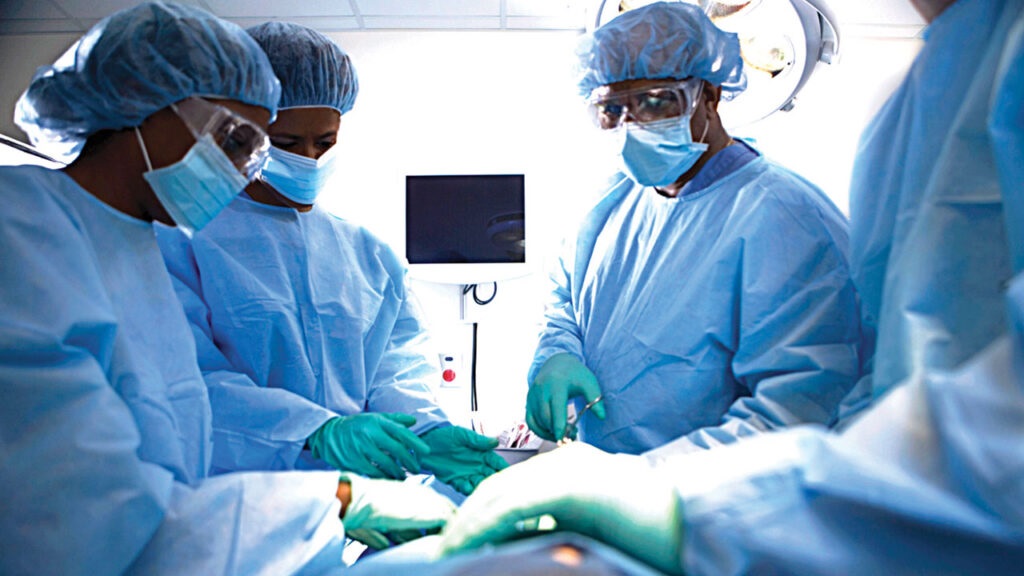
Vascular diseases, if not detected on time or poorly managed, may lead to limb amputation, orthopaedic surgeons and cardiovascular experts have warned.

They advised those at risk of having the medical condition to always visit the hospital to ascertain their status.
They enjoined those predisposed to Vascular diseases to seek early medical intervention if they suspect any form of peripheral artery disease, which is a major cause of medical amputation, or other serious bacterial infections and blood clots.

Though septic wounds among other factors also predispose to amputation, the physicians maintained that peripheral vascular disease is the major cause of amputation worldwide, and advised early intervention before the situation becomes irreversible.
According to an online medical portal, Mayo Clinic, peripheral artery disease, also known as peripheral vascular disease, is a common condition in which narrowed arteries reduce blood flow to the arms or legs, thereby, causing serious damage to the body.
To diagnose this condition, the professionals said a Doppler ultrasound test would be needed to show the direction and speed of blood moving through the arteries and veins, adding that it can also identify blood clots, narrowed arteries and other problems that affect the heart and blood vessels in the legs, arms and stomach.
Recall that the late presentation of these vascular diseases (blood clots and dead vessels) was reportedly the reason for the amputation and eventual death of the late Nollywood actor, John Okafor, popularly known as Mr Ibu.
Speaking exclusively with PUNCH Healthwise in different interviews, the experts warned that people with diabetes mellitus, serious bacterial infections and injuries, obesity, immunosuppressants and exposure to cigarette smoke are predisposing factors to amputation.
Speaking also, a Consultant Orthopaedic Surgeon at the Abia State University Teaching Hospital, Dr Isaiah Abali, affirmed that poorly managed vascular diseases can lead to medical amputation, and advised people to avoid any condition that may predispose them to loss of limbs, or eventual death.
Dr Isaiah Abali
Dr Isaiah Abali
He explained that Peripheral Artery Disease is a major cause of medical amputation worldwide, describing it as a circulatory condition in which narrowed blood vessels reduce blood flow to the limbs.
According to him, PAD is a sign of fatty deposits and calcium building up in the walls of the arteries medically known as atherosclerosis, revealing that “diabetes, obesity and cigarette smoking among others, are predisposing factors for peripheral vascular disease.”
Abali, who is also the Chairman of the Nigerian Medical Association, Abia State chapter, explained, “This condition occurs when the blood supply to the legs or upper limbs, depending on where it occurs, is cut off. When the blood supply is cut off, it may lead to gangrene and at this stage, the damage is irreversible because that part of the body is already dead and smelly. The only option for the orthopaedists is amputation.”
Gangrene, according to him, means the death of body tissues due to a lack of blood flow or due to a serious bacterial infection, saying that peripheral vascular diseases commonly affect the arms and legs, including the toes and fingers.
He noted that high blood sugar in the body damages the blood vessels, which is the reason gangrene takes place more in diabetic patients.
He added, “When the blood vessel is damaged, it can slow or block blood flow to certain parts of the body and this predisposes the individual to amputation. More so, obesity can push on arteries, slowing blood flow and increasing the risk of infection and poor wound healing.
“When people with these conditions sustain an injury, it may be difficult for the wound to heal and such wounds might become infected by bacteria. This will worsen the situation and wounds may become septic and lead to gangrene.
“Also, patients who go for cancer treatment like chemotherapy may have suppressed immune systems and this allows infections to thrive as the body has compromised immunity against infections. Human immunodeficiency virus can affect the body’s ability to fight off infections too.”
According to him, another condition that predisposes one to amputation is “Peripheral neuropathy, which occurs when the nerves in the body’s extremities, such as the hands, feet and arms, are damaged.
“People with this condition tend to get gangrene more than the others because they don’t know that something has entered their legs until it becomes a problem that leads to gangrene and amputation.”
He listed treatments for gangrene to include antibiotics, oxygen therapy, and surgery to restore blood flow and remove dead tissue, and advised that the earlier the condition is identified and treated, the better the chances for recovery.
Corroborating his views, a Consultant Cardiologist at the Lagos University Teaching Hospital, Idi-Araba, Dr Akinsanya Olusegun-Joseph, said most cardiovascular illnesses do have co-morbidities, saying that somebody with hypertension can also manifest other conditions.
Akinsanya Olusegun-Joseph
On what could be indications for amputation, he said, “The blood flow may be reduced due to cholesterol deposits in the rumen of the blood vessels and with this; there may be blockage in the artery, which also reduces blood flow to that part of the body.
“This situation is more in hypertension, diabetes and blood clotting. To manage these conditions in order not to lead to amputation, patients with hypertension, diabetes and high cholesterol which are the major risk factors should control their blood pressure, blood sugar, and cholesterol.
“They should go for Doppler studies and scan to understudy the blood vessel to know the impact of blockage to the blood supply. I, therefore, advise people to know their numbers (blood pressure), check cholesterol, eat healthy food, embrace a healthy lifestyle, embark on fitness exercises and reduce their stress level.”
Meanwhile, a study published in the National Library of Medicine, by Apama Swaminathan and team, titled, ‘Lower extremity amputation in peripheral artery disease: Improving patient outcomes,’ affirmed that poorly managed vascular diseases may lead to amputation.
The authors noted that peripheral artery disease affects over eight million Americans and is associated with an increased risk of mortality, cardiovascular disease, functional limitation, and limb loss.
“In its most severe form, critical limb ischemia, patients are often treated with Lower Extremity Amputation, although the overall incidence of this is declining. In the US, there is significant geographic variation in the performance of major LEA.
“The rate of death after major LEA in the US is approximately 48 per cent at one year and 71 per cent at three years. Despite this significant morbidity and mortality, the use of diagnostic testing in the year prior to LEA is low and varies based on patient, provider, and regional factors.”
News
NSCDC Intercepts 45,000L Of Suspected Illegal Ethanol, Nabs Three In Akwa Ibom
The Nigeria Security and Civil Defence Corps (NSCDC), Akwa Ibom State Command, has arrested three suspects and impounded a tanker loaded with 45,000 litres of ethanol suspected to have been illegally acquired.
The State Commandant, Mrs. Geraldine Abetianbe, disclosed this while briefing journalists in Uyo.
She said the arrest and seizure were carried out on Tuesday at about 1:00 p.m. by operatives of the command acting on credible intelligence at Ikot Umo Essien, along Aba Road, in Essien Udim Local Government Area.
”On June 23, at about 1300hrs, our operatives acting on credible intelligence intercepted a petroleum tanker at Ikot Umo Essien, along Aba Road, in Essien Udim Local Government Area of Akwa Ibom State.
“The tanker, with a capacity of 45,000 litres, was laden with a product suspected to be ethanol acquired illegally.
“Three suspects were arrested at the scene in connection with the act,” Abetianbe said.
The commandant explained that the arrest of the suspects and seizure of the tanker were based on reasonable suspicion of the illegal acquisition and transportation of petroleum products in the state.
She said the suspects presented a waybill during interrogation, but the document immediately raised suspicion due to several discrepancies. She added that further investigations and inquiries to verify the authenticity of the declared point of loading yielded negative results.
“This confirmed our suspicion that the product was not sourced through legitimate channels.
“Through synergy, mutual respect, and timely information sharing, we recorded this success,” she said.
Abetianbe warned criminals against engaging in the illegal trade of petroleum products, describing such activities as not only criminal but also a form of economic sabotage that deprives the government of revenue, endangers lives through adulteration and explosions, and undermines national security.
She vowed that the NSCDC, as the lead agency responsible for the protection of critical national assets and infrastructure, would not relent in carrying out its mandate.
“We shall continue to go after vandals, illegal bunkerers, product adulterators, and all those who engage in diversion and illegal transportation of petroleum products,” she said.
News
Tension as ISIS releases video of top military grade weapons captured in Niger
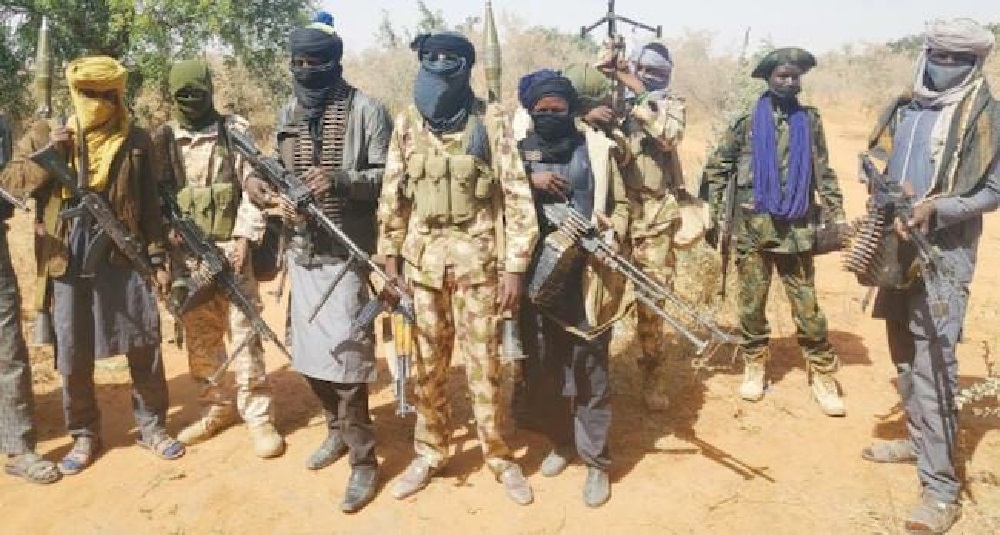
A video allegedly released by the Islamic State, ISIS, following an attack on a Nigerien military base in Inates has surfaced online, allegedly showing a cache of military-grade weapons seized during the raid.
In a sighted video which has circulated on social media, appears to show heavy weapons, including artillery rockets, machine guns and anti-aircraft guns, reportedly captured from the military installation.
The footage was shared on Sunday by Bakatsine, a journalist known for reporting on conflict and insecurity in Nigeria’s North-West region.
The authenticity of the video and the exact quantity of weapons displayed have not been independently verified.
Bakatsine said that the development has raised fresh concerns over the growing capabilities of terrorist groups operating across the Sahel, where jihadist organisations have intensified attacks against military targets in recent years.
Security analysts have repeatedly warned that weapons captured during such attacks can significantly strengthen insurgent groups and fuel further instability across the region.
According to the report, although there is no evidence that the weapons shown in the video have been moved into Nigeria, experts have long warned that the porous border between Niger and northern Nigeria allows the movement of fighters, weapons and logistics.
Bakatsine warned that terrorist groups operating across the Sahel and the Lake Chad Basin are also known to maintain operational and logistical links, increasing concerns about the potential regional impact of such seizures.
The attack on the Inates military base underscores the persistent security challenges facing countries in the Sahel, including Niger, Mali and Burkina Faso, where extremist groups continue to target military installations.
The incident has renewed calls for stronger intelligence gathering, improved border security and closer regional cooperation to prevent terrorist groups from acquiring additional military hardware.
News
Xenophobia: FG processing new flight to evacuate Nigerians in S’Africa before June 30 deadline
The Federal Government is finalising an arrangement to airlift another batch of stranded Nigerians in South Africa, The Nation has learnt.
Already, over 300 Nigerians have been evacuated in two different flights. One conveying 268 by the Federal Government and another private arrangement conveying 66.
The anti-immigration vigilante groups have set a June 30 2026 deadline demanding undocumented foreign nationals, especially blacks, to leave South Africa.
The threat has sparked widespread fear of xenophobic unrest, leading several African nations to evacuate thousands of their citizens. Though South African authorities have heavily condemned the vigilante threats and deployed the police and military to tighten security nationwide.
Sources in the Presidency, said the government is processing more flights as the June 30 2026 deadline for undocumented foreigners to leave South Africa draws closer.
The sources also distanced the Federal government from scheduled flight arrangements in the public domain.
According to one of the sources, the Federal Government has made a request for another flight and the financial aspect is being worked out.
The source revealed that the initial plan was to evacuate around 300 people and that was sorted out with the airline.
The additional names on the list were people who showed interest at a later date.
The source noted that initially, only very few people indicated interest and that formed the basis for the initial arrangement leading to the evacuation of 286.
The sources also noted that the last batch of about 90 nationals that were evacuated was done by a private intervention and were mainly vulnerable- women and children.
They, however, said with the surge on the list now, the government has to do proper profiling before making a request.
The source also stressed that it was not an issue of funding but of processes.
The sources also disclosed that the process involved those who are readily prepared to return and the need to also prepare necessary documents.
Confirming government efforts at evacuating another batch, the spokesperson, Ministry of Foreign Affairs, Kimiebi Imomotimi Ebienfa said the government is up and doing to ensure that those wishing to leave are evacuated.
He revealed that “more flights are currently processed.”
He also promised to provide updates as the process goes on.
Meanwhile, anxiety and frustration have enveloped Nigerians awaiting evacuation from South Africa, as the deadline draws near.
Over one thousand Nigerians are still awaiting evacuation.
However, as the deadline draws near, many more Nigerians are seeking to leave the late Nelson Mandela’s country.
The President of Nigerian Citizens Association South Africa (NICASA), Rev. Frank Onyekwelu called for speedy action.
He said, “As you may know, the first flight that evacuated people took about 268 people and Wednesday another 66 people left through an arranged flight from a private person from Nigeria. And so, we still have over 1,000 names remaining which we’re hoping that the other four flights as being approved by the government of Nigeria will be able to airlift them.”
Speaking on the conditions of the people awaiting evacuation, Onyekwelu said it is not looking too good, especially as they have been displaced.
He explained that frustration has started setting in. He added: “So far, we might have about a thousand people remaining. It’s not sounding well. Some of them are really frustrated. Some of them are managing wherever they found themselves as you may know that many of them came from far provinces and they are not living in Johannesburg here.
“So, currently, some of them are dispatched, hanging around in various places. Some in churches, in some community halls, and the weather is not favourable. “As you may know, we are in our winter season here in South Africa. So, it’s very cold and women and children being exposed to the cold weather, it’s a risk to their health. It’s also a risk to their general well-being.
“So, the economic challenges- some of them don’t have money to buy food or buy hygiene products to continue to manage and wait. It’s been two weeks now since the cancellation on the 15th of January.”
He disclosed that support is coming from the Nigerian community.
He however pleaded with the government to hasten the process.
“The community is supporting where they can, buying groceries, buying food, and some personal hygiene products just to show them love and support.
We continue to plead with our government and appeal that they will fast-track the process and whatever that is causing the technical delay so that these people will be airlifted and they will find their way back home where they can at least relax and have some peaceful sleep. So, the condition is not conducive for them.
“Many of them are squatting like you see like 10-15 people in one room or in one hall, you know, struggling to manage themselves and hold on until when they will get a confirmed date for evacuation. That is the current situation of our people.”
He also disclosed that in collaboration with the country’s mission in South Africa, the NICASA had engaged some security personnel to help pass information around.
He said: “Regarding the 30th June deadline, we have been working hand in hand with our consulates and missions. “We have issued a secular- public notice to engage our people for them to apply caution in movements, protect themselves first of all, and safeguard their businesses or properties. “We’ve engaged with some security personnel that will also help in passing information across to us or from us to the government in terms of if there is any security situation or incident, anyone of our national having any situation, they will quickly alert us while we will alert the government.”
He also said Nigerians have been advised to shut their businesses on the set date.
“Above all, we encourage people, especially on that 30th if it’s possible for them to close their shops, close their businesses, take out their valuables from their businesses just to avoid looting and they stay indoors, have enough air time and data in their phones, stay in touch with their families and loved ones and expect communications from our approved channels so that we can always hear their cry. If anything is happening where they are, they can easily reach out to somebody that will reach out to somebody. “So far, we also encourage them to be law abiding, not to engage if there are protests on that day, if there are South Africans marching around, they shouldn’t confront them, they should not engage them or, you know, block their ways.
“Even those that will be driving or have a need to move around at all, should avoid the hotspot areas and the strategic corners that might put their life in danger. And as much as it can, avoid travelling that day, whether within the province or outside the province. As we know that this protest might be happening all over South Africa on that same day, even though we are receiving some reports or intelligence information that they are planning to even start earlier than the 30th, maybe around the 28th or 29th to start, you know, looting or attacking foreigners.
“But we are on great alert and applying caution as we manage the situation so far,” he added.
The Nation
-
News9 hours agoLagos Begins Unique ID Registration For Public, Private School Students
-
Foreign9 hours agoVenezuela’s earthquake death toll hits 1,430, ‘worst in 123 years’
-
News9 hours agoNDC Vice Chairman, Assembly Candidate, Others Defect to APC After Court Nullifies Party Registration
-
News9 hours ago‘My Wife Sent Love Messages To Her Lover, Threatened Me With Knife For Dating Two Of My Church Members’
-
News20 hours agoIreland Opens Fully Funded Master’s Scholarship For Nigerians
-
News19 hours agoJust in: Police rescue five abductees in Ogun
-
Metro8 hours agoPolice Rescue 11 Abducted Farm Workers In Edo After ‘Gun Duel’ With Kidnappers
-
News9 hours agoOyo Gov Lifts Curfew in 10 LGAs, Reassures Residents on Security