
News
Why does Ramadan start at different times in different places?

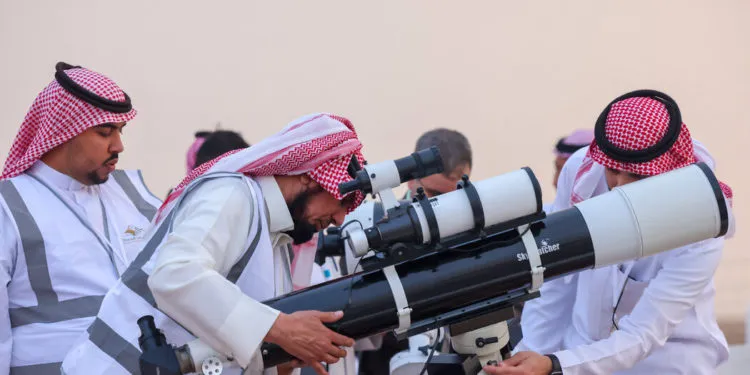


Ramadan, the holiest month of the Muslim calendar, starts on Monday in some countries but on Tuesday in others. How is that possible?
The exact timings depend on when local Islamic authorities around the world declare the sighting of the new moon, the astronomical event that marks the start of the observance.
Here’s why there’s so much variation from place to place.
The basics
Islamic countries, and Muslims around the world, use the traditional Hijri calendar to mark religious events. Each month of that calendar begins with the sighting of the early crescent moon, and the holy month of Ramadan begins at the start of the ninth month.
These customs go back centuries. But the exact start time of Ramadan varies from place to place because it depends on a range of factors, including who observes the moon and how, and whether the sky is clear or cloudy at the time.
That explains why Saudi Arabia declared that Ramadan would start on Monday after reporting a sighting of the crescent moon on Sunday, but also why neighboring Oman reported the same day that the moon was not yet visible. As a result, the two countries will begin their Ramadan celebrations about 24 hours apart. The authorities in Iran, like Oman, have also declared Tuesday to be the official start of the holy month.
In Southeast Asia, Islamic authorities in several countries said over the weekend that they, too, would observe Ramadan from Tuesday, not Monday, after unsuccessful moon sightings. That gave millions of people across the region, including in Indonesia, the nation with the world’s largest Muslim population, an extra day to prepare.
‘A challenging mission’
Astronomers have argued for centuries about what constitutes a crescent moon sighting, according to a recent study in the journal Scientific Reports, which explored how artificial intelligence and machine learning could help predict the moon’s visibility.
New technologies make moon readings more accurate, but they can also make the process more complex, the study said. For instance, does it count as an official sighting if a new crescent moon can be seen by an optical aid but not by the naked eye?
“Deciding on the start of Ramadan has always been a challenging mission, and, as a result, not all Muslims start Ramadan synchronously,” the study’s authors wrote.
In Islamic countries, national guidance helps ensure that Muslims are on the same Ramadan timetable. In other places, the timing can depend on which religious guidance residents follow. This year, for example, the Fiqh Council of North America chose Monday, while the Council of Shia Muslim Scholars of North America chose Tuesday.
Other variables
It isn’t just the start date of Ramadan that varies from place to place. The exact amount of time that people hold their dawn-to-dusk fasts depends on which year it is, and where they live in relation to the Equator.
Because the Hijri calendar is about 11 days shorter than the 365-day-ish Gregorian calendar, the month of Ramadan moves around every year in Gregorian terms. That means the fasting day in the Northern Hemisphere will get shorter between now and 2031, when Ramadan coincides with the winter solstice, Al Jazeera reported. In the Southern Hemisphere, it will grow incrementally longer over the same period.
As for location, latitude matters because it determines the timing of local sunrise and sunset. Muslims who live close to the Equator, where the length of a day changes less from season to season, can expect a relatively consistent fasting schedule each year. For those living at extreme northern or southern latitudes, there is a lot more variation.
That helps explain why, in some parts of Scandinavia, Muslims observe Ramadan fasts based on the time in Mecca, thousands of miles away. If they didn’t, depending on when the holiday fell in a given year, they would either be fasting for most of the day, or barely at all.


The Peoples Democratic Party (PDP) has fixed its first National Executive Committee (NEC) meeting following the reopening of its national headquarters, Wadata Plaza, after months of closure.
The meeting is scheduled to hold at the party’s secretariat in Abuja.
This comes days after security operatives unsealed the premises, which had been under lock since late last year due to internal leadership disputes.
The development marks a fresh step in the party’s attempt to stabilise its structure after a prolonged crisis. Party officials say the meeting will focus on restoring order and addressing lingering issues affecting the PDP’s leadership.
The secretariat had been sealed in November after a violent confrontation between two rival factions. One group was loyal to the Tanimu Turaki-led National Working Committee. The other faction was headed by Abdulrahman Mohammed, who led a caretaker committee. Both sides had laid claim to the party’s leadership, leading to chaos at the headquarters.
The crisis deepened after a court ruling earlier this year. The Appeal Court nullified the Ibadan convention that brought in the Turaki-led leadership. That judgment shifted momentum to the Mohammed-led group.
Backed by key political figures, the Mohammed faction moved quickly. They relied on the court decision to organise a fresh convention in Abuja. That exercise further strengthened their hold on the party’s structure.
Sources within the party say today’s NEC meeting will largely be attended by loyalists of the Mohammed-led leadership. Among those expected are the Minister of the Federal Capital Territory, Nyesom Wike. Also expected are former Senate President Bukola Saraki and former Abia State Governor Okezie Ikpeazu.
Party insiders say the presence of these figures signals a strong show of unity from the faction currently in control. Discussions at the meeting are expected to cover reconciliation, restructuring, and preparations for future political engagements.
There are also indications that the NEC may set up committees to address grievances within the party. Some members are pushing for a broader peace process to bring back aggrieved stakeholders.
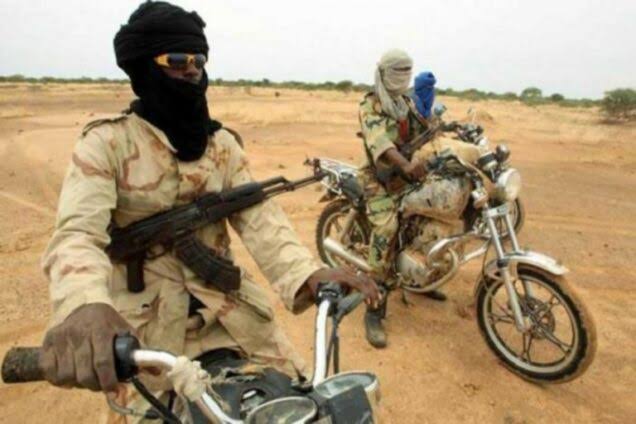
Terrorists have killed three soldiers in a fresh attack on a military camp in Kemanji community, Kaiama Local Government Area of Kwara State.
The attack reportedly occurred in the early hours of Monday, with residents saying heavy gunfire echoed across the area during the invasion.
According to local sources, the assailants, suspected to be armed terrorists, stormed the military camp without warning and engaged troops in a fierce gun battle.
The confrontation left three soldiers dead, while other personnel were said to have responded with a reprisal attack to repel the assailants.
One resident, who spoke on condition of anonymity, described the incident as sudden and violent, noting that the attackers took advantage of the early morning hours when some soldiers were asleep.
“Kemanji is a border community close to thick forest areas.
“Few of the soldiers were asleep around 3am when the terrorists invaded their camp and killed three of them before others responded,” the source said. (The Sun)
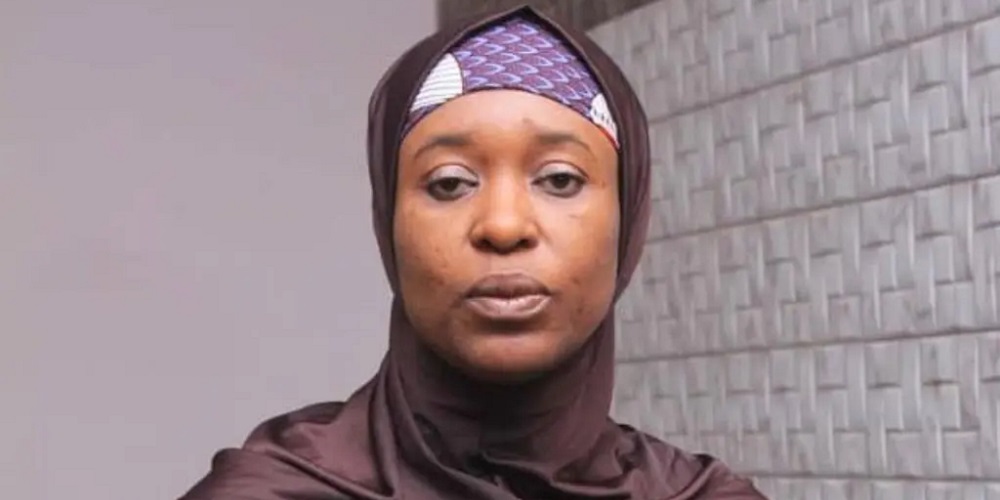
Prominent activist, Aisha Yesufu, has expressed concern over the ongoing teachers’ strike in the Federal Capital Territory (FCT), calling on the minister, Nyesom Wike, to urgently intervene and resolve the crisis.
In a statement on Monday, Yesufu lamented the prolonged closure of public primary schools across the FCT, noting that the situation continues to disrupt the education of thousands of children.
She stressed that education remains a fundamental right and should not be treated with negligence, urging authorities to prioritise the welfare of both teachers and students.
“The continuous strike by teachers in the FCT is unacceptable. Our children cannot keep paying the price for unresolved issues,” she said.
The activist appealed directly to Wike to take decisive steps towards addressing the grievances of the striking teachers, including issues surrounding unpaid salaries and poor working conditions.
According to her, swift intervention by the FCT administration would not only restore academic activities but also rebuild confidence in the public education system.
The strike, which has lingered for weeks, has left many pupils at home, raising concerns among parents over the long term impact on learning.

PDP Holds First NEC Meeting After Police Reopen National Secretariat

Just in: Terrorists invade military camp, k!ll three soldiers in Kwara

Aisha Yesufu faults FCT teachers’ strike, wants Wike to intervene




-

 News13 hours ago
Full List: Items You can no longer Import into Nigeria
-

 News13 hours ago
SSANU plans indefinite strike as April 30 renegotiation deadline approaches
-

 News13 hours ago
Terror ‘kingpin’ killed as troops arrests suspects in Nasarawa, Benue, Kwara
-
 News21 hours ago
Rescued eight Benue bus kidnap victims identified as UTME candidates
-

 News13 hours ago
JAMB releases results of 1.8m UTME candidates
-

 News13 hours ago
NCA demands arrest of Islamic cleric over alleged bounty on pastor
-

 News23 hours ago
Hardship Not a Licence for Broken Homes – Abejide Tells Couples
-
 News9 hours ago
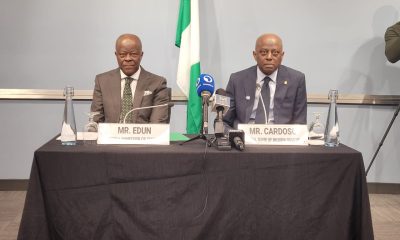
Tinubu reforms shift Nigeria from fragility to growth as global pressures mount(Photos)